How to Source Concealed Thermostatic Shower Mixers for Hotel Projects Without Scald Liability and Certification Gaps
A hotel in Dubai opened 180 rooms with concealed shower valves sourced from a supplier who had CE documentation but no WaterMark. The local authority inspection flagged every bathroom. Retrofit cost: roughly $400 per room in labor alone, not counting the valve replacements. The procurement team had checked the supplier's certification list — they just hadn't checked which certifications applied to which market.
That's the failure mode this guide is built around. Not counterfeit products. Not obvious quality problems. The quiet, expensive gap between what a supplier's certificate covers and what your deployment market actually requires.
Concealed thermostatic shower mixers are the highest-liability fixture in a hotel bathroom. They're behind the wall, they control water temperature for guests who can't see the valve, and they run continuously across hundreds of rooms for 10–15 years between major refurbishments. Get the spec wrong before the wall closes and you're looking at a problem that costs 5–10x the valve price to fix.
Here's how to source them correctly.
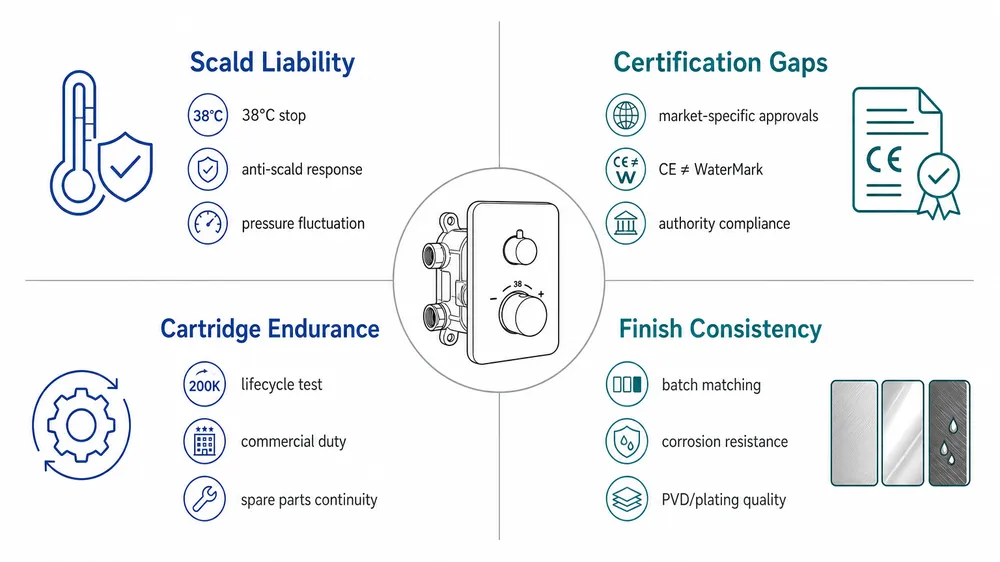
Step 1 — Specify thermostatic accuracy class before you issue the RFQ
The number that matters most in a hotel thermostatic valve spec is the temperature accuracy tolerance. Most suppliers list a valve as "thermostatic" without publishing the tolerance class. That gap is where scald liability lives.
There are two practical tiers in the market:
| Accuracy Class | Tolerance | Typical Application |
|---|---|---|
| Class I (EN 1111 / ASSE 1016) | ±1°C | Hotel, healthcare, aged care, schools |
| Class II (general commercial) | ±2°C | Residential, low-traffic commercial |
For a hotel, ±2°C is the wrong spec. At 38°C set point, a ±2°C valve can deliver 40°C — which is above the threshold where prolonged contact causes discomfort for elderly guests and children. At ±1°C, the valve holds 38°C ±1°C under normal pressure fluctuation, which is the range most hotel brand standards require.
The pressure fluctuation piece is where generic suppliers fail. A thermostatic valve that holds ±1°C at steady 3 bar inlet pressure may drift to ±2.5°C when the building's hot water system drops to 1.5 bar during morning peak demand. Ask your supplier for test data at variable inlet pressure — specifically at 1.0 bar and 3.0 bar — not just at the rated test pressure. If they can't provide it, the valve hasn't been tested under real hotel operating conditions.
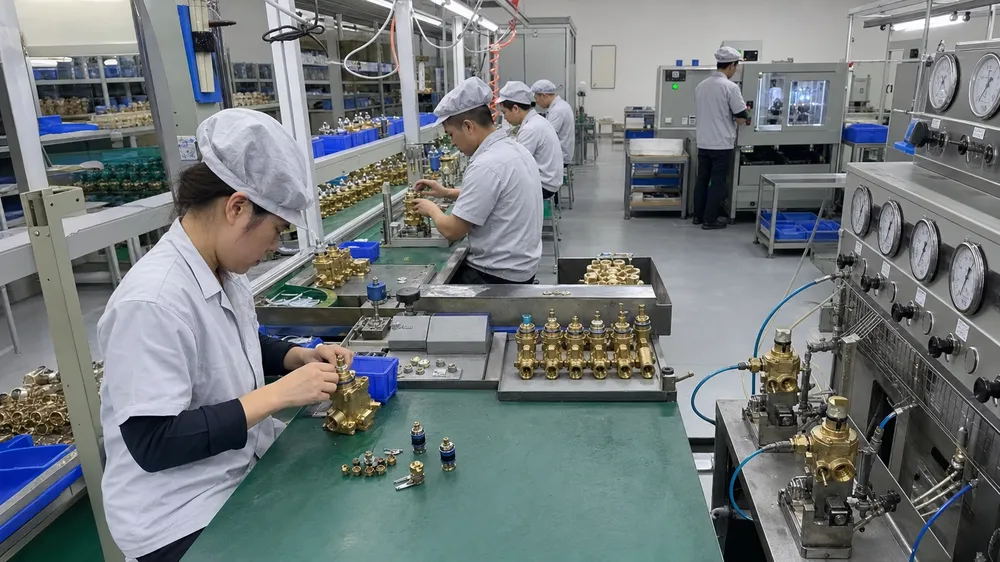
We test our concealed thermostatic cartridges at inlet pressures from 0.5 bar to 5 bar and require the temperature output to stay within ±1°C across that range. That's the spec that protects you when the building's pressure fluctuates, not just when the test rig is running at ideal conditions.
Red flag: A supplier who quotes "thermostatic accuracy ±2°C" for a hotel project is either unaware of the liability exposure or is hoping you won't ask. Either way, push for ±1°C and get the test data.
Step 2 — Map certifications to your deployment markets
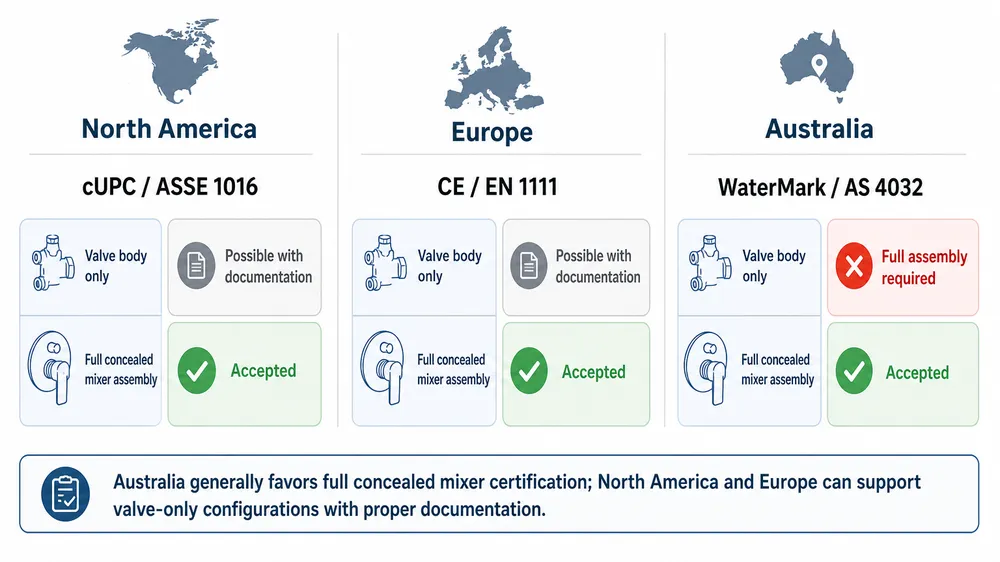
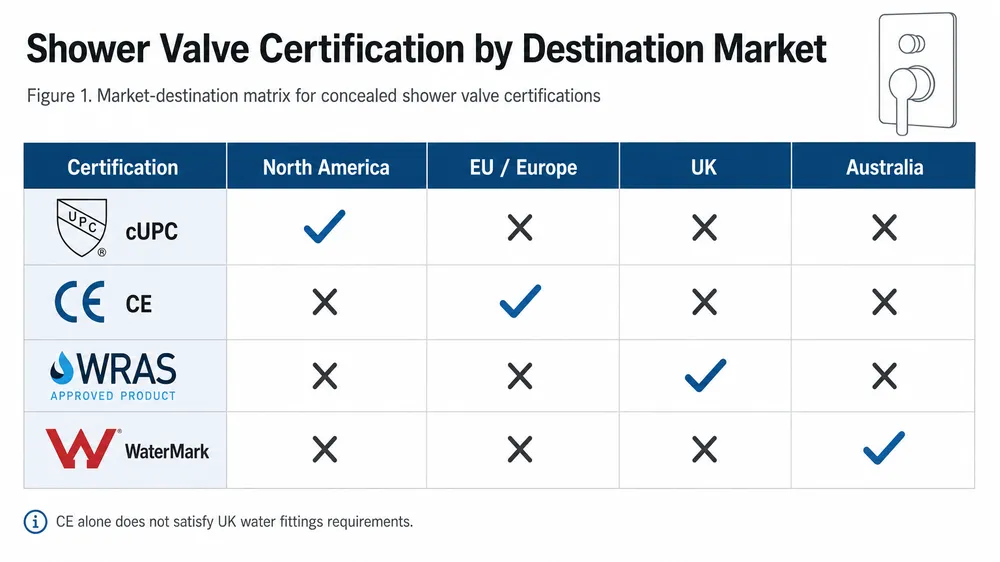
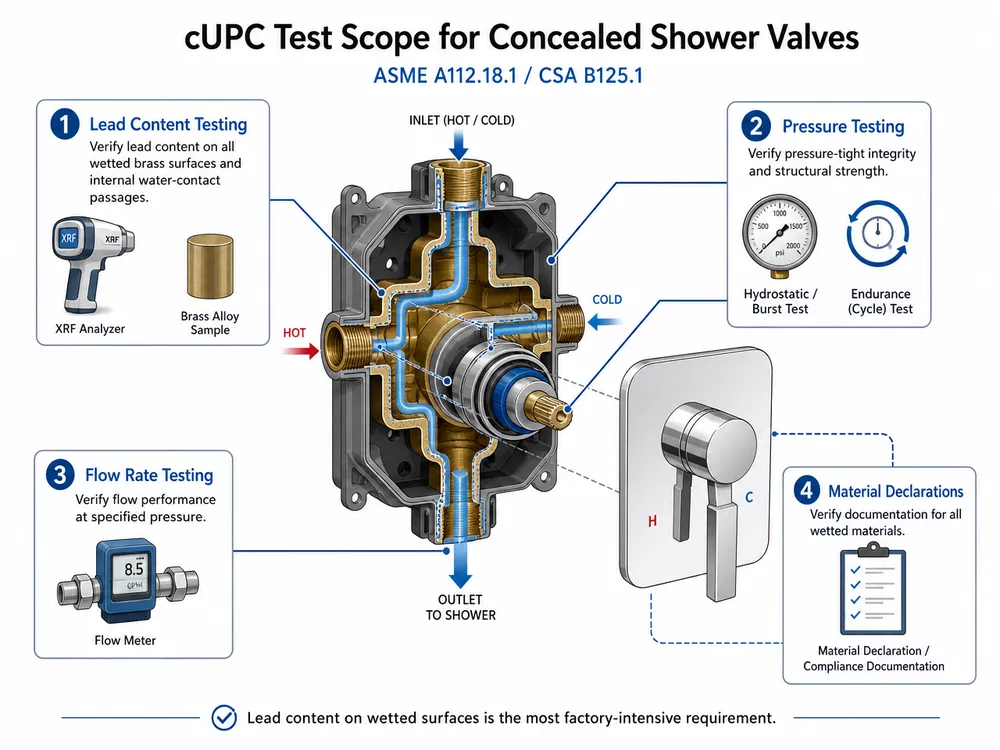
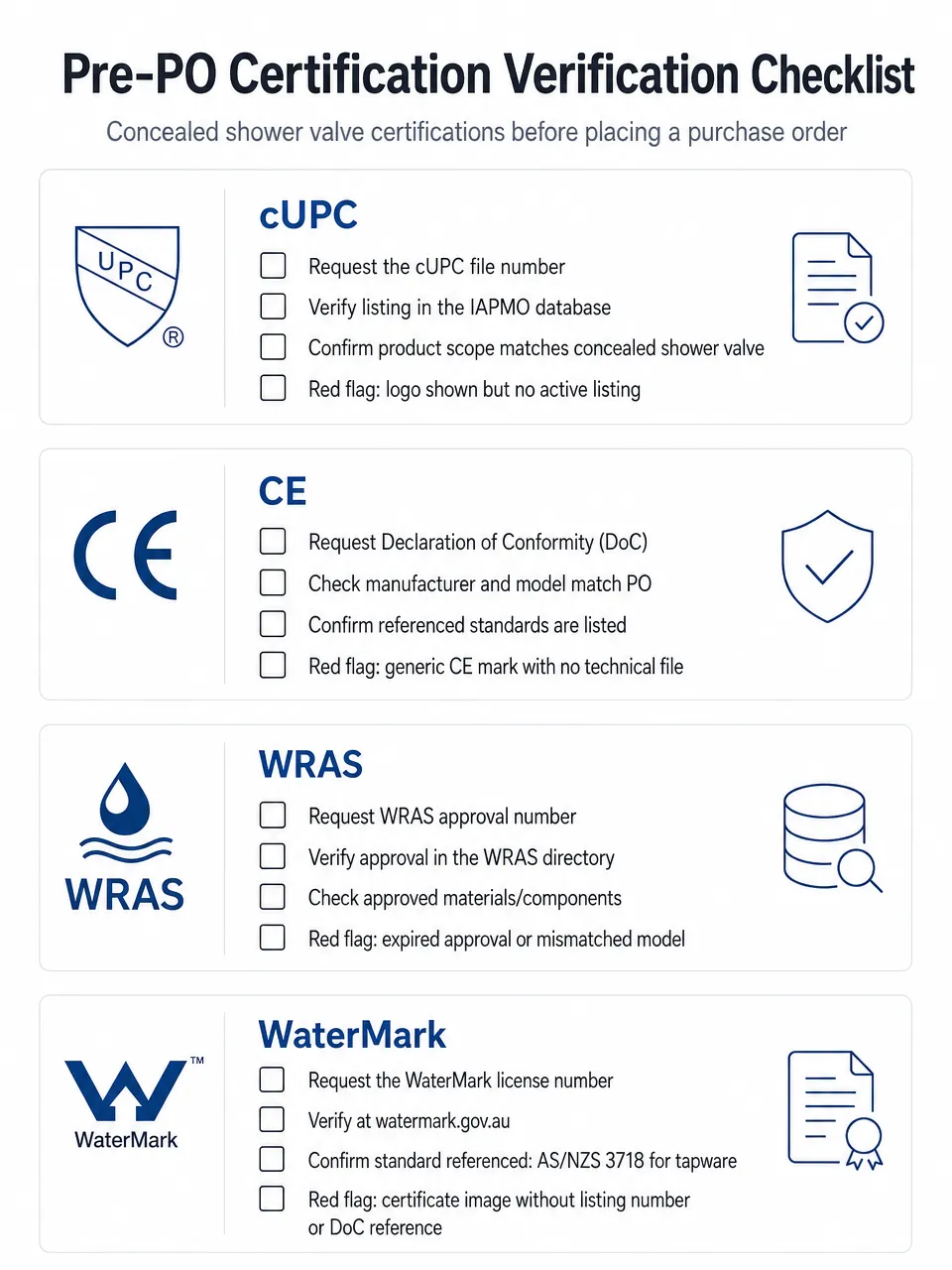
This is where most multi-property hotel groups get into trouble. A supplier with CE certification is compliant for Europe. That same CE certificate means nothing in California, Sydney, or Dubai. The certification matrix for concealed thermostatic shower valves looks like this:
| Market | Required Certification | Standard Reference |
|---|---|---|
| USA / Canada | cUPC | ASME A112.18.1 / CSA B125.1 |
| European Union | CE | EN 1111 (thermostatic), EN 817 (pressure balance) |
| Australia / New Zealand | WaterMark | AS 4032.4 |
| United Kingdom | WRAS | BS EN 1111 |
| Middle East (UAE, KSA) | ESMA / SASO | Regional adoption of EN or ASME standards |
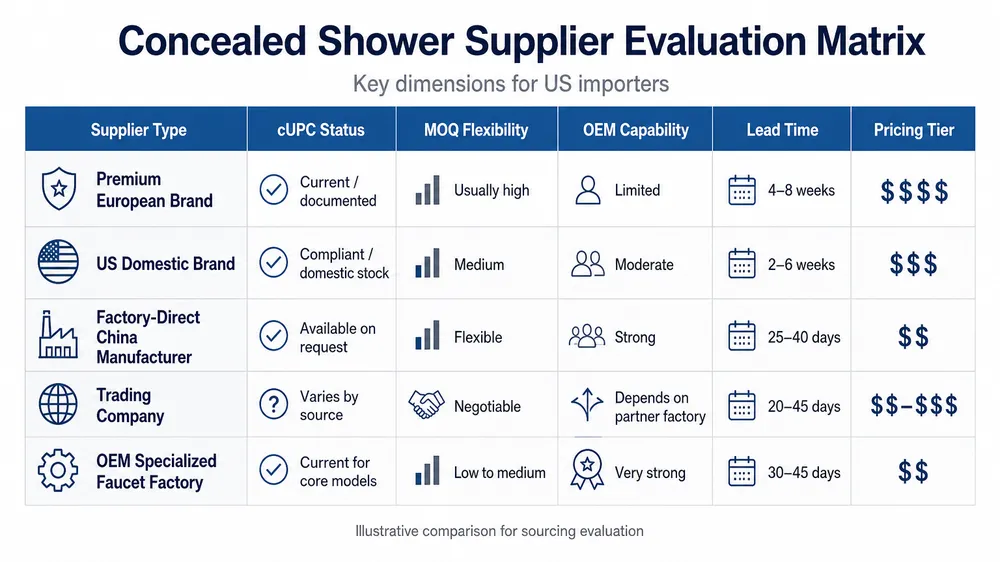
A supplier who holds only CE cannot legally supply your US properties. A supplier who holds cUPC but not WaterMark cannot supply your Australian properties. If you're rolling out across multiple markets — which most international hotel groups are — you need a supplier who holds all the relevant certifications under one roof, or you're managing two or three supplier relationships and two or three documentation packages per project.
(We've seen buyers try to split the order: one supplier for North America, another for Europe, another for Australia. The finish matching problem alone makes that approach painful — getting three factories to hit the same brushed nickel tone is nearly impossible without a shared color standard and shared plating chemistry.)
We hold cUPC, CE, and WaterMark from the same factory, so a multi-market hotel group can source the same valve body across all three regions with one set of documentation. For UK projects, we can provide WRAS-compliant configurations on request.
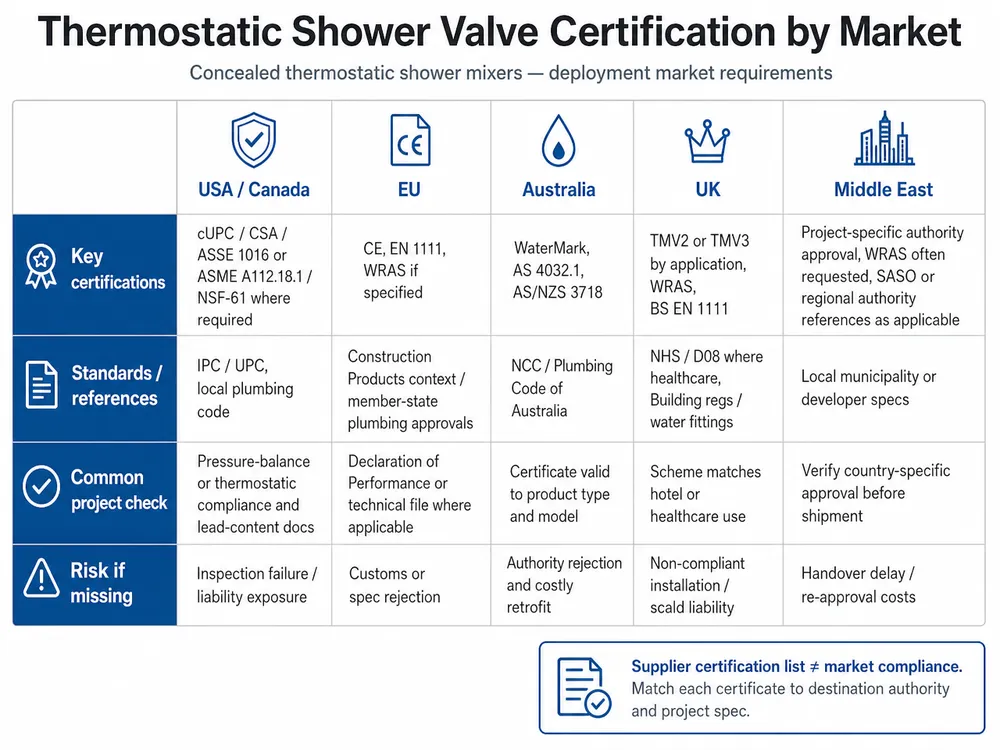
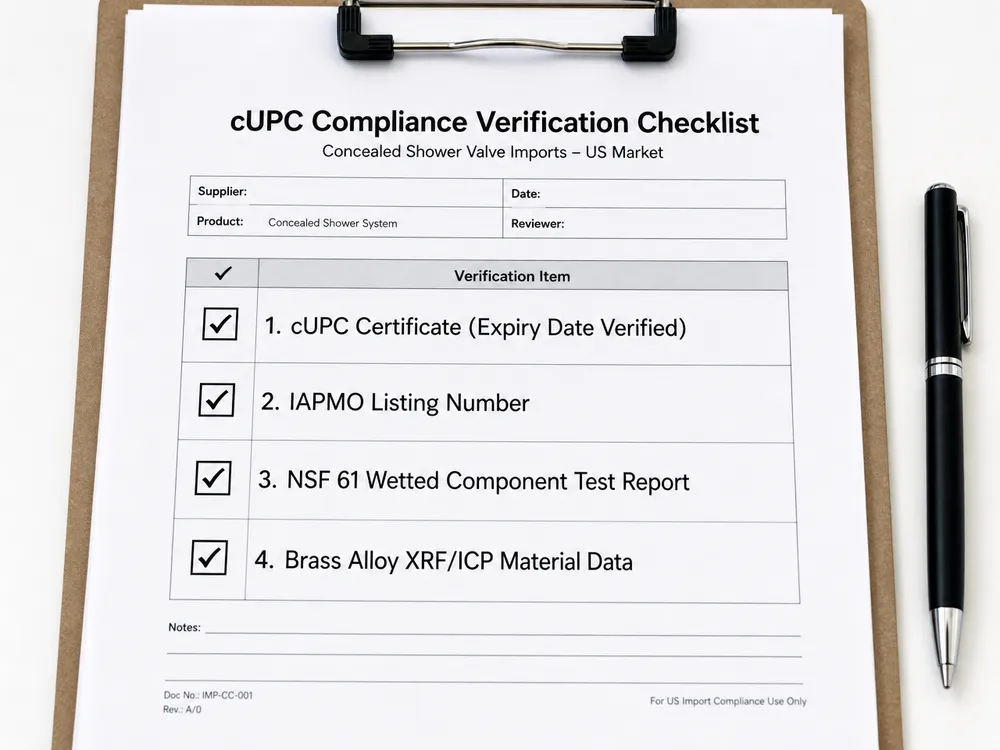
What to ask your supplier: Request the actual certificate documents, not just a logo on a product page. Check the certificate scope — some cUPC certificates cover only specific valve configurations, not the full product range. If your hotel spec requires a particular trim configuration or flow rate, confirm that configuration is within the certificate scope, not just the base valve body.
Step 3 — Evaluate cartridge endurance standards
A concealed thermostatic valve in a 200-room hotel runs roughly 600 open/close cycles per day across the property. Over a 10-year service life before major refurbishment, that's approximately 2.2 million cycles per valve. The cartridge is the component that fails first, and cartridge replacement in a concealed system means opening the wall — or at minimum, removing the trim and accessing the valve body through the access panel.
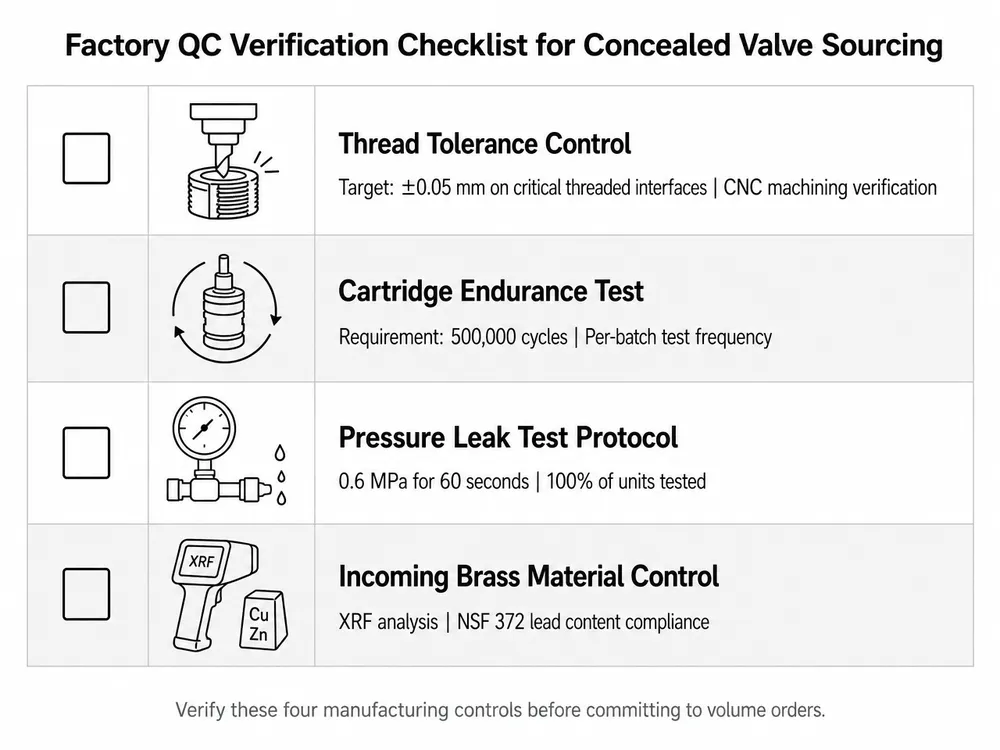
The industry standard endurance test for thermostatic cartridges is 500,000 cycles. That's the minimum for CE and cUPC compliance. But there's a difference between a supplier who runs 500,000-cycle testing on new product introductions and one who runs it on every production batch.
New product testing tells you the design works. Batch testing tells you the production run you're receiving matches the design. Cartridge quality can drift between production runs if the ceramic disc supplier changes a grinding parameter or the spring steel spec shifts slightly. Without batch-level endurance testing, you're trusting that the production run matches the qualification sample — and in a hotel project, that trust is worth nothing when a cartridge fails at 80,000 cycles in room 412.
We run 500,000-cycle endurance testing on every production batch of thermostatic cartridges, not just on new product introductions. The test reports are included in the shipment documentation. If you want to see a sample report before placing an order, we can provide one from a recent production run.
What to ask your supplier: "Do you run endurance testing on every production batch, or only on new product introductions?" If the answer is "only new products," ask how they verify batch-to-batch consistency. If they don't have a clear answer, that's a maintenance budget risk for your hotel.
Step 4 — Confirm OEM customization scope for hotel brand standards
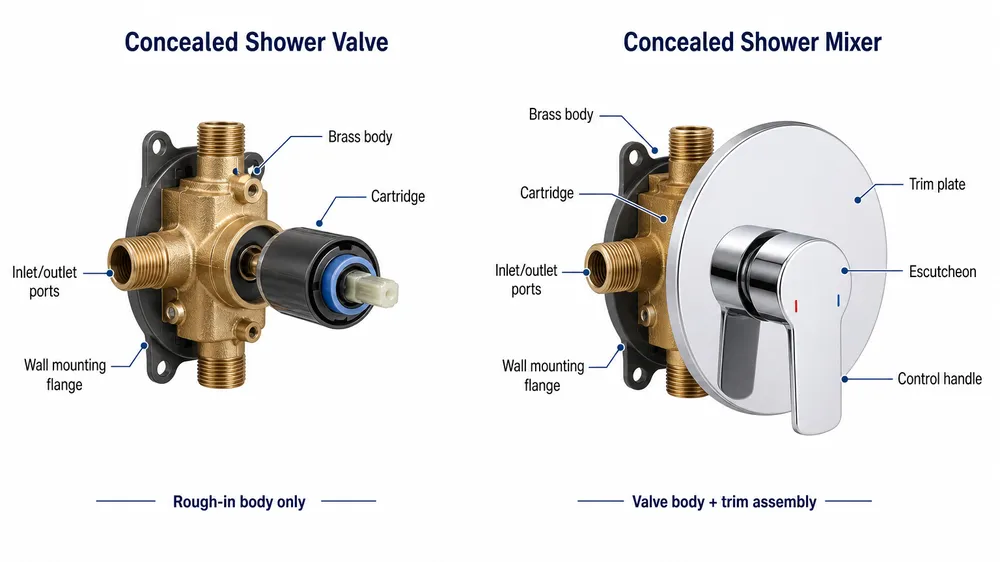
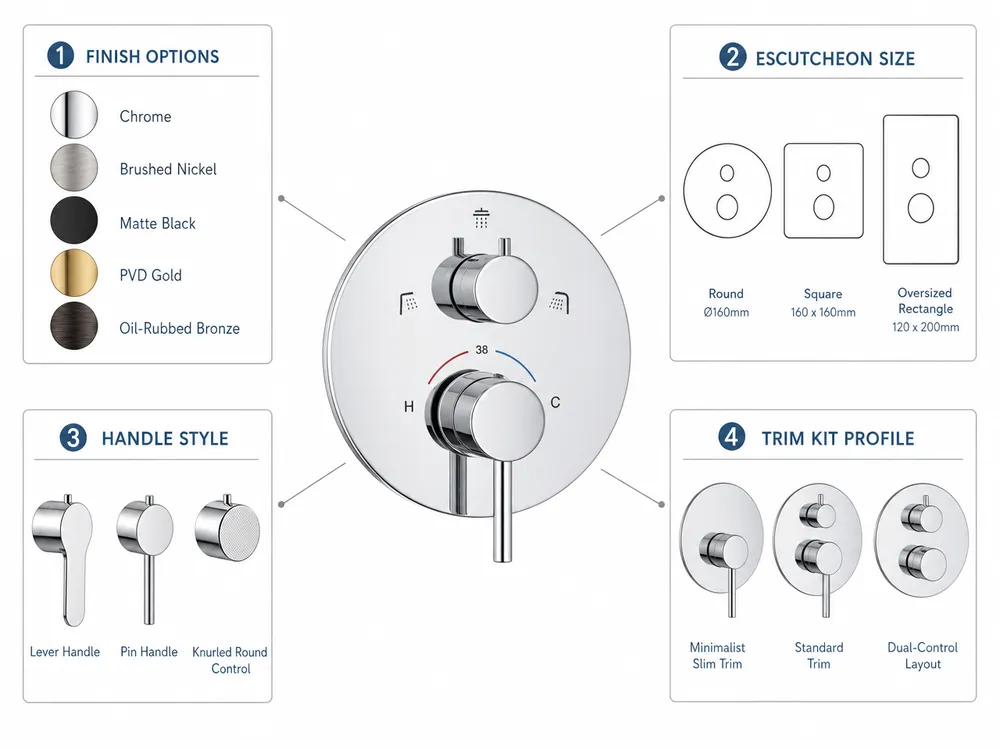
Most hotel brands have a finish standard. Marriott properties in one region may specify brushed nickel. A boutique hotel group may require matte black across all fixtures. A luxury brand may specify PVD gold for the trim kit. The concealed valve body is hidden behind the wall — but the trim plate, handle, and escutcheon are visible, and they need to match the rest of the bathroom hardware.
The customization scope you need to confirm with any supplier:
- Finish options and in-house capability — Does the supplier run their own plating and PVD lines, or do they subcontract finishing? Subcontracted finishing means a second factory's quality control and a second point of color drift between orders.
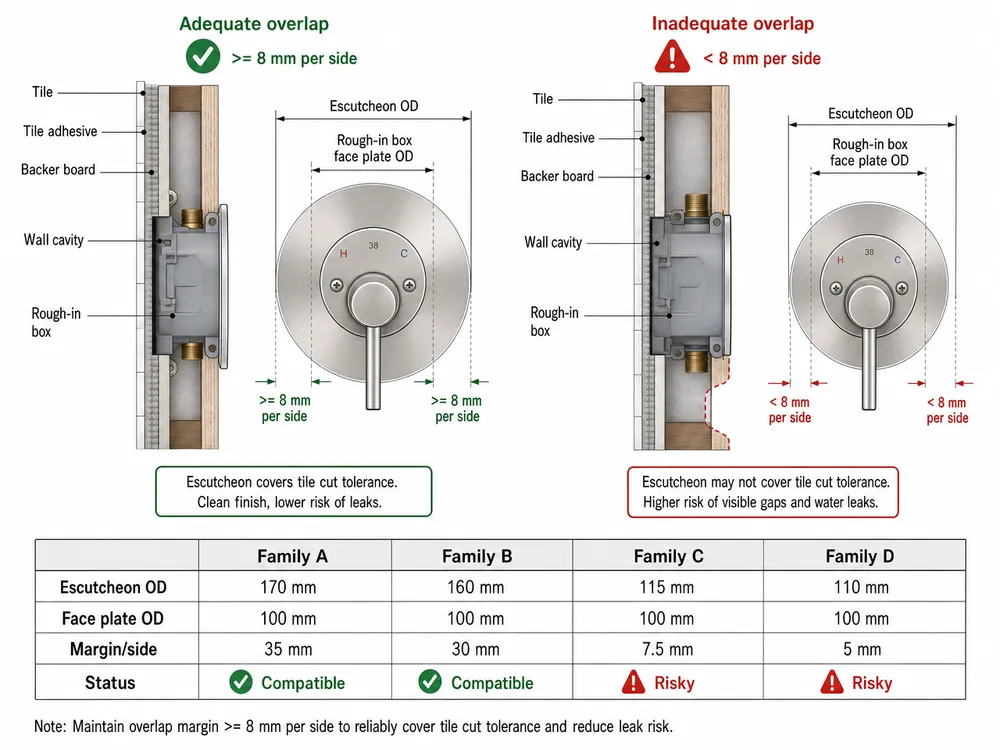
- Escutcheon size and profile — Hotel brand standards often specify escutcheon dimensions. Confirm the supplier can hit your required plate size and profile, not just their standard catalog option.
- Handle style — Lever, cross, or knob configurations affect the trim kit tooling. If you need a custom handle, confirm the supplier has in-house tooling capability and what the lead time looks like.
- MOQ for custom configurations — Some suppliers require 1,000+ pieces for a custom finish or handle. For a boutique hotel rollout of 80–120 rooms, that MOQ may be unworkable.
We run five finishes in-house — chrome, brushed nickel, matte black, PVD gold, and oil-rubbed bronze — on our own electroplating and PVD lines. Finish consistency across a 500-unit hotel order is controlled by one team, not split across subcontractors. OEM customization starts at 200 pieces, which covers a boutique hotel pilot or a single-property FF&E order before committing to a full chain rollout.
For handle and escutcheon customization, our in-house tooling room handles brass casting die modifications and CNC fixture changes without going to an outside vendor. First sample lead time for a custom OEM configuration runs 25–35 days from drawing approval.
Step 5 — Audit supplier documentation before the order, not after
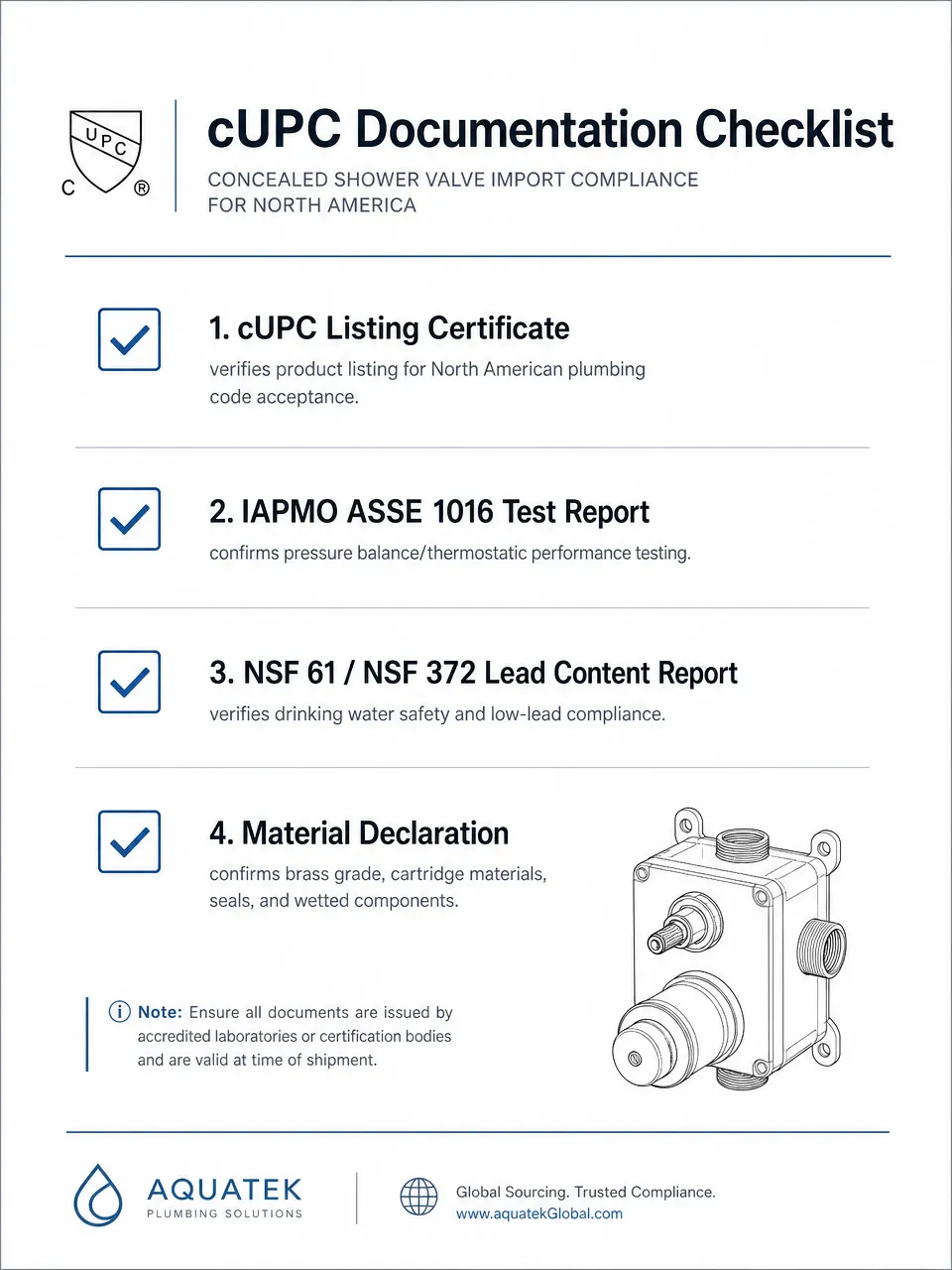
The documentation package for a hotel project concealed thermostatic valve should include:
- Test reports — Endurance test (500,000 cycles), temperature accuracy test at variable inlet pressure, salt spray test for finish durability
- Certification documents — Actual certificates with scope confirmation, not just logos
- Material declaration — Lead content compliance (especially for cUPC markets), brass alloy specification
- Country of origin documentation — Certificate of Origin for customs clearance, HS code classification
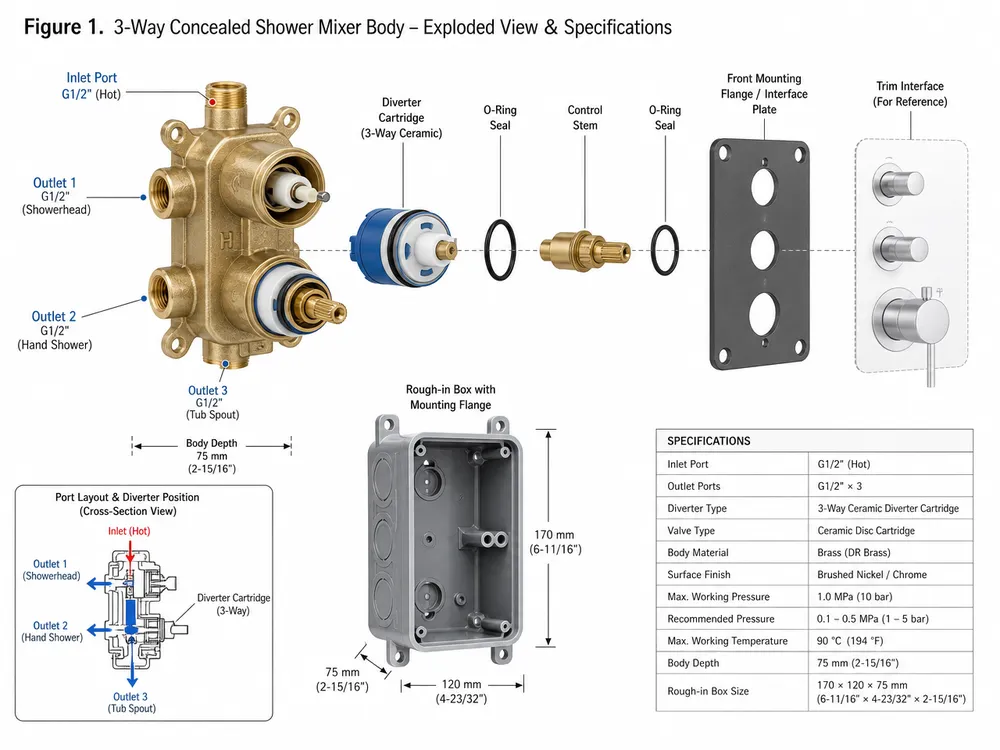
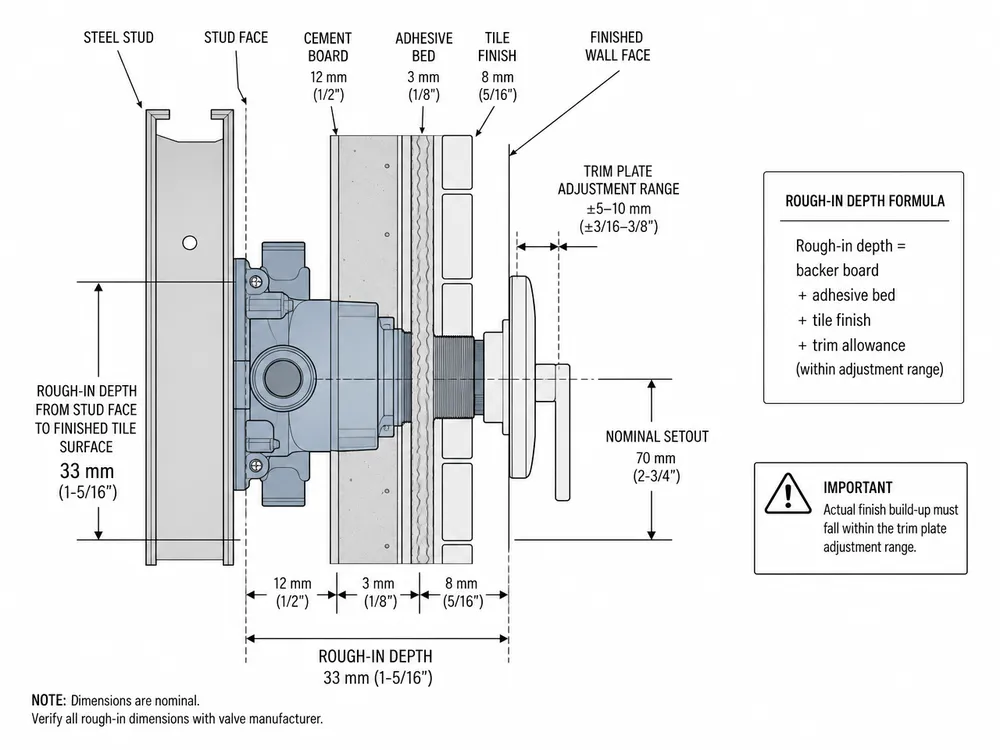
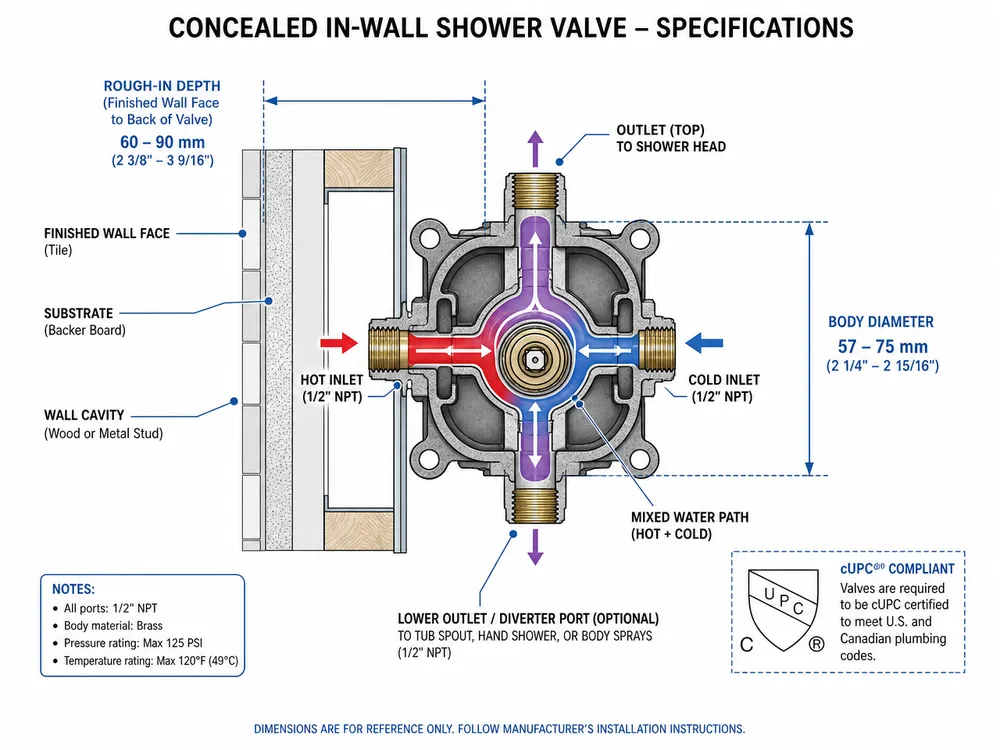
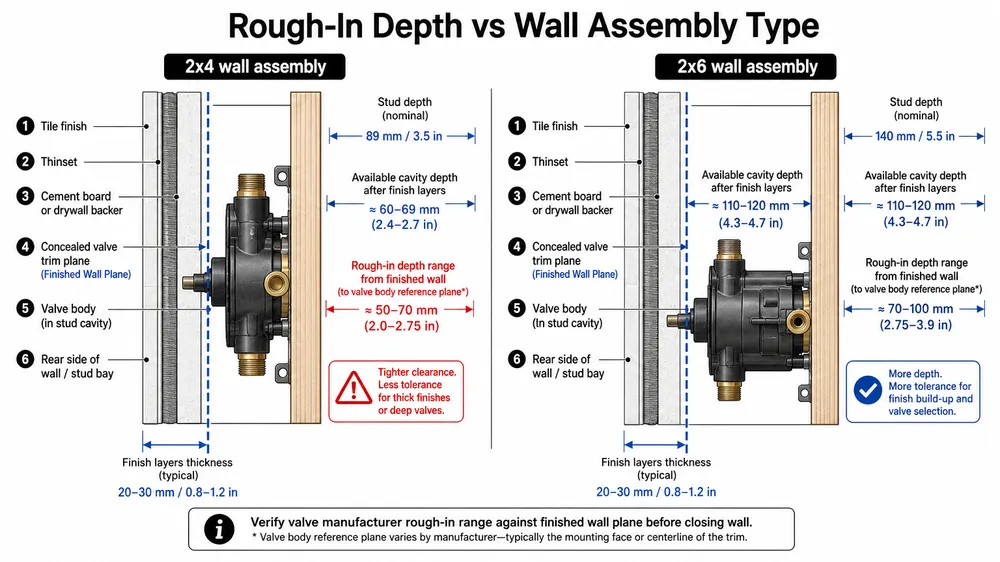
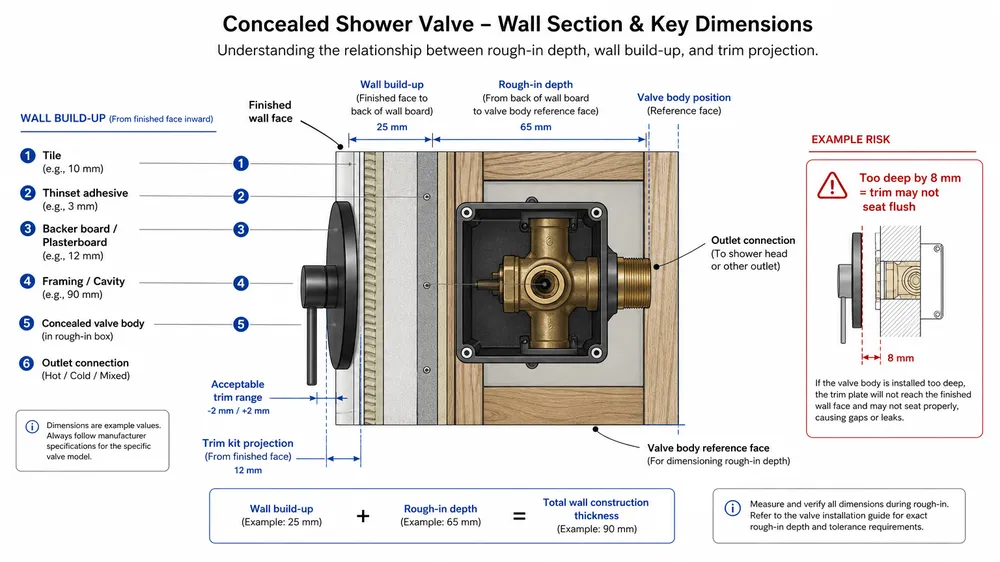
- Installation and rough-in specification — Valve body dimensions, rough-in depth range, connection size, access panel requirements
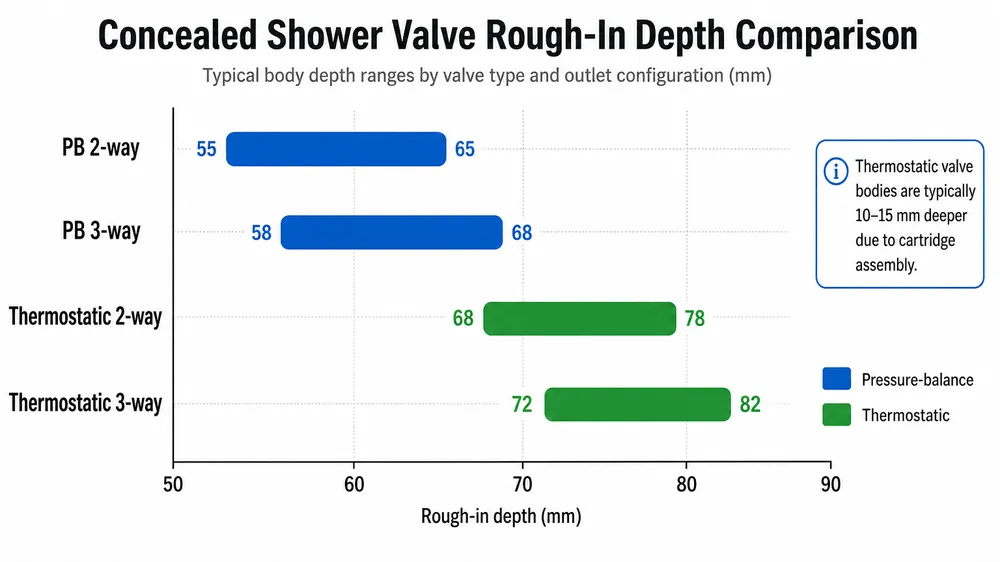
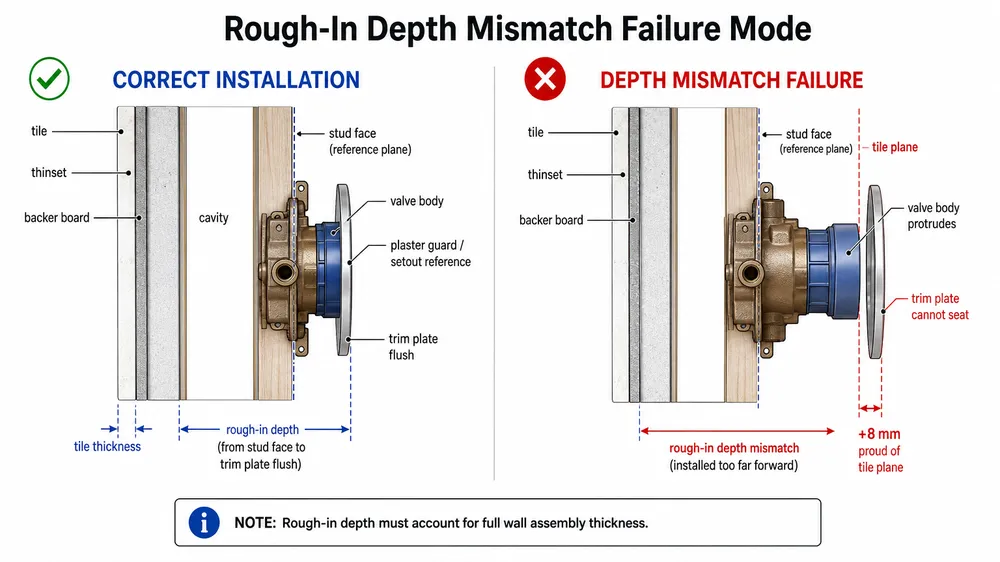
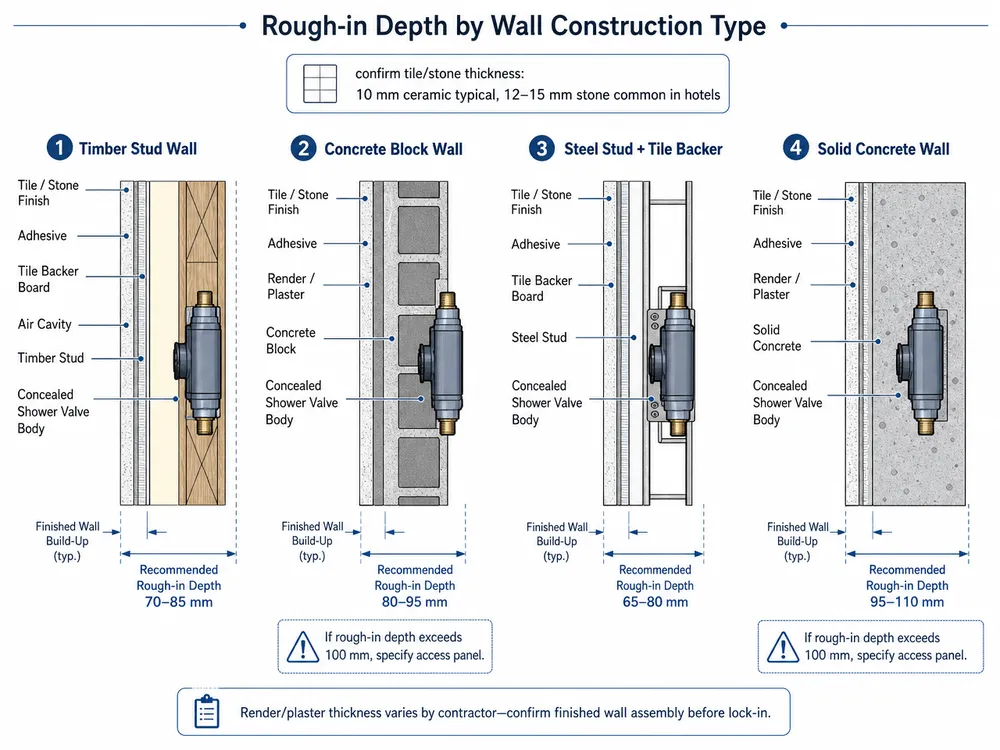
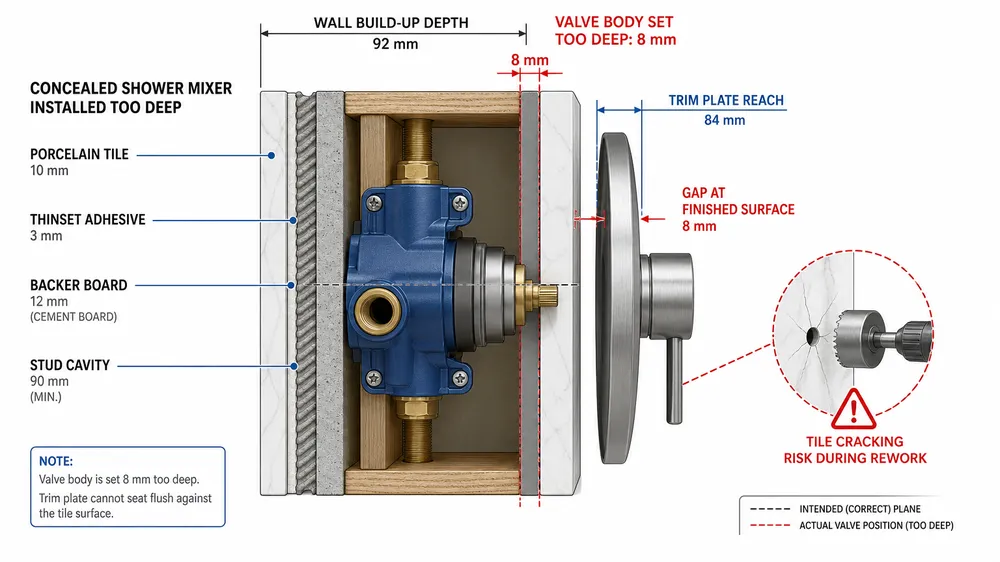
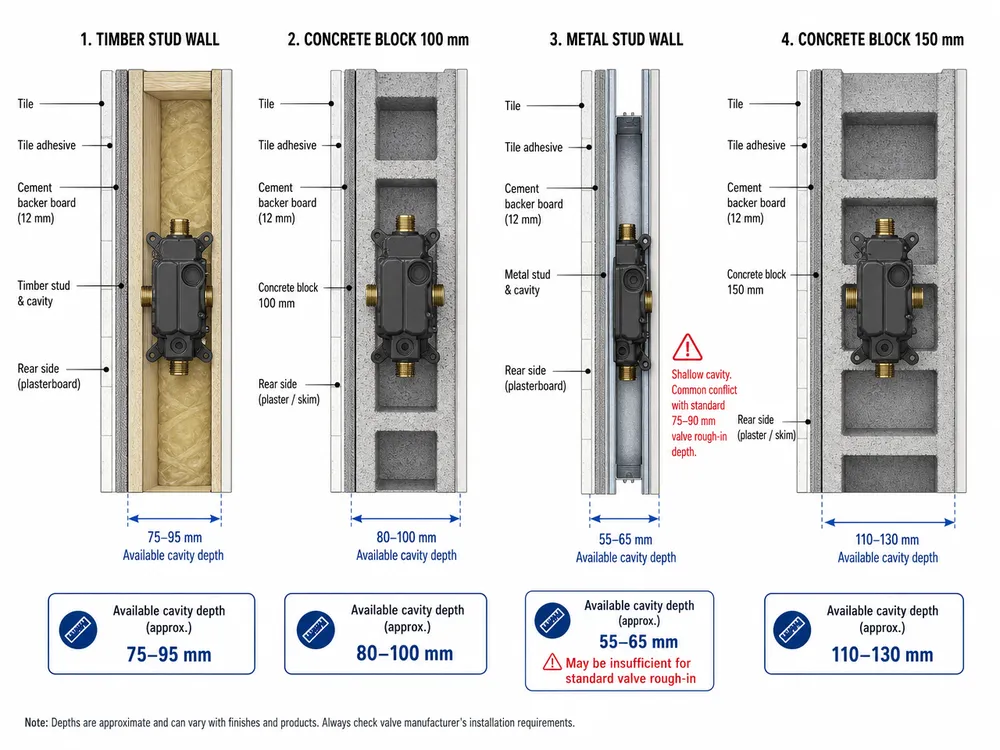
The rough-in specification is the one that generates the most expensive callbacks. A concealed valve with a rough-in depth range of 60–80mm installed in a wall built to 55mm depth means the trim plate won't seat flush. That's a callback, a wall repair, and a delay to room handover. Get the rough-in spec sheet before the wall is framed, not after.
(We've seen this happen on a 60-room boutique hotel project where the GC framed the walls before the valve spec was confirmed. The rough-in depth mismatch cost three weeks of schedule and a significant rework bill. The valve itself was fine — the coordination failure was the problem.)
Documentation checklist for hotel project sourcing:
- [ ] Temperature accuracy test report at variable inlet pressure (0.5–5 bar range)
- [ ] 500,000-cycle endurance test report — confirm it's from a production batch, not just a qualification sample
- [ ] Salt spray test report for specified finish (24h minimum, 48h preferred for humid climates)
- [ ] Certification documents with scope confirmation for each target market
- [ ] Lead content / material compliance declaration
- [ ] Rough-in specification sheet with depth range, connection size, and access panel requirements
- [ ] HS code classification for your import market
Common sourcing mistakes that generate liability and rework
Accepting paper certifications without batch test reports. A CE mark on a product page tells you the design was tested. It doesn't tell you the production run you're receiving was tested. Request batch-level test reports, not just the certification document.
Ignoring thermostatic drift under pressure fluctuation. A valve tested at 3 bar steady pressure may drift significantly at 1.5 bar during morning peak demand. Test data at variable inlet pressure is the spec that matters for a hotel building, not the rated test condition.
Underspecifying finish durability for humid environments. A chrome finish that passes 24-hour salt spray is adequate for a dry climate. For a coastal resort or a high-humidity market, specify 48-hour salt spray minimum and ask for the test data. Finish failure in a hotel bathroom generates guest complaints and warranty claims — the cost of a better finish spec is trivial compared to the cost of a finish failure across 200 rooms.
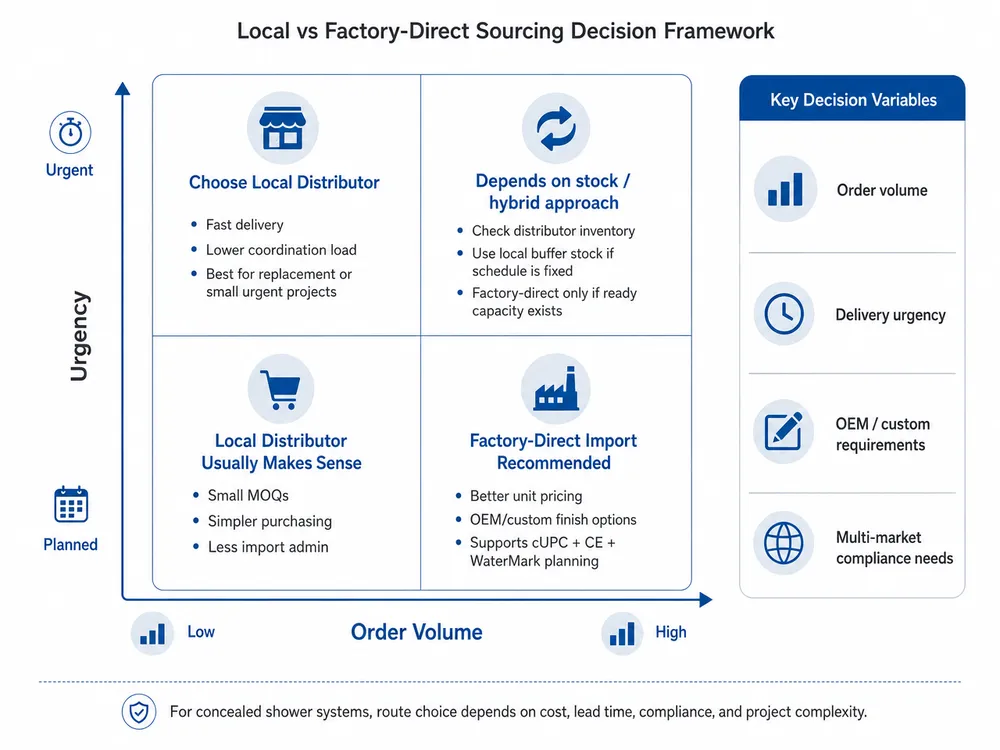
Splitting the order across suppliers to cover certification gaps. If your supplier holds cUPC but not WaterMark, the instinct is to find a second supplier for the Australian properties. The problem: finish matching between two factories is nearly impossible without a shared color standard, and you're now managing two supplier relationships, two documentation packages, and two quality systems for the same product. A single supplier with full certification coverage is worth a premium over the split-order approach.
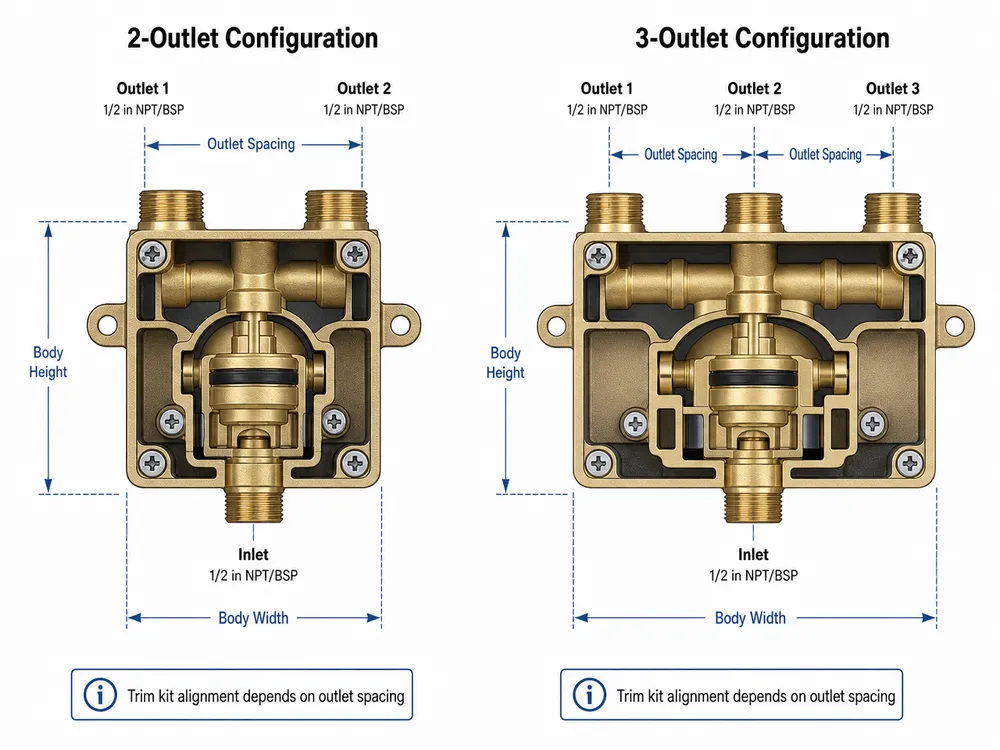
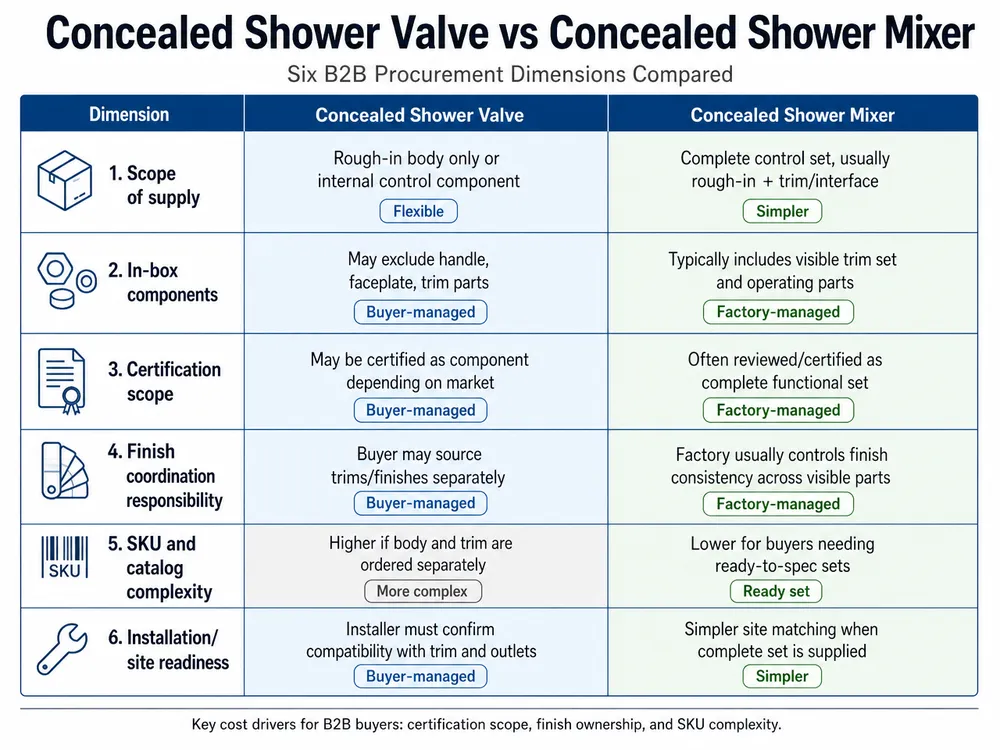
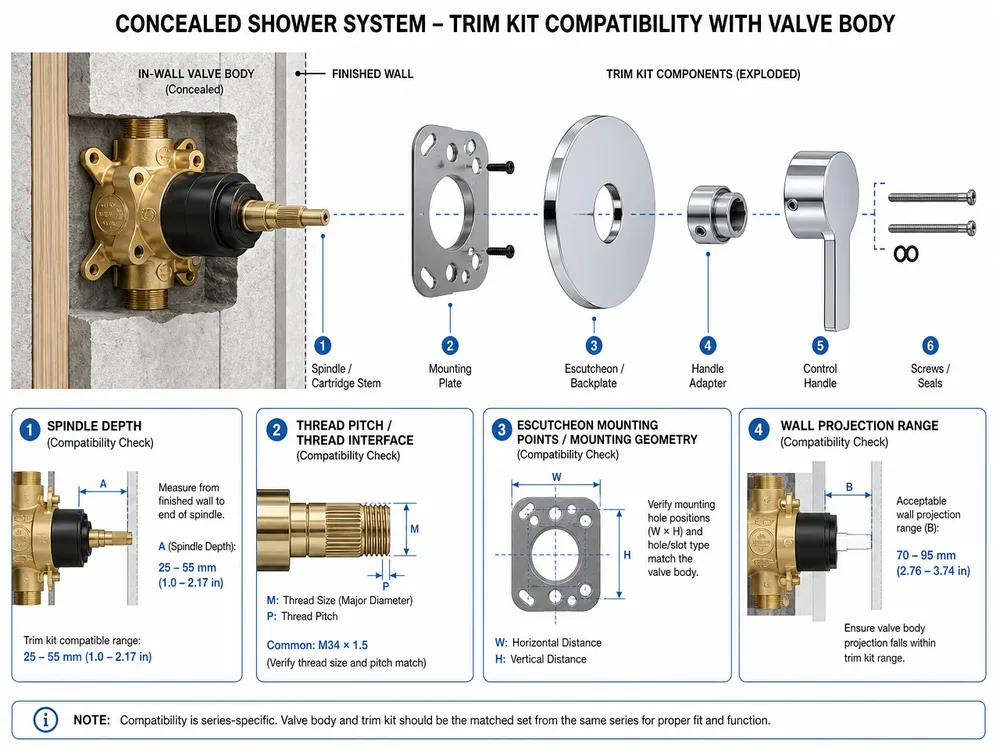
Specifying the valve body without confirming trim kit compatibility. The concealed valve body and the trim kit are two separate components. Some suppliers sell them separately, and not all trim kits are compatible with all valve bodies. Confirm compatibility before the order — and confirm that the trim kit finish matches your hotel brand standard, not just the supplier's catalog photo.
How to structure your RFQ for a hotel project
A well-structured RFQ gets you a useful response. A vague one gets you a catalog price that doesn't reflect your actual requirements.
Include these elements:
Project scope:
- Total room count and phasing (all at once, or phased rollout across properties?)
- Target markets and countries (determines certification requirements)
- Project timeline and required delivery window
Technical specification:
- Thermostatic accuracy class required (specify ±1°C for hotel)
- Inlet pressure range in your building (typical hotel range: 1.5–4 bar)
- Connection size and rough-in depth range
- Flow rate requirement at rated pressure
Finish and customization:
- Required finish(es) — if multiple finishes for different properties, list all
- Escutcheon size and profile (provide drawing or reference photo if available)
- Handle style preference
- Any existing brand-standard spec sheet
Documentation requirements:
- List the certifications required for each target market
- Specify that batch-level test reports are required, not just certification documents
- Request rough-in specification sheet with the quote
Commercial terms:
- Total quantity and order phasing
- Sample requirement before production approval
- Delivery terms (FOB, CIF, DDP)
Sending this level of detail upfront filters out suppliers who can't meet the spec and gives compliant suppliers the information they need to quote accurately. A supplier who responds to a detailed RFQ with a vague catalog price is telling you something about how they'll handle the project.
Our Concealed Thermostatic Shower Mixers are specified for hotel and commercial project use, with cUPC, CE, and WaterMark certification, ±1°C thermostatic accuracy, and 500,000-cycle batch-tested cartridges. You can browse the full Concealed Shower Mixers & Sets range for configuration options, or Request Quote with your project details and we'll respond with product configuration options, certification coverage confirmation, and a detailed quote.
Frequently asked questions
What thermostatic accuracy class should I specify for a hotel project?
Specify ±1°C (Class I per EN 1111 or ASSE 1016). This is the tolerance class required by most hotel brand standards and by healthcare and aged care applications. A ±2°C valve is adequate for residential use but creates scald liability exposure in a hotel context, particularly for elderly guests and children. Confirm the supplier's test data at variable inlet pressure — not just at the rated test condition — before accepting the spec.
Can one supplier cover cUPC, CE, and WaterMark for a multi-market hotel rollout?
Yes, but you need to verify it. Some suppliers hold multiple certifications but only for specific product configurations. Request the actual certificate documents and confirm the scope covers the valve configuration you're specifying — not just the base body. A supplier who holds all three certifications for the same product configuration eliminates the multi-supplier coordination problem and the finish-matching problem that comes with splitting the order.
What's a realistic MOQ for a hotel FF&E pilot before a full chain rollout?
200 pieces is a workable MOQ for a boutique hotel pilot or a single-property order. At that quantity, you can test the product in a real installation, confirm the finish matches your brand standard, and validate the rough-in spec before committing to a full chain rollout. Some suppliers require 500–1,000 pieces for custom configurations — if you're specifying a non-catalog finish or handle style, confirm the MOQ before the design is finalized.
How do I verify that a supplier's endurance test data applies to the production batch I'm receiving, not just the qualification sample?
Ask specifically: "Do you run 500,000-cycle endurance testing on every production batch, or only on new product introductions?" Then request a test report from a recent production batch — not the qualification report from the product launch. A supplier who can provide batch-level test reports is running a quality system that protects your maintenance budget. One who can only provide the qualification report is relying on design consistency without verifying production consistency.
What rough-in depth range should I specify for a concealed thermostatic valve in a hotel project?
Confirm the rough-in depth range with your GC before the walls are framed. Most concealed thermostatic valve bodies have a rough-in depth range of 60–90mm — but the specific range varies by product. Get the rough-in specification sheet from your supplier before the wall construction phase, not after. A mismatch between the valve's rough-in range and the wall construction depth is the most common installation callback on concealed system projects, and it's entirely preventable with a 10-minute documentation check upfront.