

Concealed Shower Mixers Built for In-Wall Installation
Pressure-balanced concealed shower mixers with brass body and ceramic disc cartridge. We manufacture the concealed mixing valve itself — not just the trim. That distinction matters when your buyer's plumber opens the wall.
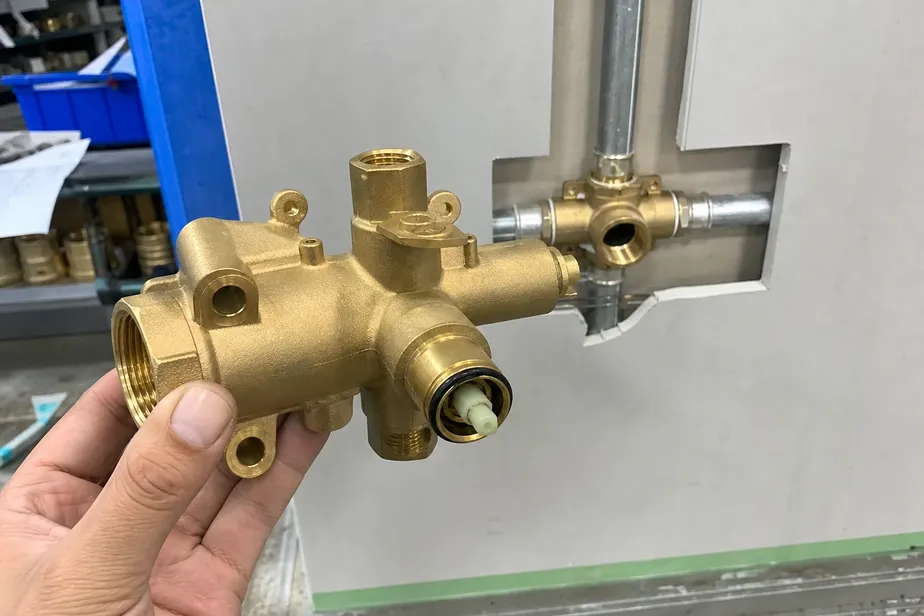
Product Overview
What a Concealed Shower Mixer Is — and Where This One Sits in the Range
A concealed shower mixer is a pressure-balancing or volume-control valve body that installs inside the wall cavity, with only the trim plate and handle visible after tiling. The mixing function — blending hot and cold supply lines to a set temperature — happens entirely behind the wall surface. That's the defining characteristic that separates this product from an exposed shower valve, and it's the reason the rough-in body tolerances matter as much as the trim aesthetics.
Within our concealed shower systems range, this is the pressure-balancing manual mixer — the core SKU that handles single-outlet temperature and flow control. It's the right product when your buyer's project calls for a clean wall installation with one shower outlet and manual temperature adjustment.
The commercial case for stocking this SKU is straightforward. Concealed shower installations have become the standard specification in mid-range and premium residential construction across North America, Europe, and Australia — the markets where our buyers are most active. Contractors writing project specs default to concealed valves because they're what architects specify. Distributors carrying concealed mixers serve both the new-build supply chain and the renovation replacement market, which runs on a 10–15 year replacement cycle. We've seen steady reorder growth from our European and Australian distributors on this SKU specifically — the renovation wave in those markets is real and it's not slowing down.
View all concealed shower systemsWhere This SKU Sits in the Range
This Page
Pressure-Balancing Manual Mixer
Single-outlet temperature and flow control. The right product when the project calls for a clean wall installation with one shower outlet and manual temperature adjustment.
Thermostatic Control
Concealed Thermostatic Shower Mixer
When the project requires thermostatic temperature lock — set-and-hold temperature control with anti-scald protection.
Dual Outlet
Two-Way Concealed Shower Mixer
When the installation needs to split flow between a rain head and a hand shower simultaneously.
Triple Outlet
Three-Way Concealed Shower Mixer
For installations requiring independent flow control across three outlets — rain head, hand shower, and body jets.
Engineering Detail
Valve Body Construction: Where the Margin Risk Lives
The rough-in body is the part of a concealed shower mixer that your buyer's customer never sees — and it's the part that determines whether you get a warranty claim two years after installation.
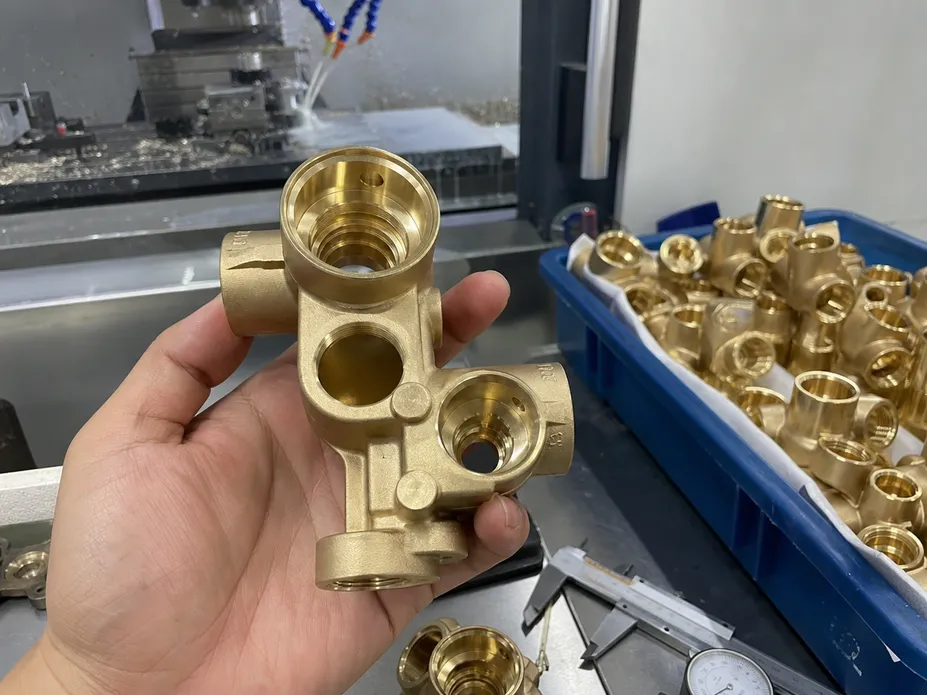
The Failure Point That Matters
A loose valve seat bore is the most common source of drip-through failure in concealed valves. Drip-through in a wall cavity is a water damage claim — not just a warranty claim. We hold the bore to ±0.05mm tolerance on every unit.
100% Pressure Tested
Every unit tested at 0.6 MPa for 60 seconds before leaving the assembly line. Working pressure range: 0.05–0.8 MPa. Hydrostatic test rating: 1.6 MPa.
Gravity-Cast Brass Body
C36000-equivalent free-machining brass. Brass over zinc alloy because concealed valves live in a permanently wet environment inside a wall cavity — zinc alloy bodies in chlorinated water systems show accelerated corrosion at the threaded port interfaces over a 3–5 year horizon, and that corrosion is invisible until the wall is opened.
Casting → CNC machining → valve seat bore held to ±0.05mm
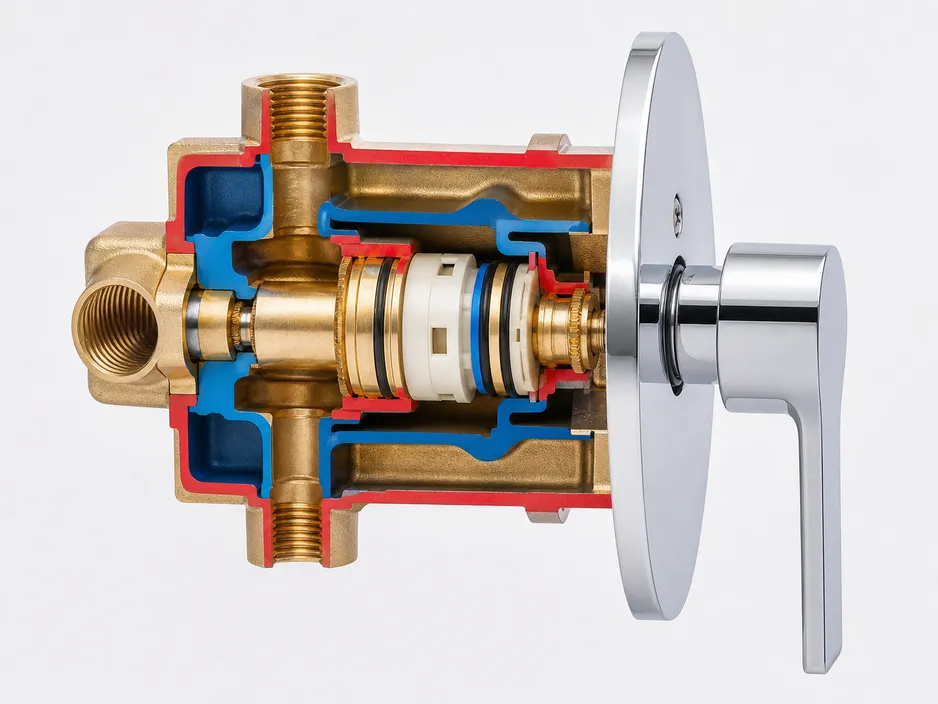
Ceramic Disc Cartridge
Rated for 500,000 open/close cycles. Every production batch is tested — not just new product introductions. The ceramic disc assembly is what keeps the valve seat correctly sealed under pressure cycling over the product's service life.
Batch-tested · 500,000 cycle rating
Threaded Port Interfaces
Inlet ports threaded to 1/2" BSP standard (G1/2), with 3/4" BSP available on request for higher-flow configurations. Outlet port: 1/2" BSP. All threaded interfaces machined to DIN EN ISO 228-1 tolerance class A — the standard your European buyers' plumbers will check against.
Rough-In Box — Included as Standard
Stamped from 1.0mm galvanized steel. Designed to fit between standard 16" on-center stud spacing. Adjustable depth from 60mm to 100mm to accommodate different wall build-up thicknesses — covers most tile-over-drywall and tile-over-cement board configurations without a custom rough-in. This is the detail that generates the most installation questions from contractors.
Ready to Spec This Valve?
Get a quote for concealed shower mixing valves — OEM from 200 pcs, CE and cUPC certified, with full technical documentation for your buyers' plumbers.
Technical Specifications
Standard production values for the concealed shower mixer. Contact us for exact data sheets or to confirm specifications for your specific project requirements.
| Parameter | Specification |
|---|---|
| Body material | C36000-equivalent free-machining brass |
| Cartridge type | Ceramic disc, pressure-balancing |
| Cartridge cycle rating | 500,000 open/close cycles (tested per batch) |
| Inlet connections | 1/2" BSP (G1/2) standard; 3/4" BSP available |
| Outlet connection | 1/2" BSP (G1/2) |
| Working pressure | 0.05–0.8 MPa |
| Hydrostatic test pressure | 1.6 MPa |
| Factory leak test | 0.6 MPa / 60 seconds, 100% of units |
| Rough-in depth adjustment | 60–100mm |
| Stud spacing compatibility | Standard 16" (406mm) on-center |
| Rough-in box material | 1.0mm galvanized steel |
| Trim plate material | Brass with surface finish |
| Available finishes | Chrome, brushed nickel, matte black, PVD gold |
| Certifications | CE, cUPC, WaterMark |
| Temperature range | 5–65°C |
| Flow rate (typical) | 15–20 L/min at 0.3 MPa |
Need project-specific data sheets?
Specifications shown are standard production values. Contact us to confirm exact tolerances or request documentation for your project requirements.
Surface Finish and Trim: What Your Buyer Sees
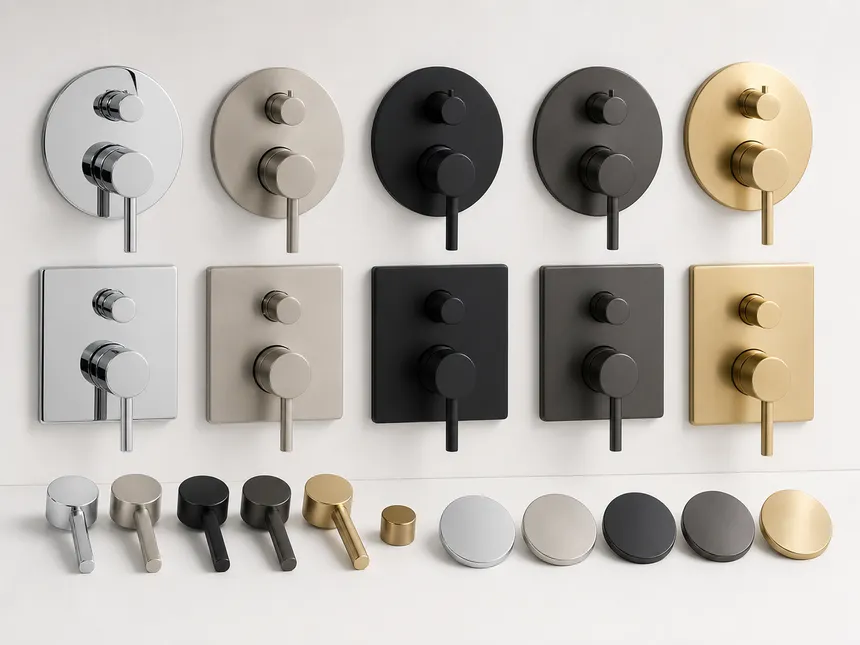
The trim plate and handle are the only visible components after installation — finish quality is what your downstream customer evaluates the product on. We run four finishes in-house on the trim components.
Chrome & Brushed Nickel
Multi-layer electroplating process
Chrome and brushed nickel go through our multi-layer electroplating process — copper base coat, nickel mid-coat, chrome or brushed top coat. The nickel mid-coat is the corrosion barrier; skipping it is a common cost-reduction move in the industry, and it's why you see chrome trim from some factories showing tarnishing in humid bathroom environments within 18 months.
Brushed nickel uses the same plating stack with a mechanical brushing step on the top coat — not a separate process or separate alloy.
Matte Black & PVD Gold
Physical vapor deposition process
Matte black is PVD-applied — physical vapor deposition at 0.3–0.5μm coating thickness, cross-cut adhesion tested on every batch before parts move to assembly. PVD matte black holds up in bathroom environments significantly better than painted or powder-coated black finishes, which is the relevant comparison when your buyer is evaluating warranty risk on a premium-priced SKU. PVD gold uses the same process with a titanium nitride compound layer for the gold tone.
PVD gold uses a titanium nitride compound layer for the gold tone — the same PVD process as matte black, not a separate electroplating line.
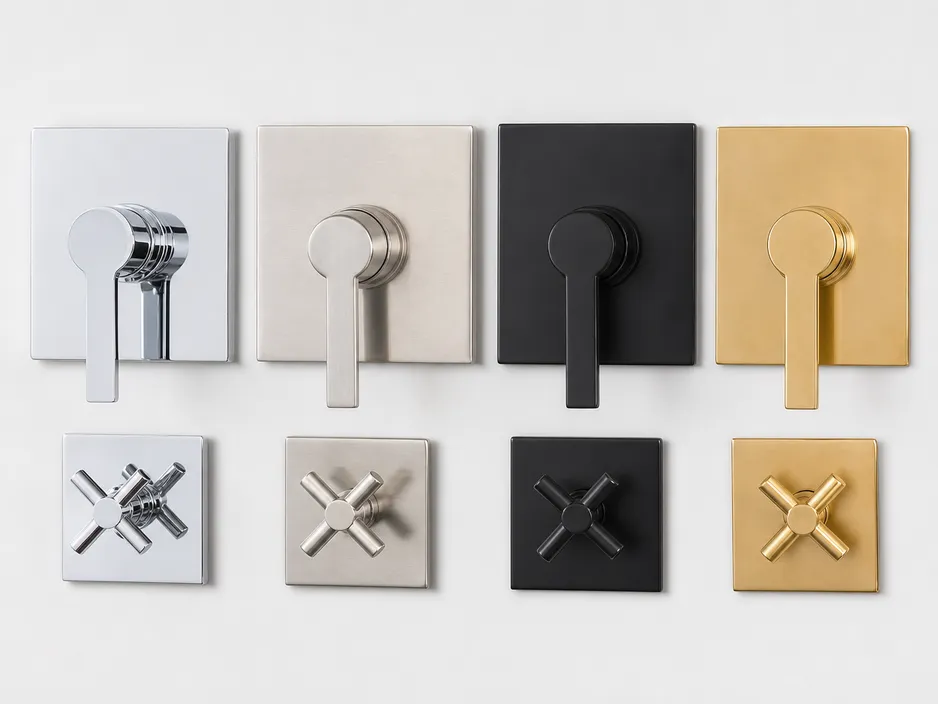
Trim Plate & Handle Options
European split based on buyer order patterns; varies by project aesthetic.
Markets Where This SKU Moves: Commercial Opportunity by Segment
Four distinct buyer channels drive volume for concealed shower mixers. Each has different order patterns, documentation requirements, and margin dynamics — here's how they break down.
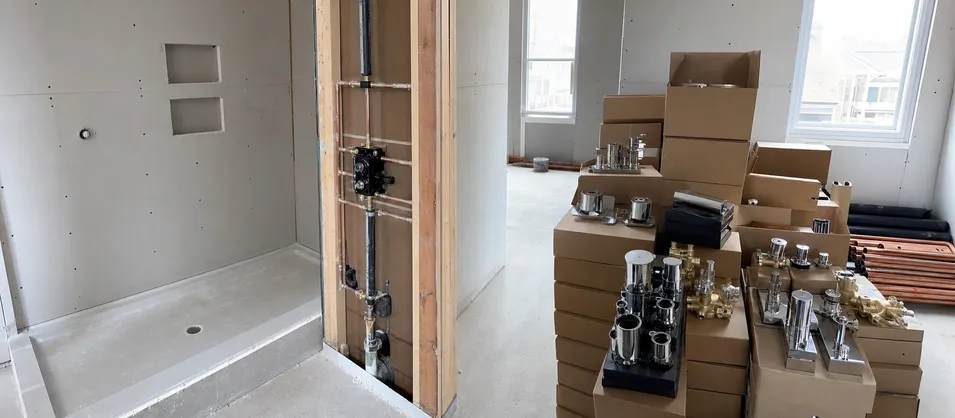
Highest Volume Segment
Residential New Construction Supply Chain
Builders and developers specifying mid-range to premium bathrooms are the highest-volume segment for concealed shower mixers. A 200-unit residential development typically specifies one concealed mixer per bathroom, with 1.5–2 bathrooms per unit average — that's 300–400 units per project.
Active Construction Markets
Distributors supplying builders' merchants or plumbing wholesalers in these markets see consistent volume with predictable reorder cycles tied to construction starts.
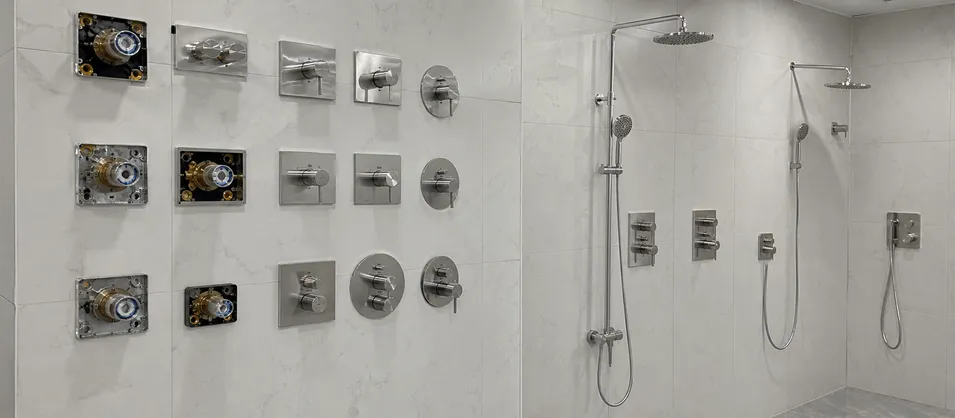
Large Per-Project Quantities
Hospitality and Commercial Fit-Out
Hotels, serviced apartments, and student accommodation projects specify concealed shower valves as standard because exposed valves are a maintenance liability in high-turnover environments. A 150-room hotel fit-out is 150 units minimum, often more if suites have multiple shower outlets.
What Buyers in This Channel Need
- 60–90 day lead time commitments
- CE and WaterMark documentation packages for compliance teams
- Longer lead times offset by larger per-project quantities
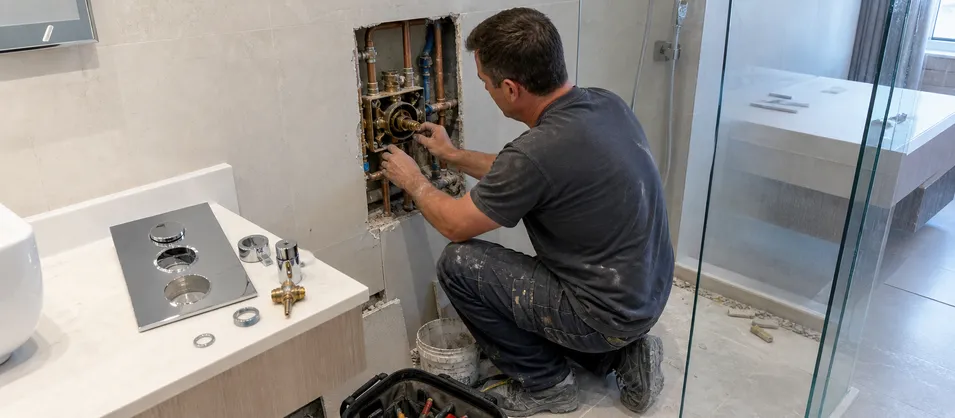
Recurring Revenue Channel
Renovation and Replacement Market
Concealed shower valves installed in the 2008–2015 construction boom are now entering their replacement cycle. The replacement market is particularly valuable for distributors because it's recurring, less price-sensitive than new construction (the homeowner is already committed to the wall opening), and the SKU mix is predictable.
Critical Supplier Requirement for This Channel
Buyers serving this segment need a supplier who can hold consistent trim dimensions across production runs. If the trim plate changes size between orders, the replacement doesn't cover the old tile cutout — a costly problem for the end customer.

Brand Extension
OEM and Private Label for Regional Brands
We supply concealed shower mixers on OEM terms to regional bathroom brands in Europe, Australia, and Southeast Asia who want their own branding on the trim plate and packaging. MOQ for OEM runs starts at 200 pieces — low enough for a regional brand to test a new SKU before committing to a full container.
OEM Program Details
- MOQ from 200 pieces — test before full container commitment
- Custom branding on trim plate and packaging
- Certification extension documentation handled when new brand name is added — no full re-certification from scratch
Find Your Channel
Discuss your target market and volume with us
Whether you're supplying builders' merchants, fitting out a hotel, or building a private label range — we'll match the right program to your channel.
Rough-In Compatibility and Installation Dimensions
This is the section most competitor product pages skip, and it's the one your buyers' plumbers actually need before they commit to a specification. The parameters below cover everything required for new construction planning and renovation compatibility checks.
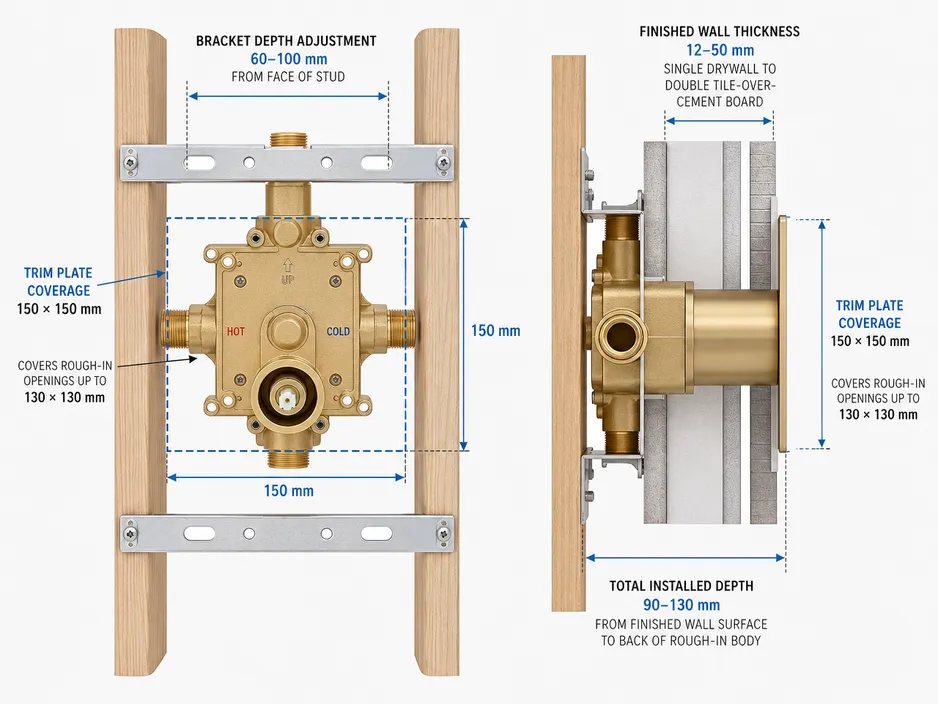
Bracket Depth Adjustment
60–100 mm
From face of stud
Finished Wall Thickness
12–50 mm
Single drywall to double tile-over-cement board
Trim Plate Coverage
150 × 150 mm
Covers rough-in openings up to 130 × 130 mm
Total Installed Depth
90–130 mm
Finished wall surface to back of rough-in body
Rough-In Body and Bracket
The rough-in body installs between wall studs with the supplied galvanized bracket. The bracket adjusts from 60mm to 100mm depth from the face of the stud, covering finished wall thicknesses from approximately 12mm (single drywall layer) to 50mm (double tile-over-cement board).
Supply and Outlet Connections
- Supply connections: 1/2" BSP male threads extending from the back of the body — standard flexible braided hose connections from the supply lines
- Outlet: 1/2" BSP male thread on the front face of the body, connecting to the shower arm or drop ear elbow for the shower head supply
Trim Plate and Handle Dimensions
- Trim plate covers a 150mm × 150mm area, accommodating rough-in openings up to 130mm × 130mm
- Handle spindle protrudes 35mm from the trim plate face at the neutral position
- Total installed depth from finished wall surface to back of rough-in body: 90–130mm depending on depth adjustment setting — the dimension architects need for wall cavity planning in new construction
Supply Line Spacing and Renovation Compatibility
For renovation replacements, the critical compatibility check is the rough-in depth and the supply line spacing. Our supply line centers are 150mm apart (hot left, cold right) per standard convention, which matches the most common rough-in spacing in North American and European construction.
If your buyer is replacing a valve with non-standard supply spacing, we can discuss custom rough-in configurations on OEM orders.
Complete Dimension Reference
| Parameter | Value |
|---|---|
| Bracket depth adjustment range | 60–100 mm from stud face |
| Finished wall thickness range | ~12–50 mm |
| Supply connection thread | 1/2" BSP male (back of body) |
| Outlet thread | 1/2" BSP male (front face) |
| Trim plate coverage area | 150 × 150 mm |
| Max rough-in opening covered | 130 × 130 mm |
| Handle spindle protrusion | 35 mm from trim plate face (neutral) |
| Total installed depth | 90–130 mm (wall surface to body back) |
| Supply line center spacing | 150 mm (hot left, cold right) |
Non-standard supply spacing for renovation replacements can be accommodated on OEM orders — contact us to discuss custom rough-in configurations.
Compliance & Documentation
Certifications and Compliance Documentation
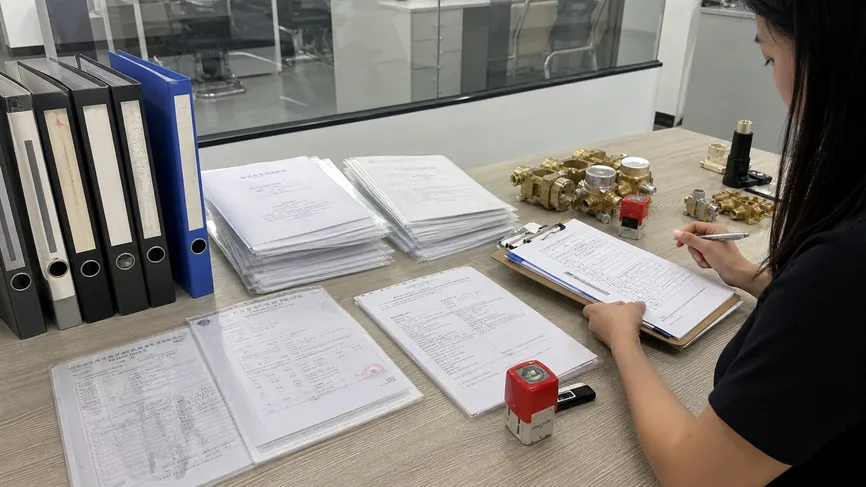
CE, cUPC, and WaterMark — the three certifications that cover the primary export markets our buyers operate in: North America, Europe, and Australia. All from a single factory and a single supplier relationship.
EU Construction Products Regulation
Conformity with EU Regulation 305/2011 for construction products and the relevant harmonized standards for sanitary fittings. Required for legal sale across all EU member states.
IAPMO Listed — UPC & IPC
Tested and listed by IAPMO against the Uniform Plumbing Code and International Plumbing Code — the two model codes adopted across most US states and Canadian provinces.
ABCB Mandatory Certification
Australia's mandatory certification for plumbing products, administered by the Australian Building Codes Board. Required for legal installation in all Australian states and territories.
North American Shipment Documentation
For North American shipments, we prepare the HS code classification and can provide documentation for customs pre-clearance. Test reports travel with the shipment documentation — your compliance team has the data without requesting it separately.
For buyers adding a new brand name or finish variant to an existing certified body, we manage the certification extension documentation with the certification body directly.
Third-Party Audit Reports
SGS third-party audit reports are available on request for buyers whose procurement process requires independent verification beyond the certification bodies.
3
Major market certifications from a single supplier
SGS
Third-party audit reports available on request
Included
Test reports ship with documentation — no separate request needed
OEM & Private Label
OEM and Private Label: Customization Parameters
The concealed shower mixer is one of our more active OEM SKUs — the combination of a certified body with customizable trim makes it a practical private-label product for regional bathroom brands who want differentiated aesthetics without the cost of developing a new rough-in body from scratch.
What Can Be Customized
-
Trim Plate Dimensions
Standard 150mm × 150mm, optional 200mm × 200mm, or custom dimensions on runs of 500+ units.
-
Handle Style
Lever, cross, or custom handle design. Custom tooling required — typically 25–35 days to first sample.
-
Surface Finish
Chrome, brushed nickel, matte black, PVD gold as standard. Custom PVD colors (rose gold, gunmetal, champagne bronze) available on runs of 300+ units.
-
Branding
Logo engraving or embossing on trim plate and handle. Custom packaging with your brand identity.
-
Inlet Configuration
1/2" BSP standard; 3/4" BSP available. Custom port positioning on OEM body tooling.
What Cannot Be Customized Without New Tooling
-
Rough-In Body Geometry
The certified body is a fixed design. Changes to the body require new casting tooling and re-certification.
-
Cartridge Type
The ceramic disc pressure-balancing cartridge is the standard. Thermostatic cartridge is a different product — see concealed thermostatic shower mixer.
MOQ and Lead Times
Standard Catalog Items
Existing finish, standard trim
Custom Finish or Handle
Existing tooling
Custom Trim Tooling
New handle or plate design
Ready to Discuss Your OEM Brief?
Send us your OEM brief or reference product for a detailed quote. We'll confirm customization scope, tooling requirements, MOQ, and lead times specific to your project.
Logistics & Cost Planning
Container Loading and Landed Cost Planning
Accurate container utilization and landed cost data before you confirm the order — so your freight forwarder can quote without surprises.

Packaging Configuration
Concealed shower mixers ship as two components — the rough-in body (boxed separately) and the trim kit — packed together in a single retail carton.
Standard Carton Specs
Container Capacity
We calculate exact CBM and gross weight per SKU before you confirm the order, so your freight forwarder can quote accurately.
20GP Container
2,800–3,200 units
Depending on carton stacking configuration
40HQ Container
6,000–6,500 units
Recommended for high-volume orders
Mixed-SKU Containers
For mixed-SKU containers combining concealed mixers with other products from our range, we coordinate the packing sequence to minimize void space. Exact CBM and gross weight per SKU is calculated before you confirm the order.
Staged Delivery Support
Separate Inner Cartons for New Construction Workflows
The rough-in body and trim kit are packed together but can be separated at the warehouse for staged delivery to job sites. Contractors often want the rough-in bodies delivered during framing and the trim kits held for delivery at finish stage.
We can pack them in separate inner cartons within the same outer carton to support this workflow if your buyer requests it.
Why this matters for new construction
This detail was added after a North American distributor asked us to solve the staged delivery problem. It costs nothing in the packing process and is a genuine service differentiator for buyers supplying the new construction channel.
Staged Delivery Workflow
Concealed Shower Systems Range
Sibling Products in the Concealed Shower Systems Range
This page covers the single-outlet manual pressure-balancing valve. Depending on your buyer's project requirements, other products in the range may be a better fit.
Thermostatic
Concealed Thermostatic Shower Mixer
Projects requiring temperature lock — hospitality, family bathrooms, markets with strict scald prevention codes.
Two-Way
Two-Way Concealed Shower Mixer
Installations with rain head + hand shower, or shower + tub spout — two outlets from one valve.
Three-Way
Three-Way Concealed Shower Mixer
Full multi-outlet shower systems — rain head, hand shower, and body jets from one valve body.
Complete Set
Concealed Shower Set
Buyers who want the valve and shower head supplied as a matched, pre-certified set.
Rough-In Only
Concealed Shower Valve
Rough-in body only, for buyers who source trim separately or supply to contractors who specify their own trim.
Trim Only
Concealed Shower Trim Kit
Trim replacement for existing rough-in bodies — renovation and replacement market.
Not Sure Which Configuration Fits?
Send Us Your Project Spec or Target Retail Price Point
We'll recommend the right SKU and send back a quote with the relevant certification documentation.
Frequently Asked Questions
Specification and procurement questions answered for buyers, engineers, and OEM partners.
What is the difference between a concealed shower mixer and a concealed thermostatic shower mixer?
A pressure-balancing concealed shower mixer (this product) blends hot and cold water manually — the user sets temperature by turning the handle, and the valve maintains a consistent mix ratio as long as supply pressures stay stable. A thermostatic mixer adds a wax-element or cartridge-based thermostat that actively compensates for supply pressure fluctuations to hold a set temperature.
Thermostatic valves are specified where scald prevention is a code requirement (most commercial projects in the UK and Australia, and increasingly in North American hospitality) or where the end user wants set-and-forget temperature control. For standard residential projects without a specific thermostatic code requirement, the pressure-balancing manual mixer is the more cost-effective specification and the higher-volume SKU.
What inlet pressure is required for a concealed shower mixer to function correctly?
The working pressure range for this valve is 0.05–0.8 MPa (0.5–8 bar). Minimum dynamic pressure at the inlet should be at least 0.1 MPa (1 bar) for adequate flow performance.
Low-Pressure Systems
Gravity-fed tanks common in older UK and Australian construction typically require a pump booster upstream of the valve. This is a plumbing design question, not a valve defect.
High-Pressure Systems
For systems above 0.5 MPa, a pressure-reducing valve upstream is recommended to protect the cartridge seals over the long term.
What certifications does this concealed shower mixing valve hold, and which markets do they cover?
Three certifications cover the primary markets our buyers operate in:
European Union markets
United States and Canada (tested against UPC and IPC model codes)
Australia and New Zealand
For markets not covered by these certifications (Middle East, Southeast Asia, specific Gulf states), we can discuss compliance documentation on a project basis — contact us with your target market and we'll advise on what's available.
What is the MOQ for OEM concealed shower mixers with custom branding?
Standard Catalog Items
200 pcs
Custom packaging and logo on existing catalog configurations
Custom Finish / Handle Style
300 pcs
Custom finish colors or handle styles using existing tooling
Custom Trim Tooling
200 pcs
Per production run after tooling approval. New handle or plate design requires tooling investment.
Most new OEM buyers start with a 200-unit trial order on a standard configuration to validate the product with their market before committing to custom tooling.
How do I specify the correct rough-in depth for a concealed shower mixer installation?
The rough-in body adjusts from 60mm to 100mm depth from the face of the wall stud. The finished wall thickness (drywall + tile + adhesive) determines where in that range you set the body.
Tile-Over-Drywall
Set body at 65–70mm depth
Tile-Over-Cement Board
Set body at 75–80mm depth
The trim plate covers the rough-in opening and sits flush against the finished tile surface. The handle spindle length is fixed, so getting the depth right at rough-in is the critical step.
Get a Quote for Concealed Shower Mixers
Send us your target volume, destination market, and any OEM requirements — we'll come back with a detailed quote, the relevant certification documentation, and a recommendation on configuration if you're deciding between SKUs.
Most new buyers start with a sample order of 2–5 units to test the product with their own customers or on a pilot project before committing to a container. We can ship samples within the standard lead time from our production schedule.
What to Include in Your Enquiry
- 1 Target volume — units per order and estimated annual volume if known
- 2 Destination market — country or region, so we can confirm the right certification documentation
- 3 OEM requirements — custom branding, finish, handle style, or packaging if applicable
- 4 SKU questions — if you're deciding between the manual mixer and the thermostatic variant, let us know your project type and we'll advise
Sample Orders Available
Most new buyers start with 2–5 units to validate the product with their own customers or on a pilot project before committing to a container. Samples ship within the standard production lead time.
Also in the Concealed Shower Systems Range