17+ Years Faucet Manufacturing

Stainless Steel &
Specialty Faucets

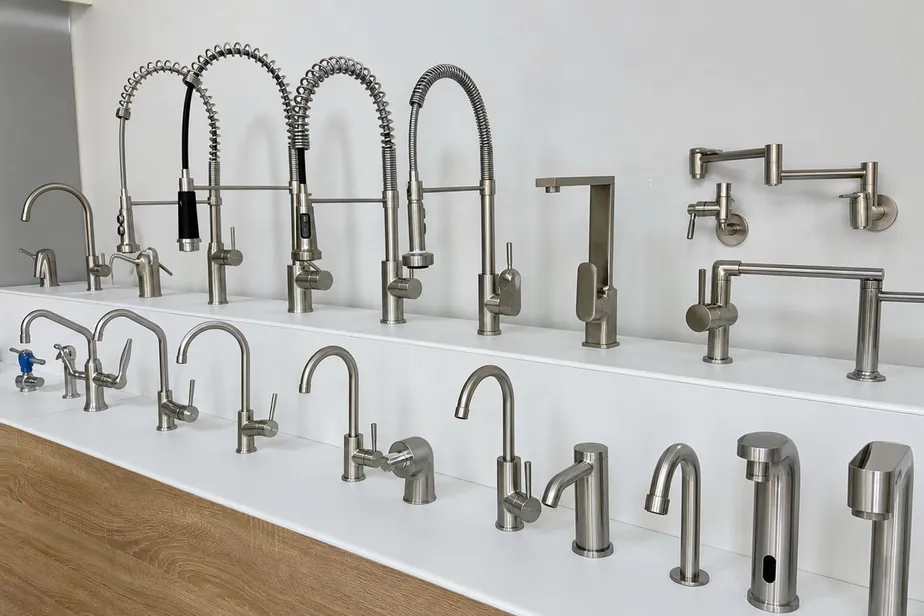
Stainless steel and specialty faucets — manufactured to export standards, sourced from a single factory.

Full line covering stainless steel faucets, sensor faucets, brushed nickel faucets, stainless mixer taps, and brushed finish variants. OEM/ODM from 200 units, with CE, cUPC, and WaterMark documentation ready for your destination market.

17+
Years Manufacturing
6
Production Lines
CE
cUPC · WaterMark
4
Export Markets
Stainless steel and specialty faucets manufactured by Wfaucet — full product line overview

Category Overview

What This Category Covers — and Why It's a Different Sourcing Decision

Most of our product range is brass-bodied. That's the standard for faucets, and it's what we've built our casting and machining infrastructure around. But stainless steel and specialty faucets occupy a distinct segment — one where the material choice, the finish expectations, and the end-market positioning are all different enough that buyers sourcing this category are usually solving a different problem than buyers sourcing standard brass kitchen or bathroom faucets.

Stainless steel faucets — whether 304 or 316 grade — are specified when corrosion resistance is the primary requirement, not just a nice-to-have. Commercial kitchens, food processing facilities, marine-adjacent installations, and outdoor applications all push buyers toward stainless because the environment will eventually defeat a plated brass body.

The same logic applies to sensor faucets in high-traffic public washrooms: the hygiene argument is the sales pitch, but the durability argument is what keeps warranty claims off your desk. Brushed nickel and brushed finish faucets sit in a different lane — they're a finish and aesthetic choice, typically for residential and hospitality distribution where the matte, non-reflective surface commands a margin premium over standard chrome.

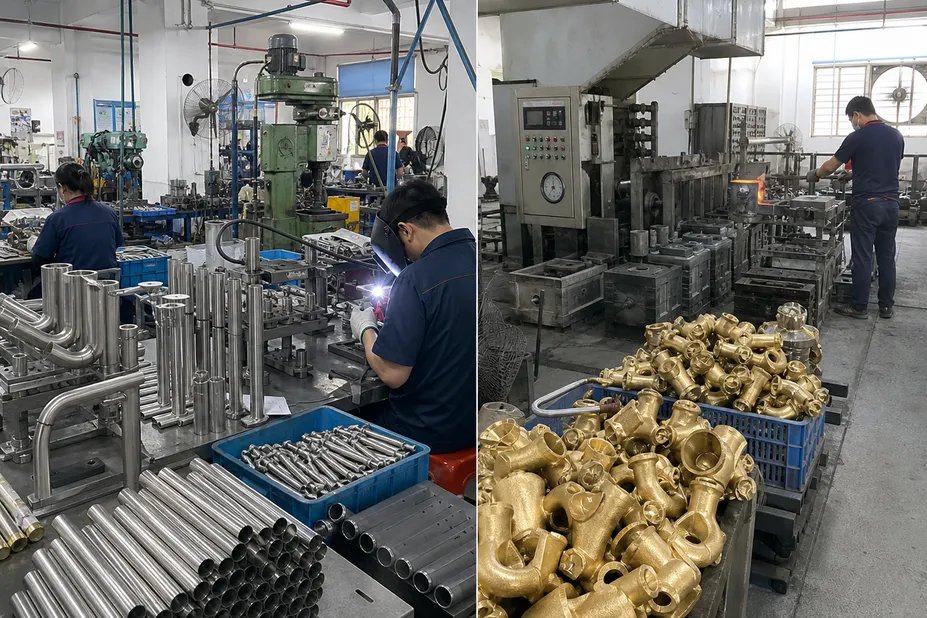
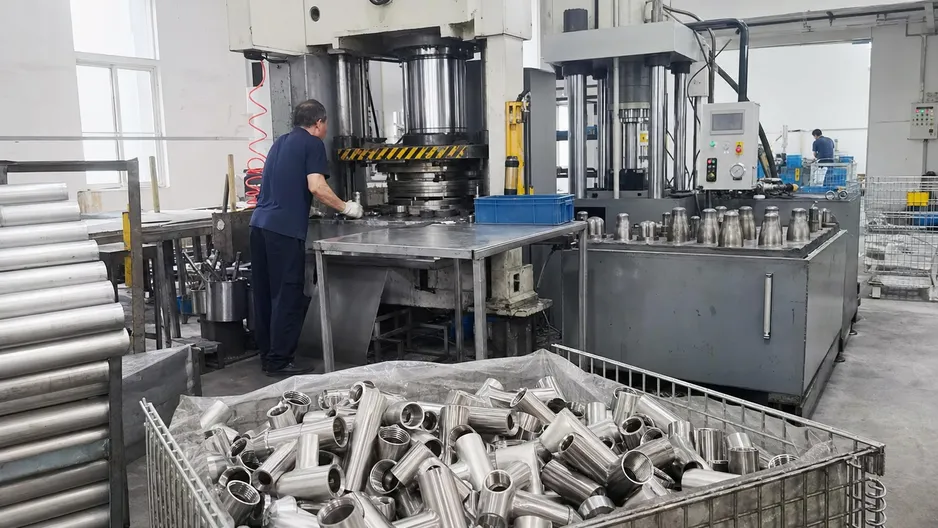
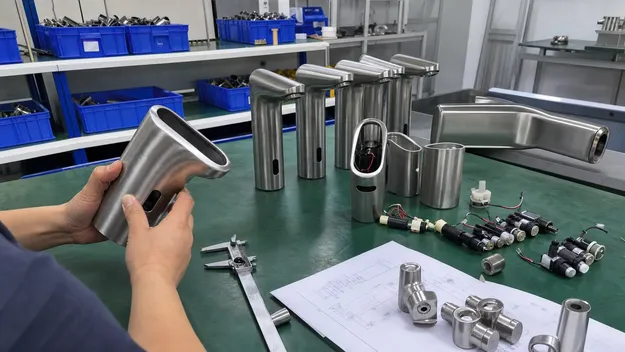
Stainless steel faucet fabrication path — hydroforming and welding versus brass gravity casting at Wfaucet factory

Manufacturing Reality

Three Distinct Manufacturing Processes — Not Three SKUs on the Same Line

We manufacture across all of these variants. Understanding that these are genuinely different manufacturing processes, not just different SKUs on the same line, is relevant to your sourcing decision: it means we've built the capability for each, not just listed them in a catalog.

Stainless Steel Bodies

Run through a separate fabrication path from our brass casting line — hydroforming and welding rather than gravity casting. 304 and 316 grade available depending on corrosion exposure requirements.

Sensor Faucets

Involve electronics integration that our standard faucet assembly doesn't. Specified for high-traffic public washrooms where the hygiene argument drives the sale and durability keeps warranty claims manageable.

Brushed Nickel & Brushed Finish

Share our brass casting infrastructure but go through a different surface finishing sequence. Positioned for residential and hospitality distribution where the matte, non-reflective surface commands a margin premium over standard chrome.

Why Buyers Source This Category Differently

Three buyer profiles, three distinct sourcing rationales

Variant Primary Specification Driver Typical End Application Buyer's Core Problem
Stainless Steel Faucets Corrosion resistance (primary, not secondary) Commercial kitchens, food processing, marine-adjacent, outdoor Environment will defeat plated brass — need material that holds
Sensor Faucets Hygiene (sales pitch) + durability (warranty management) High-traffic public washrooms Reduce touchpoints; keep warranty claims off the desk
Brushed Nickel Faucets Finish and aesthetic (margin premium over chrome) Residential and hospitality distribution Matte, non-reflective surface at a defensible price point
Brushed Finish Faucets Finish and aesthetic (same lane as brushed nickel) Residential and hospitality distribution Surface finish differentiation in a chrome-saturated market
Stainless Mixer Taps Material durability + single-body mixing function Commercial and semi-commercial kitchens, utility installations Corrosion-resistant mixing in demanding environments
Stainless Sink Faucets Material match to stainless sink installations Commercial and residential stainless sink packages Cohesive material spec across sink and faucet in one source

Built Capability, Not a Catalog Listing

The stainless steel bodies run through a separate fabrication path from our brass casting line — hydroforming and welding rather than gravity casting — and the sensor faucet line involves electronics integration that our standard faucet assembly doesn't. The brushed nickel and brushed finish products share our brass casting infrastructure but go through a different surface finishing sequence. We've built the capability for each variant, not just listed them.

Learn more about our factory and manufacturing capabilities

Product Line Overview

Product Line: Six Variants, Three Distinct Market Segments

The six product types in this category break into three commercial segments. Here's how they map, and what each one means for your distribution or project business.

Segment 1 — Core Stainless Steel
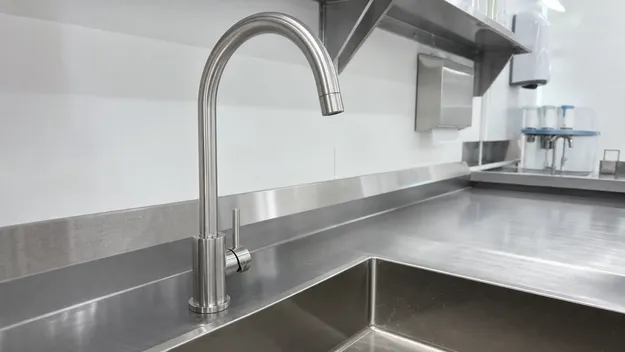
304-grade stainless steel faucet in brushed finish for commercial kitchen and healthcare applications

Core Product

Stainless Steel Faucets

The core stainless product. 304-grade stainless steel body, available in brushed and polished finishes. Specified for commercial kitchens, food service, healthcare, and any installation where chlorinated water, cleaning chemicals, or humid environments would accelerate corrosion on a plated brass body.

Buyer note: Your buyers in food service distribution and commercial fit-out procurement will recognize the spec immediately.

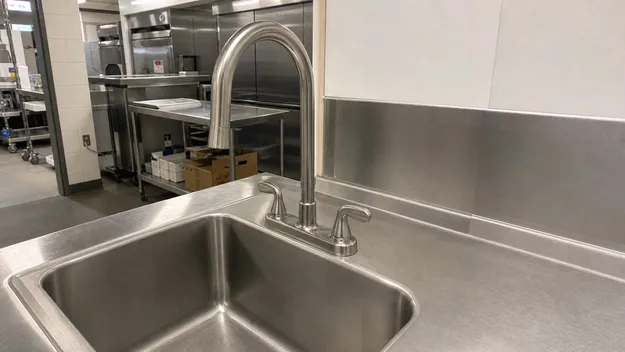
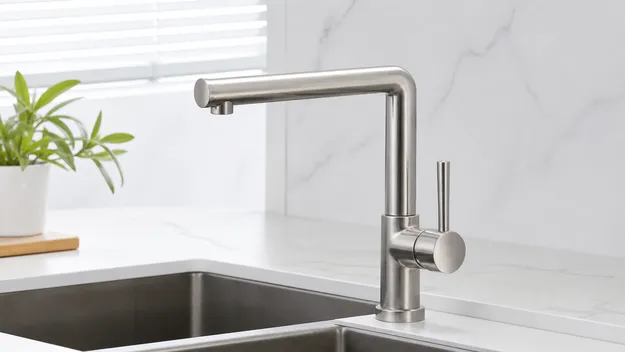
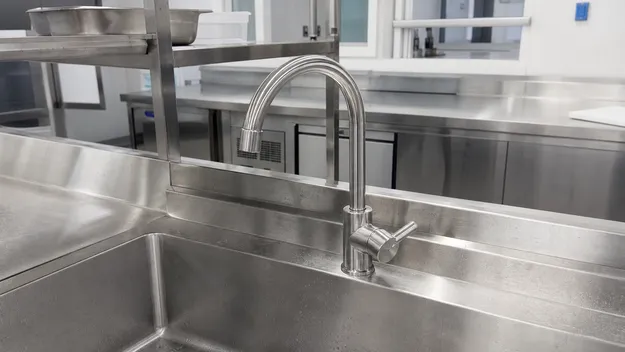
Stainless sink faucet in deck-mount configuration paired with stainless steel sink for commercial kitchen

Sink Pairing

Stainless Sink Faucets

Deck-mount configuration optimized for stainless steel sink pairings. The visual match between a stainless faucet body and a stainless sink is a consistent selling point in commercial kitchen and laboratory supply channels.

Single-hole deck Three-hole deck
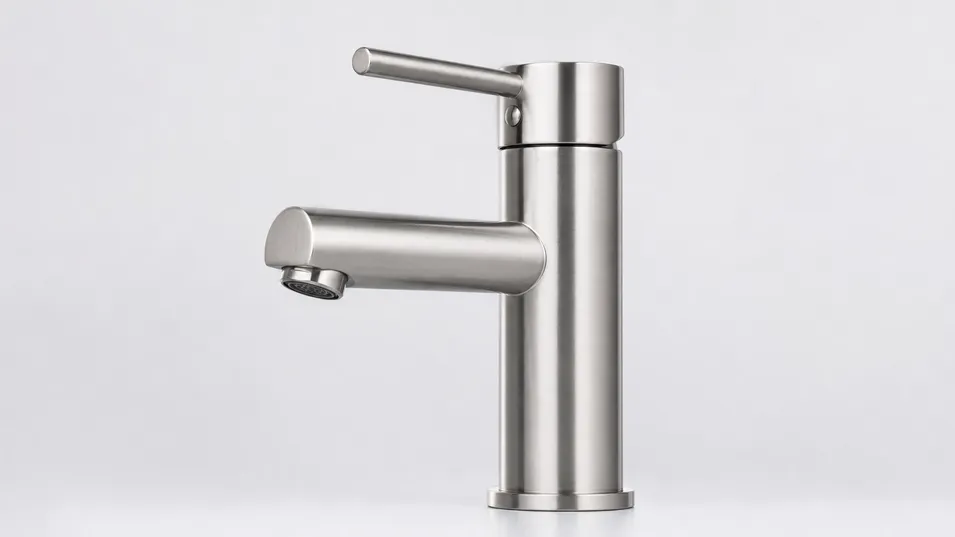
Single-lever stainless steel mixer tap for kitchen and bathroom applications, WaterMark certified

Mixer Format

Stainless Mixer Taps

Single-lever mixer in stainless steel body, covering both kitchen and bathroom applications. The mixer tap format is the dominant configuration in European and Australian markets, and the stainless body version addresses the segment of that market that specifies stainless for durability or aesthetic reasons.

Market note: Moves well for buyers supplying the Australian commercial renovation market — WaterMark certification is already in place.

Segment Context

Why Stainless Steel Commands a Separate Sourcing Decision

Stainless steel faucets are not a finish upgrade on a brass body — they are a different substrate, a different fabrication process, and a different compliance conversation. Buyers specifying for food service, healthcare, or corrosive-environment installations need to confirm material grade, surface treatment, and certification coverage before committing to a supplier. The three products above cover the core stainless configurations; the remaining three segments address sensor, brushed nickel, and brushed finish variants.

Material Grade

304 Stainless Steel

Standard across core stainless line

Finishes Available

Brushed & Polished

Consistent across stainless variants

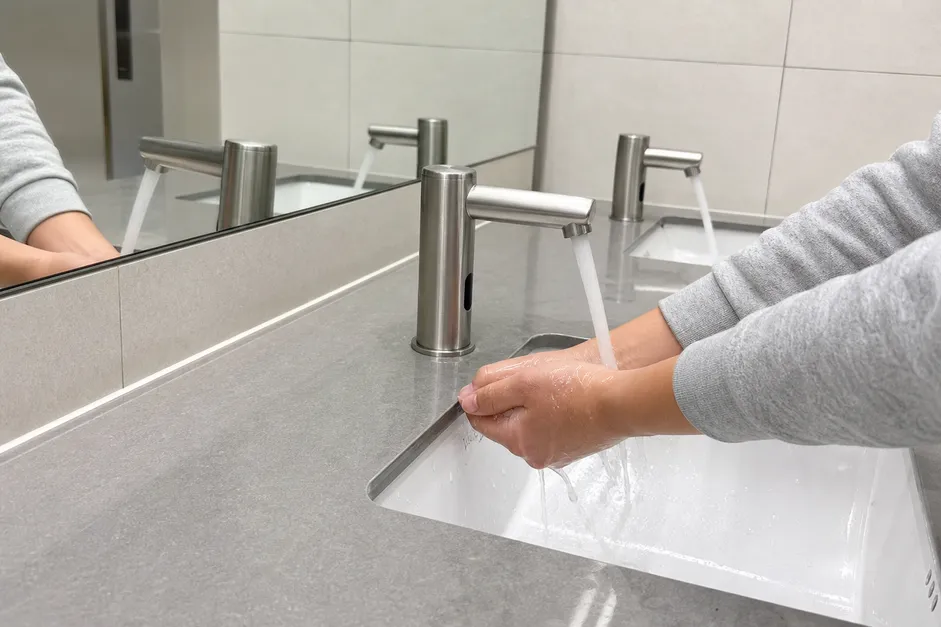
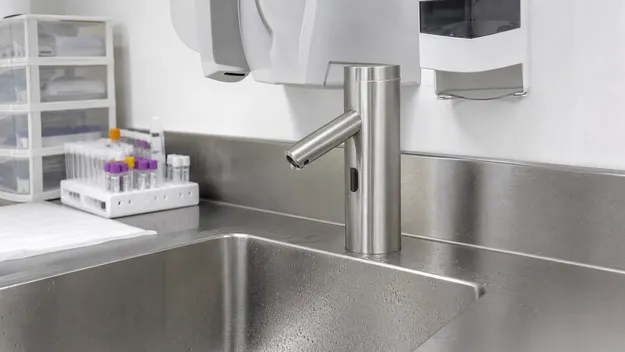
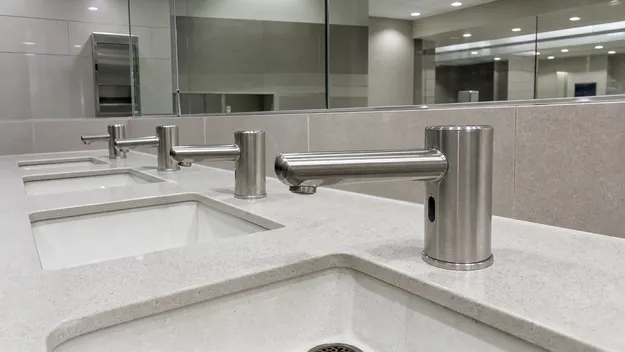
Stainless steel sensor faucet installed in commercial washroom — touchless infrared activation

Commercial & Institutional

Sensor Faucets Touchless Technology for High-Traffic Commercial Installations

Infrared sensor-activated, touchless operation. AC-powered and battery-operated configurations. Stainless steel or chrome-plated brass body options. The commercial case for sensor faucets is straightforward: public washrooms in airports, hotels, office buildings, and healthcare facilities reduce cross-contamination risk and cut water consumption by 50–70% versus manual faucets at the same flow rate. For buyers in commercial fit-out, facilities management supply, or hospitality procurement, sensor faucets are a recurring line item on renovation and new-build projects — not a one-time purchase.

The electronics integration is where manufacturing quality separates quickly. We use IR sensors with a detection range of 15–20 cm and a response time under 0.5 seconds, with a solenoid valve rated for 500,000 cycles. The sensor module is sealed to IP66 against water ingress — relevant for washroom environments where cleaning crews spray down surfaces. Battery life on the DC configuration runs 18–24 months under normal commercial use (roughly 200 activations per day).

Key Technical Parameters

Detection Range

15–20 cm

Response Time

< 0.5 seconds

Solenoid Valve Rating

500,000 cycles

Ingress Protection

IP66

Battery Life (DC)

18–24 months

Power Options

AC / Battery DC

Common failure modes from lower-quality sources: sensor drift after 6 months, solenoid valve leaking at the seat, battery compartment corroding from condensation. Our sensor line went through a 12-month field validation before we added it to the export catalog.

View Sensor Faucet Specifications

Buyer Profile — Sensor Faucets

Sensor faucets serve a distinct procurement channel from residential and light-commercial products. Typical buyers are facilities management distributors, commercial fit-out contractors, and hospitality procurement teams sourcing for multi-site rollouts. Volume per order is higher, specification requirements are tighter, and after-sales support expectations — spare solenoids, sensor modules, battery compartment seals — are part of the commercial relationship. If your customer base includes any of these segments, sensor faucets belong in your catalog as a standing SKU, not a special-order item.

Water Savings vs. Manual

50–70%

at equivalent flow rate

Daily Activations (DC config)

~200

basis for 18–24 mo. battery life

Brushed nickel faucet showing multi-layer electroplating finish

Brushed Finish — Corrosion-Critical

Brushed Nickel Faucets

Brass body with multi-layer electroplating: copper base coat, nickel mid-coat, brushed nickel top coat. The nickel mid-coat is the corrosion resistance layer — factories that skip it to cut cost produce brushed nickel faucets that fail salt spray at 48 hours and show tarnishing within a year in humid climates.

Salt Spray Performance

Our Standard

24–48 hr

minimum pass

Cost-Cut Factories

48 hr fail

tarnish within 1 yr

For buyers in coastal markets or humid climates, that difference shows up as zero warranty claims versus a steady stream of returns.

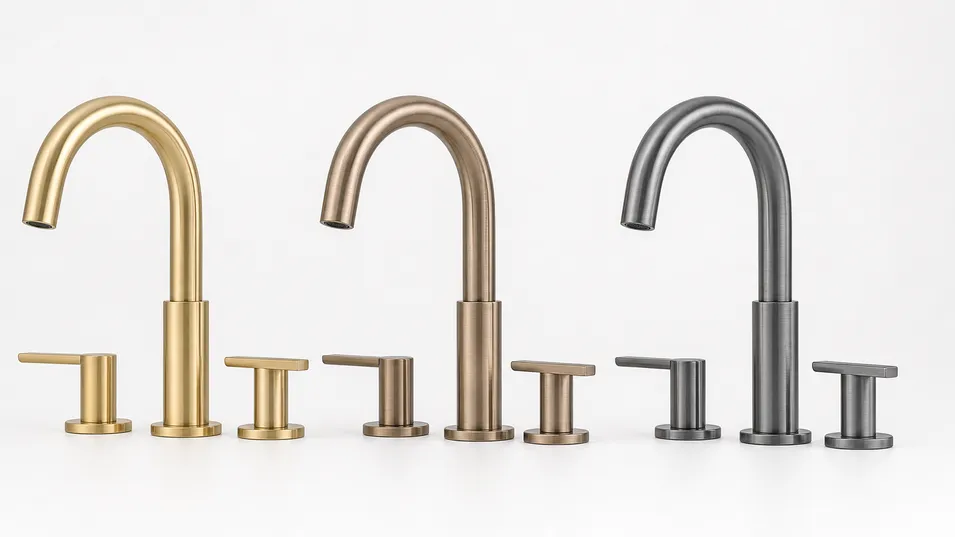
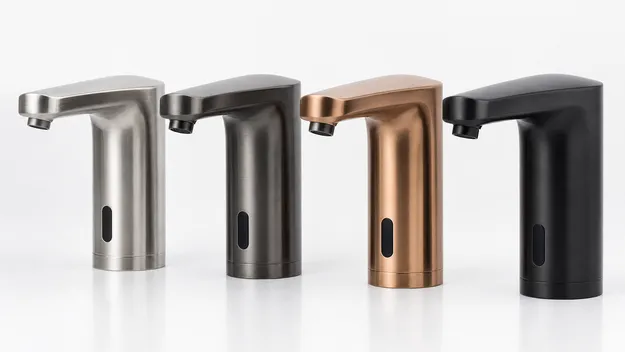
Brushed faucet variants showing PVD gold, champagne bronze, and gunmetal finishes

Brushed Finish — Margin-Premium

Brushed Faucets

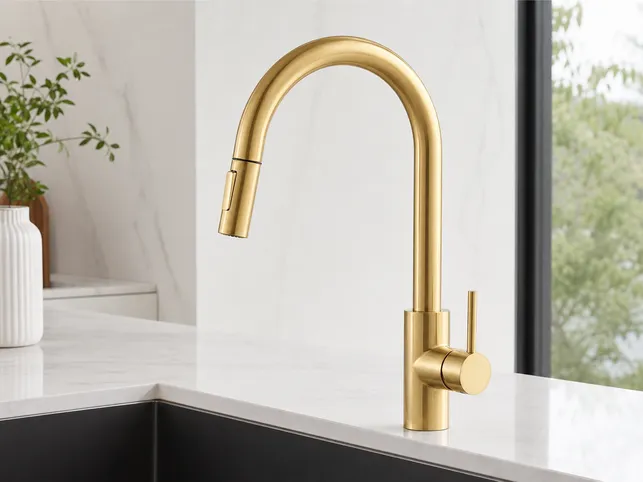
The broader brushed finish category, covering brushed gold (PVD), brushed champagne bronze, and brushed gunmetal variants in addition to brushed nickel. PVD coating runs 0.3–0.5μm thickness, cross-cut adhesion tested per batch.

Finish Variants in This Category

Brushed Gold — PVD, 0.3–0.5μm
Brushed Champagne Bronze — high-margin residential
Brushed Gunmetal — commercial and hospitality
Brushed Nickel — included in this line

Brushed gold and brushed champagne bronze are the finishes driving margin in the current residential renovation market — they retail at a significant premium over chrome, and the manufacturing cost difference is modest enough that the margin expansion is real. This segment has grown substantially over the past three years — worth building into your SKU mix if you're not already there.

Segment 1 — Stainless Core

Stainless Steel · Sink · Mixer

304 / 316 grade, hygienic and corrosion-resistant. Institutional, commercial, and specification-grade residential.

Segment 2 — Sensor / Touchless

Sensor Faucets

Infrared proximity, AC/DC/battery power options. Healthcare, food service, and high-traffic public facilities.

Segment 3 — Brushed Finish

Brushed Nickel · Brushed (PVD)

Multi-layer plating with verified salt spray performance. Residential renovation and hospitality — margin-premium SKUs.

Material Intelligence

Material and Construction: What Separates Stainless Steel from Plated Brass

Buyers sourcing stainless steel faucets for the first time — or switching from a supplier who labeled brass-bodied products as "stainless" — need to know what they're actually specifying. We'll be direct about the distinction because it affects your downstream warranty exposure.

304 stainless steel faucet body fabrication — hydroforming and deep drawing process

Genuine Stainless Steel Body

A genuine stainless steel faucet body is fabricated from 304 or 316 stainless steel sheet or tube stock, formed by hydroforming, deep drawing, or welding. The corrosion resistance is intrinsic to the material — it doesn't depend on a surface coating.

304

304 Grade — Standard

Handles standard water chemistry and most commercial cleaning agents. Sufficient for commercial kitchen and healthcare applications. Our standard grade.

316

316 Grade — Available on OEM Orders

Adds molybdenum to the alloy, improving resistance to chloride-induced pitting. Relevant for marine environments, coastal installations, or applications involving salt water or high-chloride cleaning solutions. The material cost premium is real — we'll tell you honestly whether your application needs it.

Fabrication and Form

Stainless doesn't cast well for faucet bodies — the material properties that make it corrosion-resistant also make it difficult to cast into complex shapes. So stainless faucets are typically simpler in form than brass faucets: cleaner lines, fewer compound curves, more cylindrical or geometric profiles.

That's not a limitation. It's actually aligned with the contemporary design direction that drives the commercial and modern residential segments where stainless faucets sell.

Plated Brass: A Different Product

Brass-bodied faucets with brushed nickel or brushed gold PVD finishes are a different product. The corrosion resistance comes from the plating stack, not the base material.

Done correctly — with the full copper/nickel/chrome or PVD stack and proper pre-treatment — a plated brass faucet performs well in standard residential and commercial environments.

Done incorrectly, the plating fails and the brass substrate corrodes. The quality difference is in the plating process, not in whether the product is labeled "stainless" or "brushed."

Engineering Data

Technical Specifications: Category-Wide Parameter Ranges

Specifications below are category-wide ranges. Individual product pages carry the exact parameters for each SKU.

Parameter Stainless Steel Faucets Sensor Faucets Brushed Nickel / Brushed Finish
Body Material 304 stainless steel (316 on request) 304 stainless or brass Brass (C36000-equivalent)
Finish Options Brushed, polished Chrome, brushed stainless Brushed nickel, PVD gold, brushed champagne bronze, brushed gunmetal
Valve / Cartridge Ceramic disc, 500,000-cycle rated Solenoid valve, 500,000-cycle rated Ceramic disc, 500,000-cycle rated
Operating Pressure 0.05–0.8 MPa 0.05–0.6 MPa 0.05–0.8 MPa
Flow Rate 1.5–8 L/min (aerator-adjustable) 1.5–6 L/min (flow restrictor-adjustable) 1.5–8 L/min (aerator-adjustable)
Temperature Range Cold water / mixed (up to 90°C) Cold water / mixed (up to 60°C) Cold water / mixed (up to 90°C)
Sensor Detection Range 15–20 cm IR
Battery Life (DC sensor) 18–24 months (~200 activations/day)
Salt Spray Rating 48h+ (stainless, no coating required) 24h+ (plated components) 24–48h (brushed nickel); 48h+ (PVD)
Certifications Available
CE cUPC WaterMark SGS
CE cUPC SGS
CE cUPC WaterMark SGS
MOQ (standard catalog) 200 units 200 units 200 units
MOQ (OEM / custom) 200 units 300 units 200 units

Pressure Range Note

Sensor faucets operate within a tighter pressure window (0.05–0.6 MPa) compared to manual faucets (0.05–0.8 MPa). Verify site pressure before specifying sensor models in high-pressure commercial installations.

Temperature Ceiling

Sensor faucets are rated to 60°C mixed water — lower than the 90°C ceiling for manual stainless and brushed finish models. Relevant for applications with high-temperature supply lines or steam-adjacent environments.

Per-SKU Data Sheets

The table above covers category-wide ranges. Exact tolerances, connection sizes, spout reach, and installation dimensions are on each product page. Request a full technical data sheet for any SKU via the sourcing inquiry form.

Market Intelligence

Application Segments: Where These Products Move

Understanding which market segments buy which products helps you build the right SKU mix for your distribution business.

Stainless steel faucet in commercial kitchen food service environment

Food Service

Commercial Kitchens and Food Service Supply

Stainless steel faucets and stainless mixer taps are standard specification in commercial kitchen fit-out. Health codes in most markets require or strongly prefer stainless in food preparation areas.

Typical Buyers

Restaurant equipment dealers, commercial kitchen contractors, institutional catering operations — hospitals, schools, corporate cafeterias.

Order pattern: 200–500 units per order, multiple times per year

Sensor faucet in healthcare and laboratory facility

Healthcare & Lab

Healthcare and Laboratory Facilities

Sensor faucets address infection control requirements in clinical environments; stainless faucets address chemical resistance requirements in laboratory settings.

Procurement Channel

Healthcare procurement in North America often runs through GPO (Group Purchasing Organization) channels — cUPC certification is a prerequisite, not a differentiator.

Key requirement: cUPC documentation — our standard shipment package covers this

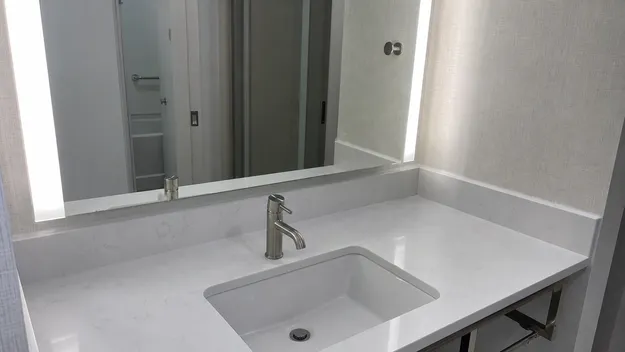
Brushed nickel faucet in hospitality hotel bathroom renovation

Hospitality

Hospitality and Commercial Renovation

Brushed nickel and brushed finish faucets are the primary finish choices in mid-to-upper hospitality renovation. They photograph well, resist fingerprints, and hold appearance longer than chrome in high-use environments.

Project Scale

A 200-room hotel renovation might specify 400–600 faucets across bathroom and vanity applications. Sensor faucets appear in lobby washrooms and public areas of the same projects.

Finish mix: Brushed nickel, brushed gold, champagne bronze — plus sensor faucets for public areas

Sensor faucet in airport transit station public washroom

Institutional

Public Facilities and Institutional Buildings

Airports, transit stations, government buildings, and large office complexes are the core sensor faucet market. These buyers prioritize durability and low maintenance over price.

Specs That Matter to Facilities Managers

500,000-cycle solenoid valve rating

IP66 sensor sealing

A sensor faucet failure in a high-traffic airport washroom creates an immediate operational problem — durability is non-negotiable

Brushed gold PVD faucet for premium residential and e-commerce distribution

Residential & E-Commerce

Residential Distribution and E-Commerce

Brushed nickel and brushed gold faucets are the finish choices driving the premium residential market. Distributors supplying plumbing showrooms, kitchen and bath retailers, or e-commerce platforms in North America and Europe are seeing brushed finishes outperform chrome in the mid-to-upper price tier.

Margin Structure

40–80%

Retail premium over equivalent chrome products

15–25%

Manufacturing cost premium for brushed gold PVD

That spread between retail premium and manufacturing cost is where your margin lives.

Segment-to-Product Quick Reference

Which product lines align with each buyer segment

Segment Primary Products
Commercial Kitchens
Healthcare & Lab
Hospitality Renovation
Public & Institutional
Residential & E-Commerce
Due Diligence

Sourcing Stainless Steel Faucets: What to Verify Before You Commit

The stainless steel faucet category has a well-known quality problem: products labeled "stainless steel" that are actually chrome-plated brass, or that use thin-gauge stainless that corrodes at weld seams within 12–18 months. Here's what to check.

Check 1

Verify the Body Material

304 stainless is non-magnetic (or very weakly magnetic at weld points). If a faucet labeled "stainless steel" sticks firmly to a magnet, the body is likely iron-based or the stainless content is insufficient.

Quick Field Test

Magnet test — 304 SS should not attract firmly

Definitive Test

XRF analysis — gives alloy composition directly; request material test report from steel supplier

Check 2

Check Weld Seam Treatment

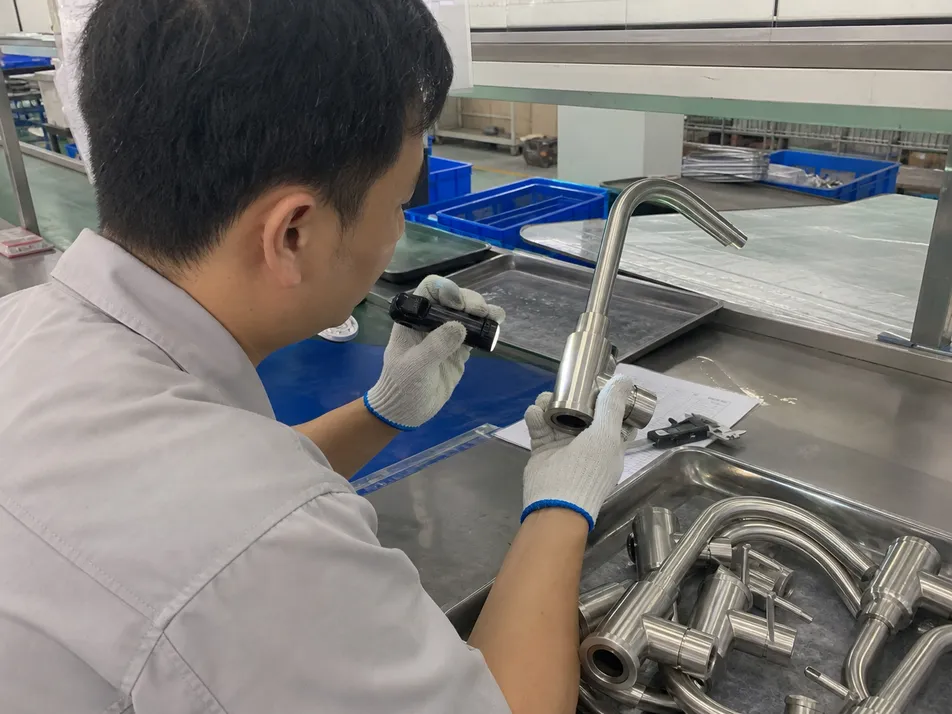
The most common failure point in stainless faucets is corrosion at weld seams, where the heat-affected zone has reduced chromium content. Proper post-weld treatment prevents this.

Passivation

Acid treatment to restore the chromium oxide layer at weld seams

Electropolishing

Alternative post-weld treatment — ask for process documentation

We passivate all stainless weld seams as a standard step before final finishing.

Stainless steel faucet quality verification weld seam passivation process

Check 3 — Sensor Faucets

Request the Solenoid Valve Cycle Test Report

A solenoid valve rated for 100,000 cycles will fail in under two years in a high-traffic commercial installation.

Insufficient

100K

cycles — fails under 2 years in high-traffic use

Commercial Grade

500K

cycles — minimum for public/institutional installs

Check 4

Request Actual Certification Documents

A supplier claiming "cUPC certified" should be able to provide the certificate number and the issuing lab. Verify it against the IAPMO or NSF database — certificate numbers are publicly searchable.

Ask for the certificate number, not just a logo on a spec sheet

Cross-reference at iapmo.org or nsf.org product databases

Confirm the listed model number matches what you're ordering

Check 5

Confirm Wall Thickness and Gauge

Thin-gauge stainless (under 1.0 mm) is prone to denting, vibration noise, and accelerated corrosion at stress points. Commercial-grade faucet bodies should use 1.2–2.0 mm wall thickness depending on the component.

Avoid

<1.0mm

budget grade

Acceptable

1.0mm

light residential

Commercial

1.2–2mm

spec standard

Red Flags in Supplier Listings

These patterns appear frequently in low-quality stainless faucet listings. Treat each as a reason to ask harder questions.

"Stainless steel" listed as finish, not body material

No alloy grade specified (304 vs 201 vs 430)

Certification logos without verifiable certificate numbers

Solenoid cycle rating absent or under 200,000 cycles

Wall thickness not disclosed in spec sheet

No mention of post-weld passivation or treatment process

Get Our Supplier Verification Checklist

A one-page PDF covering all five checks above, formatted for use during factory audits or pre-order sample evaluation. Used by our procurement team on every new supplier qualification.

Request Checklist
FAQ

Frequently Asked Questions

Answers to the questions buyers and specifiers ask most often about stainless steel faucets.

Q

Is 304 stainless steel better than brass for faucets?

It depends on the application. 304 SS outperforms brass in corrosion resistance (especially in coastal or high-chloride environments), lead-free compliance, and hygienic surface properties. Brass has advantages in machinability and is easier to produce complex valve bodies with. For commercial kitchens, healthcare, and public installations, 304 SS is generally the preferred specification. For residential applications where complex mixing valve geometry is needed, brass bodies with stainless exteriors are common.

Q

What does cUPC certification actually mean for a faucet?

cUPC (Canadian Uniform Plumbing Code) certification means the faucet has been tested and listed by an accredited third-party lab (typically IAPMO) to meet both US and Canadian plumbing code requirements. For faucets, this covers flow rate, pressure performance, lead content in wetted surfaces, and basic durability. It's a minimum requirement for commercial installation in most US and Canadian jurisdictions — not a premium quality indicator, but a baseline compliance threshold.

Q

Why do stainless steel faucets rust at the base or spout?

The most common cause is inadequate post-weld treatment. When stainless steel is welded, the heat-affected zone loses chromium to the surface, reducing corrosion resistance. Without passivation (acid treatment to restore the chromium oxide layer), these zones corrode first — typically appearing as rust staining at weld seams, mounting holes, or where the spout meets the body. The second common cause is using 201-grade stainless (lower nickel content) while labeling it as 304.

Q

What's the difference between brushed nickel and brushed stainless?

Brushed nickel is a finish applied over a base material (usually brass) — it's a nickel-plated surface with a brushed texture. Brushed stainless refers to the mechanical surface treatment (brushing/satin finishing) applied directly to a stainless steel body. Brushed stainless is more durable because the finish is integral to the material, not a coating that can chip or wear through. PVD-coated brushed finishes on stainless combine both: a stainless body with a PVD color layer that has 4–5× the hardness of standard plating.

Q

Can sensor faucets work with both AC power and battery?

Yes — most commercial-grade sensor faucets support both power modes. AC-powered units (typically 6V DC via transformer) are preferred for high-traffic installations where battery replacement would be frequent. Battery-operated units (usually 4×AA or 6V lithium) are used where running power to the sink is impractical. Some models include a hybrid mode that uses AC primary with battery backup. Battery life varies significantly by solenoid quality — a well-engineered solenoid draws less current per cycle, extending battery life from 6 months to 2+ years at comparable traffic levels.

Q

What MOQ and lead times should I expect for OEM stainless faucets?

For standard catalog models with custom branding (logo, packaging), MOQ is typically 200–500 units per SKU with 30–45 day lead times from order confirmation. For custom body geometry or non-standard finishes, MOQ rises to 500–1,000 units and lead times extend to 60–90 days including tooling. Sample lead times for pre-production approval are typically 7–15 days. These ranges vary by factory — ask specifically about tooling ownership and whether you can take tooling if you switch suppliers.

Q

How do I specify the right flow rate for a commercial installation?

Flow rate selection depends on application type and local code. For handwashing (healthcare, food service, public restrooms), 0.5 GPM is the WaterSense standard and meets most code requirements. For kitchen prep sinks requiring rinsing volume, 1.5–2.2 GPM is typical. Check local jurisdiction requirements — California, for example, mandates ≤1.8 GPM for kitchen faucets and ≤0.5 GPM for lavatory faucets in commercial buildings under CALGreen. Aerator selection is the easiest way to adjust flow rate post-production without changing the faucet body.

Q

Does 316 stainless make sense for faucets, or is 304 sufficient?

316 SS (with 2–3% molybdenum) is warranted in marine environments, coastal installations within ~1 mile of saltwater, or applications involving chloride-heavy cleaning chemicals. For standard commercial kitchens, healthcare, and hospitality, 304 SS with proper passivation is sufficient and more cost-effective. The cost premium for 316 is typically 20–30% on material, which is only justified when the environment genuinely demands it. Specifying 316 for an inland office building is over-engineering; specifying 304 for a beachfront resort kitchen is under-engineering.


Work With Us

Ready to Source Stainless Steel Faucets?

Whether you need catalog products with custom branding, OEM development for a new product line, or a verified supplier for a large commercial project — start with a conversation. We respond to qualified inquiries within one business day.

Catalog + Private Label

Standard product lines with your branding. MOQ from 200 units. 30–45 day lead time.

OEM Custom Development

Custom geometry, finishes, and specifications. MOQ from 500 units. Full tooling support.

Project Specification

Large commercial or hospitality projects. Spec sheets, samples, and compliance documentation provided.

Send an Inquiry

Tell us about your project and we'll follow up with relevant product options and pricing.

We respond to qualified inquiries within one business day. No spam, no unsolicited follow-ups.

Custom Manufacturing

OEM and Custom Development for This Category

The stainless steel and specialty faucet category has more OEM activity than our standard brass faucet lines, for a straightforward reason: buyers in commercial and institutional channels often need products that match an existing specification, a project architect's drawing, or a branded product line. The standard catalog covers most needs, but custom work is common.

Stainless steel faucet OEM hydroforming tooling process

Stainless Steel Faucets

OEM customization typically involves body profile, spout reach and height, handle configuration, and connection type. We work from 2D drawings or reference samples.

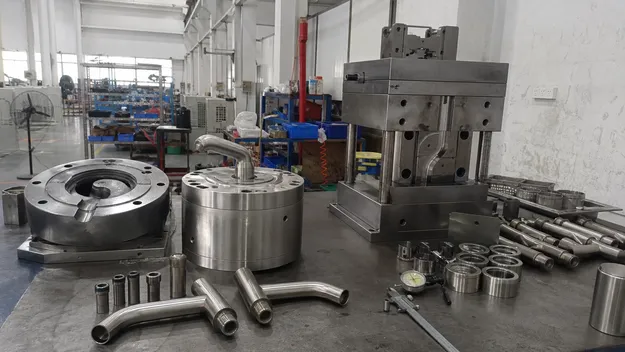
Tooling note: Stainless faucet bodies use hydroforming dies — not casting dies. Tooling cost and lead time differ from brass OEM work. We'll give you an honest assessment of whether your design is cost-effective to tool versus adapting an existing body.

Custom sensor faucet housing OEM development

Sensor Faucets

OEM work often involves housing design — to match an existing washroom aesthetic or a branded product line — while retaining our validated sensor and solenoid valve internals.

Practical use case: We've done this for buyers who had an existing sensor faucet line from another supplier and needed to transition to a more reliable internal mechanism without changing the external appearance. The electronics validation work is already done — you're customizing the housing, not re-engineering the sensor system.

Brushed finish faucet PVD color matching OEM

Brushed Finish Faucets

OEM customization is primarily finish specification and handle or spout profile changes. Custom PVD color matching is available on runs over 500 units.

Scope: Finish specification, custom PVD color matching (500+ units), handle profile changes, spout profile changes.

MOQ — All Variants

200 units

Minimum across all variants in this category

New Tooling — First Sample

25–35 days

Lead time for new tooling development

Existing Body Modifications

15–20 days

Lead time for modifications to existing catalog bodies

Explore OEM/ODM Capabilities

Questions about tooling cost or design feasibility? Contact us before committing to a direction.

Compliance & Standards

Certifications for Your Destination Market

Stainless steel and specialty faucets ship to markets with different compliance requirements. Here's what we hold and what it covers.

cUPC

US & Canada

North American plumbing code compliance. Required for sale in the US and Canada through licensed plumbing channels.

NSF 61/372 lead content Pressure & flow performance Material standards

Covers stainless steel and brushed nickel faucet lines.

CE

European Union

European conformity marking. Required for sale in EU markets.

Material safety Pressure ratings EN 817 & EN 200

Sensor faucets carry CE certification. Covers flow performance under EN 817 and EN 200 standards.

WaterMark

Australia & NZ

Australian standards compliance (AS/NZS 3718). Required for sale through licensed plumbing channels in Australia and New Zealand.

AS/NZS 3718 Licensed plumbing channels

Stainless mixer taps and brushed nickel faucets carry WaterMark certification.

SGS

Third-Party Verification

Third-party testing and audit. SGS test reports are available for all product lines.

Material composition Salt spray performance Endurance testing

Useful for buyers whose import process requires third-party verification independent of manufacturer-issued documentation.

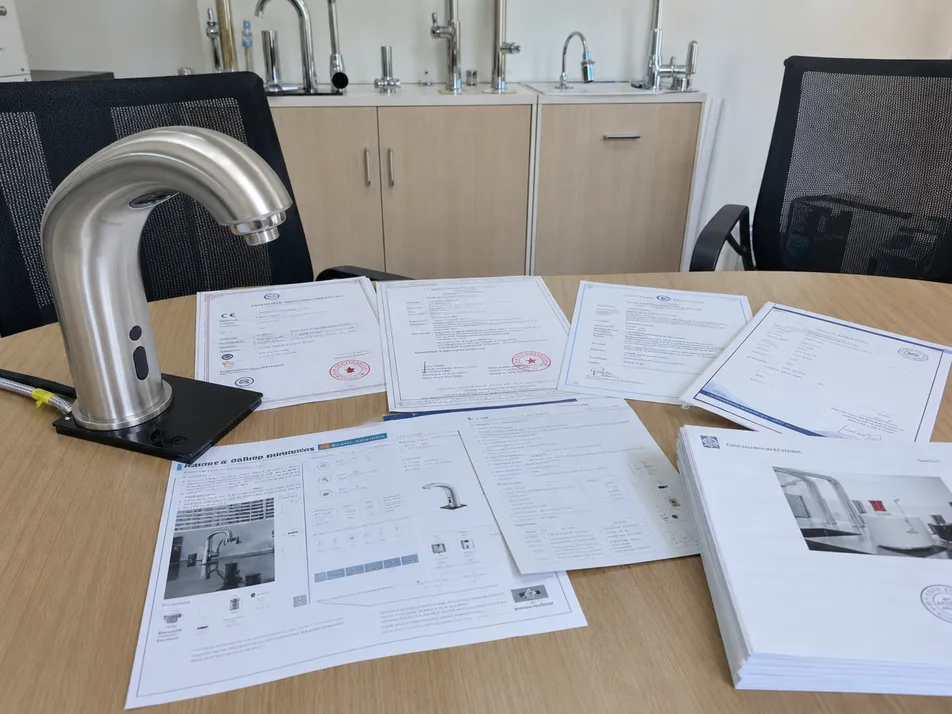
Wfaucet certification documentation for stainless steel faucets

Sensor Faucet Certifications

Sensor faucets carry both CE and cUPC certification, covering EU and North American market requirements.

CE cUPC

Need a Certification Not Listed Here?

If your destination market requires a certification not listed here, contact us. We've navigated certification extensions for new markets before and can assess the timeline and cost.

Discuss your market requirements

Certification Coverage by Product Line

Product Line cUPC CE WaterMark SGS
Stainless Steel Faucets
Brushed Nickel Faucets
Sensor Faucets
Kitchen Faucets

Certification Documents Available on Request

Full certification documents, test reports, and SGS audit records are available to qualified buyers. Request a documentation package when you inquire about a product line.

Common Questions

Frequently Asked Questions

Answers to the questions buyers ask most often before placing a first order.

Have a question not covered here?

Ask us directly
Buyer FAQ

Frequently Asked Questions

Decision-support answers for procurement, specification, and quality verification.

What is the difference between 304 and 316 stainless steel for faucets, and which do I need?

304 stainless steel is the standard specification for commercial and residential faucets. It handles normal water chemistry, standard cleaning agents, and most commercial environments without corrosion issues. 316 stainless adds molybdenum, which improves resistance to chloride-induced pitting — the failure mode that occurs when stainless is exposed to salt water, high-chloride cleaning solutions, or marine environments.

For most commercial kitchen, healthcare, and residential applications, 304 is sufficient and the right cost choice. Specify 316 if your application involves direct salt water contact, coastal outdoor installation, or industrial cleaning chemicals with high chloride content. We supply 316 on OEM orders — ask us if you're unsure whether your application warrants it.

How do I verify that a faucet labeled "stainless steel" is actually stainless and not chrome-plated brass?

Two practical checks: first, a magnet test — 304 stainless is non-magnetic or very weakly magnetic, while iron-based or brass bodies with chrome plating will respond differently. Second, request the material test report (XRF analysis or mill certificate) from the supplier.

Any factory producing genuine stainless steel faucets will have incoming material test reports from their steel supplier. If a supplier can't produce material documentation, treat the "stainless steel" claim as unverified.

What sensor faucet specifications matter most for high-traffic commercial installations?

Three specs drive long-term performance in commercial washrooms:

  • Solenoid valve cycle rating — 500,000 cycles minimum for commercial-grade. Lower-rated valves fail within 18–24 months at 200+ activations per day.
  • Sensor IP rating — IP66 minimum to survive cleaning crew spray-down.
  • Sensor response time — under 0.5 seconds. Slower response creates user frustration and perceived malfunction.

Battery life matters for DC-powered units: 18–24 months at commercial use rates means annual battery replacement, which is manageable. 6-month battery life creates a maintenance burden that facilities managers will blame on the product.

What is the minimum order quantity for stainless steel faucets, and can I mix SKUs?

MOQ is 200 units for standard catalog items. You can mix SKUs within the same product family to reach the MOQ — for example, 100 units of stainless sink faucets and 100 units of stainless mixer taps.

For OEM orders with custom tooling, MOQ is also 200 units per SKU. Sensor faucets have a 300-unit MOQ on OEM configurations due to the electronics component procurement minimums.

How does brushed nickel faucet quality vary between suppliers, and what should I check?

The quality variable in brushed nickel is the plating stack. A full-quality brushed nickel finish runs copper base coat, nickel mid-coat, and brushed nickel top coat — the nickel mid-coat is the corrosion resistance layer.

Factories cutting cost skip the nickel mid-coat or reduce its thickness, producing a finish that looks identical on day one but fails salt spray at 48 hours and shows tarnishing in humid environments within 12–18 months.

Request the salt spray test report: 24-hour minimum is the industry floor, 48-hour is the standard for quality product. If a supplier can't provide a salt spray test report, the plating process is unverified.

What stainless steel faucet certifications are required for the North American market?

cUPC certification is the primary requirement for sale through licensed plumbing channels in the US and Canada. cUPC covers lead content compliance (NSF 61/372 — maximum 0.25% weighted average lead content in wetted surfaces), pressure and flow performance, and material standards. For California specifically, AB 1953 (the "no-lead" law) applies — cUPC certification covers this requirement.

Some commercial procurement channels also require NSF 61 certification separately from cUPC; we can provide documentation on which of our products carry NSF 61 listing.

Start Your Sourcing Conversation

Tell Us Your Requirements.
We'll Send Back a Quote.

Tell us your target market, the application environment, and your volume expectations — we'll recommend the right configuration from this line and send back a quote with the relevant certification documentation for your destination market.

If you're currently sourcing stainless faucets from another supplier and seeing quality issues, send us a sample or a photo of the failure mode. We can usually identify the manufacturing root cause and tell you whether our process addresses it.

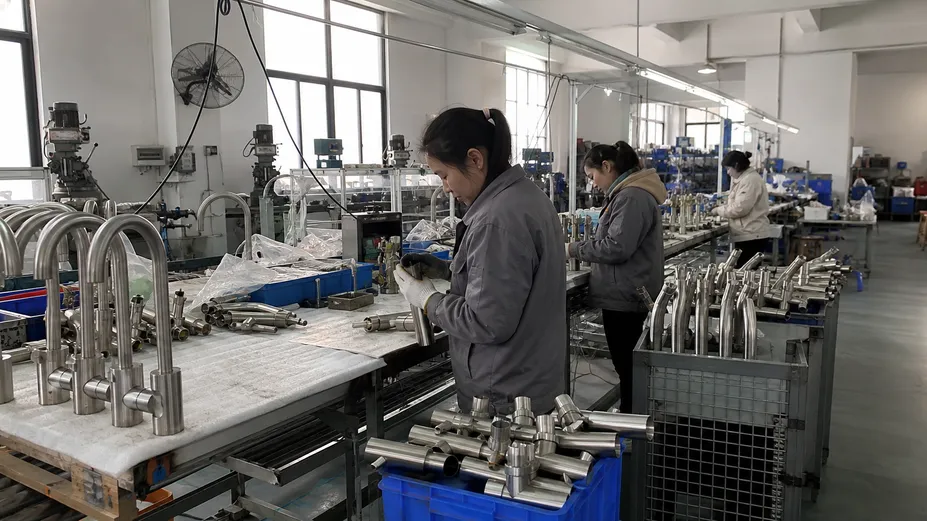
Wfaucet stainless steel faucet manufacturing facility

Manufacturer since 2008. ISO 9001 certified production. Full documentation — material test reports, salt spray results, and market certifications — available on request.

17+

Years Manufacturing

200

Unit MOQ

ISO

9001 Certified