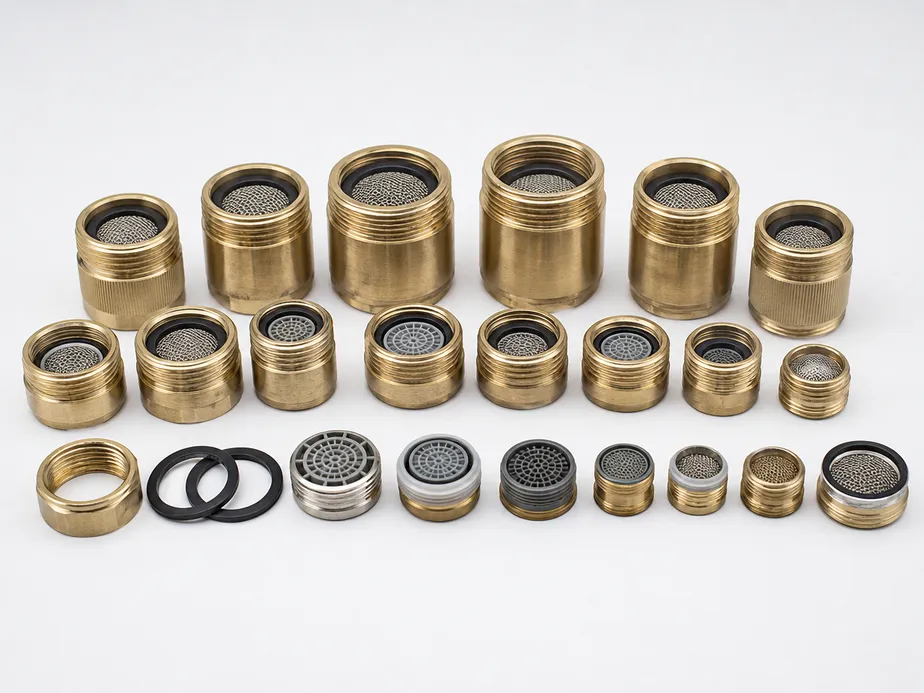

Brass-body bathroom faucet aerators built to thread spec, flow spec, and market compliance — ready for OEM labeling or catalog listing. Standard and low-flow configurations available. Thread sizes from M16 to M24, male and female, internal and external. Certifications on file for North America, Europe, and Australia.
Flow Range
0.5 – 2.2 GPM
Thread Sizes
M16 – M24
Product Overview
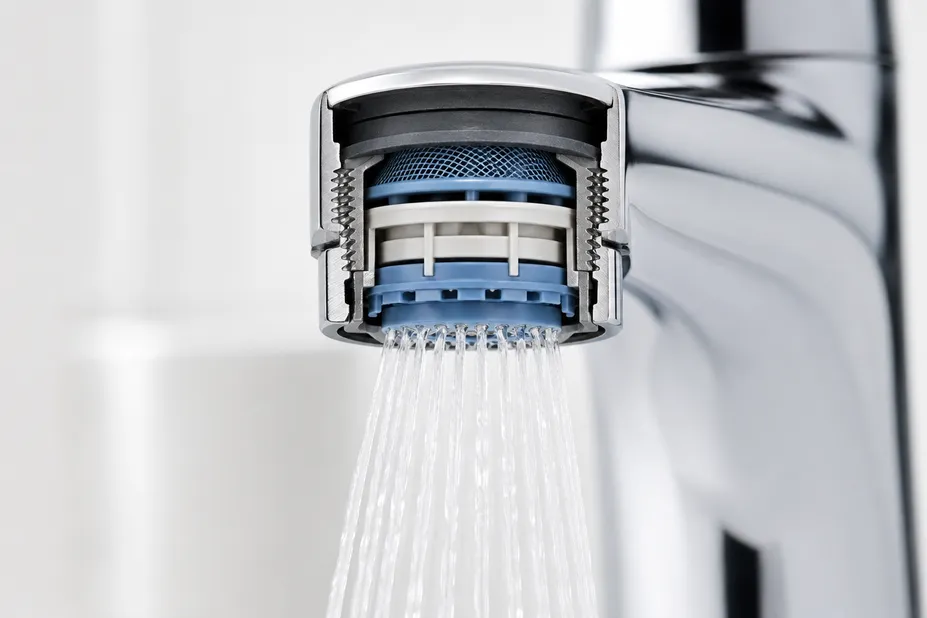
A bathroom faucet aerator is the threaded insert that screws into the faucet spout tip. It mixes air into the water stream, controls flow rate, and in most markets determines whether the faucet passes water efficiency regulations. That last point is where most sourcing problems start: buyers order aerators by thread size alone, then discover the flow rate doesn't meet WaterSense, WELS, or local building code requirements for the destination market.
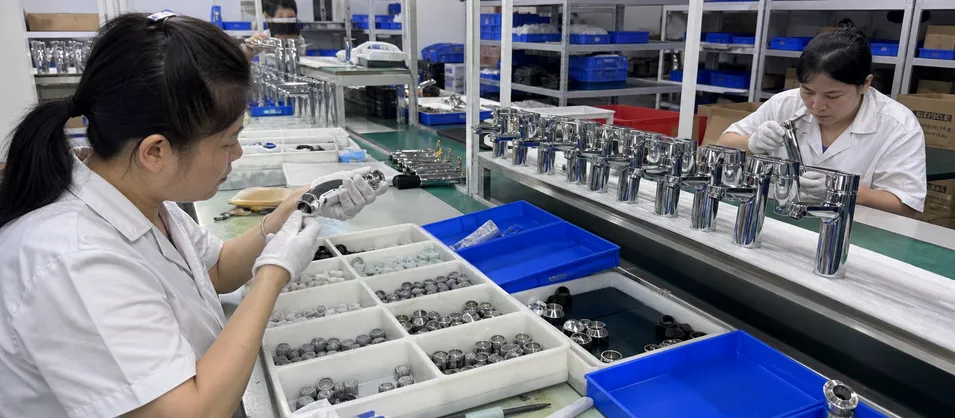
We manufacture bathroom faucet aerators as a dedicated product line — not as an afterthought component bundled with faucet orders. The distinction matters because aerator performance is determined by three independent variables: thread size and type (which must match the faucet spout), flow rate (which must meet market regulations), and spray pattern (which affects end-user perception and downstream return rates). Getting one wrong means the aerator doesn't fit, doesn't comply, or generates complaints. We spec all three before production starts.
The bathroom aerator differs from a kitchen faucet aerator primarily in flow rate range and spray pattern. Bathroom applications typically run 0.5–1.5 GPM (1.9–5.7 L/min), lower than kitchen configurations, because bathroom sinks are used for handwashing and face washing rather than filling vessels. We've had buyers try to use kitchen aerators on bathroom faucets to simplify their SKU count — the flow rate is usually too high for WaterSense compliance, and the stream pattern is wrong for a bathroom basin. The aerator body diameter also tends to be smaller on bathroom faucets, which is why M16 and M18 thread sizes are more common in this category than the M22/M24 sizes typical of kitchen spouts.
Three Variables That Determine Aerator Performance
Thread Size & Type
Must match the faucet spout exactly — male/female, metric/imperial, and pitch all matter.
Flow Rate
Must meet destination market regulations — WaterSense, WELS, CALGreen, EN 246. Bathroom range: 0.5–1.5 GPM.
Spray Pattern
Affects end-user perception and return rates. Aerated, laminar, and spray patterns serve different applications.
Bathroom vs. Kitchen Aerator
Bathroom
Kitchen
Using kitchen aerators on bathroom faucets is a common SKU-consolidation mistake — the flow rate typically fails WaterSense compliance and the stream pattern is wrong for a bathroom basin.
Technical Data
These are the standard configurations we run in production. Custom thread sizes, flow rates, and spray patterns are available — see the customization section below.
| Parameter | Standard Options |
|---|---|
| Thread type | Male external (fits female-threaded spout) / Female internal (fits male-threaded spout) |
| Thread sizes | M16×1 M18×1 M22×1 M24×1 15/16"-27 55/64"-27 |
| Flow rate options | 0.5 GPM 0.8 GPM 1.0 GPM 1.2 GPM 1.5 GPM 2.2 GPM |
| Spray pattern | Aerated (air-mixed) / Laminar (non-aerated, clear stream) / Spray |
| Body material | Brass (standard) / Chrome-plated brass / Plastic housing with brass insert |
| Screen mesh | Stainless steel, 100–200 mesh |
| Key dimensions | Outer diameter 16–24mm; body height 15–25mm (varies by thread size) |
| Operating pressure | 0.05–0.8 MPa (typical residential range) |
| Temperature rating | Up to 80°C |
Specifications shown are standard production values. Contact us for exact data sheets on specific configurations.
The flow rate is the spec that most directly affects your market compliance. The table below maps our standard flow rate configurations to the major destination market requirements.
North America
Requires ≤1.5 GPM for bathroom lavatory faucets. Our 0.5, 0.8, 1.0, and 1.2 GPM configurations all qualify.
California & State Codes
California and other state-level codes require ≤1.2 GPM. Specify this flow rate explicitly when ordering for these markets.
Europe
No single EU-wide mandate, but WELL Building Standard and many national codes target ≤1.0 GPM (≈3.8 L/min) for lavatory faucets.
Australia / New Zealand
WELS 5-star requires ≤4.5 L/min (≈1.19 GPM). Our 0.5, 0.8, and 1.0 GPM configurations achieve 6-star; 1.2 GPM achieves 5-star.
Middle East
UAE Estidama and regional green building codes typically align with ≤1.5 GPM for lavatory faucets, with higher-efficiency credits at ≤1.0 GPM.
Other Markets
Selling into a market with a specific L/min requirement? We can configure flow restrictors to any target rate. Share your destination market and we'll spec accordingly.
Discuss your market requirementsThread size is the most common source of fitment errors in OEM sourcing. Use this reference to confirm the correct size before placing an order.
| Thread Size | OD (mm) | Standard | Typical Application | Region |
|---|---|---|---|---|
| M16×1 | 16 mm | Metric | Compact bathroom faucets, vessel sinks | Europe, Asia |
| M18×1 | 18 mm | Metric | Standard bathroom lavatory faucets | Europe, Asia, Middle East |
| M22×1 | 22 mm | Metric | Kitchen faucets, higher-flow bathroom | Europe, Asia |
| M24×1 | 24 mm | Metric | Kitchen faucets, commercial | Europe, Asia |
| 15/16"-27 | ~24 mm | UNS (Imperial) | Standard US bathroom faucets (male spout) | North America |
| 55/64"-27 | ~22 mm | UNS (Imperial) | Standard US bathroom faucets (female spout) | North America |
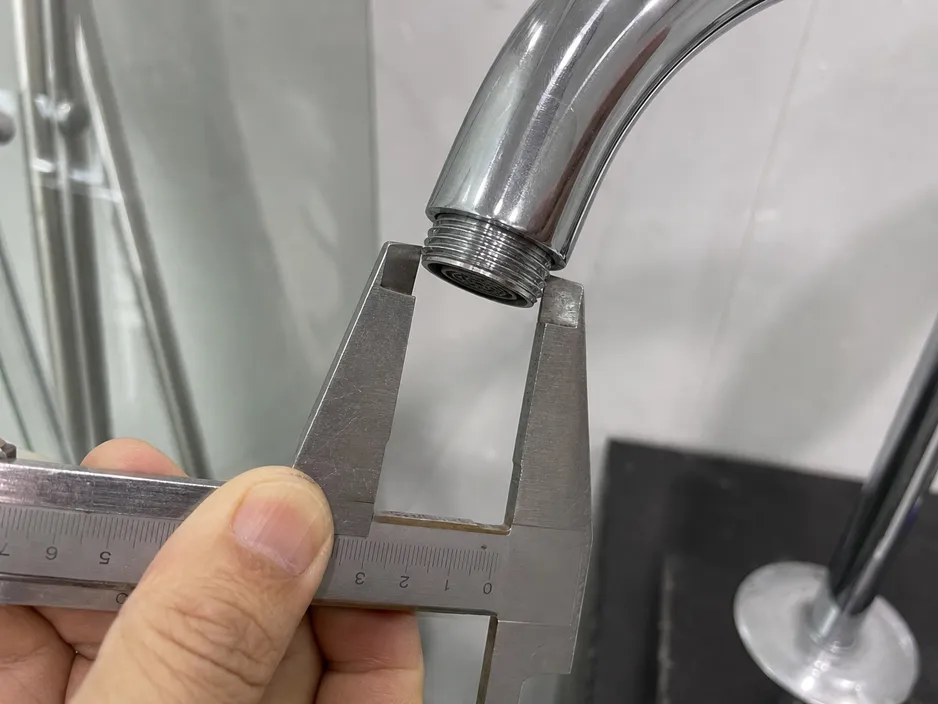
Measurement tip: Always measure the spout OD (outer diameter) directly — do not rely on faucet model numbers alone. A 1 mm mismatch in thread size will cause leaks or cross-threading. When in doubt, send us a sample spout and we'll confirm the correct aerator size before production.
Beyond thread size and flow rate, these configuration choices affect end-user experience, installation method, and product positioning.
Standard aerators deliver variable flow as inlet pressure changes. Pressure-compensating (PC) aerators include an internal elastomeric regulator that maintains a consistent flow rate across a wide pressure range — important for multi-story buildings or variable municipal supply.
Every component in our aerator assembly is specified for long-term contact with municipal water systems. Here's what we use, why we chose it, and what the tolerances mean for your compliance exposure.
Same alloy as our faucet body production
The aerator body is C36000-equivalent free-machining brass — the same alloy we use across our faucet body production. We chose brass over zinc alloy because bathroom aerators sit in contact with water continuously, and zinc alloy corrodes faster in chlorinated municipal water systems.
Comparison test result:
Zinc alloy aerator bodies showed visible corrosion at the thread interface after 18 months in a hard-water test environment. The brass bodies were clean.
The chrome-plated brass option runs through our in-house electroplating line — copper base coat, nickel mid-coat, chrome top coat — the same stack we use on our faucet bodies, so the finish matches when the aerator ships as part of a faucet assembly.
Stamped stainless steel, punched to spec
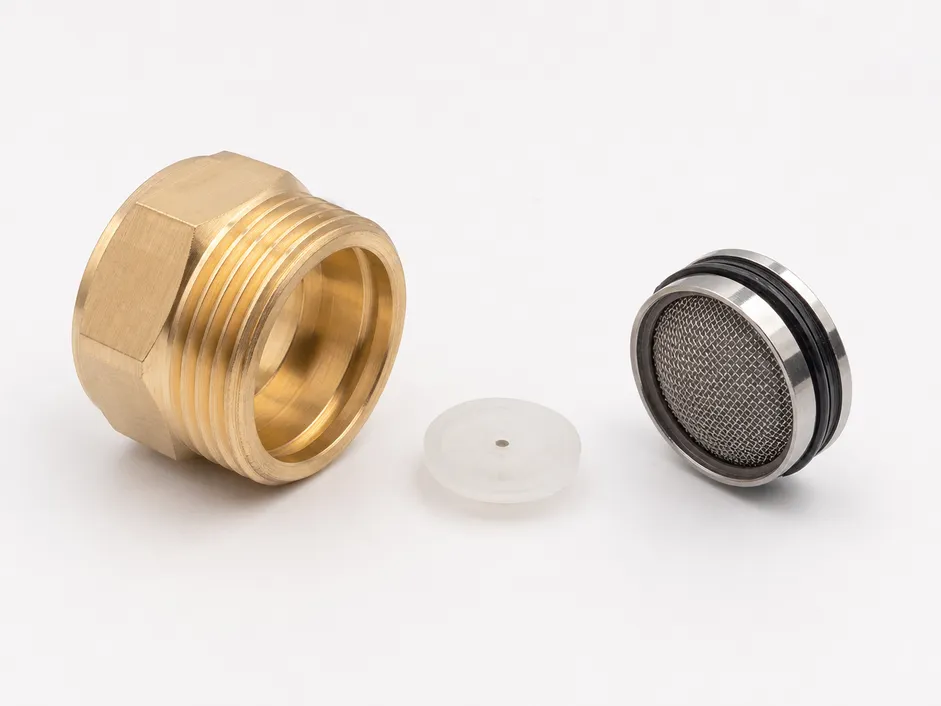
The flow restrictor disc is the component that actually controls flow rate. We stamp these from stainless steel sheet and punch the orifice to a tolerance of ±0.02mm. That tolerance is tighter than most aerator manufacturers hold, and it's the reason our flow rates are consistent across a production batch rather than varying ±15% from unit to unit.
Why batch consistency matters for compliance:
If you're selling into a market where the faucet must pass a flow rate test at the point of installation, a faucet that tests at 1.48 GPM on one unit and 1.62 GPM on another is a compliance problem waiting to happen.
Upstream debris protection for the orifice
The stainless steel mesh screen sits upstream of the flow restrictor and catches debris that would otherwise clog the orifice. We use 100-mesh as standard for most configurations — fine enough to catch sediment from typical municipal water systems, coarse enough not to restrict flow below the rated value.
100-Mesh (Standard)
Suitable for typical municipal water systems. Catches sediment without restricting rated flow. Lower maintenance frequency.
200-Mesh (Optional)
For markets with known water quality issues — certain Southeast Asian and Middle Eastern municipal systems. Catches finer particles; requires more frequent cleaning. Trade-off is noted in product documentation.
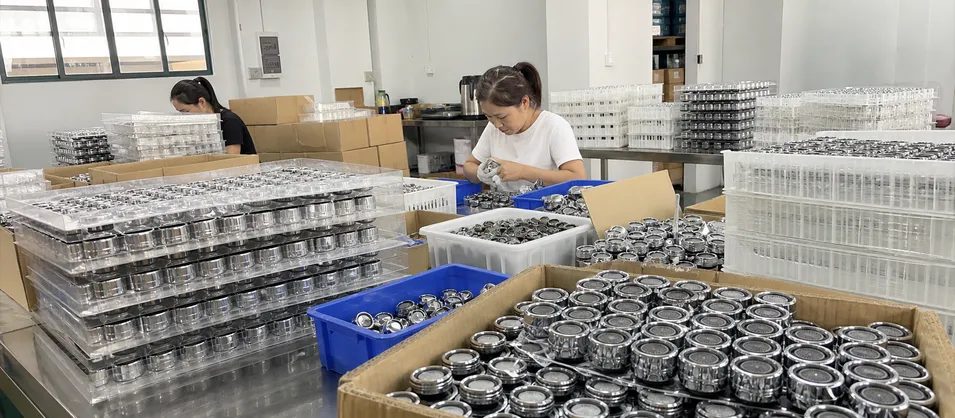
Assembly is straightforward: body, screen, flow restrictor, and aerator insert are assembled and then flow-tested. We pull a sample from each production batch and run it on our flow test bench at 0.3 MPa — the standard test pressure for most aerator certifications — to verify the flow rate is within ±5% of the rated value.
The test data travels with the shipment documentation.
0.3 MPa
Standard test pressure matching most aerator certifications
±5%
Flow rate tolerance verified per production batch sample
±0.02mm
Orifice punch tolerance — tighter than most aerator manufacturers hold
Aerator demand concentrates in four distinct channels. Each has a different order pattern, compliance requirement, and reorder cycle. Understanding which segment you're serving shapes how you spec the product and structure the supply relationship.
Segment 01
The highest-volume segment for standalone aerator sales. Plumbing distributors and hardware wholesalers stock aerators as a consumable — they get replaced when clogged, when a faucet is upgraded, or when a building owner needs to bring older fixtures into compliance with updated water efficiency codes.
Typical volume:
A mid-size plumbing distributor in the US might turn 5,000–20,000 aerator units per year across multiple thread sizes.
Key sourcing requirement:
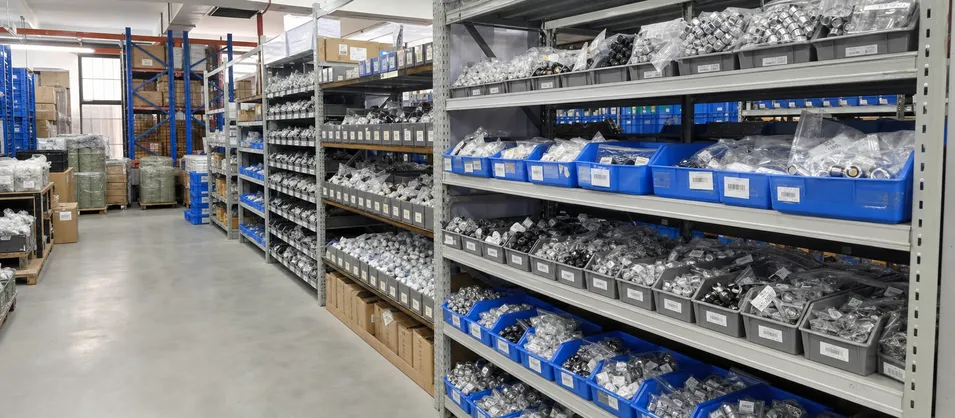
Having the full thread size matrix in stock. A distributor who can't match the thread size loses the sale to whoever can. We supply the full M16–M24 metric range and the two common imperial sizes in a single order, so your catalog covers the installed base without sourcing from multiple suppliers.
Segment 02
Aerators ship as part of a complete faucet. If you manufacture or private-label bathroom faucets, the aerator is typically the last component specified and the first one that generates a complaint if it's wrong.
How we support OEM buyers:
We supply aerators matched to faucet spout thread specs. Send us the spout thread spec and we'll confirm the correct aerator configuration before you commit to a production run.
Real outcome:
We've caught thread mismatches for three different buyers this way. It's a five-minute check that prevents a container-load problem.
Segment 03
Runs on project timelines with specific compliance requirements. A 300-room hotel renovation might specify 1.0 GPM aerators across all bathroom faucets to meet LEED water efficiency credits.
Typical order size
600–1,200 units per project, tied to construction schedule
Reorder cycle
3–5 years as properties renovate; initial project win often holds replacement business
What we provide:
Production slot holds for project orders, plus the compliance documentation — flow rate test reports, material certifications — that the project's LEED consultant needs.
Segment 04
Markets like California, Australia, and parts of Europe create demand for aerator upgrades on existing faucet installations. Utility rebate programs sometimes subsidize aerator replacement as a water conservation measure — these programs generate bulk orders of a single flow rate configuration in large quantities.
Typical configuration:
0.5 or 0.8 GPM, single flow rate, high volume. Order pattern is predictable and volume is significant.
Track record:
We've supplied several such programs through distributors in Australia and the US West Coast.
Most buyers fall clearly into one of these four channels, but some distributors serve two or three simultaneously — stocking replacement inventory while also supplying OEM accounts and occasional project orders. If that's your situation, the thread size matrix and documentation package we provide are designed to cover all three without separate SKU management.
Send us your current order pattern and destination market and we'll confirm the right configuration, mesh spec, and documentation set before you commit to a production run.
The standard configurations cover most sourcing needs, but we run custom specifications regularly. Here's what's adjustable and what isn't.
Any metric thread size from M14 to M28, and both common imperial sizes. Non-standard thread pitches — for example, M22×0.75 for certain European faucet brands — require a tooling setup.
Lead Time (Non-Standard)
+7–10 days
First order only; standard run thereafter
Min. Order (Non-Standard)
500 pieces
Per non-standard thread size
Any flow rate from 0.5 to 2.2 GPM is achievable by changing the flow restrictor orifice diameter. Intermediate values — 0.9 GPM, 1.1 GPM — are available if your market compliance requires a specific number.
Pricing Impact
The flow restrictor is a low-cost component. Custom flow rates don't significantly affect unit price.
Three patterns available depending on application:
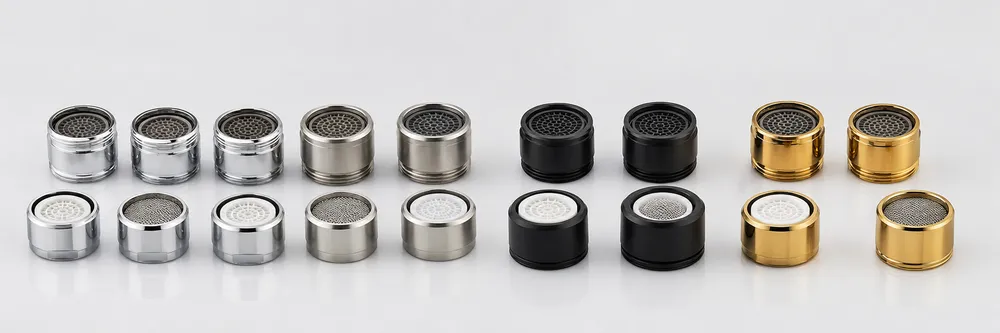
Chrome-plated brass is standard. Additional finishes are available for aerators that will be visible on the faucet — some exposed-spout designs show the aerator tip.
Finish matching to faucet body finish is possible when both are sourced from us — we run the aerator through the same plating batch as the faucet body.
Three packaging formats available depending on your distribution channel:
Bulk Poly Bag
Standard for OEM supply
Individual Retail Blister Card
For distribution to hardware retail
Branded Box with Your Logo
Min. 1,000 units per SKU. We print your brand name, product code, and compliance logos — send us your artwork files and we'll confirm the print spec.
Ready to specify your configuration?
Send us your thread spec and target market — we'll confirm the right configuration and quote within 24 hours.
The aerator is a regulated component in most of our buyers' target markets, and the documentation requirements vary by destination. Here's what we can provide.
Flow rate test reports at 0.3 MPa per ASME A112.18.1 / CSA B125.1
cUPC certification covers the faucet assembly including the aerator when supplied as part of a complete faucet
For standalone aerator supply: SGS flow rate test reports
WaterSense compliance documentation available for configurations ≤1.5 GPM
EN 246 flow rate classification documentation
CE marking applies to the complete faucet assembly
For standalone aerator supply: material certificates covering RoHS compliance and lead content per EN 15664-1 for drinking water contact materials
Flow rate test reports for standalone supply
WELS (Water Efficiency Labelling and Standards) star rating documentation for configurations that meet the threshold
WaterMark certification covers the complete faucet assembly
For standalone aerator supply: flow rate test reports and material certificates
SGS third-party test reports available for any configuration
Brass alloy is lead-free per California Prop 65 and EU RoHS — XRF test reports available on request
We test every incoming brass batch for lead content as part of standard incoming inspection — this isn't a special request, it's routine
All documentation is prepared in parallel with production and ships with the container. Your customs broker and compliance team get the paperwork without having to chase it.
Standard
SGS Reports
US / Canada
WaterSense
Europe
EN 246 / RoHS
Australia
WELS / WaterMark
Material
XRF / Prop 65
System
ISO 9001
Need documentation for a specific market?
Tell us your destination market and we'll confirm which certifications apply to your configuration.
The single most common problem we see with aerator orders is thread mismatch — the aerator arrives and doesn't fit the faucet spout. This happens because faucet manufacturers don't always specify thread size in their product listings, and buyers assume a "standard" size exists. It doesn't. The installed base of bathroom faucets spans at least six common thread sizes across metric and imperial systems, and the thread type (male vs. female) depends on whether the spout has an internal or external thread.
Thread Diameter
Measure the outer diameter of the spout tip (for external threads) or the inner diameter of the spout opening (for internal threads). Common bathroom faucet sizes: M16, M18, M22 metric; 15/16" imperial.
Thread Type
Is the spout thread male (external, aerator screws on) or female (internal, aerator screws in)? Most bathroom faucets use a female-threaded spout that accepts a male-threaded aerator, but this varies by manufacturer.
Thread Pitch
Standard metric pitch is 1mm for these sizes. Non-standard pitches exist on some European and Japanese faucet brands.
Body Diameter Clearance
The aerator body must fit within the spout opening. On some low-profile bathroom faucets, the spout opening is recessed and requires a key-style aerator (removed with a special tool) rather than a standard hand-tighten type.
We'll Identify the Thread Spec for You
If you're sourcing aerators to match an existing faucet line, send us a sample faucet or a photo of the spout tip with a ruler for scale — we'll identify the thread spec and confirm the correct aerator before you commit to an order. We've done this for dozens of buyers and it takes us about 10 minutes.
Common Thread Reference
| Thread Size | System | Typical Application |
|---|---|---|
| M16 | Metric | Compact bathroom faucets |
| M18 | Metric | Standard bathroom faucets |
| M22 | Metric | Larger bathroom / kitchen |
| 15/16" | Imperial | North American market |
Bathroom faucet aerators are one configuration in our broader aerator and components line. If your sourcing needs extend beyond bathroom applications, the pages below cover the relevant specifications and configurations.
Kitchen
Higher flow rates (1.5–2.2 GPM), larger thread sizes (M22/M24 standard), and dual-spray configurations for pull-down spouts. For kitchen faucet OEM or distribution.
View specsConservation
0.5 GPM configurations optimized for water conservation programs and LEED-certified projects. Covers both bathroom and kitchen applications at the lowest flow rates we produce.
View specsCommercial & Utility
Covers utility sink and commercial sink applications where flow rate and thread specs differ from residential bathroom configurations.
View specsDrinking Water
Aerators with integrated filtration media for faucets used in drinking water applications.
View specsMulti-category orders: If you need aerators across multiple categories for a single order, we can consolidate into one shipment — same documentation package, same container.
View Full RangeAnswers to the sourcing and specification questions we hear most often from buyers, distributors, and OEM procurement teams.
There's no single standard. North American bathroom faucets most commonly use 15/16"-27 (external) or 55/64"-27 (internal) imperial threads. European bathroom faucets typically use M22×1 or M24×1 metric threads. Asian-manufactured faucets (including most Chinese-made faucets) often use M18×1 or M22×1.
The only reliable way to confirm is to measure the spout or check the faucet manufacturer's spec sheet. If you're sourcing aerators for a mixed installed base, order a sample set across the common sizes before committing to volume.
WaterSense requires ≤1.5 GPM (5.7 L/min) for bathroom lavatory faucets. For California (CALGreen Title 24), the requirement is ≤1.2 GPM. For LEED v4 water efficiency credits, the baseline is 1.5 GPM and points are awarded for lower flow rates.
If you're supplying into multiple US markets, the 1.2 GPM configuration covers all state-level requirements including California — it's the safer default for a single-SKU strategy.
Yes, when both the faucet and aerator are sourced from us. We run aerators through the same plating batch as the faucet bodies — chrome, brushed nickel, matte black, and PVD gold are all available.
If you're sourcing faucet bodies from another manufacturer and need finish-matched aerators, send us a sample of the faucet finish and we'll match it as closely as our plating process allows. Exact matching isn't always possible across different plating lines, but we can usually get within acceptable visual tolerance.
200 pieces for standard configurations with custom flow rates.
500 pieces for non-standard thread sizes that require tooling setup.
1,000 pieces for custom retail packaging with your branding.
Lead time for standard configurations is 15–20 days from order confirmation. Non-standard thread sizes add 7–10 days for tooling.
The main cause of aerator clogging is calcium carbonate scale buildup on the mesh screen and flow restrictor. For hard water markets (water hardness above 200 mg/L CaCO3), we recommend specifying a 100-mesh screen rather than 200-mesh — the coarser mesh is less prone to scale bridging and easier for end users to clean.
We also recommend including a cleaning instruction card in the retail packaging, which reduces warranty claims from customers who don't know the aerator is removable and cleanable.
For markets with extreme hardness (above 400 mg/L), a laminar-flow aerator without a mesh screen is worth considering — it eliminates the clogging point entirely, though it changes the stream appearance.
Both. We supply aerators pre-installed on faucet bodies for OEM faucet orders, and as standalone components for distribution and replacement supply.
For OEM faucet orders, the aerator spec is confirmed as part of the faucet specification process — we match thread size, flow rate, and finish to the faucet body before production. For standalone component orders, we ship in bulk poly bags or retail packaging depending on your distribution channel.
The fastest way to get an accurate quote is to send us four pieces of information:
Thread size and type
Metric or imperial, male or female, diameter
Flow rate
Or the target market so we can recommend the compliant configuration
Quantity
Per SKU and total
Packaging requirement
Bulk OEM, retail blister, or branded box
If you're not sure about the thread size, send us a photo of the faucet spout with a ruler, or a sample unit. We'll identify the spec and come back with a confirmed configuration and quote — typically within one business day.
New to sourcing aerators from China? Most of our buyers in this category start with a sample order of 2–5 units per configuration to verify fit and flow rate before committing to volume. We can ship samples within 5–7 days. The sample cost is credited against your first production order.
Contact Us Directly
Factory Address
Block A, Jinsha Smart Manufacturing Park, No. 88 Xilian East Road, Danzao Town, Nanhai District, Foshan City, Guangdong Province, China (528216)
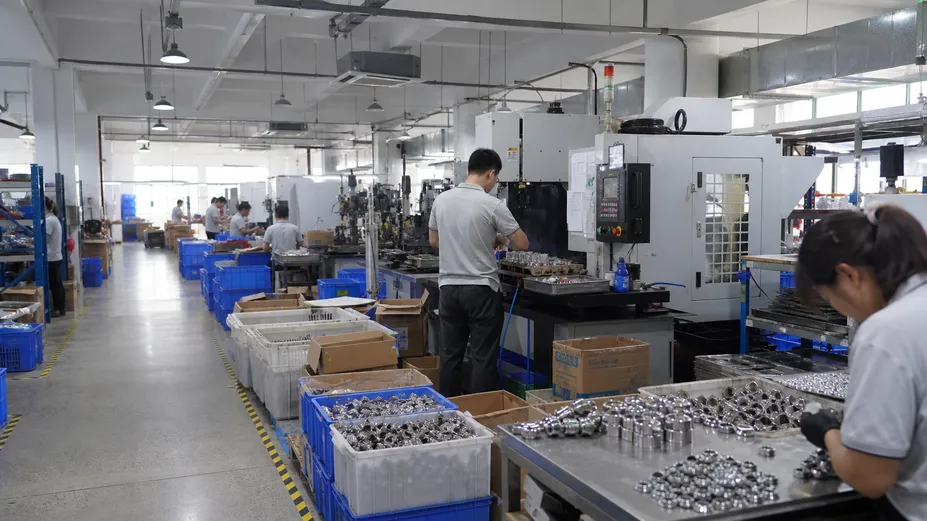
Wfaucet factory — Jinsha Smart Manufacturing Park, Foshan, Guangdong. ISO 9001 certified production for faucet aerators and components.
Typical Response Time
Quote turnaround within one business day. Sample shipment within 5–7 days. Sample cost credited against first production order.
© 2026 Wfaucet. All rights reserved.