

Sensor Faucets Built for High-Traffic Installations
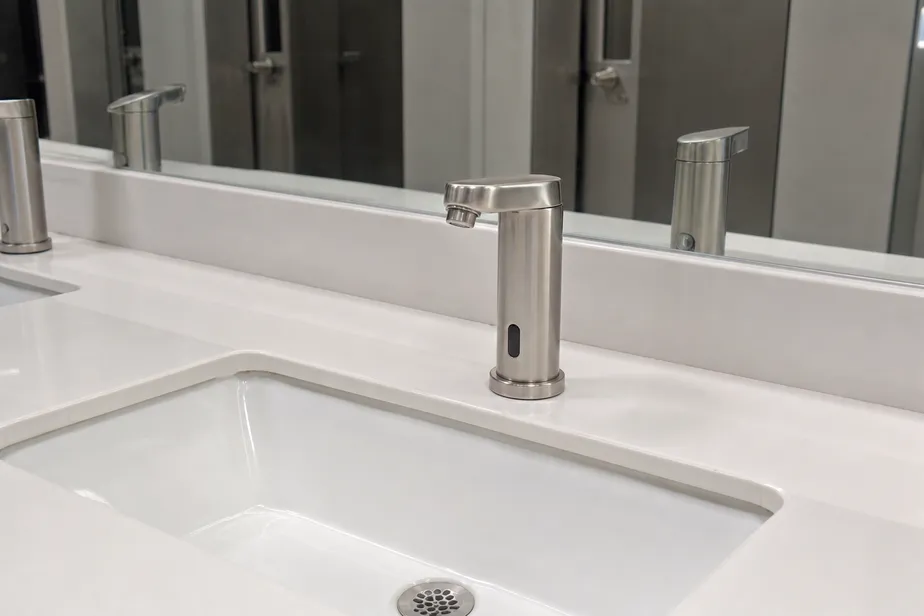
Commercial-grade touchless sensor faucets where failure is not an option. IR sensor with 15–20 cm detection range, 500,000-cycle solenoid valve, IP66-sealed sensor module.
AC-powered and battery-operated configurations. Stainless steel and chrome-plated brass body options. CE and cUPC certified.
Engineering Perspective
The Electronics Are Where Sensor Faucet Quality Separates
Most faucet factories treat sensor faucets as a standard faucet with a sensor module bolted on. We don't. The sensor faucet line went through a 12-month field validation program before we added it to our export catalog — and that decision came directly from watching what happens when the electronics are treated as an afterthought.
The failure modes in sensor faucets are predictable and consistent across low-quality product: sensor drift after 6 months of operation, solenoid valve leaking at the seat after 80,000–100,000 cycles, battery compartment corroding from condensation in washroom environments, and sensor response time degrading as the IR emitter ages. Every one of these failures generates a warranty claim, a facilities management complaint, or a product return — and in a commercial installation with 50 or 100 faucets, a single failure mode multiplied across the installation is a serious problem for whoever sold the product.
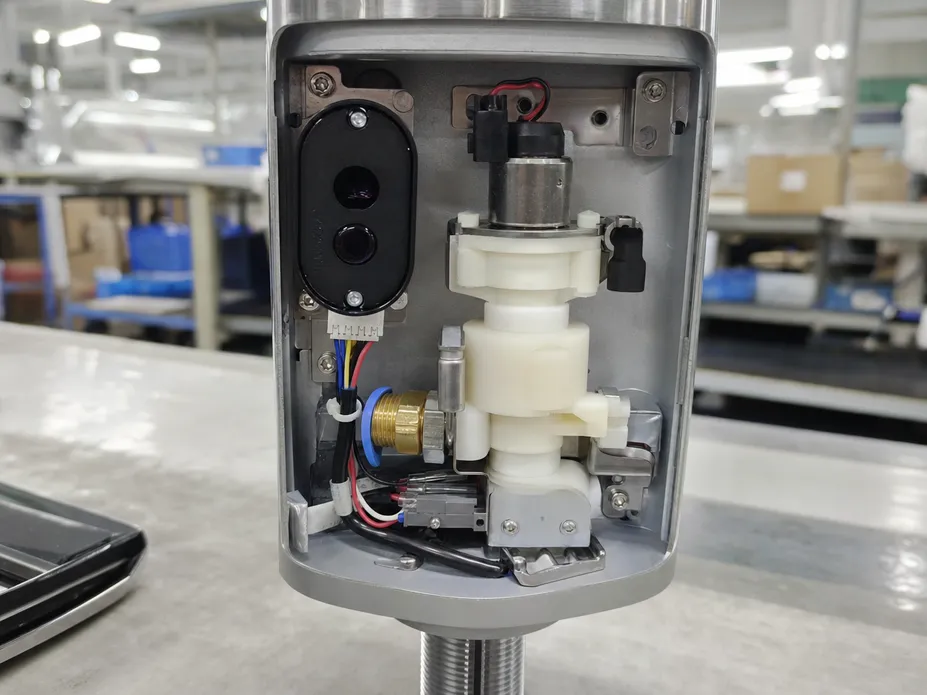
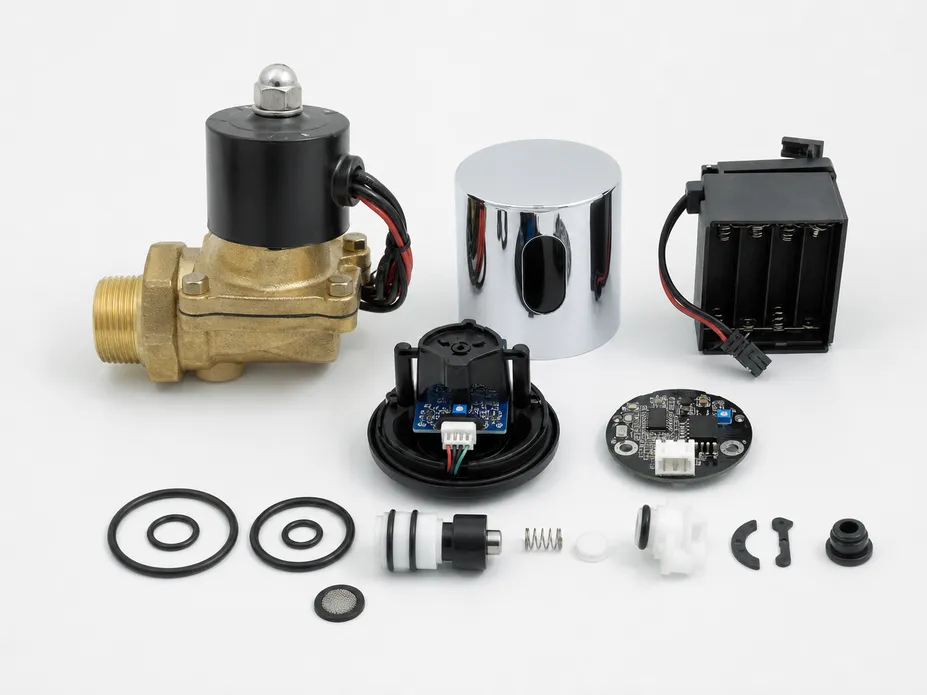
Our sensor faucet line is built around three components we won't compromise on: the IR sensor module, the solenoid valve, and the housing seal.
Three Components We Won't Compromise On
IR Sensor Module
Detection range of 15–20 cm with response time under 0.5 seconds — fast enough that users don't experience the hesitation that makes a sensor faucet feel broken.
Solenoid Valve
Rated for 500,000 cycles at operating pressure — roughly 6–7 years of service at 200 activations per day in a commercial washroom.
Housing Seal
Sensor module housing sealed to IP66 — survives the spray-down cleaning that commercial washroom crews do daily. These aren't marketing specs; they're the minimums set after field validation.
AC-Powered Configuration
The right choice for permanent installations where running a power line is feasible. No battery replacement schedule, no risk of the faucet going offline because a battery died.
Battery-Operated Configuration
Runs 18–24 months under normal commercial use (approximately 200 activations per day) — annual battery replacement at most. We've had buyers come to us with battery-operated sensor faucets from other suppliers that needed replacement every 4–6 months. That maintenance burden gets blamed on the product, not the battery, and it kills reorder relationships.
Product Data
Technical Specifications
Specifications shown are standard values for this product line. Actual specifications may vary by configuration. Contact us for detailed product data sheets and custom configuration options.
| Parameter | Specification |
|---|---|
| Sensor Type | Passive infrared (PIR) / Active IR |
| Detection Range | 15–20 cm |
| Response Time | < 0.5 seconds |
| Auto Shut-Off | 30 seconds (adjustable on OEM configurations) |
| Solenoid Valve Rating | 500,000 cycles at rated operating pressure |
| Operating Pressure | 0.05–0.6 MPa |
| Flow Rate | 1.5–6 L/min (flow restrictor-adjustable) |
| Water Temperature | Cold water / mixed (up to 60°C) |
| Power Supply (AC) | AC 100–240V, 50/60Hz (transformer to 6V DC) |
| Power Supply (DC) | 6V DC (4 × AA batteries) |
| Battery Life (DC) | 18–24 months at ~200 activations/day |
| Sensor IP Rating | IP66 |
| Body Material | 304 stainless steel or chrome-plated brass (C36000-equivalent) |
| Finish Options | Brushed stainless, polished chrome |
| Spout Reach | 130–180 mm (standard catalog); custom on OEM |
| Inlet Connection | G1/2" standard; G3/8" available |
| Salt Spray Rating | 24h+ (plated components) |
| Certifications | CE cUPC |
| MOQ (standard catalog) | 200 units |
| MOQ (OEM/custom) | 300 units |
500K
Solenoid Cycles
IP66
Sensor Seal Rating
18–24
Month Battery Life
12mo
Field Validation
Need a full product data sheet, configuration-specific specs, or custom parameter ranges for an OEM project? We provide complete documentation for qualified buyers.
Request Detailed Specs or a SampleWhere Sensor Faucets Generate Recurring Revenue for Your Business
The commercial case for sensor faucets is not a single-project sale. The segments that buy sensor faucets buy them repeatedly — renovation cycles, new-build projects, and replacement programs create a reorder pattern that manual faucet segments don't match. Here's how the major segments break down.
Public Facilities & Institutional
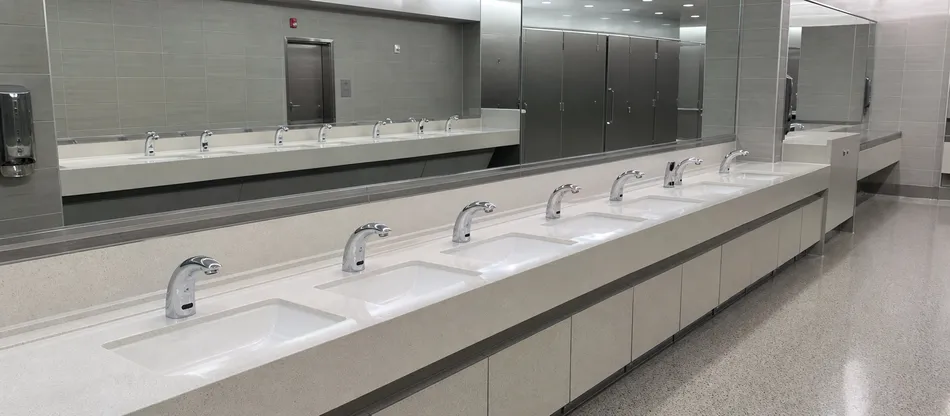
High-Traffic Institutional Buildings
Airports, transit stations, government buildings, and large office complexes are the core sensor faucet market. These buyers — typically facilities management procurement teams or commercial fit-out contractors — specify sensor faucets for two reasons: hygiene (touchless operation reduces cross-contamination in high-traffic environments) and water conservation (sensor faucets cut water consumption 50–70% versus manual faucets at equivalent flow rates, which matters when you're running 200 washroom fixtures across a terminal).
The procurement pattern in this segment is project-based but large: a single airport terminal washroom renovation might specify 80–150 sensor faucets across multiple restrooms. Contractors supplying this segment need a product that passes facilities management's technical review — which means the solenoid valve cycle rating and IP66 sensor sealing are the specs that get scrutinized, not the price per unit. Our cUPC certification covers North American institutional procurement requirements; CE covers European and international projects.
Buyer note: We've seen this segment grow significantly for buyers who can demonstrate the solenoid valve cycle rating with a test report — facilities managers have been burned by low-spec product before and they ask for documentation now.
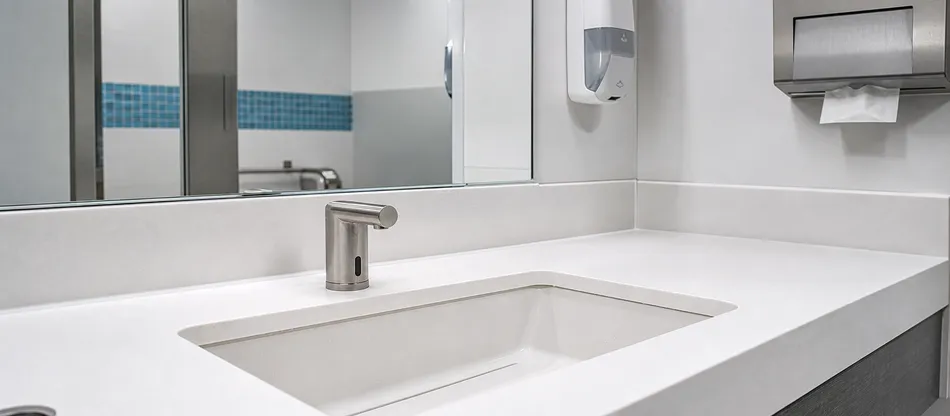
Healthcare & Clinical
Hospitals, Clinics, and Laboratory Facilities
Hospitals, clinics, and laboratory facilities specify sensor faucets for infection control. In clinical settings, touchless operation is often a code requirement, not a preference — and the procurement channel in North America typically runs through GPO (Group Purchasing Organization) frameworks that require cUPC certification as a baseline. Our cUPC documentation covers this requirement.
Healthcare procurement tends toward moderate volumes with high specification scrutiny: 50–200 units per facility, but with detailed technical review before approval. Once a product is approved for a healthcare system's procurement list, it becomes a recurring line item across multiple facilities and renovation cycles. Getting on that list requires the right certifications and the ability to provide test reports on demand — both of which we support.
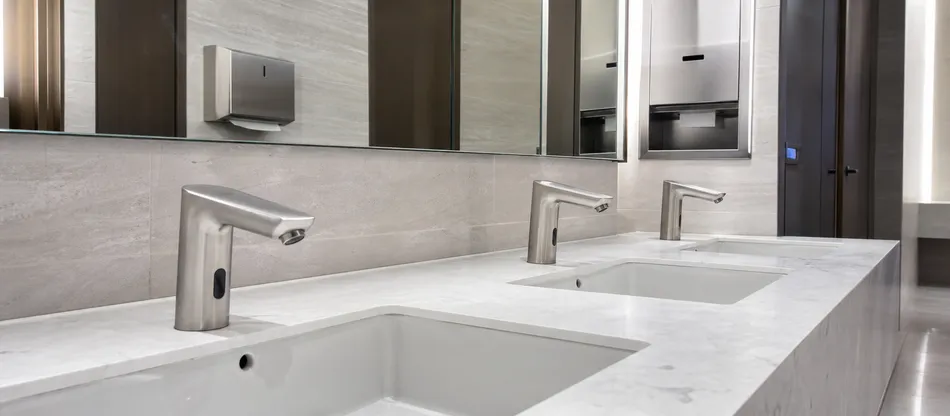
Hospitality
Lobby Washrooms and Public Areas
Hotel renovation projects specify sensor faucets for lobby washrooms, public restrooms, and spa areas — not for guest rooms, where manual faucets remain standard. A 200-room hotel renovation might specify 20–40 sensor faucets for public areas alongside 400+ manual faucets for guest bathrooms. For distributors supplying hospitality fit-out contractors, sensor faucets are a line item on every mid-to-upper hotel project, which means consistent demand tied to the hospitality renovation cycle.
The finish specification in hospitality leans toward brushed stainless or polished chrome — both of which we carry in the standard catalog. OEM housing customization is available for buyers who need a specific aesthetic to match a branded washroom design.
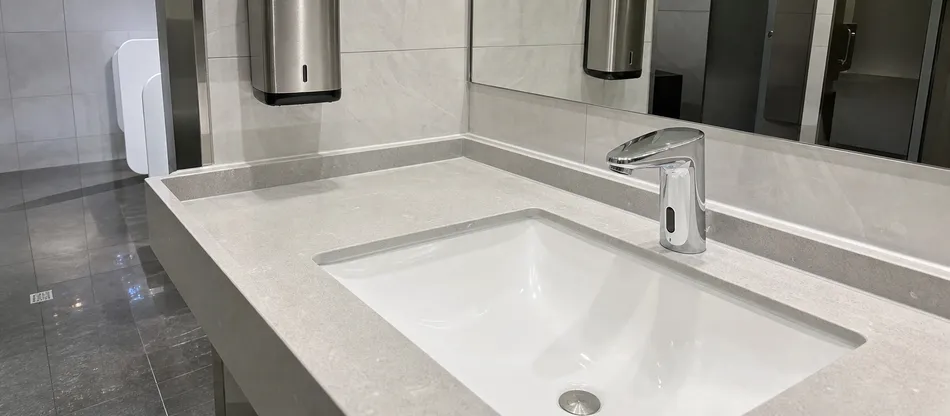
Commercial Office
Office Buildings and Corporate Campuses
Corporate facilities procurement increasingly specifies sensor faucets for washrooms as part of sustainability and hygiene programs. The water conservation argument is quantifiable — facilities managers can calculate the reduction in water consumption and present it against a sustainability target. For distributors supplying commercial fit-out contractors or facilities management supply chains, this segment generates consistent project-based demand with reorder potential as buildings cycle through renovation programs.
Solenoid Valve and Sensor Module: What We Specify and Why
The two components that determine sensor faucet longevity in commercial use are the solenoid valve and the sensor module. Most product descriptions skip the engineering detail here — we don't, because these are the specs your buyers will ask about when they've been burned by low-quality product before.
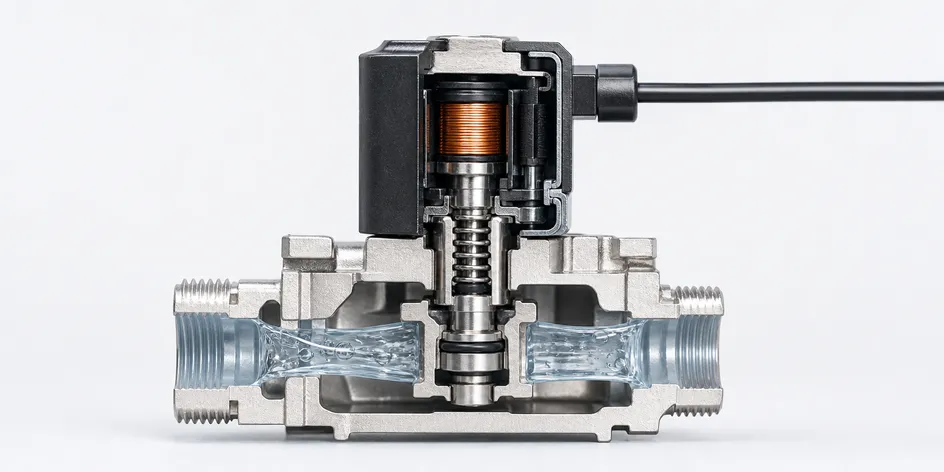
Solenoid Valve
The solenoid valve controls water flow — it opens when the sensor detects a hand and closes when the hand is removed or the auto shut-off timer triggers. The failure mode in an undersized solenoid valve is seat leakage: the valve seat wears under repeated cycling, and the valve starts dripping between activations.
At 200 activations per day, a valve rated for 100,000 cycles reaches its design life in under 18 months. Our solenoid valve is rated for 500,000 cycles at 0.05–0.6 MPa operating pressure — tested at rated pressure through the full cycle count, not at reduced pressure to inflate the number.
500,000
Cycle Rating
0.05–0.6
MPa Operating Range
>18 mo
vs. 100K-cycle valves
The test report is available with shipment documentation.
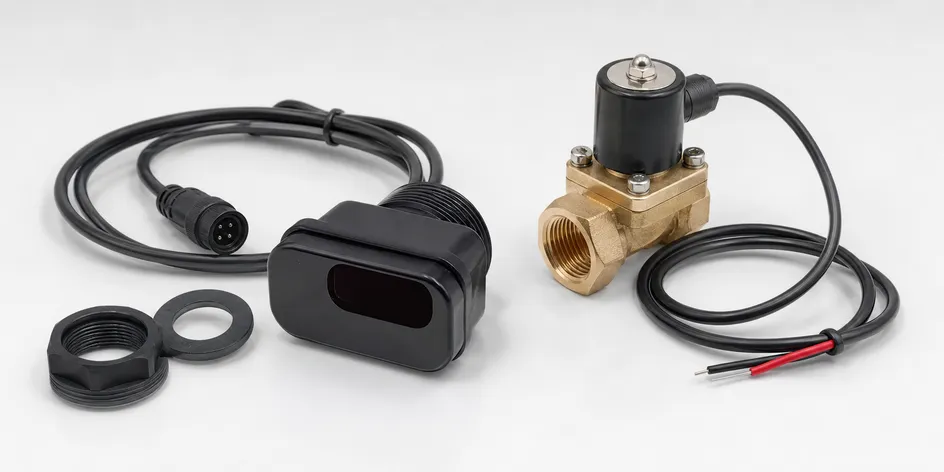
IR Sensor Module
The IR sensor module uses active infrared detection: an IR emitter and receiver pair that detects the reflection from a hand entering the detection zone. The 15–20 cm detection range is calibrated to avoid false activations from ambient movement while remaining responsive to hand placement.
Response Time: <0.5 seconds
Slower response creates the perception of malfunction, which generates service calls even when the faucet is technically operating correctly.
IP66 Sealed — Direct Water Jet Rated
In a commercial washroom where cleaning crews spray down surfaces with high-pressure hoses, an IP54-rated sensor module will eventually fail from water ingress. IP66 is the right spec for this environment.
Detection Range: 15–20 cm
Calibrated to avoid false activations from ambient movement while remaining responsive to hand placement.
30-Second Auto Shut-Off — Standard on All Configurations
We build in a 30-second auto shut-off as standard — if a hand is left in the detection zone or an object is placed in front of the sensor, the valve closes after 30 seconds to prevent water waste. On OEM configurations, the shut-off timer is adjustable.
OEM parameter note: We've had buyers in healthcare ask for a shorter shut-off — 15 seconds — to align with hand-washing protocol timing. That's a straightforward OEM parameter change.
AC vs. Battery Configuration: Which One Fits Your Project
This is the question we get most often from buyers new to the sensor faucet category. The answer is straightforward once you understand the trade-offs.
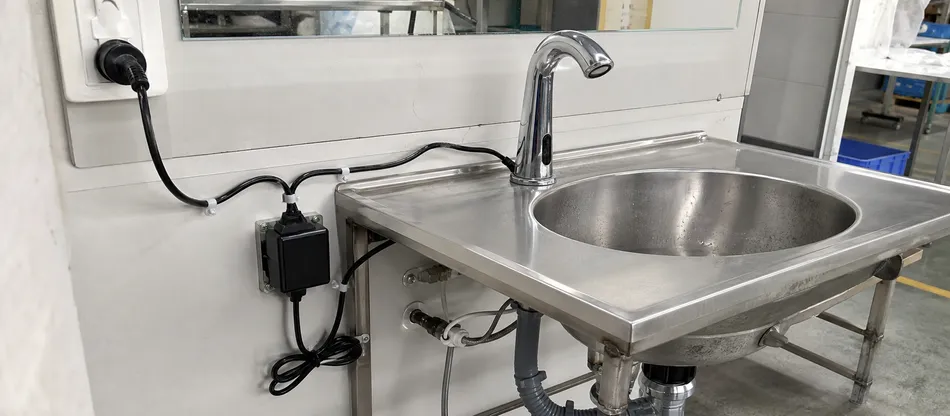
AC-Powered (Mains-Connected)
The transformer steps down AC 100–240V to 6V DC at the faucet. No battery replacement, no risk of the faucet going offline between maintenance cycles.
Right Choice For
- Permanent installations where a power line can be run to the faucet location
- New construction or major renovation where plumber and electrician are already on site
- High-traffic commercial facilities where uninterrupted operation is critical
Trade-Off
Running a power line adds labor and materials that a battery unit doesn't require. Installation cost is higher when the electrical rough-in isn't already planned.
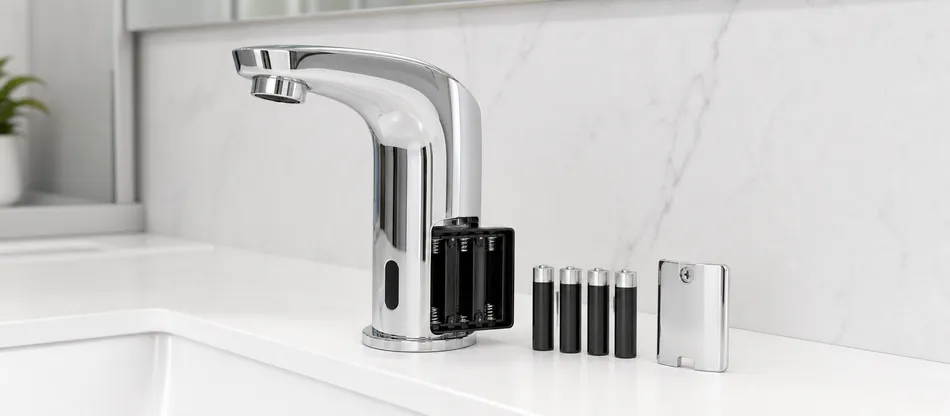
Battery-Operated (DC)
Four AA batteries, 18–24 months of service life at commercial use rates. The right choice for retrofit installations where running a power line is impractical or cost-prohibitive.
Right Choice For
- Retrofit installations where running a power line is impractical or cost-prohibitive
- Markets where buyers' customers prefer simpler installation without electrical work
- Projects where installation flexibility across varied site conditions is a priority
Trade-Off
Annual battery replacement in a commercial installation is manageable, but it needs to be factored into the total cost of ownership conversation with your buyers.
Shared Platform
Same Internals, Different Power Supply
Both configurations use the same sensor module, solenoid valve, and housing. The only difference is the power supply circuit. For OEM orders, we can configure the auto shut-off timer and detection sensitivity on either platform.
AC Input
100–240V
Stepped to 6V DC
Battery Life
18–24 mo
4× AA at commercial rates
Sensor Module
Shared
Both configurations
Solenoid Valve
Shared
Both configurations
OEM Customization: Housing Design Around Validated Internals
The most common OEM request we get for sensor faucets is housing customization — a buyer has an existing sensor faucet line or a branded washroom product line and needs a housing that matches their aesthetic while using a more reliable internal mechanism.
We've done this for buyers who were transitioning away from a previous supplier's product after field failures. The approach works well: the sensor module, solenoid valve, and power supply circuit are already validated, so the OEM work is focused on the housing geometry, spout profile, and finish specification.
For new housing designs, we work from 2D drawings or reference samples. The housing tooling for sensor faucets involves both the body casting or fabrication and the sensor module mounting geometry — the sensor window position and angle affect detection performance, so we review the housing design against our sensor module specifications before committing to tooling.
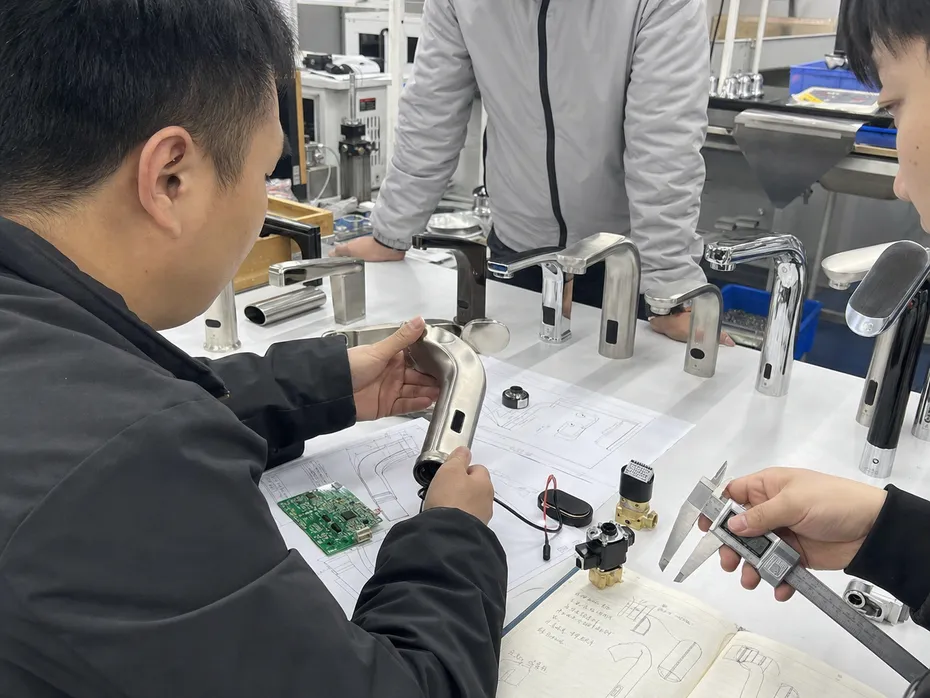
New Housing Tooling
30–40 Days
First sample lead time for new housing tooling. Covers body casting or fabrication and sensor module mounting geometry review. We validate sensor window position and angle against our sensor module specifications before committing to tooling.
Modifications to Existing Catalog Bodies
15–20 Days
For modifications to existing catalog bodies — spout reach, handle profile, finish. Faster turnaround because the core tooling is already validated and in production.
Standard OEM Parameters Available Without New Tooling
These parameters can be configured on any OEM order without requiring new tooling investment or extended lead times.
Auto Shut-Off Timer
10–60 Seconds
Adjustable timer range to match application requirements and water conservation targets.
Detection Range Calibration
12–25 cm
Sensitivity calibrated to the installation environment — countertop depth, basin geometry, and user population.
Flow Rate Adjustment
1.5–6 L/min
Via flow restrictor. Configurable to meet local water efficiency codes or buyer specification.
Inlet Connection Type
G1/2" or G3/8"
Standard thread options to match regional plumbing infrastructure without adapter fittings.
Power Supply Configuration
AC or DC
Mains-connected transformer or 4× AA battery pack. Same sensor module and solenoid valve on both platforms.
Body Finish
Brushed Stainless or Polished Chrome
Standard finishes on catalog bodies. Custom PVD finishes available on OEM runs over 500 units.
Custom Finishes & MOQ
PVD Finishes and Minimum Order Quantities
Custom PVD finishes — brushed gold and brushed champagne bronze — are available on OEM runs over 500 units. These finishes require dedicated PVD coating runs and are not available on standard catalog orders.
MOQ for OEM sensor faucet configurations is 300 units — higher than our standard 200-unit MOQ for other product lines, because the electronics component procurement has its own minimum quantities.
OEM Sensor Faucet MOQ
300 units
Electronics component procurement minimum
PVD Finish Minimum
500 units
Brushed gold & brushed champagne bronze
Available PVD Finishes
We review housing designs against sensor module specifications before committing to tooling.
Certifications and Compliance Documentation
Sensor faucets ship to markets with specific compliance requirements. Here's what we hold and what it covers for this product line.
CE Marking
European Conformity
European conformity marking covering electrical safety (low voltage directive), electromagnetic compatibility, and plumbing performance under EN 817 and EN 200 standards.
Required for sale in EU markets. Accepted in many international markets that follow European standards.
cUPC Certification
North American Plumbing Code
North American plumbing code compliance covering lead content (NSF 61/372 — maximum 0.25% weighted average lead content in wetted surfaces), pressure and flow performance, and material standards.
NSF 61/372: Max 0.25% weighted average lead content in wetted surfaces
Required for sale through licensed plumbing channels in the US and Canada. Covers the sensor faucet line in both AC and battery configurations.
SGS Third-Party Testing
Independent Verification
Third-party testing and audit reports available for material composition, salt spray performance, solenoid valve cycle testing, and sensor performance.
Useful for buyers whose import process requires third-party verification independent of manufacturer-issued documentation.
SGS Test Report Coverage
Documentation Ships With Every Container
All test reports ship with the container documentation — you don't need to request them separately. If your destination market requires a certification not listed here, contact us. We've navigated certification extensions for new markets before and can give you an honest assessment of timeline and cost.
Packaging, Container Loading, and E-Commerce Readiness
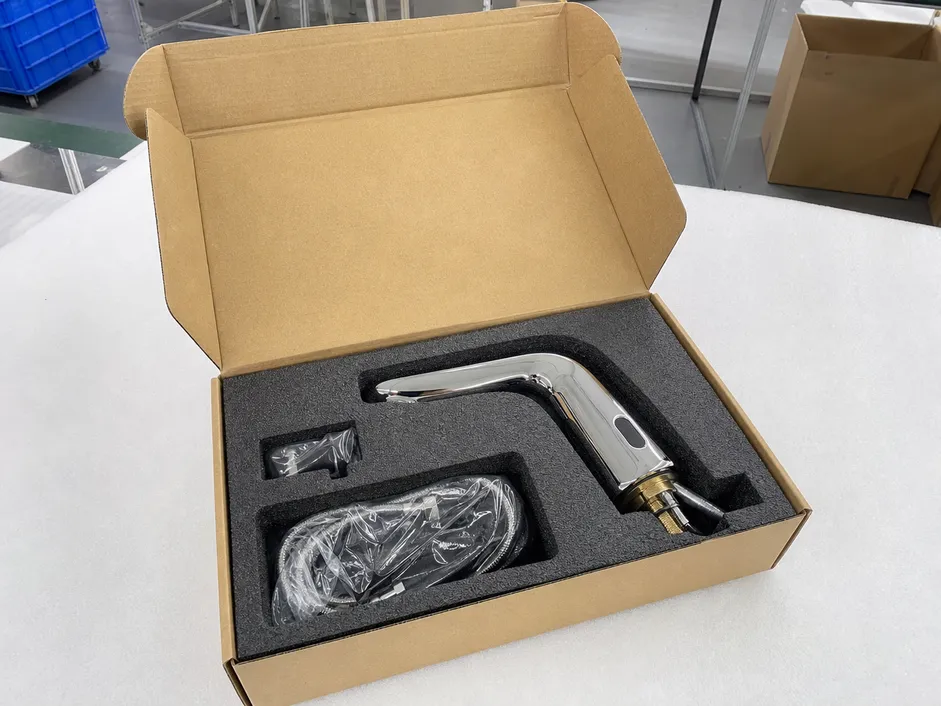
Each sensor faucet ships in an individual retail-ready carton with foam insert protection for the sensor module and spout.
Carton Design Rationale
The carton is designed to survive standard freight handling without sensor module damage. The most common damage claim on sensor faucets from other suppliers is sensor window cracking from inadequate carton protection — which generates returns even when the faucet itself is functional.
Sensor window cracking from inadequate packaging is the leading damage claim category for sensor faucets in transit. Our foam insert geometry is specified around the sensor module geometry, not generic faucet profiles.
Container Loading
Standard carton dimensions are optimized for 40HQ container loading. We provide a packing list with CBM and gross weight per SKU before order confirmation, so your freight forwarder can quote accurately.
1,200–1,500
Units per 40HQ
Varies by body configuration and carton size
Pre-Order
CBM + Weight Data
Packing list issued before order confirmation
E-Commerce Readiness
For buyers selling through e-commerce channels (Amazon, independent stores), the retail carton includes product photography-ready packaging with specification callouts.
OEM Branding on Carton
Brand name and logo added to carton on OEM orders
Blind Drop-Shipping
Available for buyers who need it
FBA-Compliant Labeling
FNSKU barcode placement and suffocation warning labels — available on request at no additional charge
Photography-Ready Packaging
Specification callouts printed on carton for product listing use
Amazon FBA
FNSKU placement and suffocation labels included on request. No additional charge.
Private Label / OEM
Brand name and logo printed on carton. Blind drop-shipping capability available.
Freight Forwarding
CBM and gross weight per SKU provided before order confirmation for accurate freight quotes.
Product Line
Sibling Products in This Category
Sensor faucets are one of six product types in our stainless steel and specialty faucet line. If your sourcing needs extend beyond sensor faucets, here's where the other products fit.
Stainless Steel Faucets
304-grade stainless body, no electronics. The right choice for commercial kitchens, food service, and healthcare applications where corrosion resistance is the primary requirement and touchless operation is not specified.
Stainless Sink Faucets
Deck-mount configuration for stainless sink pairings. Commercial kitchen and laboratory supply channels.
Stainless Mixer Taps
Single-lever mixer in stainless body. Strong in European and Australian markets; WaterMark certified.
Brushed Nickel Faucets
Brass body with full copper/nickel/chrome plating stack. Residential and hospitality distribution, 24–48h salt spray rated.
Brushed Faucets
PVD finishes including brushed gold and brushed champagne bronze. Margin-premium residential segment.
Buyer Guidance
Frequently Asked Questions
Answers to the specification and procurement questions that come up most often in commercial sensor faucet sourcing.
What solenoid valve cycle rating should I specify for a commercial sensor faucet?
500,000 cycles is the minimum for commercial-grade specification. At 200 activations per day — a reasonable estimate for a busy office or hotel washroom — a 100,000-cycle valve reaches its design life in under 18 months. A 500,000-cycle valve gives you 6–7 years of service at the same use rate.
The cycle rating should be verified with a test report showing the valve operating at rated pressure through the full count, not at reduced pressure. If a supplier can't provide this test report, the cycle rating is unverified.
What IP rating does a sensor faucet need for commercial washroom installation?
IP66 minimum. Commercial washroom cleaning crews spray down surfaces with high-pressure hoses, and an IP54-rated sensor module will eventually fail from water ingress in this environment. IP66 means the sensor module is rated for direct water jet exposure from any direction.
IP67 (submersion-rated) is available on some configurations but is not necessary for standard washroom use — IP66 is the right specification.
AC-powered vs. battery sensor faucet: which is better for a hotel renovation project?
For a hotel renovation where the plumber and electrician are already on site, AC-powered is the better long-term choice — no battery replacement schedule, no risk of a faucet going offline between maintenance cycles. Battery-operated makes sense for retrofit installations where running a power line is impractical.
The total cost of ownership difference is real: AC has higher installation cost but zero ongoing battery expense; battery has lower installation cost but requires annual replacement in commercial use. Most of our hotel buyers land on AC for lobby and public washrooms, battery for lower-traffic back-of-house locations.
What is the minimum order quantity for sensor faucets, and can I mix AC and battery configurations?
MOQ is 200 units for standard catalog configurations. You can mix AC and battery configurations within the same order to reach the MOQ. For OEM configurations with custom housing or parameter adjustments, MOQ is 300 units due to electronics component procurement minimums.
We can mix body finishes (brushed stainless and polished chrome) within the same order.
How do I verify sensor faucet quality before committing to a large order?
Request three documents: the solenoid valve cycle test report (500,000 cycles at rated pressure), the sensor IP rating test certificate (IP66 minimum), and the cUPC or CE certification documentation. These three documents cover the failure modes that generate the most warranty claims in commercial installations.
We provide all three as standard with sample orders — you don't need to request them separately. Most new buyers in this category start with a 10–20 unit sample order to test with their own customers or on a pilot installation before committing to volume.
What sensor faucet configurations are available for healthcare procurement in North America?
cUPC certification is the baseline requirement for healthcare procurement through GPO channels in the US and Canada. Our sensor faucet line carries cUPC certification in both AC and battery configurations.
For healthcare-specific requirements — shorter auto shut-off timers, specific flow rate restrictions, or antimicrobial surface treatments — these are available as OEM parameters. Contact us with your facility's specification sheet and we'll confirm which parameters are standard versus custom.
Start the Sourcing Conversation
Send us your project specs — installation environment, power supply availability, volume, and destination market — and we'll come back with a configuration recommendation and a quote with the relevant certification documentation.
Seeing Field Failures From Another Supplier?
If you're currently sourcing sensor faucets from another supplier and seeing field failures, send us a description of the failure mode. We can usually identify whether it's a solenoid valve issue, a sensor module issue, or a housing seal issue — and tell you whether our product addresses it.
Solenoid Valve
Cycle & pressure failures
Sensor Module
Detection & range issues
Housing Seal
IP rating & ingress failures