

Low Flow Faucet Aerators at 0.5 and 1.0 GPM
Built for compliance-driven markets and water conservation programs. Brass housings, multi-layer mesh, flow restrictor disc design that lets you swap rates without changing tooling. Every unit ships with flow rate test documentation for your compliance team.
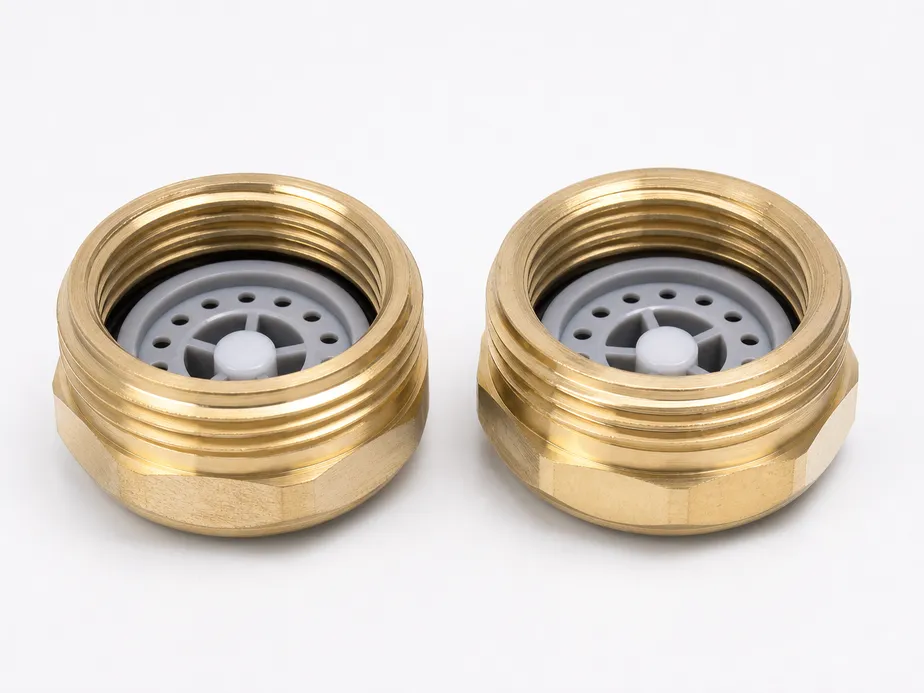
Flow Rates
0.5 & 1.0 GPM
Min. Order
200 pcs
Technical Overview
What Makes a Low Flow Aerator Different — and Why the Spec Matters for Your Market
A low flow faucet aerator is not simply a standard aerator with a tighter mesh. The flow restriction comes from a precision-molded flow restrictor disc seated upstream of the aerator mesh stack. That disc has a calibrated orifice — typically 1.5–2.0 mm diameter for a 1.0 GPM unit, smaller for 0.5 GPM — and it's the disc, not the mesh, that controls the rated flow. The mesh handles particulate; the disc handles compliance.
Mesh vs. Disc: Why the Distinction Matters
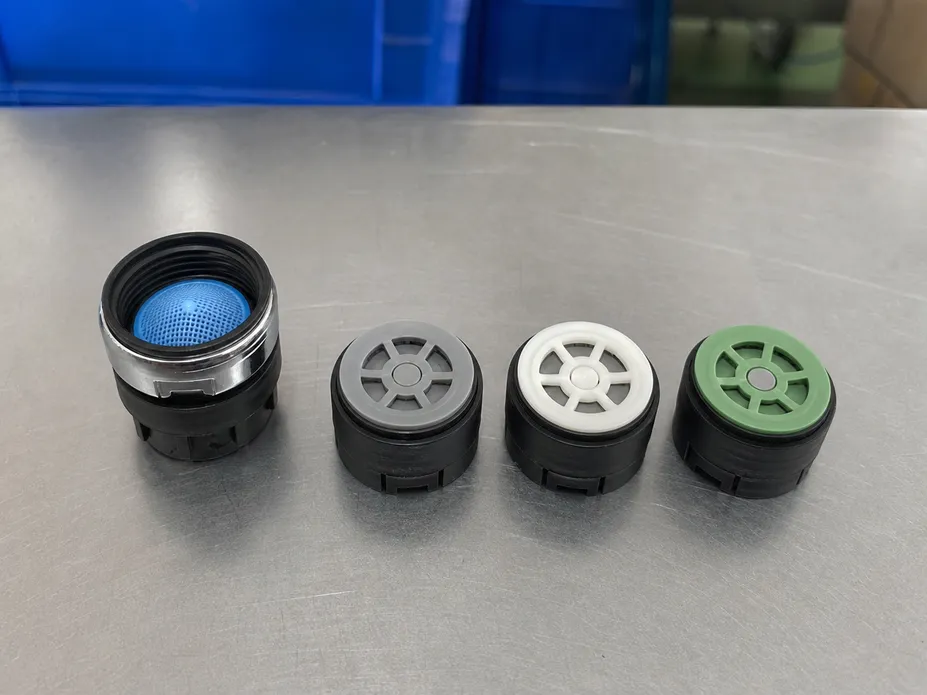
The mesh handles particulate filtration. The flow restrictor disc controls the rated flow rate. These are two separate functions handled by two separate components — which is why our modular design lets you swap compliance tiers without retooling the housing.
This distinction matters commercially because it determines how you manage your SKU range. Our aerator housings use a modular design: the flow restrictor disc is a separate insert, not molded into the housing. That means you can run a single brass housing across 0.5 GPM, 1.0 GPM, and 1.5 GPM variants by swapping the disc insert.
One Housing. Three Compliance Tiers.
0.5 GPM
Institutional / Commercial
1.0 GPM
Residential / All Markets
1.5 GPM
Standard Compliance
One housing tooling investment, three compliance tiers. For a distributor building a water conservation product line, that's the difference between stocking three separate SKUs with three separate housings and stocking one housing with three disc variants — a meaningful inventory simplification.
We've been manufacturing low flow aerators since the California CEC regulations started tightening around 2016, and the market has only expanded since. If your distribution footprint touches any of these markets, a water saving faucet aerator program isn't optional — it's a compliance requirement your buyers are already asking about.
Compliance Markets Covered
California CEC
≤1.2 GPM for lavatory faucets. Both our 0.5 and 1.0 GPM units comply.
US WaterSense
Federal ≤1.5 GPM threshold. Both models qualify.
EU EcoDesign
≤6 L/min (≈1.6 GPM). Both models comply with margin.
Australia WELS 3-Star
≤6 L/min for kitchen and bathroom. Both models meet the threshold.
Colorado & New York State
≤1.5 GPM thresholds adopted following California's lead. Both models comply.
Specifications
Flow Rate Specifications and Compliance Coverage
The two flow rates we manufacture for low flow programs are 0.5 GPM and 1.0 GPM. Here's where each one fits in the compliance landscape.
Model
0.5 GPM / 1.9 L/min
Institutional & commercial water cost reduction
Compliance Coverage
Model
1.0 GPM / 3.8 L/min
Higher-volume SKU — residential & all-market default
Compliance Coverage
A note on pressure variance
Flow rates above are measured at 60 PSI (4.1 bar), the standard test pressure for US and most international certifications. At lower pressures — common in older buildings or gravity-fed systems — actual flow will be lower. If your buyers operate in low-pressure environments, mention it when requesting a quote and we can advise on the right orifice size.
Compliance at a Glance
| Market / Standard | Max Allowed | 0.5 GPM | 1.0 GPM |
|---|---|---|---|
| US Federal WaterSense | 1.5 GPM | ||
| California CEC | 1.2 GPM | ||
| EU EcoDesign | 6 L/min (≈1.6 GPM) | ||
| Australia WELS 3-Star | 6 L/min | ||
| Colorado / New York State | 1.5 GPM | ||
| Singapore PUB Water Efficiency | 4 L/min (≈1.06 GPM) | Verify at local pressure |
Construction
Construction and Component Breakdown
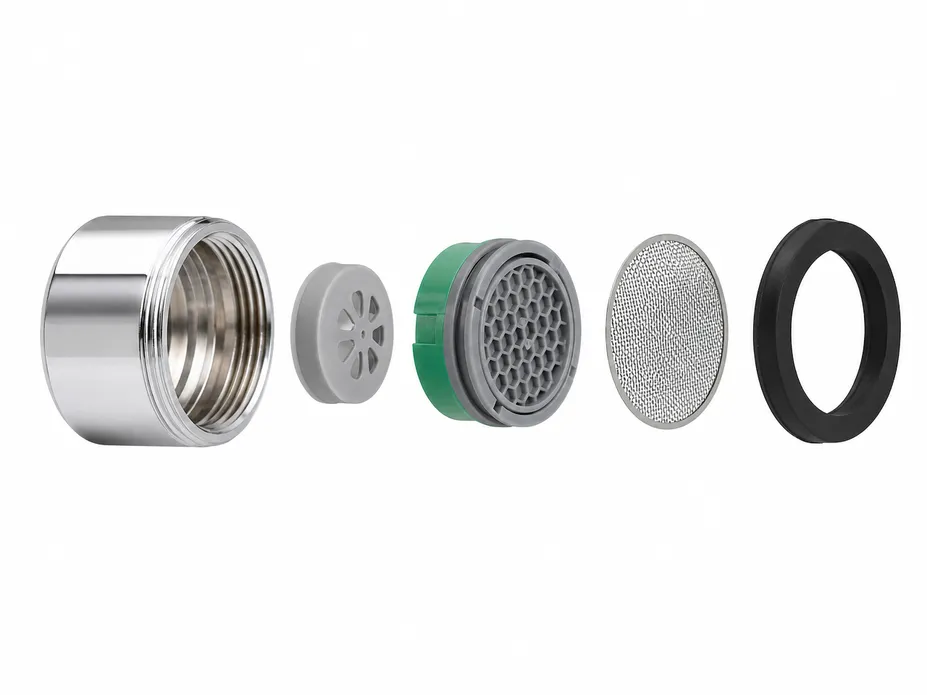
Every low flow aerator we manufacture is built from the same modular component stack. Understanding what's inside helps you answer buyer questions and position the product accurately against cheaper alternatives.
Outer Housing (Shell)
Brass or zinc alloy body with threaded male or female connection. Available in M16×1, M18×1, M22×1, and M24×1. Finished in chrome, brushed nickel, or matte black. The housing is the visible part buyers see and the structural anchor for all internal components.
Flow Restrictor Disc
The precision-orificed disc that sets the flow rate. Orifice diameter is approximately 1.0 mm for the 0.5 GPM model and 1.5 mm for the 1.0 GPM model. Made from durable polymer. This is the component that determines compliance tier — swapping the disc changes the flow rate without replacing the housing.
Aerator Insert (Mixer)
A multi-layer mesh and diffuser stack that introduces air into the water stream downstream of the restrictor. This is what gives the flow its soft, full appearance despite the low volume. Without it, a 0.5 GPM stream would look thin and unsatisfying to end users.
Inlet Screen / Sediment Filter
A fine stainless steel mesh at the inlet that catches particulates before they reach the restrictor orifice. Critical for the 0.5 GPM model — a 1.0 mm orifice will clog quickly without upstream filtration. The screen is removable for cleaning.
Rubber Gasket / O-Ring Seal
EPDM or silicone sealing ring that prevents leakage at the faucet spout connection. Included with every unit. Buyers sometimes ask whether they need to source a separate washer — they don't.
Why Construction Quality Matters for B2B
Modular disc design means your buyers can stock one housing SKU and swap flow rates — reducing their inventory complexity.
Brass housing resists corrosion and survives the chlorinated water conditions common in US and Australian municipal supplies.
Removable inlet screen extends service life in hard water markets — a common objection from hotel and facility buyers is maintenance cost.
Included gasket eliminates a common installation complaint and reduces returns from buyers who don't stock washers.
Optional Add-On
Cache / Tamper-Resistant Housing
For institutional buyers — hotels, hospitals, student housing — the standard aerator can be upgraded to a cache (key-required) housing. This prevents guests or occupants from removing or replacing the aerator, protecting the water savings program the buyer has invested in.
Cache housings use a proprietary key tool for installation and removal. We supply the key with bulk orders. The internal component stack — restrictor disc, aerator insert, screen, gasket — is identical to the standard model.
Who orders the cache version
Hotel chains running water efficiency programs across properties
Hospitals and healthcare facilities with compliance mandates
Universities and student housing with high turnover populations
Commercial office buildings targeting LEED or BREEAM credits
OEM & Private Label
OEM and Private Label Options
Most of our B2B buyers don't sell under our name — they sell under their own. We manufacture to support that. Here's what's available for OEM and private label programs on low flow aerators.
Custom Branding on Housing
Your logo or brand name laser-etched or pad-printed on the aerator housing. Available on brass and zinc alloy housings. Minimum order quantities apply — ask for details when requesting a quote.
Custom Retail Packaging
Blister card, clamshell, or poly bag packaging with your artwork. We can include flow rate callouts, compliance logos, and installation instructions in your language. Artwork files required in print-ready format.
Custom Flow Rate
Need a flow rate between 0.5 and 1.0 GPM, or a non-standard L/min value for a specific market? We can tool a custom restrictor disc orifice. Lead time and MOQ are higher than standard models — discuss requirements early.
Custom Finish
Beyond our standard chrome, brushed nickel, and matte black, we can match PVD finishes for buyers who need to coordinate with a specific faucet line. Finish matching requires a sample or Pantone/RAL reference.
Custom Thread Size
We stock M16, M18, M22, and M24 in both male and female configurations. Non-standard thread sizes — including imperial BSP threads for UK and Australian markets — can be produced with sufficient volume.
Third-Party Certification Support
If your market requires WaterSense, WELS, or EU EcoDesign certification under your brand name, we can provide test reports and technical documentation to support your application. We do not apply for certification on your behalf.
Standard MOQ
500 pcs
Per SKU, standard models
OEM / Custom MOQ
1,000 pcs
Per SKU, branded or custom spec
Lead Time
30–45 days
From order confirmation, standard spec
Compliance & Certifications
Certifications and Market Compliance
Regulatory compliance is a hard requirement in most B2B channels — not a differentiator. Here's where our aerators stand, and what documentation we can provide to support your import, distribution, or resale program.
EPA WaterSense
United States
Our 1.0 GPM and 0.5 GPM models meet WaterSense flow rate criteria. Test reports from an accredited third-party lab are available on request. WaterSense labeling on your packaging requires EPA partnership enrollment under your brand.
WELS (Water Efficiency Labelling)
Australia & New Zealand
Our aerators are tested to AS 6400 standards. We supply technical data sheets and flow test results to support your WELS registration. Registration must be completed by the importer of record — we provide the documentation package.
EU EcoDesign / Energy Label
European Union
EU Regulation 2021/340 sets maximum flow rates for taps and showers. Our aerators comply with the flow rate limits for Class A and Class B products. We provide a Declaration of Conformity and technical file on request for EU importers.
NSF/ANSI 61 — Lead Content
United States / Canada
Brass housing alloy is selected to meet NSF/ANSI 61 lead leaching limits. Material certifications and alloy composition reports are available. Full NSF listing under your brand requires separate application — we support the process with material data.
RoHS Compliance
European Union / Global
All plastic components — aerator insert, restrictor disc, flow straightener — are manufactured from RoHS-compliant materials. Supplier declarations and material data sheets are available for EU importers who need to maintain a technical file.
LEED / BREEAM Credit Support
Global Green Building Programs
We provide flow rate documentation, water savings calculations, and product data sheets formatted for LEED WE credits and BREEAM Wat credits. Useful for buyers supplying commercial construction or retrofit projects seeking green building certification.
Need Compliance Documentation?
All test reports, declarations, and material certifications are provided at no charge with a confirmed order or active quote. For pre-qualification purposes, we can share redacted versions — contact us with your specific requirement.
Ordering & Logistics
How to Order, Pricing Structure, and Shipping
We keep the process straightforward. No distributor portals, no mandatory account setup before you can get a price. Here's how B2B orders work from first contact to delivery.
Submit a Quote Request
Tell us the SKUs, quantities, destination country, and any custom requirements. Use the quote form or email directly. We respond within one business day.
Receive Proforma Invoice
We issue a proforma invoice with unit price, shipping cost, payment terms, and estimated lead time. Prices are quoted EXW factory or FOB port — your choice.
Confirm and Pay Deposit
Standard payment terms are 30% deposit, 70% before shipment. T/T bank transfer is preferred. For established accounts, net-30 terms are available after the first two orders.
Production and Shipment
We produce, QC inspect, and ship. You receive packing list, commercial invoice, and bill of lading. Pre-shipment inspection by a third party (SGS, Bureau Veritas) can be arranged at your cost.
Volume Pricing Tiers
| Order Quantity (per SKU) | Price Tier | Typical Buyer Profile | Lead Time |
|---|---|---|---|
| 500 – 999 pcs | Tier 1 — Base wholesale | Regional distributors, first-time buyers | 30–35 days |
| 1,000 – 4,999 pcs | Tier 2 — Standard volume | National distributors, hotel procurement | 30–40 days |
| 5,000 – 19,999 pcs | Tier 3 — High volume | Importers, large facility operators | 35–45 days |
| 20,000+ pcs | Tier 4 — Contract pricing | OEM buyers, national retail programs | Negotiated per order |
Exact pricing provided on proforma invoice. Tiers are per SKU — mixed SKU orders are priced on total volume. Prices are FOB unless otherwise agreed.
Sea Freight
Standard for orders above 500 kg CBW. We consolidate into cartons of 100 pcs and palletize for container loading. FCL and LCL both available. We work with freight forwarders in Ningbo and Shanghai.
Air Freight
Available for urgent orders or sample shipments. Cost-effective up to approximately 200 kg. We use DHL, FedEx, and UPS for express; air cargo for larger urgent shipments. Buyer pays freight unless otherwise agreed.
Export Documentation
We provide commercial invoice, packing list, bill of lading, and certificate of origin as standard. Form E (ASEAN), EUR.1, and other preferential origin certificates available where applicable. HS code: 8481.80.
Material Engineering
Brass Housing Construction: Why Material Choice Affects Your Warranty Exposure
The housing material on a low flow aerator is a sourcing decision that shows up in your warranty claims 18–24 months after the sale. We manufacture in both brass and zinc alloy, and we're direct about when each is appropriate.
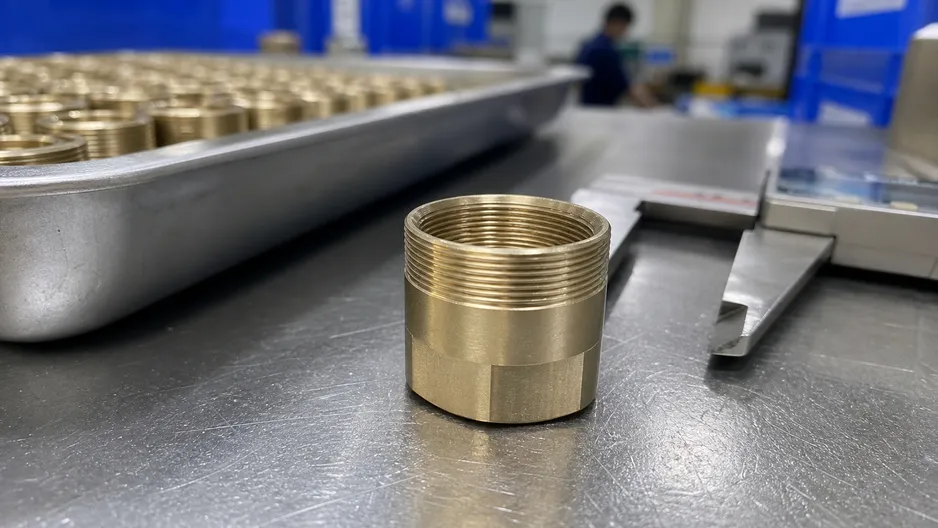
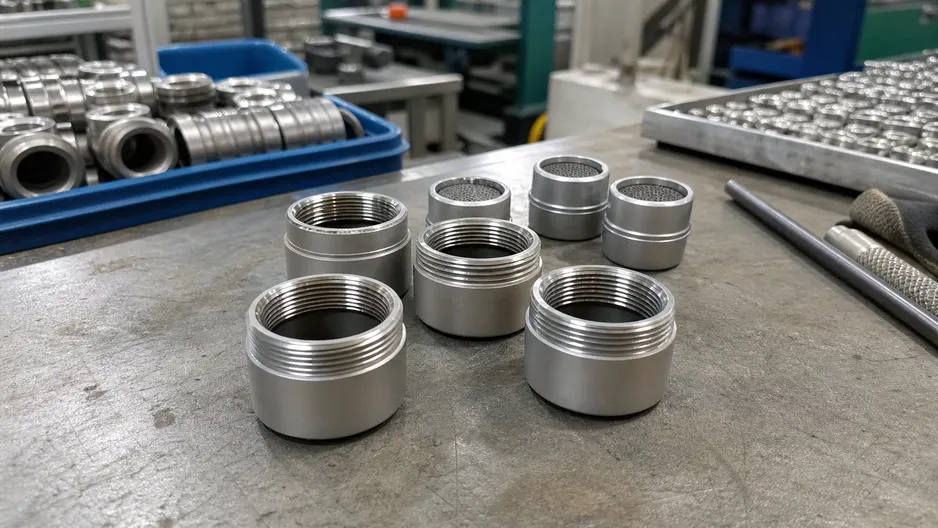
Brass Housing (C36000 Alloy)
C36000-equivalent free-machining brass — the same alloy we use across our faucet bodies — machines to tight thread tolerances and holds them across temperature cycling. The thread interface is where aerator failures start: a housing that expands and contracts differently from the faucet spout will eventually develop a slow drip at the joint.
Brass-to-brass thermal expansion is matched; brass-to-zinc is not. For any product going into a premium channel, a coastal market, or a commercial installation where the aerator will be removed and reinstalled periodically, brass is the right call.
Recommended For
- Premium channel distribution
- Coastal and humid markets (Florida, Gulf Coast, Singapore)
- Commercial installations with periodic removal and reinstallation
- Any application where warranty exposure is a primary concern
Zinc Alloy Housing (ZA-8)
ZA-8 alloy — not standard Zamak — is appropriate for mid-market price points where the retail price target doesn't support brass. The constraint is humidity and chloride exposure.
We've shipped zinc alloy aerators to buyers in Southeast Asian coastal markets and seen corrosion at the thread interface within 12–18 months — not catastrophic failure, but the kind of surface degradation that generates negative reviews and return requests. If your distribution footprint includes Florida, the Gulf Coast, Singapore, or similar humid coastal environments, the $0.15–0.20 per unit premium for brass housing is cheaper than the warranty cost.
Appropriate When
- Mid-market retail price targets require cost control
- Distribution is inland or low-humidity markets
- Aerator will not be frequently removed and reinstalled
Chrome Plating Stack
Multi-Layer Finish: The Detail That Separates Our Chrome from the Industry Standard
The chrome plating on our brass housings runs a copper base coat, nickel mid-coat, chrome top coat — the same multi-layer stack we use on our faucet bodies. That nickel mid-coat is what gives the finish its corrosion resistance; skipping it is a common cost-cutting move in the industry.
Our chrome passes 24-hour salt spray as a minimum. Brushed nickel and matte black are also available; matte black uses a PVD process rather than paint, so it holds up to cleaning products without fading.
Plating Stack
Salt Spray Rating
24 hrs
Minimum standard — same spec as faucet bodies
Matte Black Finish
PVD process — not paint. Resists cleaning products without fading.
The $0.15–0.20 Decision
The brass housing premium over zinc alloy is $0.15–0.20 per unit. In coastal or high-humidity markets, that delta is consistently cheaper than the warranty cost from thread interface corrosion at 12–18 months. If your distribution footprint includes any humid coastal geography, the material upgrade pays for itself before the first warranty cycle closes.
Demand Patterns
Market Segments Where Low Flow Aerators Drive Repeatable Volume
The commercial logic for stocking a water saving faucet aerator line is straightforward: compliance mandates create non-discretionary demand. Your buyers aren't purchasing because they want to — they're purchasing because their local code requires it or their sustainability certification demands it. That's a different demand pattern than a style-driven product, and it's worth understanding the segments.
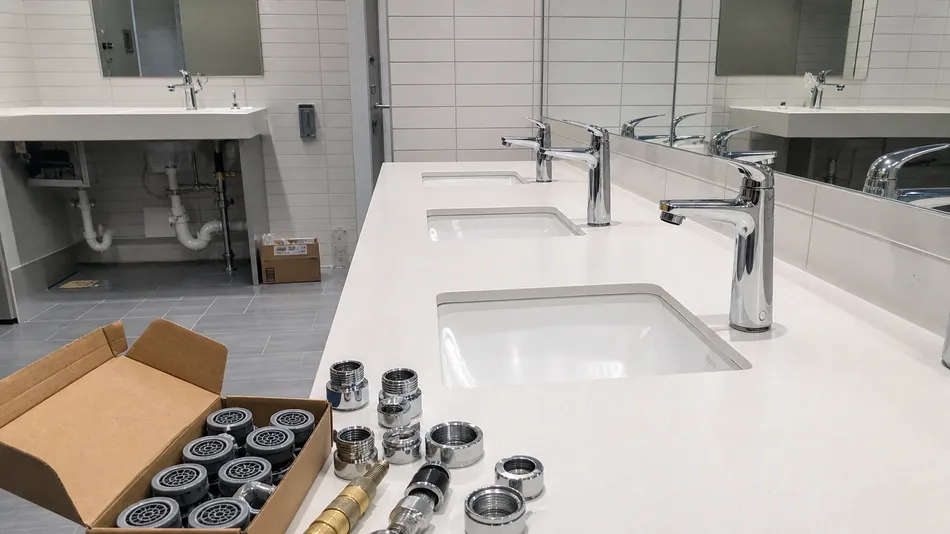
Green Building & LEED Certification Projects
Commercial construction projects pursuing LEED certification need to document water use reduction against a baseline. Low flow aerators at 1.0 GPM or below are a standard specification in LEED plumbing packages. A mid-size commercial building might specify 50–200 aerators across kitchen and bathroom fixtures.
Project contractors sourcing for LEED work typically order in the 200–500 unit range per project, with repeat orders as new projects come through their pipeline. If you're supplying plumbing contractors in markets with active commercial construction, this is a high-margin, specification-driven segment.
Typical Order Range
200–500 units
per project
Flow Spec Required
≤ 1.0 GPM
LEED plumbing baseline
Hotel & Hospitality Retrofits
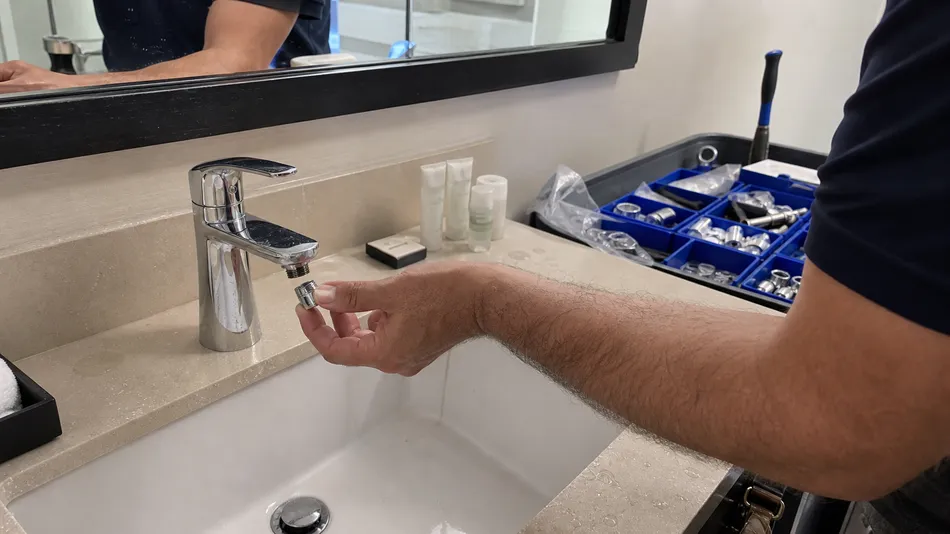
Hotel chains running water conservation programs — increasingly common as ESG reporting requirements tighten — retrofit existing faucets with low flow aerators rather than replacing the fixtures. A 200-room hotel might have 400–600 faucet points.
Regional hotel management companies running multi-property programs can generate orders in the 2,000–5,000 unit range. The cache aerator variant is the right specification here: it prevents guests from removing or replacing the aerator, which protects the hotel's water conservation metrics.
Buyers in the Middle East and Southeast Asia specifically request cache low flow aerators for hospitality programs — it's a detail that signals you understand the application.
Multi-Property Orders
2,000–5,000 units
per program cycle
Variant Required
Cache Aerator
tamper-resistant spec

Municipal & Institutional Retrofits
Water utilities and municipal governments in water-stressed regions run rebate programs that incentivize low flow fixture installation. Plumbing distributors who are approved suppliers for these programs can move significant volume — 10,000+ units per program cycle is not unusual in California, Texas, or Australian markets running active conservation incentives.
The documentation requirement for these programs is strict: flow rate test reports, compliance certifications, and sometimes third-party verification. We supply all of this with every shipment.
Program Volume
10,000+ units
per program cycle
Active Markets
CA, TX, AU
and similar water-stressed regions
E-Commerce & Replacement Parts Programs
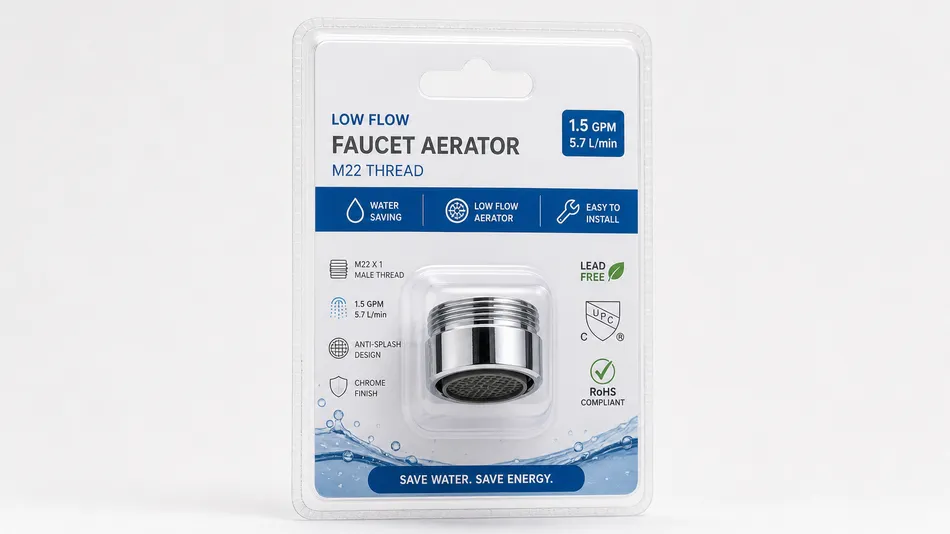
Low flow aerators are a high-velocity SKU on Amazon and similar platforms in the US and EU — consumers replacing aerators to reduce water bills or meet rental property compliance requirements. For distributors building an e-commerce assortment, the 1.0 GPM unit in chrome M22 is the highest-volume SKU.
Packaging for e-commerce needs to survive mail-order handling: we supply retail blister packs with header cards that include the flow rate specification and compliance claims printed on the packaging, which reduces customer service inquiries about whether the product meets their local code.
Top SKU
1.0 GPM M22
chrome, highest velocity
Packaging
Retail Blister
mail-order rated with compliance claims
Compliance-Driven Demand
Non-Discretionary Purchasing Is a Different Sales Motion
Compliance mandates mean your buyers are purchasing because they have to, not because they want to. That creates predictable, repeatable volume that isn't subject to the same style-cycle risk as decorative plumbing products. Understanding which segment you're serving — LEED, hospitality, municipal, or e-commerce — determines the right variant, documentation package, and order quantity to quote.
4
Distinct demand segments with different volume profiles
Flow Restrictor Disc Design: The Manufacturing Detail That Determines Compliance Accuracy
The flow restrictor disc is the component that determines whether your aerator actually delivers the rated flow rate — and whether it continues to do so after 12 months in service. This is where low flow aerator manufacturing separates from standard aerator manufacturing.
Orifice Tolerance: ±0.05 mm
We mold the flow restrictor disc in ABS with a calibrated orifice. The orifice diameter is held to ±0.05 mm tolerance — the same tolerance we hold on valve seat threads in our faucet bodies.
0.5 GPM Orifice
~1.0 mm
diameter
1.0 GPM Orifice
~1.5 mm
diameter
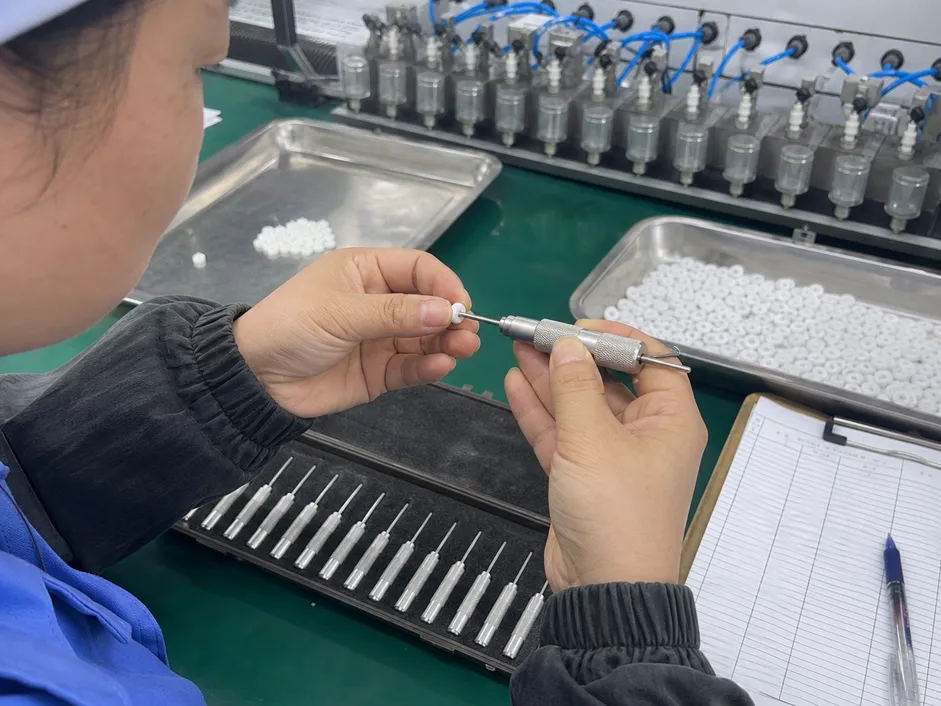
A 0.1 mm variation in orifice diameter at these scales translates to a measurable flow rate deviation. We run the disc tooling in-house and inspect orifice diameter on a sample basis from every production batch using a calibrated pin gauge set — not commodity supplier discs.
Positive-Retention Seating Geometry
The disc seats in a groove in the aerator housing upstream of the mesh stack. The seating geometry matters: if the disc can rock or shift under flow pressure, the effective orifice area changes and the flow rate drifts.
0.3 mm Interference Fit
We use a positive-retention groove with a 0.3 mm interference fit — the disc clicks in and stays put. No friction-only retention that shifts under thermal cycling.
What Friction-Only Retention Does
After a few months of thermal cycling, friction-held discs shift and the flow rate creeps up. That's the kind of compliance drift that gets a product pulled from a WaterSense program.
Batch Flow Testing: The Report Ships With Your Order
Every production batch is flow-tested at 60 PSI on our test bench before release. We pull a statistical sample — typically 5% of batch — and measure actual flow rate against the rated spec.
Test Pressure
60 PSI
Sample Rate
5%
of batch
Report Delivery
In the Box
The test report documents the sample size, the test pressure, and the measured flow rate range. If your compliance team or a third-party auditor needs to verify the flow rate claim, the data is already in the box.
Thread Sizing and Compatibility: Getting This Right Before You Order
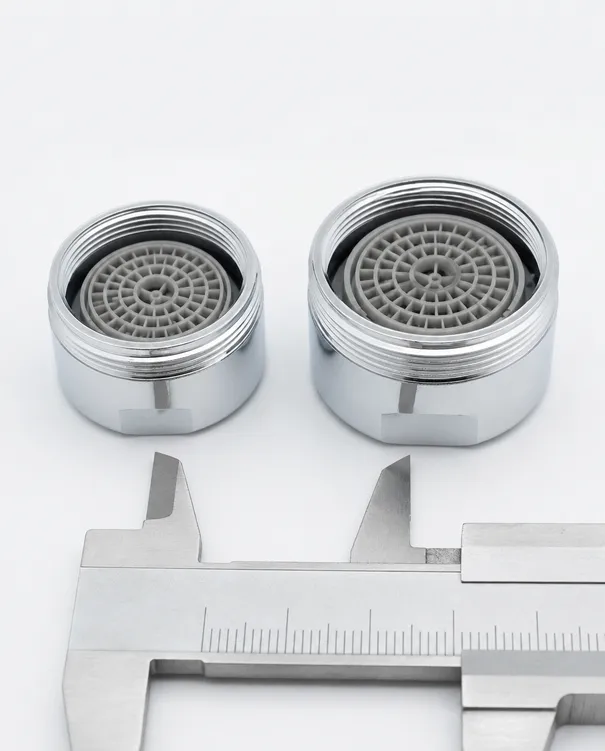
Thread size is the specification that generates the most sourcing errors on aerator orders, and low flow aerators are no exception. The thread must match the faucet spout — wrong thread means 100% return rate, no exceptions.
Thread Size Reference
| Thread Size | Common Application | Notes |
|---|---|---|
| M22×1 male | Most North American faucets | The default for US/Canada market sourcing |
| M24×1 male | Most European faucets | Standard in EU product; not interchangeable with M22 |
| M18×1 male | Smaller-diameter spouts, some Asian market faucets | Less common; confirm before ordering |
| M16×1 male | Compact bathroom faucets, some filter faucets | Niche; typically specified for specific faucet models |
| Female thread variants | Faucets with external male spout thread | Less common in residential; more common in commercial |
Retrofitting Existing Faucets
Send us a sample of the existing aerator or the faucet spout drawing. We'll confirm the thread spec and recommend the correct configuration. No guesswork, no returns.
Pairing With Wfaucet Faucets
If you're sourcing aerators to pair with faucets you're also buying from us, we pull the thread spec directly from the faucet drawing — no guesswork, no returns.
Multi-Market Catalog Recommendation
For buyers building a multi-market replacement parts catalog, we recommend stocking these as your two primary SKUs:
M22 — North America
Primary SKU for US/Canada market
M24 — Europe
Primary SKU for EU market
M18 and M16 are worth stocking in smaller quantities for service and repair applications. Those two thread sizes cover the majority of residential faucets in both markets.
Unsure of Your Thread Spec?
The safest approach is to send us a sample of the existing aerator or the faucet spout drawing before placing your order.
Send Thread InquiryCustomization Options for OEM Low Flow Aerator Programs
Most buyers running a water saving faucet aerator program want their brand on the product, not ours. OEM customization on low flow aerators covers the following dimensions.
| Customization Option | Details | MOQ Impact |
|---|---|---|
| Flow rate | 0.5 GPM or 1.0 GPM (disc swap, same housing) | No MOQ change |
| Thread size | M16, M18, M22, M24 in male or female | No MOQ change for standard sizes |
| Housing material | Brass or zinc alloy | No MOQ change |
| Finish | Chrome, brushed nickel, matte black | No MOQ change for standard finishes |
| Cache vs. external | Cache (key-removal) or standard | No MOQ change |
| Logo engraving | Laser engraving on housing face | No MOQ change; setup fee applies |
| Pad printing | Brand name or flow rate marking on housing | No MOQ change; setup fee applies |
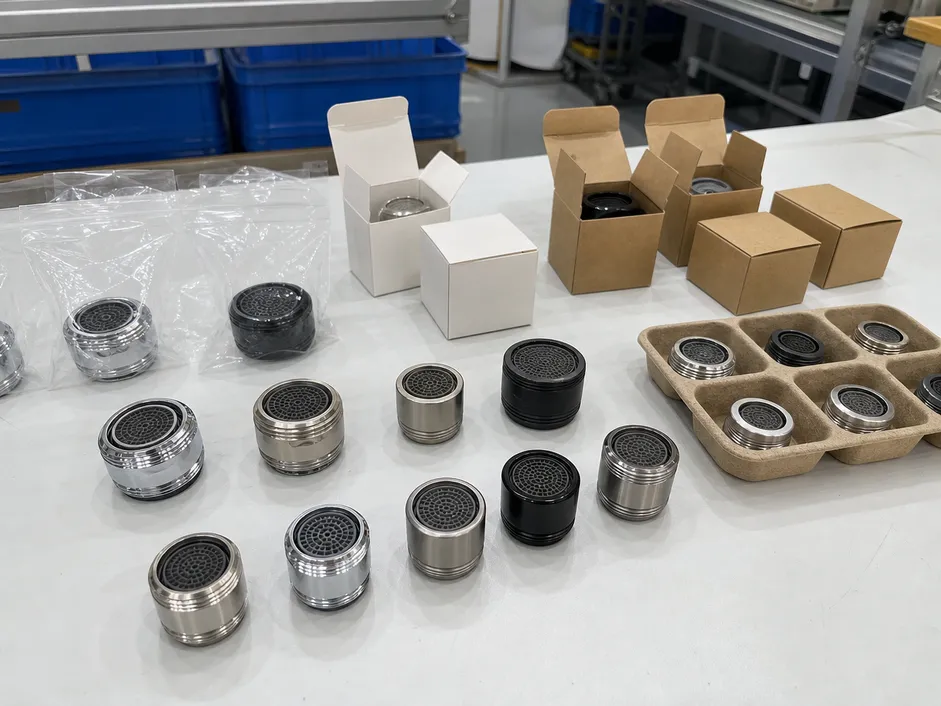
| Retail packaging | Blister pack, poly bag, or branded box | No MOQ change for standard formats |
| Custom packaging | Branded box with your UPC, compliance claims, flow rate spec | 500 pcs minimum for custom print run |
| Non-standard thread | Sizes outside M16–M24 range | New tooling required; 20–25 day lead time addition |
MOQ and Lead Time at a Glance
- 200 pieces per SKU — MOQ for standard catalog configurations
- 15–20 days — lead time for standard OEM (existing tooling, new finish or packaging)
- 500 pieces minimum — for custom packaging print run
- +20–25 days — additional lead time for non-standard thread tooling
Compliance-Driven Packaging Programs
If you're running a compliance-driven program with specific packaging requirements — flow rate certification printed on the box, WaterSense logo placement, WELS star rating — we handle the artwork coordination and can supply packaging pre-printed with your compliance claims.
That saves your warehouse a labeling step and ensures the compliance information is on the primary packaging, which is what retail buyers and program auditors check.
Packaging Compliance Claims We Handle
- Flow rate certification on primary box
- WaterSense logo placement
- WELS star rating
- Your UPC and brand identity
Compliance Documentation: What Ships with Every Order
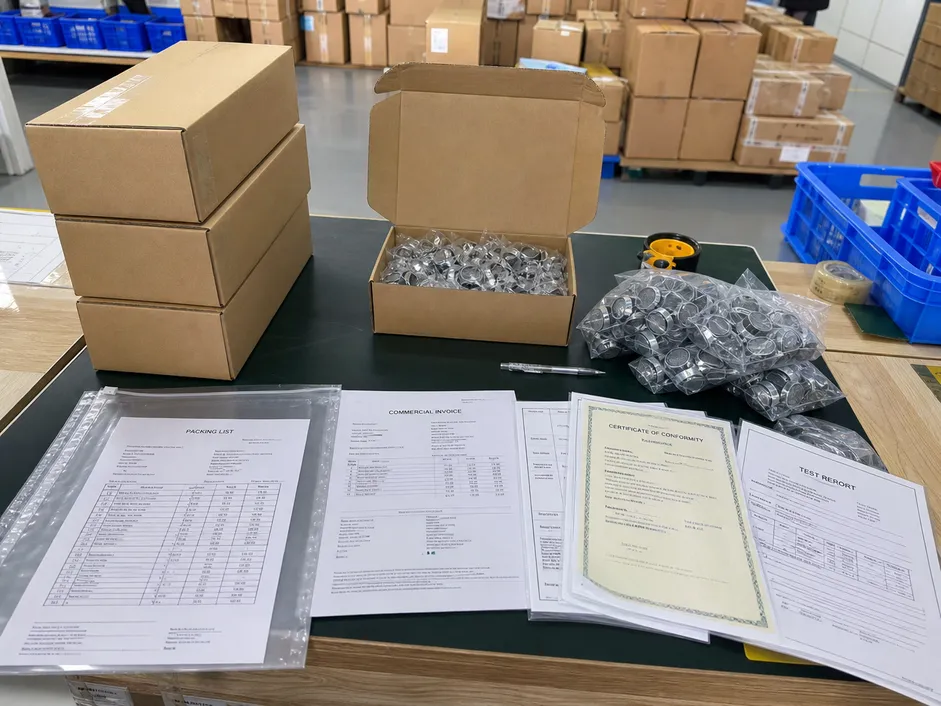
For a low flow faucet aerator, the documentation is as important as the product. Compliance programs, customs clearance, and retail buyer requirements all depend on having the right paperwork. Here's what we include with every shipment.
Flow Rate Test Report
Documents the tested flow rate at 60 PSI for the specific batch, sample size, and measured range. This is the primary document for WaterSense program compliance and for retail buyers who require flow rate verification.
Material Safety / Lead Content
Our brass housings use C36000-equivalent alloy with lead content below 0.25% — compliant with California AB 1953 and the federal Reduction of Lead in Drinking Water Act. XRF test results are available on request.
Certification Documents
cUPC for North American plumbing code compliance, CE for EU market entry, WaterMark for Australia. We include the relevant certificates for your destination market with every shipment. SGS test reports are available for Middle East and Southeast Asian markets.
Packing List and Commercial Invoice
Prepared with the correct HS code classification for aerator components. For North American shipments, we can provide a binding ruling reference for customs pre-clearance if your broker needs it.
A Note on WaterSense Labeling
One thing that comes up regularly with buyers running WaterSense programs: the WaterSense label itself requires third-party certification by an EPA-recognized laboratory — our flow rate test report supports the application, but it doesn't substitute for the third-party certification.
We can connect you with testing labs we've worked with if you're building a WaterSense-labeled product line.
Documentation by Destination Market
Buyer Guidance
Installation Compatibility and End-User Considerations That Affect Your After-Sales Cost
Low flow aerators install the same way as standard aerators — thread onto the faucet spout, hand-tight plus a quarter turn with a wrench. The installation detail that generates the most after-sales calls is flow rate perception: end users accustomed to 2.2 GPM faucets notice the difference when they switch to 1.0 GPM, and some interpret it as a defect rather than a feature.
Managing Flow Rate Perception in Your Channel
The way to manage this in your distribution channel is packaging language. We can print the flow rate specification and a brief explanation on the retail packaging:
"WaterSense compliant — 1.0 GPM / 3.8 L/min"
Buyers who know what they're getting don't call your customer service line. For institutional and commercial programs where the aerator is installed by a contractor rather than an end user, this is less of an issue — the contractor understands the specification.
Cache Aerator Key Tool Logistics
Cache aerators require a key tool for removal. We include one key per unit in the retail packaging, and we can supply bulk key sets for commercial installers who are retrofitting multiple fixtures.
Hospitality & Institutional Programs
Confirm with your buyer whether they want the key included in the retail pack or supplied separately to the facilities team. Bulk key sets are available for commercial retrofit programs.
Hard Water Markets
Reducing Service Calls in Scale-Prone Regions
For buyers supplying into markets with hard water — much of the US Southwest, the Middle East, parts of Australia — we recommend noting on the packaging that the aerator mesh should be cleaned every 6–12 months.
Hard water scale accumulates on the mesh and can reduce flow below the rated spec over time, which generates complaints that the aerator is "getting worse." A cleaning reminder on the packaging sets the right expectation and reduces service calls.
Region
US Southwest
Region
Middle East
Region
Parts of Australia
Recommended Maintenance Interval
Clean aerator mesh every 6–12 months
After-Sales Cost Drivers: Quick Reference
Issue
Flow rate perceived as defect
End users unfamiliar with WaterSense specs call in thinking the aerator is faulty.
Fix
Print GPM spec and WaterSense compliance statement on retail packaging.
Issue
Cache aerator removal without key
Facilities teams or end users can't remove the aerator for cleaning or replacement.
Fix
Include key in retail pack, or supply bulk key sets to commercial installers separately.
Issue
Flow degrading over time in hard water
Scale buildup on mesh reduces flow below rated spec, generating "getting worse" complaints.
Fix
Add 6–12 month cleaning reminder to packaging for hard water market distribution.
Product Range
Sibling Products in the Aerator Range
Low flow aerators are one configuration in our broader aerator line. Depending on your market and application, other products in the range may be relevant. If you're building a complete aerator assortment — low flow for compliance markets, standard flow for general distribution, filter aerators for hard water regions — we can supply the full range from one factory with consistent housing dimensions and finish matching.
Standard Faucet Aerators
1.5–2.2 GPM
General residential and commercial programs. Higher flow rates; covers markets without strict conservation mandates.
Best for: General residential & commercial
Kitchen Faucet Aerators
1.5–2.2 GPM
Kitchen applications with spray/stream switching. Dual-function design for kitchen use.
Best for: Kitchen applications
Bathroom Faucet Aerators
Standard Flow Rates
Bathroom sink applications, laminar or aerated flow. Compact cache and external thread options.
Best for: Bathroom sink applications
Filter Faucet Aerators
Hard Water / Filtration
Hard water markets, sediment filtration. Integrated replaceable pre-filter; flow rate secondary to filtration.
Best for: Hard water markets
Sink Faucet Aerators
Cross-Brand Replacement
Cross-brand replacement parts programs. Universal thread compatibility focus for broad fixture coverage.
Best for: Replacement parts programs
Full Range
One Factory, Complete Assortment
Consistent housing dimensions and finish matching across all SKUs. Mix aerator types from the same product family without finish mismatches.
Aerator Range Comparison
| Product | Best For |
|---|---|
| Standard Faucet Aerators | General residential and commercial programs, 1.5–2.2 GPM |
| Kitchen Faucet Aerators | Kitchen applications with spray/stream switching |
| Bathroom Faucet Aerators | Bathroom sink applications, laminar or aerated flow |
| Filter Faucet Aerators | Hard water markets, sediment filtration |
| Sink Faucet Aerators | Cross-brand replacement parts programs |
Consistent housing dimensions and finish matching across the full range — simplifies catalog management and eliminates finish mismatches when buyers mix SKUs. View the Full Faucet Aerators & Components Range →
Frequently Asked Questions
Decision-support answers for buyers sourcing low flow aerators for residential distribution, commercial programs, and OEM product lines.
What is the difference between a 0.5 GPM and 1.0 GPM low flow aerator, and which should I stock?
What is the difference between a 0.5 GPM and 1.0 GPM low flow aerator, and which should I stock?
The flow rate is controlled by the restrictor disc orifice — 0.5 GPM has a smaller orifice (~1.0 mm) than 1.0 GPM (~1.5 mm). Both meet every major compliance threshold in the US, EU, and Australia.
The 1.0 GPM unit is the right default for residential distribution: it meets California's ≤1.2 GPM requirement and WaterSense's ≤1.5 GPM threshold while maintaining enough flow that end users don't perceive a significant pressure drop.
The 0.5 GPM unit is for institutional and commercial applications where water cost reduction is the primary driver — hotel conservation programs, municipal retrofits, LEED projects.
Residential Distribution
Start with 1.0 GPM. Meets CA CEC and WaterSense. Acceptable perceived flow for end users.
Commercial / Institutional
Stock both. 0.5 GPM for hotel programs, municipal retrofits, LEED projects where cost reduction drives spec.
Do your low flow aerators qualify for WaterSense labeling?
Do your low flow aerators qualify for WaterSense labeling?
Our 1.0 GPM aerators meet the flow rate requirement for WaterSense (≤1.5 GPM at 60 PSI), and we supply flow rate test reports with every shipment.
However, the WaterSense label itself requires third-party certification by an EPA-recognized laboratory — our test report supports the application but doesn't substitute for it.
If you're building a WaterSense-labeled product line, we can supply the aerators and connect you with testing labs we've worked with for the certification process. The certification cost and timeline depend on the lab, but the product qualification step is straightforward given our existing test documentation.
How do I verify that the aerator thread matches my faucet spout before placing a production order?
How do I verify that the aerator thread matches my faucet spout before placing a production order?
Send us a sample of the existing aerator or the faucet spout drawing. We'll confirm the thread spec and recommend the correct configuration.
If you're sourcing low flow aerators to pair with faucets you're also buying from us, we pull the thread spec directly from the faucet drawing — no guesswork.
Default Thread Coverage
M22×1 — majority of North American residential faucets
M24×1 — most European product
Those two SKUs handle the bulk of the market for replacement parts catalogs without a specific faucet reference.
What is the lead content in your brass aerator housings, and does it comply with California AB 1953?
What is the lead content in your brass aerator housings, and does it comply with California AB 1953?
Our brass housings use C36000-equivalent free-machining brass with lead content below 0.25% — compliant with California AB 1953 and the federal Reduction of Lead in Drinking Water Act.
We test incoming brass batches using XRF analysis and maintain test records by batch.
XRF test results are available on request and can be included in your shipment documentation for California market compliance.
Can you supply low flow aerators with cache (key-removal) design for commercial and hospitality applications?
Can you supply low flow aerators with cache (key-removal) design for commercial and hospitality applications?
Yes. Cache low flow aerators are available in both 0.5 GPM and 1.0 GPM, in all standard thread sizes and finishes.
The cache design uses a recessed housing that requires a key tool for removal — it can't be unscrewed by hand, which prevents guests or building occupants from replacing the aerator and defeating the conservation program.
One key per unit included in retail packaging; bulk key sets available for commercial installers.
Standard specification for hospitality, institutional, and municipal retrofit programs.
MOQ and lead time are the same as standard external aerators.
What packaging options are available for retail and e-commerce distribution?
What packaging options are available for retail and e-commerce distribution?
Standard options are retail blister pack with header card, bulk poly bag (for wholesale/distribution), and branded box.
E-Commerce Distribution
Blister pack with flow rate specification and compliance claims printed on the header card — reduces customer service inquiries about local code compliance.
Custom Branded Packaging
Your brand, UPC barcode, and compliance claims (WaterSense, WELS star rating, California CEC compliance). Minimum order 500 pieces for the custom print run. We handle artwork coordination and can supply packaging pre-printed with your compliance claims.
Source Low Flow Aerators Direct from the Manufacturer
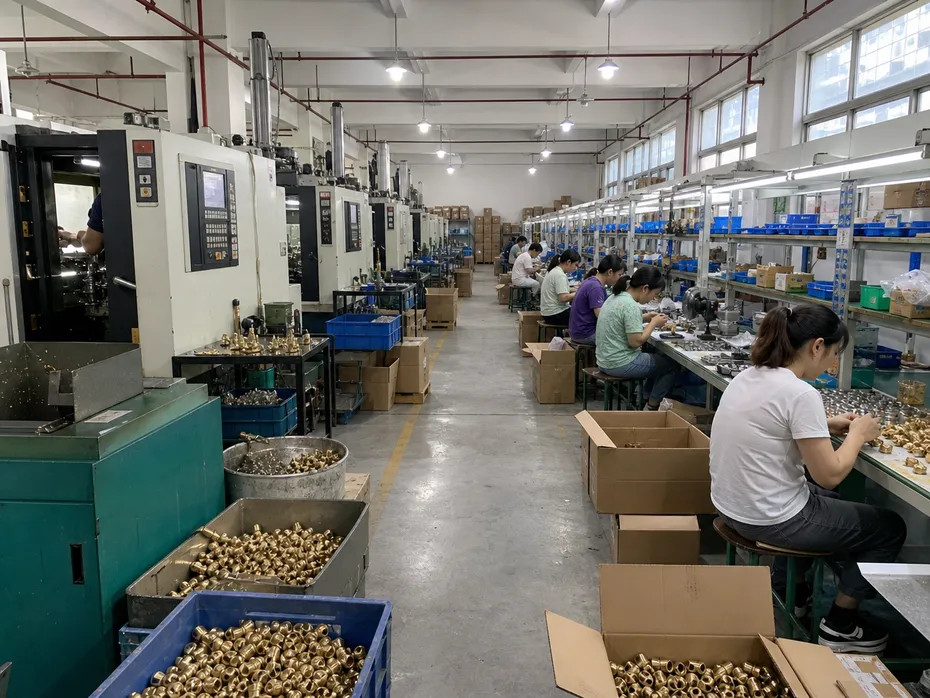
We've been manufacturing low flow faucet aerators as part of our integrated faucet component operation since the California CEC regulations started driving demand for sub-1.5 GPM product. The same brass alloy, the same CNC tolerances, the same QC protocols that run our faucet lines run our aerator lines.
Flow rate test reports, lead content documentation, and market-specific certifications ship with every order.
200 pcs
Minimum Order
0.5 / 1.0
GPM Options
17+ yrs
Manufacturing
If you're building a water conservation product line, a compliance-driven replacement parts program, or sourcing low flow aerators for a specific institutional or commercial project, send us your target flow rates, thread sizes, and volume expectations. We'll come back with a detailed quote, sample availability, and a recommendation on which configuration fits your market and compliance requirements.
Contact Direct
What to Include
- Target flow rates (0.5 or 1.0 GPM)
- Thread sizes or faucet spout drawing
- Volume expectations and timeline
- Target markets and compliance requirements
- Finish and packaging preferences