

Pull Down Kitchen Faucets Built for Zero-Return Performance
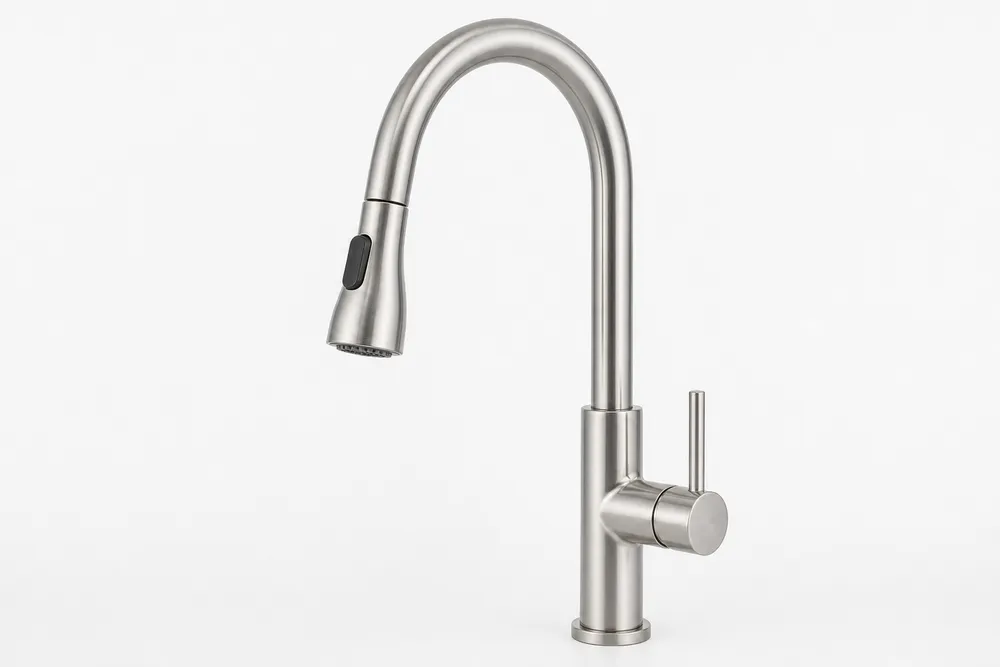
Pull down kitchen faucets built on brass gravity casting — the highest-volume configuration in our kitchen line, engineered for zero-return performance across North American, European, and Australian markets.
High-arc spout, weighted counterbalance retraction, ceramic disc cartridge tested to 500,000 cycles. Available in 5 finishes with cUPC, CE, and WaterMark certification under one roof.
Kitchen Collection
Why Pull-Down Is the Configuration That Drives Your Kitchen Faucet Volume
Pull-down is not one configuration among many — it's the dominant form factor in North American kitchen hardware retail, and it accounts for the largest share of our kitchen faucet production. When distributors and importers come to us to build or expand a kitchen faucet catalog, pull-down is almost always the first SKU they want to nail down. The reason is straightforward: it's the configuration your downstream customers are searching for, the one that moves fastest off shelves, and the one where finish and quality consistency directly affect your reorder rate.
The pull-down design — high-arc spout with a retractable spray head that pulls straight down toward the sink basin — gives end users the reach and flexibility that fixed-spout faucets can't match. But from your perspective as a buyer, what matters is that this configuration has a specific set of mechanical demands that separate a well-made unit from one that generates warranty claims at 18 months.
The retractable hose takes mechanical stress on every use. The counterbalance mechanism has to return the spray head reliably for years. The spray face has to resist mineral buildup in hard-water markets. We've been running this configuration on a dedicated assembly station since it became the volume leader in our kitchen line, and the production decisions we've made reflect what we've learned from shipping it to buyers across five continents.

Dominant Retail Form Factor
Pull-down is the highest-velocity SKU in North American kitchen hardware retail. It's the configuration your downstream customers are actively searching for.
Finish Consistency Drives Reorders
Quality and finish consistency on pull-down directly affect your reorder rate. A unit that holds its finish at 24 months keeps your retail partner coming back.
Five-Continent Production Experience
We've shipped pull-down to buyers across North America, Europe, Australia, and beyond. The production decisions we've made reflect what we've learned from those markets.
Engineering Detail
The Retraction Mechanism: Where Most Pull-Down Faucets Fail
This is the section most product pages skip, and it's the one that matters most for your return rate.
The Two Failure Modes
Spring Fatigue
Spring-return units begin showing retraction lag at approximately 80,000 cycles on accelerated testing. The coil loses tension over time — there's no recovery.
Hose Kinking
Repeated extension cycles stress the hose at the bend point. Kinking results in a spray head that won't retract — the most common pull-down warranty claim category.
The retractable hose on a pull-down faucet is under mechanical stress every single time the spray head is extended and retracted. On a residential faucet used 10–15 times per day, that's 3,500–5,000 cycles per year. The two failure modes we see most often in the market are spring fatigue and hose kinking — both of which result in a spray head that won't retract properly, which generates a warranty claim and an RMA.
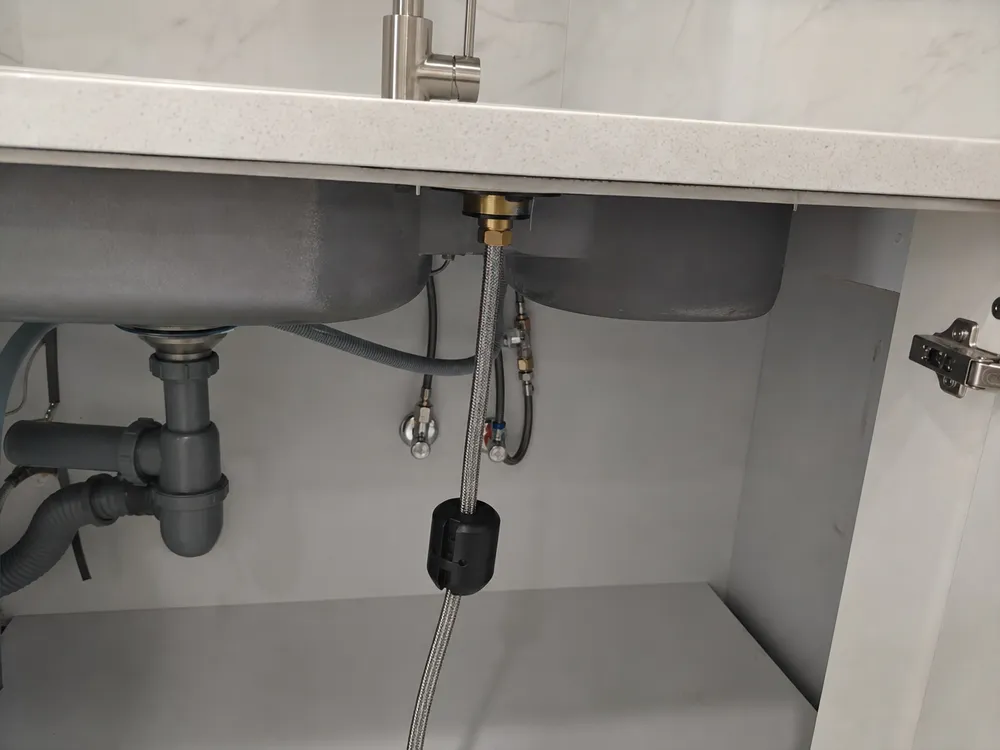
We switched from spring-return to a weighted counterbalance system in 2021 after seeing spring fatigue failures on long-run orders. The counterbalance weight hangs on the hose below the deck, using gravity rather than spring tension to return the spray head. There's no spring to fatigue, no coil to lose tension over time.
The hose itself is braided stainless steel, rated for 500,000 extension cycles — the same endurance standard we apply to our cartridge testing. We tested both configurations side by side on an accelerated cycle rig before making the switch. The spring-return units started showing retraction lag at around 80,000 cycles. The counterbalance units were still returning cleanly at 500,000.
The hose connects to the spray head via a quick-connect fitting with a PTFE-sealed compression thread. No thread sealant tape required during installation, which eliminates one of the most common sources of field installation error — an undertightened or overtaped connection that leaks at the joint within the first year.
What This Means for Your Business
For your downstream customers: a faucet that works the same way at year three as it did on day one.
For you: zero RMA on retraction mechanism failure — the most common pull-down warranty claim category we hear about from buyers who've switched to us from other suppliers.
Spring-Return vs. Weighted Counterbalance: Side-by-Side
| Attribute | Spring-Return | Weighted Counterbalance |
|---|---|---|
| Return mechanism | Coil spring tension | Gravity via hanging weight |
| Failure mode | Spring fatigue, coil tension loss | No fatigue component |
| Retraction lag onset | ~80,000 cycles (accelerated test) | Clean return at 500,000 cycles |
| Hose material | Varies by supplier | Braided stainless steel |
| Hose connection | Threaded, tape required | Quick-connect, PTFE-sealed compression |
| Installation error risk | Undertightened / overtaped joint leaks | Eliminated — no tape required |
| RMA exposure | High — most common pull-down claim | Zero on mechanism failure |
Cycle data from accelerated endurance testing conducted on both configurations prior to the 2021 production switch. Spring-return retraction lag observed at ~80,000 cycles; counterbalance configuration returned cleanly through 500,000 cycles with no retraction degradation.
Technical Specifications
Standard parameters for our pull-down kitchen faucet line. Exact values vary by model — contact us for model-specific data sheets.
Full Parameter Reference
| Parameter | Specification |
|---|---|
| Body Material | C36000-equivalent free-machining brass |
| Valve / Cartridge | Ceramic disc, 500,000-cycle endurance tested per batch |
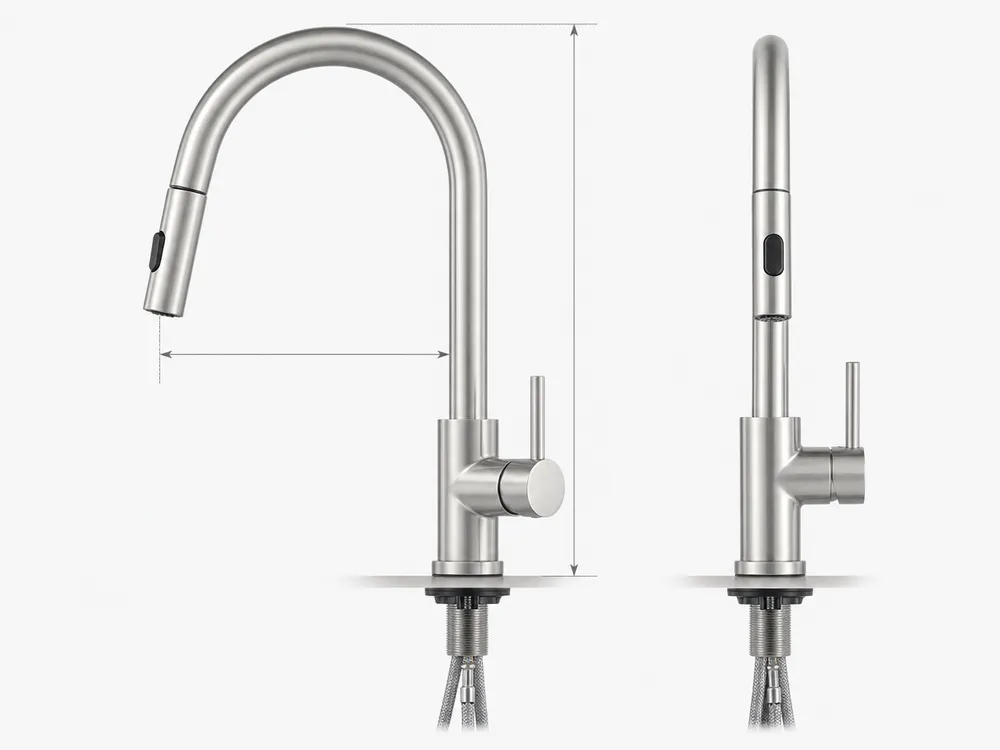
| Spout Height | Typically 360–420mm (high-arc profile) |
| Spout Reach | Typically 200–250mm |
| Spray Head Extension | Typically 400–500mm hose extension |
| Retraction Mechanism | Weighted counterbalance (gravity return) |
| Hose Material | Braided stainless steel |
| Hose Cycle Rating | 500,000 extension cycles |
| Flow Rate | 1.8 GPM standard; 1.5 GPM WaterSense-compatible available |
| Operating Pressure | 0.05–0.8 MPa |
| Leak Test | 0.6 MPa, 60 seconds, 100% of units |
| Spray Modes | Stream + spray (standard); stream + spray + pause available |
| Spray Face | Silicone nozzle, tool-free cleaning |
| Connections | 3/8" compression (standard); G1/2" available for European market |
| Hole Configuration | 1-hole deck mount (standard) |
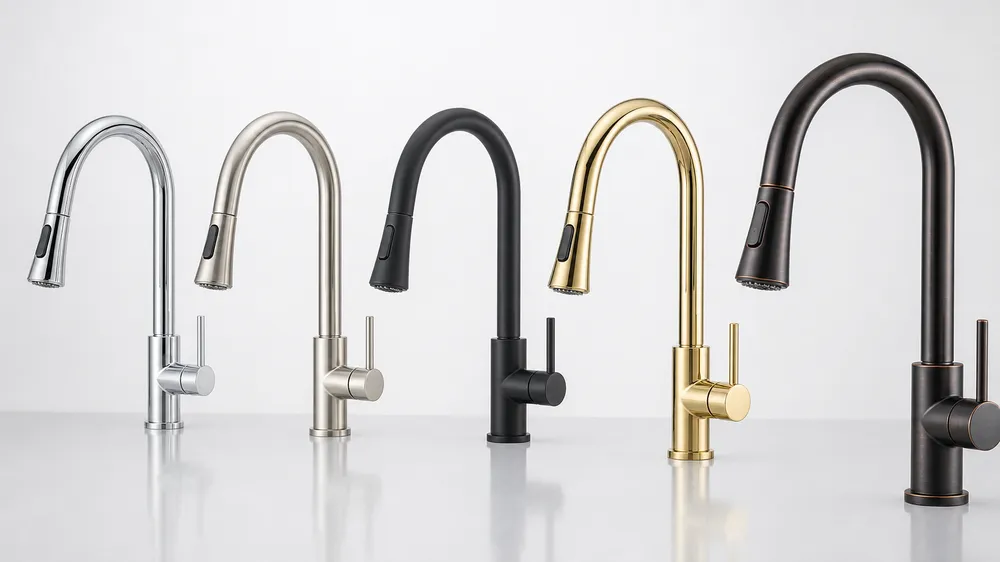
| Available Finishes | Chrome, brushed nickel, matte black, PVD gold, oil-rubbed bronze |
| Salt Spray (chrome/nickel) | 24h minimum; 48h on new finish batches |
| Salt Spray (PVD finishes) | 48h minimum; cross-cut adhesion tested per batch |
| Certifications | cUPC (North America), CE (Europe), WaterMark (Australia), SGS |
| OEM MOQ | 200 pieces per SKU |
| Standard Lead Time | 25–35 days (catalog items); 35–50 days (OEM with new tooling) |
Specifications shown are industry-standard values for this product type. Actual specifications may vary by model. Contact us for detailed product data sheets.
Key Performance Thresholds
-
500,000 Cartridge Cycles
Ceramic disc, endurance tested per batch — not per design revision
-
100% Leak Tested
0.6 MPa for 60 seconds — every unit, not sampled
-
500,000 Hose Extension Cycles
Braided stainless steel hose rated to match cartridge lifespan
-
Multi-Market Certified
cUPC, CE, WaterMark, SGS — one SKU covers North America, Europe, Australia
OEM Entry Point
Finish Options and What Each Means for Your Margin
All five finishes run on our in-house lines — no subcontracting. That matters for mixed-SKU orders because finish consistency across a 3,000-unit run is controlled by one team using documented bath chemistry parameters, not coordinated across three vendors.
Chrome
Anchor SKUMulti-layer electroplated: copper base coat, nickel mid-coat, chrome top coat. The nickel mid-coat is the corrosion barrier; factories that skip it to cut cost produce chrome that fails salt spray at 48 hours and shows tarnishing in humid climates within a year.
Salt Spray
24h min; 48h new batches
Position
Lowest unit cost, highest catalog velocity
Brushed Nickel
Volume LeaderPVD process, 0.3–0.5μm coating thickness. Fingerprint-resistant surface. The dominant finish in North American kitchen hardware retail for the past several years, and the one that commands a retail price premium over chrome while still moving at high volume.
Process
PVD, 0.3–0.5μm
Benefit
Zero RMA for finish degradation, coastal accounts
Matte Black
Fastest GrowingPVD process, 48h salt spray rated. The fastest-growing finish in the contemporary kitchen segment and the configuration driving the most new SKU requests from our e-commerce OEM buyers. If you're building a private label catalog targeting the design-forward residential renovation market, matte black pull-down is the SKU to lead with.
Salt Spray
48h rated
Target Segment
Design-forward residential renovation, e-commerce OEM
PVD Gold / Brushed Gold
Premium TierPhysical vapor deposition, 0.3–0.5μm. Specified for hospitality, luxury residential, and Middle Eastern markets. PVD gold holds color consistency better than electroplated gold over time — no color shift from cleaning chemicals, which matters when your buyer is specifying a hotel fit-out and needs finish consistency across 200 units installed over 18 months.
Process
PVD, 0.3–0.5μm
Key Markets
Hospitality, luxury residential, Middle East
Oil-Rubbed Bronze
Traditional / TransitionalElectroplated with a living finish characteristic. Specified for traditional and transitional kitchen styles. Popular in North American markets with a strong farmhouse and craftsman aesthetic segment. This finish pairs particularly well with our farmhouse-style pull-down handle profiles — worth noting if you're targeting that segment.
Process
Electroplated, living finish
Style Fit
Traditional, transitional, farmhouse, craftsman
Pairing Note
Farmhouse-style pull-down handle profiles available
In-House Finish Control
All five finishes produced on our own lines. Documented bath chemistry parameters. Consistent results across mixed-SKU runs — no vendor coordination risk on 3,000-unit orders.
Finish Decision Matrix
Chrome → Catalog anchor, lowest unit cost
Highest velocity; nickel mid-coat separates quality from commodity
Brushed Nickel → North American retail premium
Dominant finish; price premium over chrome, still high volume
Matte Black → E-commerce OEM, private label lead SKU
Fastest-growing; design-forward residential renovation
PVD Gold → Hospitality, luxury, Middle East
Color-stable under cleaning chemicals; hotel fit-out consistency
Oil-Rubbed Bronze → Traditional / transitional, farmhouse
Living finish character; pairs with farmhouse handle profiles
Mixed-Finish MOQ Policy
Mixed-finish orders on the same body SKU qualify for blended MOQ. Minimum 500 units per finish variant within a 3,000-unit run. Useful for buyers building a full catalog launch across multiple colorways without committing to 3,000 per finish.
Valve & Flow Control
The valve is the component your buyers will never see and the one that determines whether they reorder from you or switch suppliers after the first warranty cycle. Here's what's inside and why each spec decision matters.
Ceramic Disc Cartridge
Core Valve Technology
35mm ceramic disc cartridge, rated 500,000 cycles. Ceramic discs seal against each other with no rubber O-ring contact at the sealing surface, which eliminates the primary failure mode of ball-and-seat valves — O-ring degradation from chlorinated municipal water. The 500,000-cycle rating translates to roughly 136 years of daily use at 10 operations per day. That number is what lets you offer a lifetime warranty without actuarial risk.
35mm
Disc diameter
500K
Cycle rating
136yr
Equiv. daily use
No O-ring
At sealing surface
Flow Rate & Pressure Range
Performance Envelope
Standard configuration ships at 1.8 GPM (6.8 L/min) at 60 PSI — WaterSense compliant without a flow restrictor swap. Operating pressure range is 15–125 PSI, which covers low-pressure well systems and high-pressure urban municipal supplies. The aerator is field-replaceable; buyers in markets with different regulatory flow limits can swap to a 1.5 GPM or 2.2 GPM aerator without any other modification.
Flow Rate
1.8 GPM @ 60 PSI
WaterSense compliant
Pressure Range
15–125 PSI
Well systems to urban municipal
Aerator Options
1.5 / 1.8 / 2.2 GPM
Field-swappable, no tools
Spray Mode Switching
Pull-Down Head Function
Three-function diverter: stream, spray, and pause. The pause function is the one that drives repeat purchase intent in consumer reviews — it's the feature that lets users stop flow while repositioning without touching the handle. Diverter button is integrated into the spray head body with a tactile click; no separate lever that can snag or break off. Diverter rated to the same 500,000-cycle standard as the main cartridge.
Stream
Filling, rinsing
Spray
Cleaning, produce
Pause
Repositioning
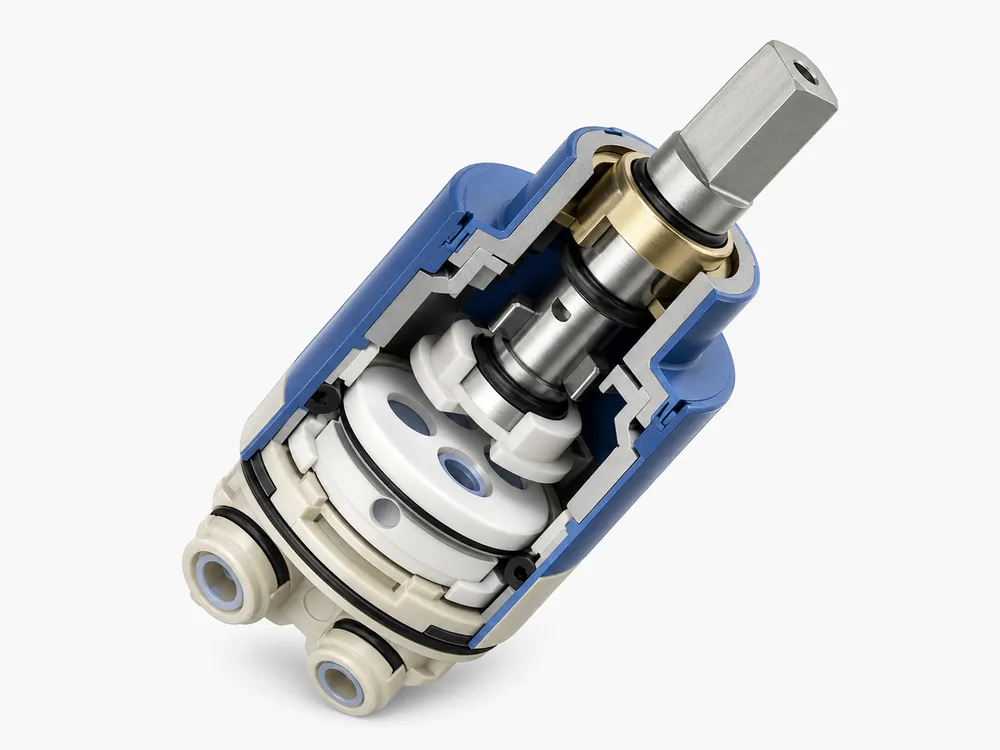
35mm ceramic disc cartridge. No rubber at the sealing surface. The component that makes a lifetime warranty commercially viable.
Why Valve Spec Drives Warranty Cost
Ceramic disc: no O-ring degradation from chlorinated water
500K cycles eliminates drip failure within any realistic product life
Field-replaceable cartridge: service call resolved without full unit swap
Ball-and-seat alternatives: O-ring failure at 2–5 years in chlorinated supply
Cartridge-only replacements: $4–8 per unit vs. $45–90 full replacement cost
Cartridge Availability
Replacement cartridges stocked and available for direct shipment to your end customers or service network. Eliminates the need for you to carry spare parts inventory to support warranty claims.
Hose & Docking System
The hose and docking mechanism are the two components that generate the most consumer complaints in pull-down faucets — and the most preventable ones. Here's how we've engineered both failure modes out.
Braided Stainless Hose
304 stainless steel braid over EPDM inner tube. 59-inch (150cm) extended reach. The braid serves two functions: burst pressure protection and kink resistance. EPDM inner tube is chloramine-resistant — relevant because a growing number of North American municipal systems have switched from chlorine to chloramine disinfection, which degrades standard rubber hose liners faster.
Material
304 SS braid / EPDM
Extended Reach
59 in / 150 cm
Inner Tube
Chloramine-resistant
Kink Resistance
Full-braid construction
Magnetic Docking System
Neodymium magnet docking, rated 50,000 dock/undock cycles. The magnet is embedded in the spout neck; the spray head snaps into alignment automatically on return. No mechanical latch to wear out, no alignment tab to break. The most common pull-down faucet complaint in consumer reviews is a spray head that won't stay docked — this system eliminates that failure mode entirely.
Magnet Type
Neodymium embedded
Cycle Rating
50,000 dock cycles
Alignment
Auto-snap, no tab
Failure Mode
None — no latch to wear
Counterweight System
Integrated hose weight, 85g, positioned 12 inches from the spray head connection. The weight serves as a counterbalance that keeps the hose retracted under the deck when the spray head is docked. Without a properly weighted counterbalance, hose retraction relies on the user manually feeding the hose back — which leads to hose pooling under the sink and eventual kinking at the cabinet floor.
The 85g weight is calibrated for the 59-inch hose length. Custom hose lengths (available on request for OEM configurations) are paired with a recalculated weight to maintain the same retraction behavior.
85g
Counterweight
12 in
From head connection
Auto
Retraction on release
59 in
Hose reach
Covers deep farmhouse sinks and offset drain configurations
50K
Dock cycles rated
~13 years at 10 dock/undock operations per day
304 SS
Braid grade
Chloramine-resistant EPDM inner tube; no liner degradation
Market Segments Where Pull-Down Drives Profitable Volume
Pull-down kitchen faucets perform across four distinct B2B channels. Each has different volume thresholds, finish preferences, and sourcing priorities — here's what matters in each.

North America
Residential Renovation Distribution
This is the core market for pull-down kitchen faucets, and it's where the configuration earns its volume leadership. Distributors supplying the US and Canadian renovation channel typically run 2,000–5,000 units per SKU per order, with 3–4 reorders per year on proven SKUs.
Key sourcing requirement: finish consistency across reorders
Your retail customers notice when the brushed nickel on a replacement faucet doesn't match the one they bought 18 months ago. We hold finish parameters batch-to-batch using documented plating bath chemistry controls, and we include the batch production record with shipment documentation so your QC team has the data without requesting it separately.

Global
E-Commerce and Private Label
Pull-down in matte black and brushed gold are the configurations with the strongest online retail velocity right now. The MOQ of 200 pieces makes it viable to test a new finish or handle profile before committing to a full container.
Typical buyer path
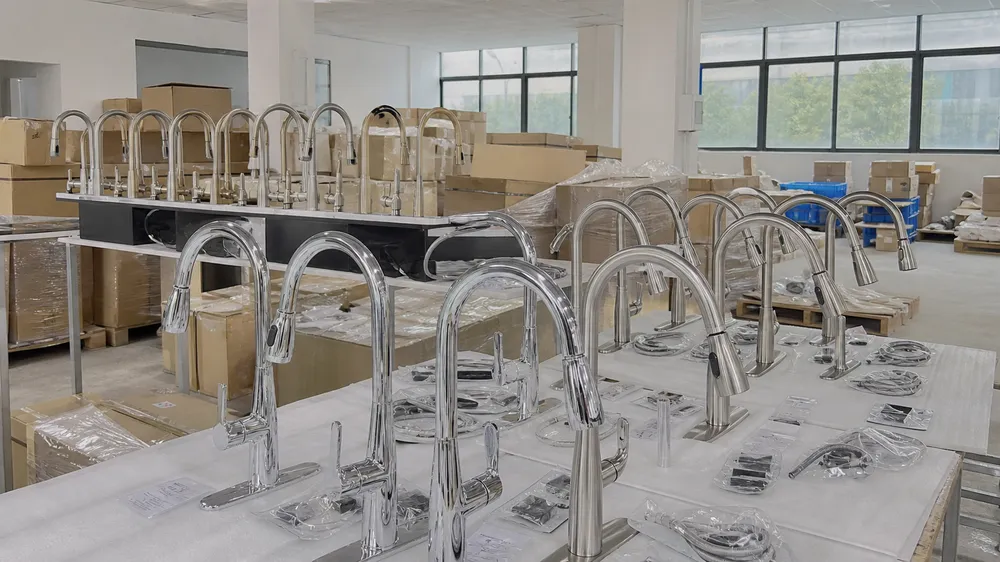
Most of our e-commerce OEM buyers start with a 200–500 unit trial run, validate the SKU with their customers, then scale to 2,000+ units. The pull-down configuration photographs well for product listings, and the high-arc profile reads as premium in thumbnail images — which supports a higher retail price point and better margin for your catalog.
Southeast Asia · Middle East
New Construction Project Supply
Project procurement teams specify pull-down kitchen faucets for residential developments and serviced apartment fit-outs. Chrome and brushed nickel in the standard high-arc profile dominate this segment.
What matters most: lead time reliability
A delayed container can hold up an entire floor of unit completions. Our 4-week production scheduling window is committed, not estimated. We've had buyers in this segment tell us that our on-time delivery rate is the primary reason they stayed with us after the first order — worth more to them than a 3% price difference.

Europe · Middle East · Australia
Hospitality and Contract Specification
Hotel and serviced apartment projects specify pull-down kitchen faucets in volume with tight aesthetic consistency requirements. PVD gold and brushed nickel are the most specified finishes in this segment.
OEM with custom handle profiles from 200 pieces
Finish matching is available from 200 pieces, and our engineering team handles certification extension for new variants — you don't run a full re-certification from scratch when you add a new handle configuration to an existing certified body.
Brass Body Construction and Why It Protects Your Downstream Margin
The body construction decisions that affect your return rate are worth spelling out. Every material and tolerance choice below is a direct lever on warranty claims and repeat business.
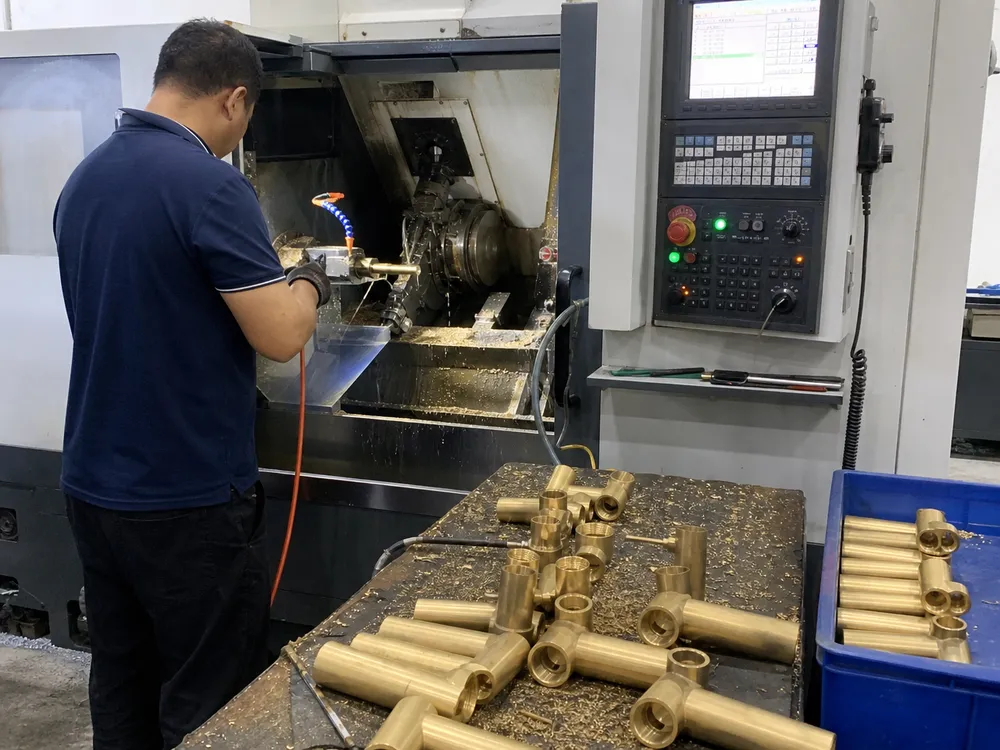
C36000-Equivalent Free-Machining Brass
We use C36000-equivalent free-machining brass for all pull-down bodies. For cUPC-certified products going to North American markets, the alloy meets NSF 61/372 lead content requirements (≤0.25% weighted average lead content).
XRF Analysis on Every Incoming Batch
Every incoming brass batch is tested with XRF analysis before it enters production. This is a non-negotiable step in our cUPC compliance process, and we apply the same standard to all production regardless of destination market.
Valve Seat Thread Tolerance: ±0.05mm
After casting and trimming, each body goes through CNC machining where we hold valve seat thread tolerances to ±0.05mm. That tolerance is the difference between a cartridge that seats properly and one that allows micro-movement under pressure.
Why this matters for your warranty rate
Micro-movement is what causes drip failure at 12–18 months — the most common warranty claim in this product category. We verify every body with a thread gauge at the post-machining inspection checkpoint.
500,000-Cycle Cartridge Endurance Testing
Cartridges go through 500,000-cycle endurance testing on every production batch, not just on new product introductions. The cartridge performance your sample showed is the cartridge performance your container delivers.
Brass Spray Head Housing — Not Zinc, Not ABS
The spray head housing is also brass — not zinc alloy, not ABS. We evaluated zinc alloy for a cost-reduction project and decided against it for the spray head because the long-term corrosion performance in chlorinated water systems didn't meet our standards for export markets.
Weight difference
Marginal
Durability over 5 years
Significant
≤0.25%
Weighted average lead content
NSF 61/372 compliant
±0.05mm
Valve seat thread tolerance
CNC-verified every body
500K
Cartridge cycles tested
Every production batch
For the full casting and machining process overview, see our kitchen faucet manufacturing page.
Kitchen Faucet Manufacturing OverviewOEM Customization: What You Can Specify and What the Minimums Are
Pull-down kitchen faucets are one of our most frequently customized product types. Here's what's available and what the practical limits are.
Handle Profile and Shape
We can modify handle geometry using existing body tooling (no new casting die required) for runs of 200+ pieces. If you want an entirely new handle design, we cast a new die — tooling investment is discussed separately from per-unit price, and most buyers amortize it over the first 1–2 production runs.
Spout Height and Reach
Standard catalog range is 360–420mm spout height and 200–250mm reach. Modifications within this range are typically achievable without new tooling. Significant departures from standard geometry require tooling review.
Spray Modes
Standard configuration is stream + spray. We can add a pause/stop function to the spray head for runs of 500+ pieces. Three-function heads (stream + spray + pause) are available as a catalog option on select models.
Finish
All five in-house finishes are available at standard MOQ (200 pieces). Custom finishes outside our standard lineup require a process setup — we typically recommend 500+ pieces minimum to amortize the setup cost without significant per-unit impact.
Branding and Packaging
OEM private label with your brand name on the faucet body, spray head, and packaging is available from 200 pieces. We handle blind drop-shipping for e-commerce buyers — your brand, your packaging, shipped directly from our warehouse to your fulfillment center or FBA prep facility.
Certification Extension
If you're adding a new finish or handle configuration to an existing cUPC-certified body, our engineering team manages the documentation update with the certification body. You don't run a full re-certification from scratch.
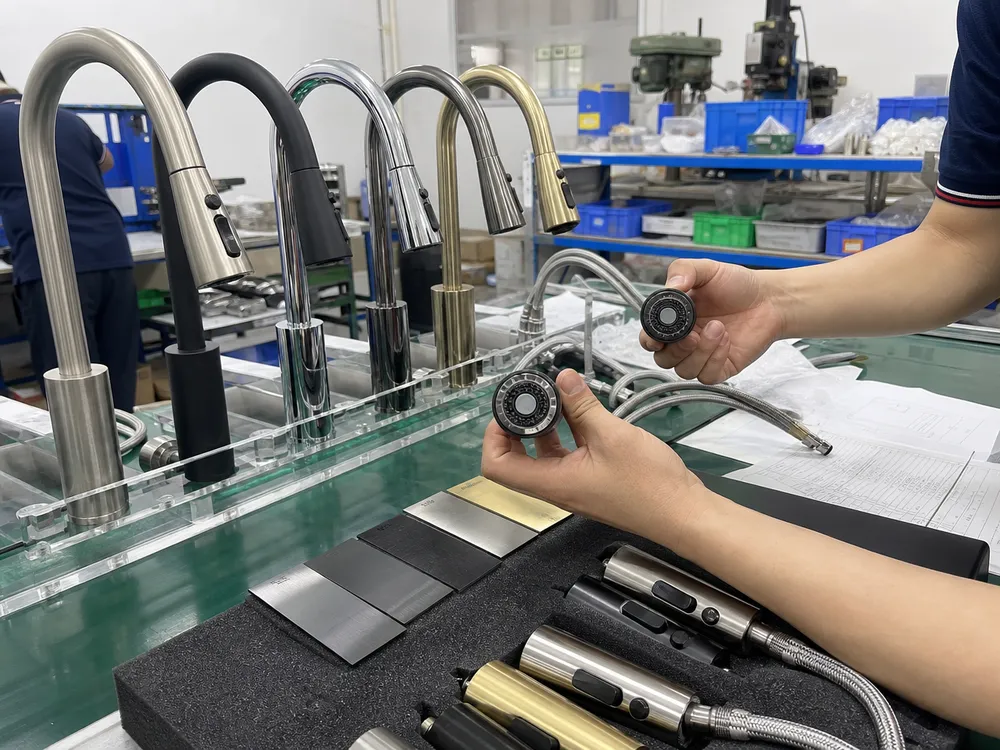
Engineering Note: Counterbalance Weight
The counterbalance weight is sized to the hose length. If you're specifying a non-standard hose extension length, we need to recalculate the counterbalance weight to maintain proper retraction force. It's a straightforward engineering adjustment, but it needs to be flagged at the spec stage — not discovered during sample review.
OEM Minimum Order Summary
Compliance Documentation by Destination Market
Multi-market certification coverage from a single factory. Test reports ship with every container — you don't need to request them separately.
United States / Canada
cUPC + NSF 61/372
IAPMO certification covering both US and Canadian markets. NSF 61/372 lead content compliance included. AB 1953 lead-free requirements covered by our low-lead brass alloy qualification for California shipments.
Certified — test reports availableEuropean Union
CE (EN 817 / EN 200)
CE marking under EN 817 and EN 200 standards. Declaration of conformity available for your compliance team and customs documentation.
Certified — declaration of conformity availableAustralia / New Zealand
WaterMark (AS/NZS 3718)
WaterMark license under AS/NZS 3718. License documentation available for import compliance and distributor requirements in the ANZ market.
Certified — license documentation availableGlobal (Third-Party Audit)
SGS
Independent third-party factory and product audit by SGS. Audit reports available on request for buyers requiring independent verification beyond self-declared certifications.
Audited — reports available on requestAll Markets
ISO 9001:2015
Quality management system certification covering the full production process. Applicable to all destination markets and required by many institutional and commercial procurement programs.
CertifiedNorth America
HS Code + Customs Pre-Clearance
For North American shipments, we prepare HS code classification and can provide binding ruling references for customs pre-clearance. Your customs broker and warehouse team get the same documentation package on every reorder.
Test reports ship with every container — no separate request required.
Consolidating Multi-Market Orders from One Factory
If you're consolidating North American, European, and Australian orders from a single factory, the multi-certification coverage means your compliance team isn't managing documentation from three different suppliers. One factory, one documentation package, three destination markets covered.
Test reports ship with every container — your customs broker and warehouse team get the same documentation package on every reorder, without needing to request them separately.
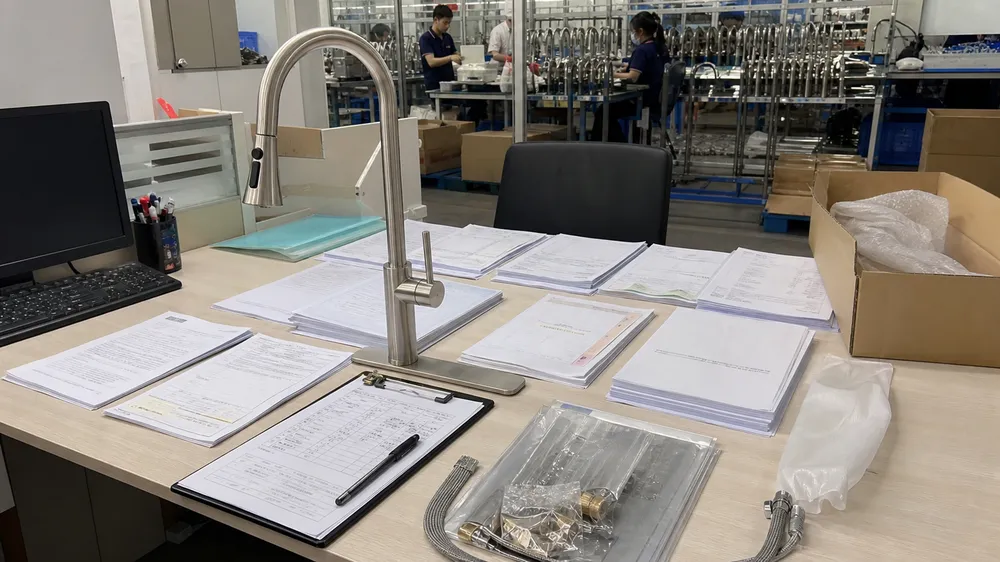
Container Loading and Logistics Readiness
Pull-down kitchen faucets are mid-volume items by weight and CBM. Here is what to expect from carton configuration through to port-ready documentation.
Standard Carton Configuration
Optimized for 20GP and 40HQ containers
Carton dimensions are calculated against container floor plans. We provide a packing list with CBM and gross weight per SKU before you confirm the order, so your freight forwarder can quote accurately.
Units per Master Carton
6
Inner Box
Individual with foam insert
Transit Protection Design
Redesigned 2022 — drop-test validated
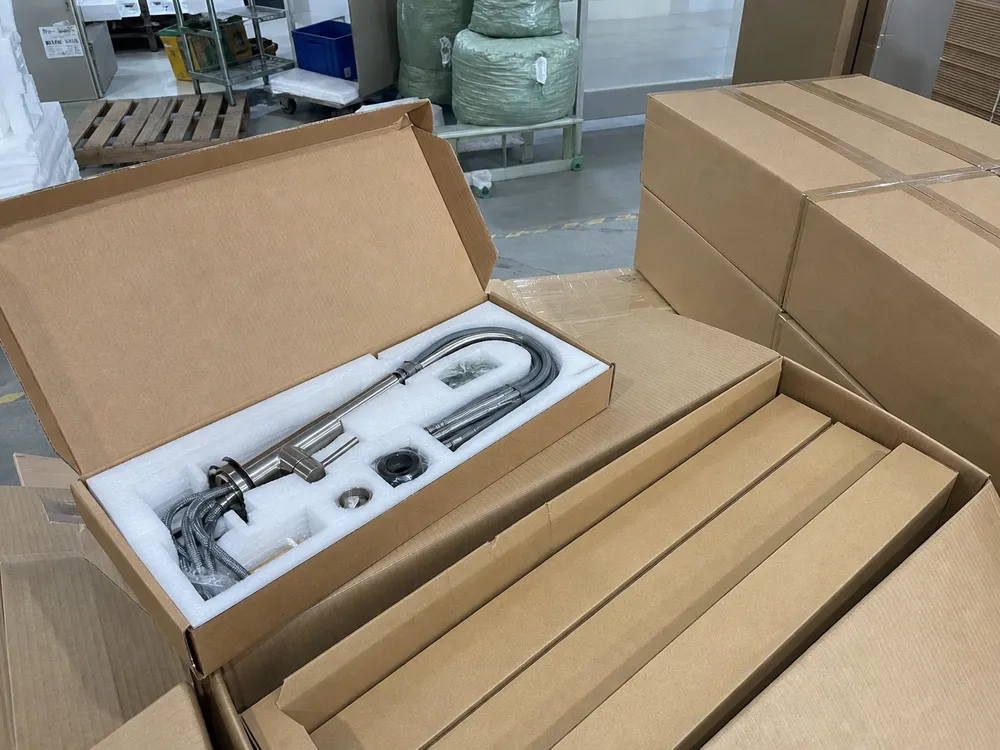
The spray head is the most vulnerable component in transit. The foam insert geometry is sized to prevent movement under drop-test conditions. The current inner packaging design passes a 1.2m drop test on all six faces.
Background: We redesigned the inner packaging for pull-down models in 2022 after a buyer reported damage claims on a shipment that had been consolidated with heavier items. The current design addresses that failure mode directly.
E-Commerce and Mail-Order Durability
For e-commerce buyers, inner box packaging is designed for mail-order durability. The foam insert geometry prevents spray head movement under the same drop-test conditions applied to standard freight shipments — so the same carton works for FBA inbound, 3PL warehouse receipt, and direct-to-consumer last-mile.
FBA and Warehouse Labeling
We apply FNSKU labels, UPC barcodes, and custom SKU labels at both the carton and unit level. Labeling is coordinated before shipment so your inbound is compliant on arrival.
Blind Drop-Shipping
Blind drop-shipping with your brand documentation is available. No Wfaucet or DTE branding appears on any outward-facing packaging surface — your brand identity is preserved end to end.
Multi-SKU Container Coordination
For buyers consolidating multiple SKUs into one container, we coordinate the packing sequence to minimize void space and keep the container weight balanced for port handling.
Pre-Order Packing Documentation
We provide a complete packing list with CBM and gross weight per SKU before you confirm the order. Your freight forwarder gets accurate data to quote before you commit — no surprises at the port.
- CBM and gross weight per SKU provided pre-confirmation
- 20GP and 40HQ container floor plan optimization
- 1.2m six-face drop-test validated inner packaging
- FNSKU, UPC, and custom SKU labeling at carton and unit level
- Blind drop-ship packaging — no factory branding on outward surfaces
- Multi-SKU packing sequence coordination for balanced container weight
Drop Test
1.2m
All six faces — current inner packaging design
Units / Carton
6
Master carton, individual inner box per unit
Container Types
20GP / 40HQ
Floor plan optimized packing
Packaging Redesign
2022
Damage-claim driven improvement
Frequently Asked Questions
Decision-support answers for importers, distributors, and OEM buyers evaluating pull-down kitchen faucets. Technical details, configuration guidance, and sourcing specifics — no marketing filler.
What is the difference between a pull-down and pull-out kitchen faucet, and which should I stock?
What is the difference between a pull-down and pull-out kitchen faucet, and which should I stock?
Pull-down faucets have a high-arc spout with the spray head pulling straight down toward the sink basin. Pull-out faucets have a lower-profile spout with the spray head pulling forward and out.
Pull-Down
- High-arc spout; head retracts straight down
- Dominant configuration in North American retail
- Majority of US and Canadian kitchen faucet volume
- Lead with this for North American catalogs
Pull-Out
- Lower-profile spout; head pulls forward and out
- More common in European markets
- Suited to lower cabinet clearances
- Carry both if covering European markets
Assembly note: The two configurations use different hose routing and counterbalance geometry — they are not interchangeable at the assembly level. Stocking decisions should be made per market, not mixed within a single SKU line.
What causes pull-down kitchen faucets to stop retracting, and how do you prevent it?
What causes pull-down kitchen faucets to stop retracting, and how do you prevent it?
There are two primary failure modes. Understanding both helps you evaluate supplier claims before placing an order.
Spring Fatigue (Spring-Return Designs)
Spring-return mechanisms lose tension over time — typically showing retraction lag at 60,000–100,000 cycles on lower-quality units. Wfaucet switched to a weighted counterbalance system in 2021 specifically to eliminate spring fatigue as a failure mode.
Hose Kinking
Prevented by using braided stainless hose — not PVC — and routing the hose with adequate bend radius below the deck. Our hose is rated for 500,000 extension cycles.
Sourcing action: If a pull-down faucet you're currently sourcing has retraction issues in the field, the root cause is almost always one of these two. Ask your supplier which retraction mechanism they use before your next order — spring-return or weighted counterbalance.
What cUPC certification covers for pull-down kitchen faucets in the US market?
What cUPC certification covers for pull-down kitchen faucets in the US market?
cUPC (IAPMO) verifies compliance with ASME A112.18.1 / CSA B125.1 plumbing standards, which covers flow rate, pressure performance, and material safety. For California and other states with AB 1953 requirements, the lead-free standard (≤0.25% weighted average lead content) must also be met — our cUPC-certified pull-down faucets use a low-lead brass alloy that satisfies this requirement.
Standard Covered
ASME A112.18.1 / CSA B125.1
Flow rate, pressure performance, material safety
Lead Content
≤0.25% weighted average
AB 1953 compliant — low-lead brass alloy
Documentation
Test reports included
Certification docs shipped with order
We can provide cUPC test reports and certification documentation with your shipment. For buyers importing into multiple US states, the cUPC + low-lead brass combination covers the compliance requirements without needing separate state-level documentation.
What is the minimum order quantity for a pull-down kitchen faucet with a custom finish or handle?
What is the minimum order quantity for a pull-down kitchen faucet with a custom finish or handle?
MOQ starts at 200 pieces per SKU for handle modifications using existing body tooling and for all five standard finishes. For custom finishes requiring a new PVD or plating process setup, we recommend 500 pieces minimum — below that, the setup cost per unit affects your margin significantly. For entirely new body tooling (new casting die for a custom handle profile), tooling investment is discussed separately from per-unit price.
| Customization Type | MOQ | Tooling Note | Sample Lead Time |
|---|---|---|---|
| Handle modification (existing body tooling) | 200 pcs / SKU | No new tooling required | 15–20 days |
| Standard finishes (all 5 options) | 200 pcs / SKU | No new process setup | 15–20 days |
| Custom finish (new PVD / plating setup) | 500 pcs recommended | Setup cost amortized over run; below 500 pcs impacts margin | 25–35 days |
| New body tooling (custom handle profile / casting die) | Discussed separately | Tooling investment quoted independently; typically amortized over 1–2 production runs | 25–35 days (new OEM brief) |
Most buyers amortize tooling investment over the first 1–2 production runs. First sample from a new OEM brief: 25–35 days. Modified sample from existing catalog body: 15–20 days.
How do you ensure the brushed nickel finish on a reorder matches the original batch?
Finish consistency across reorders is one of the most common concerns we hear from distributors. Our approach is built around documented process control at every stage:
Plating Bath Chemistry
Bath composition parameters are documented for each finish. The bath is tested and adjusted before each production run — not assumed to be stable from the previous cycle.
PVD Coating Thickness
For PVD finishes — brushed nickel, matte black, PVD gold — coating thickness is measured on a sample basis using a coating thickness gauge. Target range: 0.3–0.5μm.
Reference Panel Comparison
A reference panel from the previous order runs alongside the new batch. Visual comparison is conducted under standardized lighting before the run is approved.
Batch Production Record
All parameters are recorded in the batch production record, which ships with your container documentation. If your QC team pulls the record and finds a deviation, we address it before the next run — not after you've already distributed the product.
This process applies to all PVD and electroplated finishes. If you have a specific finish consistency requirement — for example, a tighter ΔE tolerance for a branded product line — raise it during OEM specification and we'll document it as a production hold point.
What spray modes are available, and can the spray face be customized?
Standard configuration is stream + spray (two-mode). Three-mode heads are available on select catalog models and as an OEM option.
Stream Mode
Standard catalog. Focused flow for filling pots and rinsing.
Spray Mode
Standard catalog. Wide coverage for rinsing produce and cleaning the sink basin.
Pause Mode
Three-mode OEM option (500+ pcs). Temporarily stops flow without adjusting the valve — reduces water waste at the sink.
Silicone Nozzle Design — Standard on All Models
The spray face uses a silicone nozzle design. Individual nozzles flex to release mineral deposits without tools — no descaling chemicals, no disassembly. This matters specifically for buyers in hard-water markets and directly reduces after-sales complaints and warranty claims on your end.
OEM Spray Face Customization
Custom spray face geometry — nozzle count, spray pattern diameter — is available for OEM runs with sufficient volume to justify tooling. Contact us with your requirements to discuss feasibility and minimum order thresholds.
Start Your Pull-Down Kitchen Faucet Sourcing
New Buyers: Sample Order
Most new buyers start with a 2–4 unit sample order across the finish options they're evaluating before committing to a production run. We can ship samples within 7–10 business days from catalog inventory.
Existing Sourcing: Quality or Price Comparison
If you have an existing pull-down faucet you're currently sourcing and want to compare quality or pricing, send us a reference sample or detailed photos — our engineering team will identify the closest configuration in our catalog or spec an OEM equivalent and send back a detailed quote.
New Catalog or New Market Entry
For buyers building a new catalog or entering a new market, tell us your target channel (North American retail, e-commerce, project supply) and volume expectations. We'll suggest a starter SKU mix — finish combinations, handle profiles, spray mode configurations — based on what's moving for our existing distributors in that region.