
Foshan Factory · OEM from 200 Pieces

Low Profile Bathroom Faucets Built for Vessel Sink Applications

Brass-body low profile bathroom faucets engineered for vessel sink and shallow vanity applications — compact spout height, full certification coverage, OEM from 200 pieces.

We manufacture these on our own floor in Foshan. Same brass casting, same CNC tolerances, same 500,000-cycle cartridge testing as the rest of our bathroom line — just a body geometry built for the installations where standard spout height doesn't work.

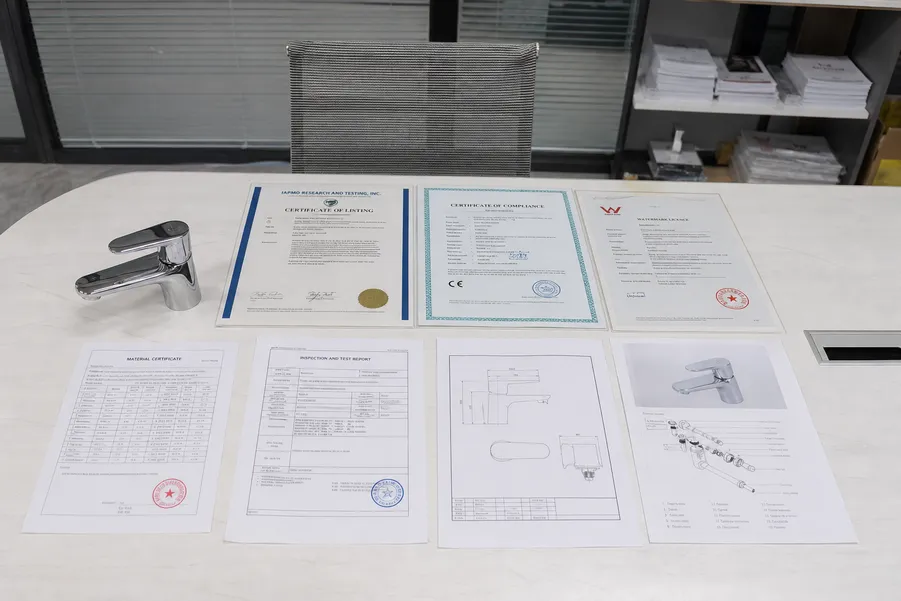
cUPC + CE + WaterMark 17+ Years Manufacturing OEM from 200 Pieces
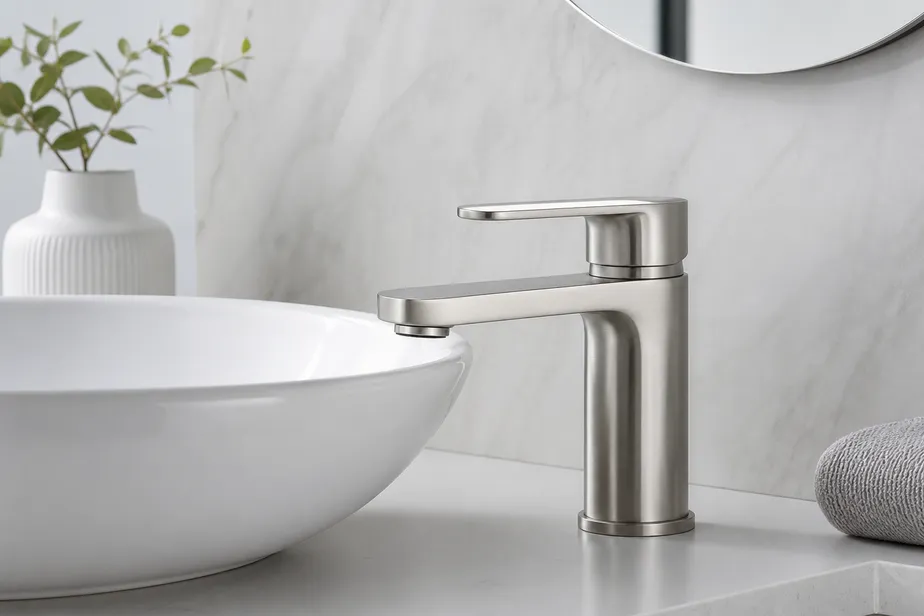
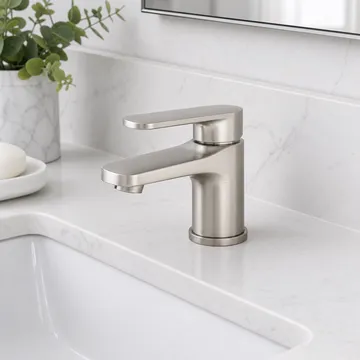
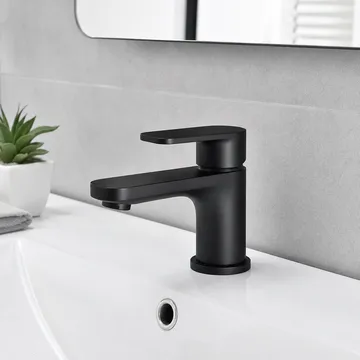
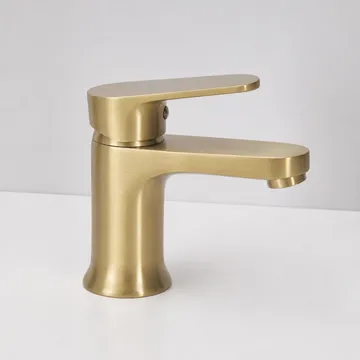
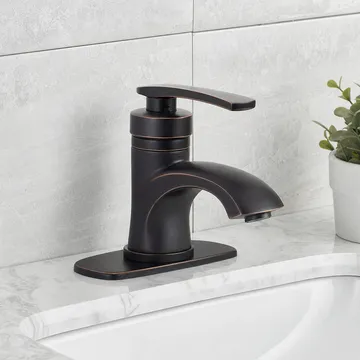
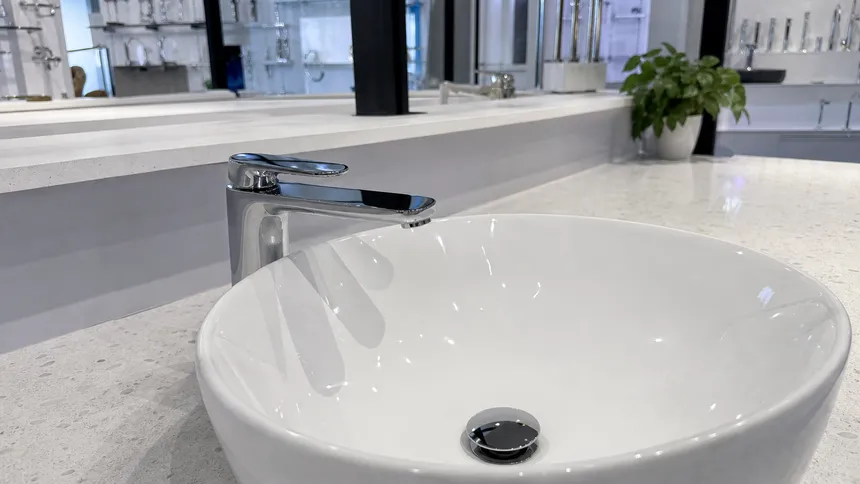
Low profile bathroom faucet with compact spout height for vessel sink installation

Sourcing Clarity

What "Low Profile" Actually Means in a Sourcing Context

The term gets used loosely in the market, so let's be precise about what we're talking about. A low profile bathroom faucet has a compressed body height — typically a spout height of 3 to 5 inches (75–130mm) above the deck, compared to 6 to 9 inches for a standard centerset or single-hole faucet. That geometry exists for one reason: vessel sink installations, where the basin sits on top of the counter rather than dropping into it, and a standard-height faucet would deliver water at or below the rim of the bowl.

The design constraint is tighter than it looks. You can't simply shorten a standard faucet body and call it low profile — the internal waterway geometry, the cartridge housing depth, and the spout arc all have to be re-engineered to work within the reduced height envelope while still delivering adequate flow and clearance. We've seen product in the market that was labeled low profile but had a spout arc that directed water at the inside wall of the vessel rather than the center of the basin. That's a design failure that generates end-user complaints and returns.

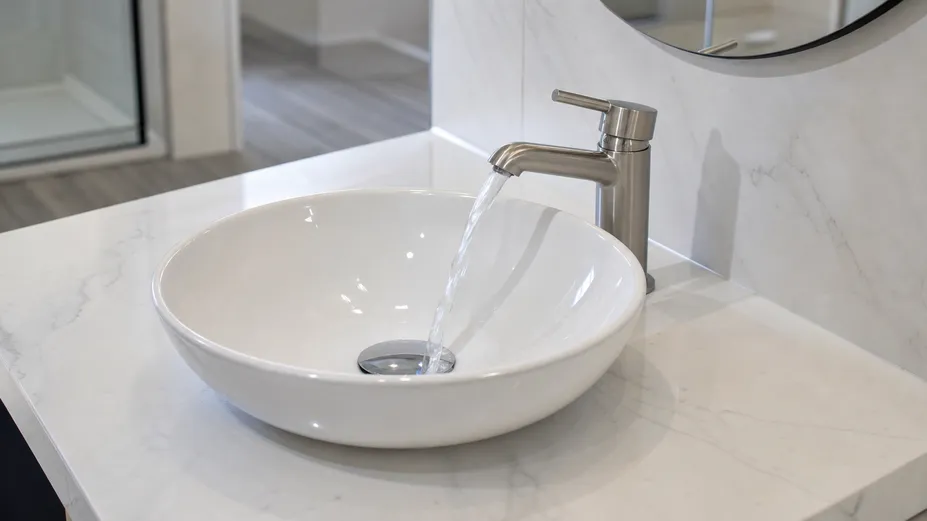
Our low profile faucets are designed around a spout height of approximately 4 to 5 inches (100–130mm) with a forward spout reach of 4 to 5 inches (100–130mm), which covers the geometry of most standard vessel sinks in the 14–18 inch diameter range. The waterway is a single-piece brass casting — no soldered joints inside the body, which is the failure point in cheaper fabricated alternatives.

If your buyers are fitting vessel sinks in hotel bathrooms or premium residential renovations, this is the configuration that works without callbacks.

Height Comparison: Low Profile vs Standard

Low Profile

3–5 in

75–130mm spout height

  • Vessel sink compatible
  • Re-engineered waterway geometry
  • Single-piece brass casting
  • Centered spout arc delivery

Standard Height

6–9 in

150–230mm spout height

  • Delivers at/below vessel rim
  • Not suited for vessel sinks
  • Drop-in / undermount sinks
  • Standard vanity applications
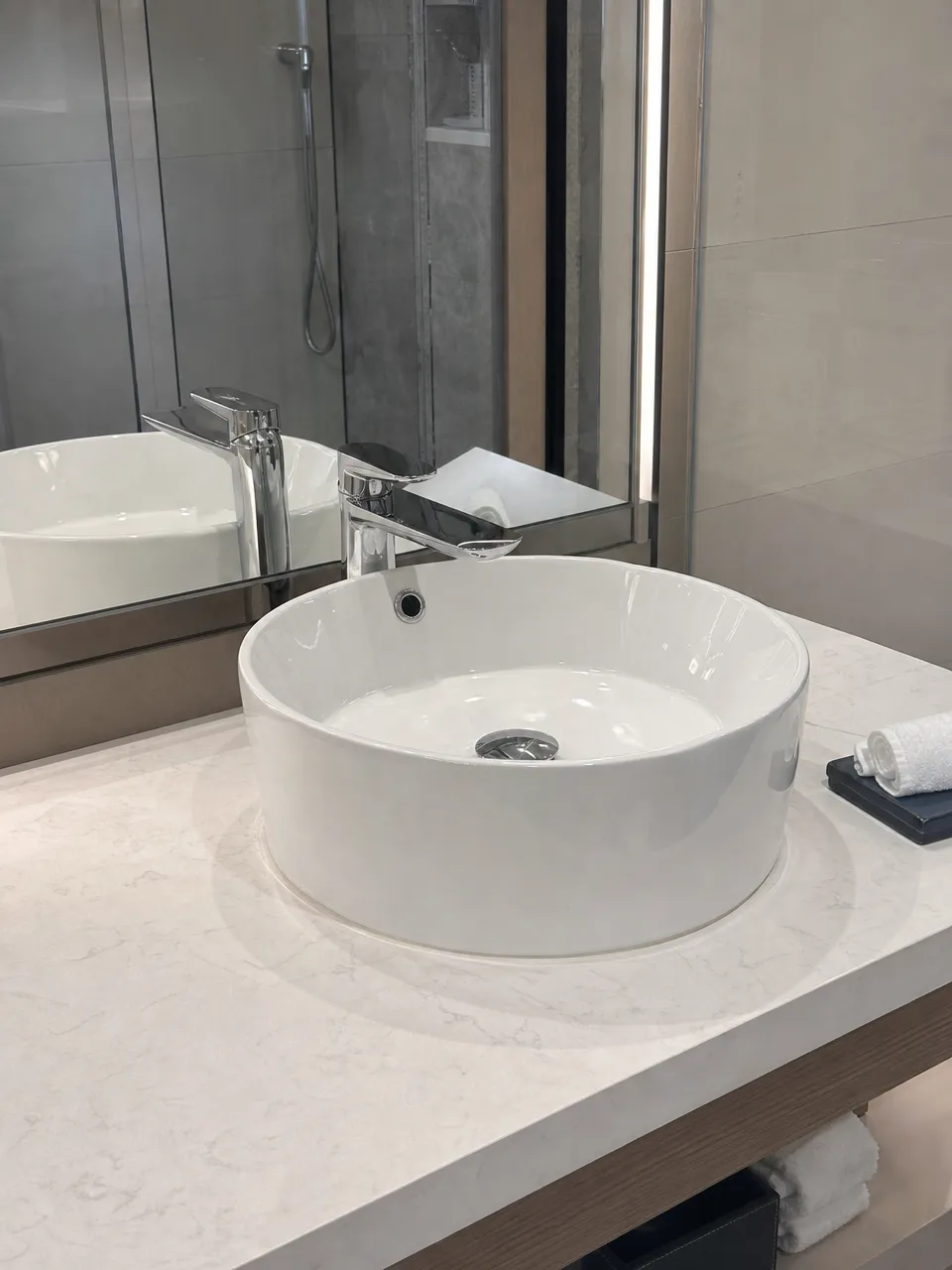
Low profile bathroom faucet installed with vessel sink showing correct spout height and water delivery arc

Our Design Target Geometry

4–5 in

Spout Height
(100–130mm)

4–5 in

Spout Reach
(100–130mm)

14–18 in

Vessel Sink
Diameter Range

Engineering Data

Technical Specifications

Specifications shown are industry-standard values for this product type. Exact dimensions vary by model. Contact us for detailed product data sheets and CAD drawings.

Parameter Typical Value Notes
Body material C36000-equivalent free-machining brass Gravity cast, in-house
Spout height (deck to spout outlet) 100–130mm (4–5 in) Confirm exact model for your application
Spout reach (centerline to outlet) 100–130mm (4–5 in) Suitable for 14–18 in diameter vessel sinks
Mounting configuration Single-hole deck mount Standard 35mm hole diameter
Handle configuration Single lever Ceramic disc cartridge
Cartridge type Ceramic disc, 35mm 500,000-cycle endurance tested
Flow rate options 1.2 GPM / 1.5 GPM / 2.2 GPM Aerator-configured at order time
Supply connection 3/8 in compression (standard) Flexible braided hose supply lines included
Operating pressure 0.05–0.8 MPa Tested at 0.6 MPa for 60 seconds per unit
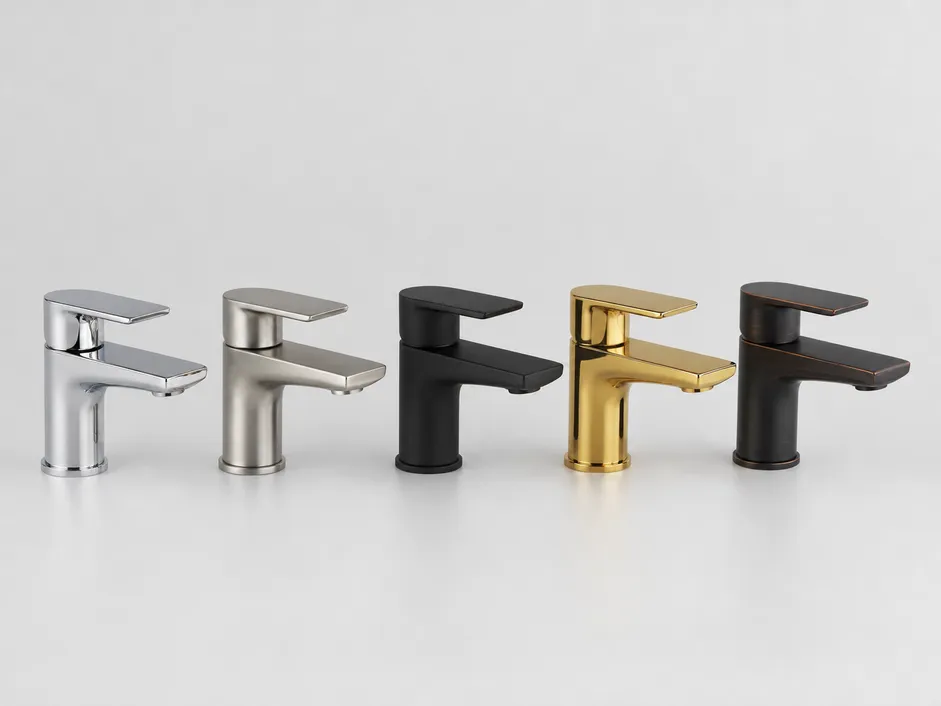
Finish options Chrome, brushed nickel, matte black, PVD gold, oil-rubbed bronze All in-house
Certifications
cUPC CE WaterMark ISO 9001:2015
SGS audit reports available
Request Specs and CAD Drawings

Exact dimensions vary by model — confirm with our team before specifying.

Low profile bathroom faucet brass body detail showing single-hole deck mount and single lever handle

Key Spec Highlights

Brass Body, Gravity Cast

C36000-equivalent free-machining brass. Single-piece casting — no soldered internal joints.

3 Flow Rate Options

1.2 / 1.5 / 2.2 GPM — aerator-configured at order time to match your market's code requirements.

500,000-Cycle Ceramic Cartridge

35mm ceramic disc cartridge endurance-tested to 500,000 cycles. Drip-free performance over the product lifetime.

cUPC / CE / WaterMark Certified

Third-party certified for North American, European, and Australian markets. SGS audit reports available on request.

Surface Finishing

Finish Options

All finishes are applied in-house on our own plating and PVD lines. That means consistent color matching across large orders and full traceability — no outsourced finishing surprises.

Low profile bathroom faucet in polished chrome finish

Polished Chrome

Mirror-bright. Most popular for commercial and hospitality projects.

Electroplated
Low profile bathroom faucet in brushed nickel finish

Brushed Nickel

Warm satin tone. Hides water spots — preferred for residential vanities.

Electroplated
Low profile bathroom faucet in matte black finish

Matte Black

Flat, non-reflective. Strong demand in contemporary and industrial interiors.

PVD coated
Low profile bathroom faucet in PVD brushed gold finish

PVD Brushed Gold

Warm champagne tone. PVD hardness resists tarnish and daily wear.

PVD coated
Low profile bathroom faucet in oil-rubbed bronze finish

Oil-Rubbed Bronze

Dark brown with hand-rubbed highlights. Suits traditional and transitional styles.

Electroplated

In-House PVD Line

Physical vapor deposition applied on our own equipment — not outsourced. Consistent hardness and color lot-to-lot.

Salt Spray Tested

All finishes pass 200-hour neutral salt spray (NSS) per ASTM B117. PVD finishes tested to 500 hours.

Custom Finishes Available

Brushed gold, rose gold, gunmetal, and custom RAL colors available for OEM orders of 500+ units.

Batch Color Consistency

Spectrophotometer QC on every plating batch. Delta-E tolerance held to <1.5 for large OEM orders.

Installer Reference

Installation Guide

Low profile vessel faucets have a short installation sequence, but the pre-installation checks are where most problems originate. Work through these steps before the faucet leaves the box.

1

Verify Vessel Sink Height and Hole Diameter

Measure the vessel sink's rim height above the vanity deck. Add the faucet's spout height. The combined total must place the spout outlet above the vessel rim — typically 1–2 in (25–50mm) of clearance is ideal. Confirm the deck hole is 35mm (1-3/8 in) diameter; enlarge if needed before mounting.

Do not mount the faucet before confirming spout clearance. Repositioning after tiling or stone work is costly.

2

Thread Supply Lines Through Deck Hole

Feed the flexible braided supply lines down through the deck hole before positioning the faucet body. Apply the supplied rubber gasket or plumber's putty ring to the faucet base. Lower the faucet body into the hole from above.

  • Use the rubber deck gasket on stone or tile surfaces — skip putty to avoid staining.
  • On wood or laminate decks, plumber's putty provides a better seal.
3

Secure Mounting Nut and Align Spout

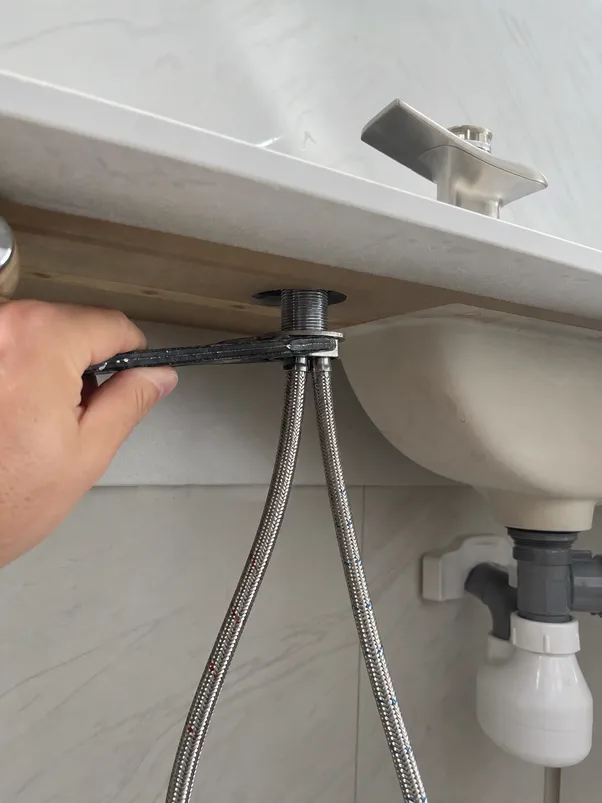
From below the deck, thread the mounting nut onto the faucet shank. Hand-tighten first, then align the spout to center over the vessel sink basin. Tighten the mounting nut with a basin wrench to finger-tight plus a quarter turn — do not overtighten on stone decks.

Spout alignment is easier to adjust before the nut is fully tightened. Confirm the spout arc delivers to the center of the basin, not the rim.

4

Connect Supply Lines to Shut-Off Valves

Connect the hot and cold braided supply lines to the corresponding 3/8 in compression shut-off valves. Hand-tighten, then snug with an adjustable wrench — one-quarter turn past hand-tight. Do not use thread tape on compression fittings.

  • Hot supply connects to the left port (standard plumbing convention).
  • Avoid kinking the braided hose — maintain a gentle curve.
5

Pressure Test and Check for Leaks

Slowly open the shut-off valves. Run both hot and cold through the faucet for 60 seconds. Inspect all connection points — deck gasket, mounting nut, and supply line fittings — for any weeping or drips. Dry all surfaces first so small leaks are visible.

A successful installation shows no moisture at any joint after a 60-second full-flow test. If a compression fitting weeps, tighten by an additional eighth turn only.

Low profile bathroom faucet installation showing supply line routing and mounting nut position under vanity deck

Tools Required

  • Basin wrench (for under-deck nut)
  • Adjustable wrench (supply connections)
  • Tape measure (spout height verification)
  • 35mm hole saw (if enlarging deck hole)
  • Plumber's putty or rubber gasket (supplied)
  • Flashlight (under-cabinet inspection)

Need the Full Installation Sheet?

PDF instruction sheets with dimensioned diagrams are available for all models. Request via our RFQ form and we'll include them with your sample shipment.

Request Installation Documentation

Manufacturing Detail

The Brass Body and Why the Casting Method Matters Here

Low profile faucets are a case where the manufacturing method has a direct commercial consequence. The compressed body geometry means the internal waterway has tighter bends and a shorter path from inlet to spout outlet.

The Problem With Fabricated Bodies

In a fabricated body — one assembled from multiple brass or zinc components soldered or press-fit together — those tight bends create joint locations inside the waterway. Joints inside a waterway are where dezincification and pinhole leaks develop over time, particularly in markets with aggressive water chemistry.

The most common failure mode we see in competitor product is a valve seat machined to a loose tolerance — which lets the ceramic disc rock slightly under pressure and wear unevenly, causing drips at 18 months.

Single-Piece Gravity Casting

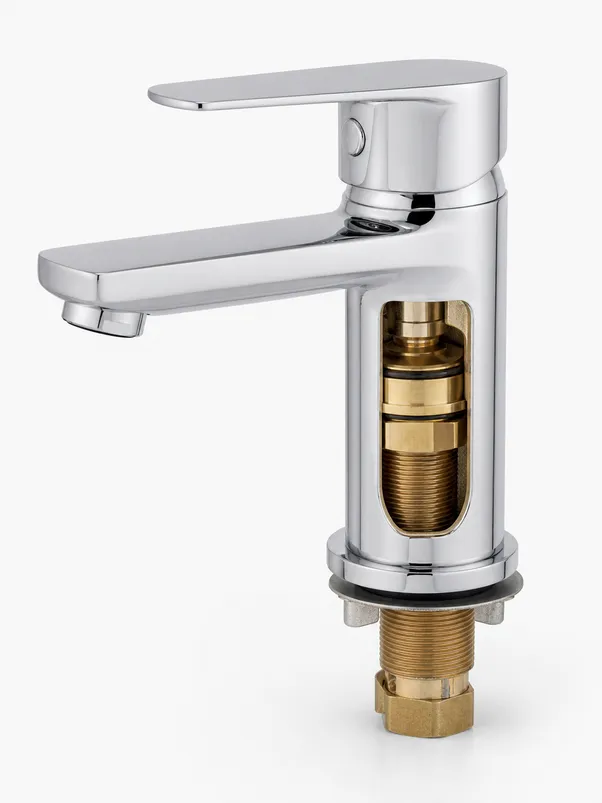
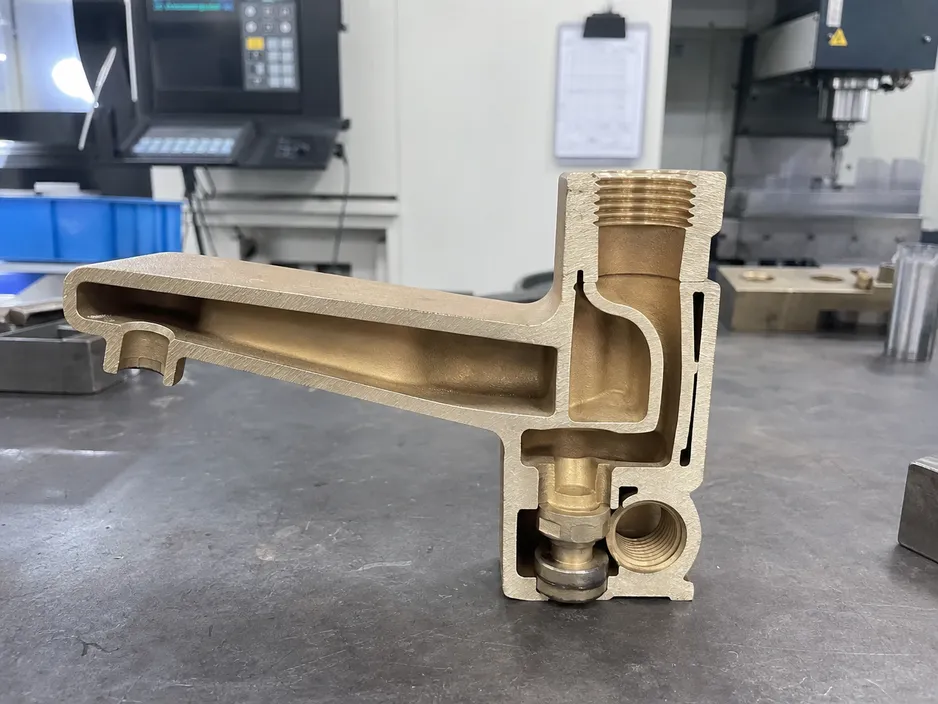
We cast the low profile body as a single piece using brass gravity casting — the same C36000-equivalent free-machining alloy we use across the bathroom line. The waterway is formed in the casting, not assembled from parts.

After casting, the body goes to CNC machining where we hold valve seat thread tolerances to ±0.05mm. That tolerance is the one that determines whether the cartridge seats correctly and whether the faucet drips at 18 months.

Single-piece brass gravity cast low profile faucet body showing internal waterway formation

Why Single-Piece Casting Matters

No internal joints in the waterway

Eliminates dezincification and pinhole leak risk at assembly points

±0.05mm valve seat tolerance

CNC-machined after casting for consistent cartridge seating across every unit

Consistent spout arc geometry

No unit-to-unit variation from joint assembly — critical for hotel fit-outs specifying 200+ identical installations

C36000-equivalent free-machining alloy

Same brass specification used across the full bathroom faucet line

Verified Against Competitor Product

We've had buyers send us competitor product for comparison. The most common failure mode we see is a valve seat machined to a loose tolerance. For a hotel fit-out where 200 identical vessel sink installations need to look the same, spout arc consistency from a single-piece casting is what makes that order manageable.

Distribution Intelligence

Where Low Profile Faucets Move: Market Segments Worth Building Into Your Catalog

Three distinct segments drive consistent demand for low profile faucets. Each has a different buyer profile, order pattern, and margin dynamic — understanding the split helps you position inventory and target the right procurement contacts.

Segment 01

Hospitality Renovation and New Build

Vessel sink installations have become a standard specification in mid-to-upper tier hotel bathroom renovations across North America, the Middle East, and Southeast Asia. A typical hotel renovation project specifies 150–400 bathroom units, and vessel sink configurations are increasingly the default in the premium tier.

The low profile faucet is a required component — you can't install a vessel sink without a faucet matched to its geometry. For distributors serving hospitality procurement teams or FF&E contractors, this is a repeatable, project-driven segment with predictable order volumes and a clear reorder cycle tied to renovation schedules.

Middle East Market Note

UAE and Saudi Arabia hospitality projects have been specifying vessel sinks in boutique hotel and serviced apartment developments at a growing rate. PVD gold and brushed gold finishes move well in this segment — the warm metal tone is a design preference in the region, and PVD is the only finish technology that holds reliably in the humidity levels of Gulf coastal properties.

We've shipped hotel fit-out orders to UAE buyers across 300-unit orders where finish consistency across all five finishes is a strict requirement. Running all five finishes in-house is what makes that manageable.

150–400

units per typical hotel renovation project

PVD

only finish that holds in Gulf coastal humidity

Low profile faucet installed on vessel sink in hotel bathroom renovation project
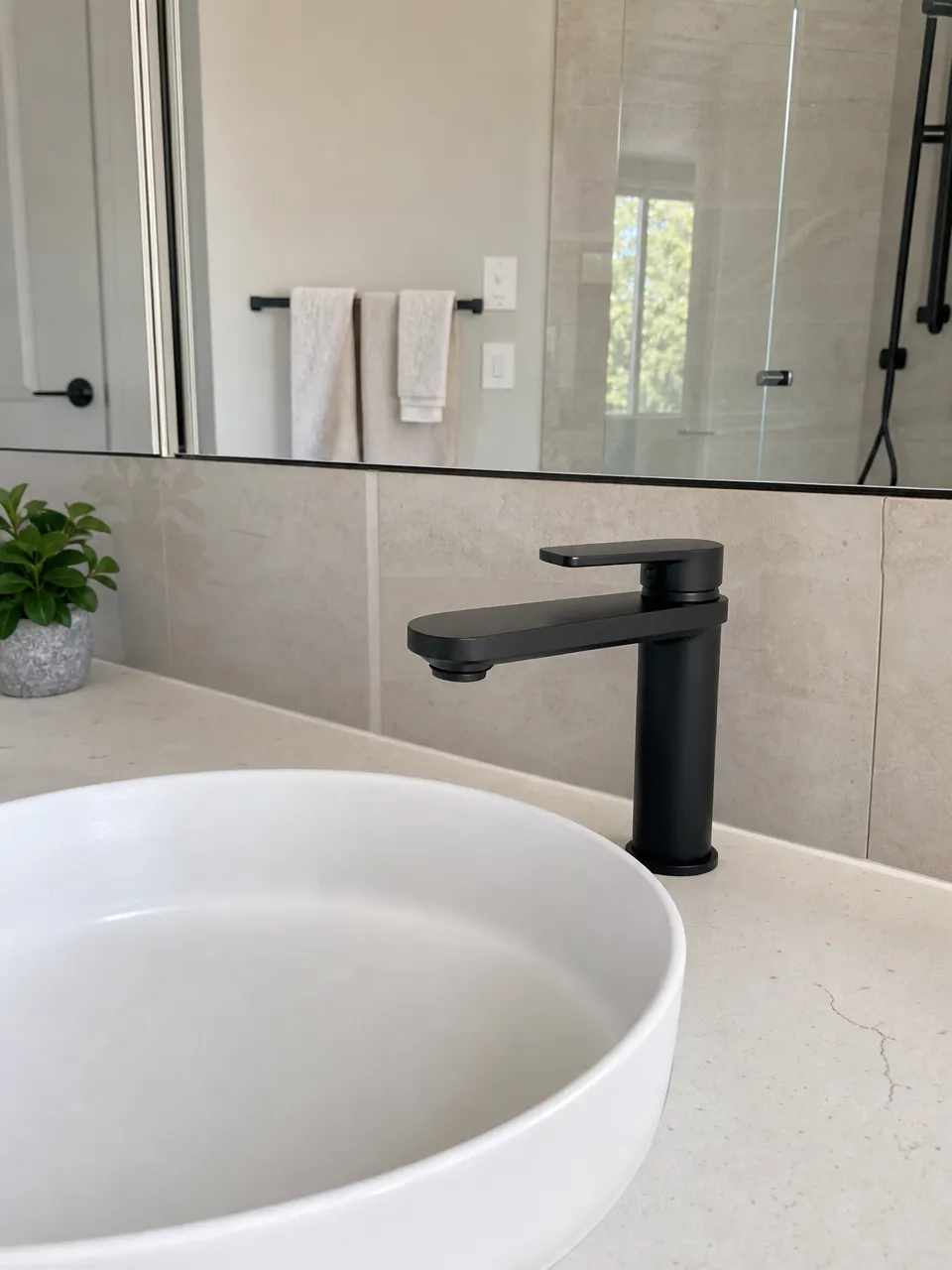
Matte black low profile faucet on vessel sink in premium residential bathroom

Segment 02

Premium Residential and Renovation Retail

Vessel sinks have moved from boutique residential into mainstream premium residential in North American and Australian markets. A distributor or retailer carrying vessel sinks without a matched low profile faucet is leaving the accessory sale on the table.

The typical retail buyer purchasing a vessel sink is already committed to a specific aesthetic — they're looking for a faucet that completes the installation, not a generic centerset that happens to fit. Low profile faucets in matte black and brushed nickel are the finish combinations that move fastest in this segment, based on what our existing North American buyers are reordering.

Margin Profile

Low profile faucets carry a higher per-unit retail price because they're a specialized configuration — buyers expect to pay more for a product that solves a specific installation problem. For a distributor, that means better margin per unit on a product that's already being pulled by the vessel sink trend rather than requiring active selling.

Segment 03

Compact Vanity and Powder Room Applications

Beyond vessel sinks, low profile faucets are increasingly specified for compact powder room vanities where the counter depth is shallow and a standard-height faucet would look disproportionate. This is a smaller segment than hospitality or premium residential, but it's a consistent one.

Powder room renovations are a high-frequency project type for residential contractors, and the low profile configuration is the right answer for a specific set of counter dimensions. For a contractor supply distributor, having this SKU in the catalog means you're the answer when the contractor calls with a non-standard vanity spec.

Catalog Positioning Note

This segment doesn't require active selling — it's a pull purchase driven by a specific installation constraint. The contractor already knows they need a low profile faucet; the question is whether you have it in stock when they call.

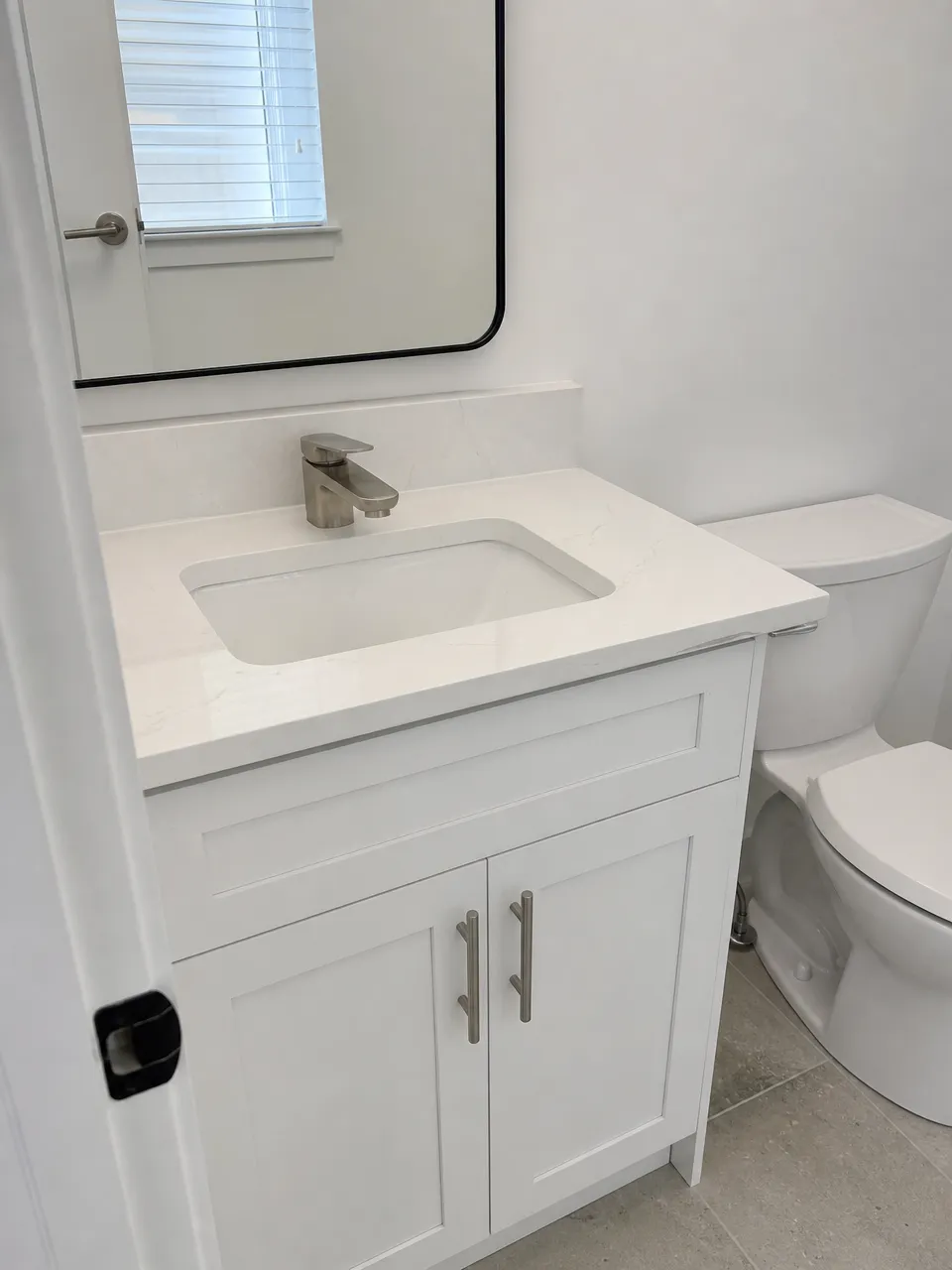
Low profile faucet on compact powder room vanity with shallow counter depth

Hospitality

Project-Driven

Predictable volumes tied to renovation schedules. 150–400 units per project.

Premium Residential

Trend-Pulled

Vessel sink trend drives demand. Higher margin per unit than standard centerset.

Contractor Supply

Spec-Driven

Non-standard vanity dimensions create a pull purchase. Stock availability wins the order.

Surface Engineering

Finish Options and What Each One Means for Your Market

All five finishes run on our own lines in Foshan — no subcontracting, no batch-to-batch variation from a third-party plating shop. For a low profile faucet going into a vessel sink installation, finish consistency matters more than it does for a standard centerset, because the faucet is a visual focal point rather than a background fixture.

Chrome

Multi-layer electroplating — copper base, nickel mid-coat, chrome top. The nickel mid-coat is the corrosion barrier; it's also the layer that gets skipped when a factory is cutting costs. Our chrome passes 24-hour salt spray minimum, most batches clear 48 hours.

Entry-to-mid price point Highest global volume Any market

Brushed Nickel

Same copper/nickel/chrome stack as chrome, with a brushed texture applied before the final chrome layer, then lacquer-sealed. Hides water spots better than polished chrome — fewer end-user complaints, lower after-sales cost for your buyers.

North American mid-to-premium Strong residential performer

Matte Black PVD

PVD-applied, 0.3–0.5μm coating thickness, cross-cut adhesion tested per batch. This is the finish that separates the product from commodity. Painted matte black looks identical in a product photo but shows wear at handle contact points within 6–12 months. PVD matte black doesn't chip, peel, or fade under normal bathroom conditions.

If your buyers are in a market where matte black is a premium finish — and it is, in North America and Australia right now — PVD is the only version worth selling. The warranty claim difference between PVD and painted is significant.

North America Australia Premium segment

PVD Gold PVD

Same PVD process as matte black, different target color. Moves well in Middle East hospitality and high-end residential globally. Higher per-unit value, lower volume — but the margin profile is strong and the segment is growing.

Middle East hospitality High-end residential Strong margin profile

Oil-Rubbed Bronze

Electroplated with a hand-applied antiquing treatment. Traditional aesthetic, specified in North American projects with a transitional or traditional design direction. Stable volume, not growing, but consistent.

North American traditional Stable volume
Five finish options for low profile bathroom faucets: chrome, brushed nickel, matte black PVD, PVD gold, and oil-rubbed bronze

Mixed-Finish Orders

For mixed-finish orders — say, matte black and brushed nickel in the same container — we schedule the same finish across all SKUs in the same plating run where possible, which minimizes batch-to-batch variation. A matte black low profile faucet and a matte black towel bar from the same order will match.

PVD vs. Painted Matte Black: What the Difference Costs You

Factor PVD Painted
Appearance at purchase Identical Identical
Wear at handle contact (6–12 mo) None Visible
Chip / peel risk None High
Warranty claim exposure Low Significant

Finish-specific pages: For deeper specification detail by finish, see our dedicated pages for matte black bathroom faucets, brushed nickel bathroom faucets, and chrome bathroom faucets.

Internal Mechanics

Cartridge Specification and the 500,000-Cycle Standard

The cartridge in a low profile faucet operates under the same mechanical conditions as any other single-lever faucet — the compressed body geometry doesn't change the cartridge's job. We use a 35mm ceramic disc cartridge across the low profile line, sourced from qualified suppliers with their own test reports, and we run 500,000 open/close cycle endurance tests on every production batch.

500,000-Cycle Endurance Test

Run on every production batch — not just new product introductions

At two uses per day — a conservative estimate for a residential bathroom — 500,000 cycles represents 685 years of use. In practice, the test is a proxy for manufacturing consistency: a cartridge that passes 500,000 cycles at our test pressure was manufactured to the right tolerances. A cartridge that fails at 50,000 cycles was not.

We run this test on every production batch, not just on new product introductions or annual audits, because cartridge quality can drift between supplier production runs. The test catches that drift before it reaches your container.

35mm Ceramic Disc Cartridge

Used across the full low profile line — consistent replacement part, consistent performance spec

Sourced from qualified suppliers with their own test reports on file

Compressed body geometry does not change the cartridge's mechanical operating conditions

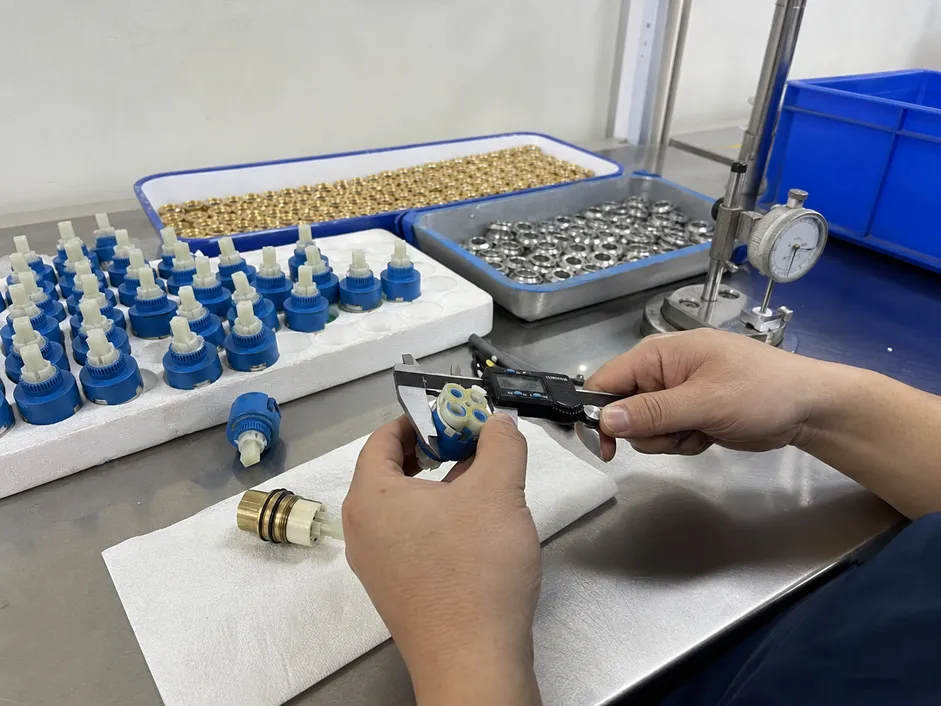
35mm ceramic disc cartridge used in low profile bathroom faucets, shown during quality inspection

100% Outgoing Inspection — Every Unit

These are not statistical sampling checks

Handle Torque Check

The lever must move smoothly through its full arc without stiffness or play. Checked on every unit at final inspection.

Flow Rate Verification

Verified at rated pressure on every unit before packaging.

60-Second Leak Test at 0.6 MPa

Every unit gets a 60-second leak test at 0.6 MPa before it goes into a carton. No exceptions.

Why batch-level testing matters: Cartridge quality can drift between supplier production runs. Running the 500,000-cycle test on every production batch — not just at product launch or annual audit — catches that drift before it reaches your container.

OEM & Private Label

Customization Options for OEM and Private Label Orders

The low profile faucet line is fully available for OEM from 200 pieces per SKU. The configuration options below cover the dimensions that matter most for buyers building a private label catalog or adapting the product for a specific market.

Dimension Standard Options Custom Range MOQ for Custom
Finish Chrome, brushed nickel, matte black, PVD gold, oil-rubbed bronze Custom PVD colors (brushed gold, rose gold, gunmetal) 500 pcs
Flow rate 1.2 GPM, 1.5 GPM, 2.2 GPM Specify at order time Standard MOQ
Handle style Single lever (standard) Cross handle, knob handle 300 pcs
Spout height 100–130mm standard range Outside range requires tooling review Contact us
Supply lines 3/8 in compression, braided stainless Custom length, angle-stop valve included Standard MOQ
Packaging Standard Wfaucet carton Custom carton printing, branded instructions, retail-ready 200 pcs
Certification docs cUPC, CE, WaterMark in Wfaucet name Issued in your brand name Volume threshold applies

ODM: Adapting Body Geometry to Your Spec

For ODM projects — adapting the body geometry or spout profile to your spec — first sample is typically 15–20 days from reference drawing or sample. We maintain an in-house tooling room for brass casting dies, so tooling revisions don't go to an outside vendor.

For new body designs, first sample is 25–35 days depending on tooling complexity.

Starting Small: The 200-Piece Trial Logic

The 200-piece OEM minimum is low enough to test a new finish or configuration in your market before committing to a full container. Most new buyers start with a 200–500 unit trial order on one or two SKUs, then scale once they've confirmed the product moves in their channel.

200 pcs OEM minimum In-house tooling room 15–20 day first sample
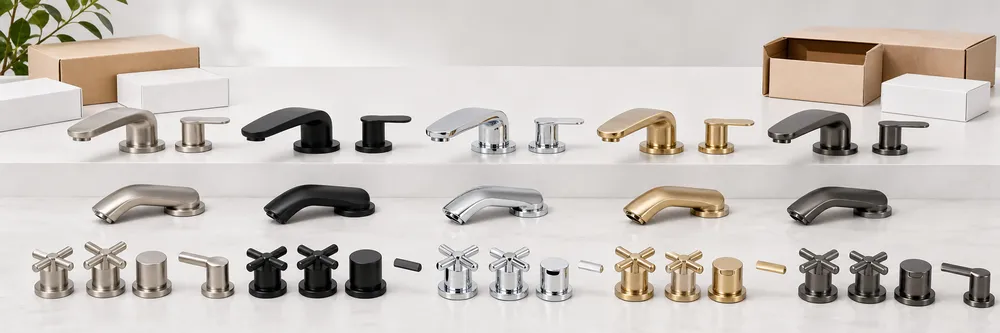
OEM and private label low profile faucet configurations showing finish and handle options

Built for private label from the ground up

Custom PVD finishes, branded packaging, and certification docs issued in your brand name — all from 200 pieces per SKU.

Compliance & Standards

Certification Coverage: North America, Europe, Australia

cUPC, CE, and WaterMark are all held on this product line. The same certifications that cover our standard bathroom faucet line apply to the low profile configuration, because the body material, cartridge, and waterway construction are the same. You're not sourcing a specialty product that requires separate compliance work.

North America

cUPC Certification

cUPC compliance means NSF/ANSI 61 and 372 lead-free qualification. We test every incoming brass batch for lead content using XRF analysis.

The low profile body uses the same C36000-equivalent alloy as the rest of the bathroom line — the lead-free qualification carries over.

NSF/ANSI 61 NSF/ANSI 372 Lead-Free XRF Tested

Australia

WaterMark Certification

WaterMark certification is mandatory for any faucet installed in Australia. The low profile faucet carries WaterMark, and WELS water efficiency rating is available on product packaging.

Specify your flow rate requirement — typically 6 L/min or below for residential — at order time.

WaterMark WELS Rated ≤6 L/min Residential

Europe

CE Certification

CE covers pressure and temperature performance requirements for the European market.

SGS third-party audit reports are available on request for buyers who need documentation for their own compliance files or import processes.

CE Mark SGS Audit Reports On Request

Why the Same Certifications Apply

The low profile configuration shares the same brass body alloy, ceramic disc cartridge, and waterway construction as the standard bathroom faucet line. Certification bodies test the material and waterway — not the external geometry. That means the compliance work already done on the standard line carries directly to the low profile product.

For buyers who need certifications issued under their own brand name, that's available at volume thresholds — discuss at RFQ stage.

cUPC CE WaterMark certification documentation for low profile bathroom faucet

Installation Guidance

Installation Geometry: What Your Buyers Need to Know Before They Order

Low profile faucets have one installation variable that standard faucets don't: the spout height has to be matched to the vessel sink height. Get this wrong and the faucet delivers water at the rim of the bowl or below it — a functional failure that generates returns and contractor callbacks.

The Geometry That Works

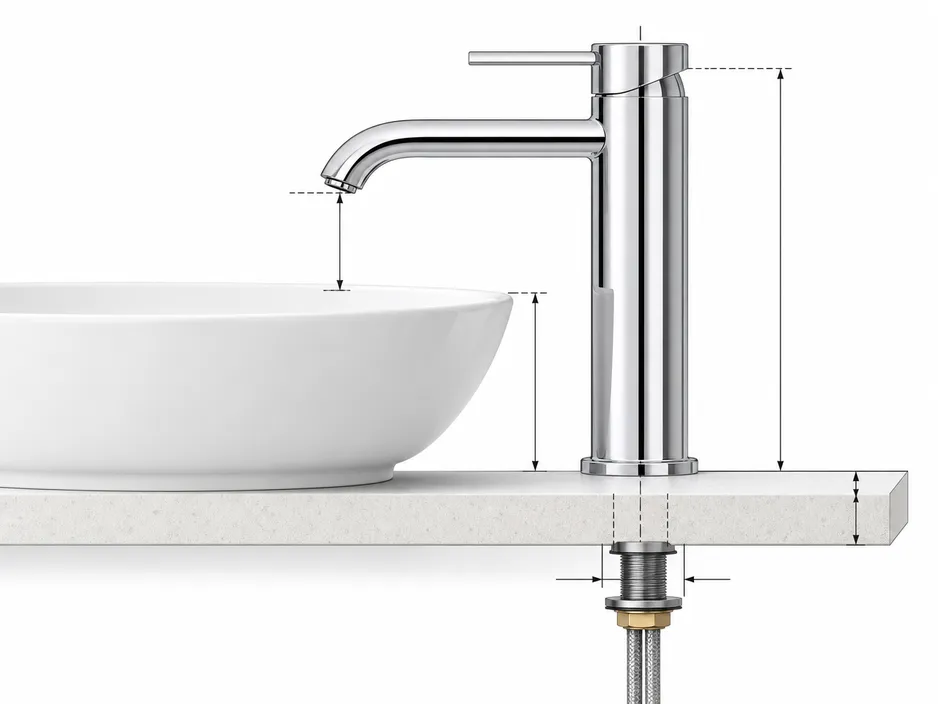
Spout outlet height above the counter should be at least 1 to 2 inches (25–50mm) above the interior rim of the vessel sink.

Reference Scenario

  • Vessel sink interior depth: 5 inches
  • Vessel sink overall height: 6 inches
  • Standard vanity height: 32 inches
  • Required spout outlet height above counter: at least 7 inches

Our standard low profile models with a 4 to 5 inch spout height work for vessel sinks with an overall height of 5 to 6 inches — covering the majority of standard vessel sinks in the market.

Mounting & Connection Specs

Mounting Hole

Standard single-hole deck mount, 35mm diameter

Supply Line Connections

3/8 inch compression — standard for North American and most international plumbing rough-in

Special Tools Required

None. No special tools or adapters required for installation.

Low profile faucet installation geometry diagram showing spout height relative to vessel sink rim

For Buyers Supplying Contractors or Renovation Retailers

This compatibility information is worth including in your product documentation. A contractor who installs the wrong faucet-to-sink combination generates a callback that costs more than the faucet.

Providing a simple compatibility guide with your catalog reduces that risk and reduces your after-sales support load.

Quick Compatibility Reference

Vessel Sink Overall Height Required Spout Outlet Height Our Standard Low Profile Models
5 inches ≥ 6 inches above counter Compatible (4–5 in spout)
6 inches ≥ 7 inches above counter Compatible (4–5 in spout)
7+ inches ≥ 8 inches above counter Verify per model

Product Range

Sibling Products: Other Bathroom Faucet Configurations

The low profile configuration is the right answer for vessel sink and compact vanity applications. If your project or catalog has different requirements, here's where the other configurations fit.

Buyer FAQ

Frequently Asked Questions

Answers to the specification and sourcing questions that come up most often before an order is placed.

What spout height do I need for a vessel sink installation?

The spout outlet should clear the interior rim of the vessel sink by at least 1 to 2 inches. For a vessel sink with a 6-inch overall height sitting on a standard counter, you need a spout outlet at least 7 inches above the counter surface.

Our standard low profile models deliver a spout outlet at 4 to 5 inches above the deck — suitable for vessel sinks with an overall height of 5 to 6 inches, which covers most standard vessel sinks. If your vessel sink is taller than 6 inches, contact us — we can review the geometry and confirm compatibility or recommend a configuration adjustment.

What is the difference between a low profile faucet and a standard bathroom faucet for vessel sink use?

A standard bathroom faucet has a spout height of 6 to 9 inches above the deck. Installed with a vessel sink that sits 5 to 6 inches above the counter, the spout outlet ends up at or below the rim of the bowl — water hits the inside wall of the vessel rather than the center of the basin.

A low profile faucet with a 4 to 5 inch spout height solves this by keeping the spout outlet above the rim while maintaining a proportional visual relationship with the sink. The internal engineering — waterway geometry, cartridge housing, spout arc — is specific to the low profile body, not a shortened version of a standard faucet.

What certifications does the low profile bathroom faucet carry?

cUPC (NSF/ANSI 61 and 372, North America), CE (Europe), WaterMark (Australia and New Zealand), and ISO 9001:2015. SGS third-party audit reports are available on request.

The low profile line uses the same certified body material and cartridge construction as our standard bathroom faucet line, so the certification coverage is the same. Test reports ship with your order documentation.

cUPC NSF/ANSI 61 & 372 CE WaterMark ISO 9001:2015
What is the MOQ for OEM low profile bathroom faucets?

200 pieces per SKU for standard catalog configurations with your branding and packaging. Custom PVD colors (brushed gold, rose gold, gunmetal) require 500 pieces. New body geometry or spout profile modifications require tooling review — contact us with your spec and we'll confirm MOQ and tooling cost.

Most buyers start with a 200–500 unit trial order to test the product in their market before scaling.

Standard OEM

200 pcs

Per SKU, catalog configs

Custom PVD Colors

500 pcs

Brushed gold, rose gold, gunmetal

New Body Geometry

TBD

Tooling review required

How do you handle finish consistency across a large hotel fit-out order?

All five finishes run on our own lines. For a single-finish order — say, 300 units of matte black for a hotel renovation — we schedule the entire batch in the same plating run, which eliminates batch-to-batch variation.

For mixed-finish orders, we schedule the same finish across all SKUs in the same run where possible. The PVD line runs at a controlled deposition rate with cross-cut adhesion testing on every batch, so the matte black on unit 1 and unit 300 are the same coating.

What flow rate should I specify for WaterSense or WELS compliance?

For WaterSense (USA, EPA): specify 1.2 GPM — this is the maximum for bathroom lavatory faucets under the WaterSense program. For WELS (Australia): specify 6 L/min (approximately 1.6 GPM) or below for most residential applications.

We configure the aerator at order time — specify your target market and we'll set the correct flow rate. For mixed-market orders, we can pack different aerator configurations in the same container.

WaterSense (USA)

1.2 GPM max

EPA bathroom lavatory standard

WELS (Australia)

6 L/min max

~1.6 GPM, residential standard

Request a Quote

Get a Quote for
Low Profile Bathroom Faucets

Send us your vessel sink dimensions, target finish, volume, and destination market. We'll come back with a detailed quote, confirm the spout height compatibility for your specific sink, and flag any configuration details worth discussing before you commit.

If you're building a vessel sink package — faucet plus sink, sold as a set — tell us your sink spec and we'll confirm the faucet geometry that works. We've done this configuration review for several buyers and it's faster than going back and forth after the order is placed.

Low profile bathroom faucet installed on vessel sink — Wfaucet OEM manufacturing

What to Include in Your RFQ

  • Vessel sink overall height and interior rim diameter
  • Target finish or finishes (matte black, brushed nickel, chrome, brushed gold, rose gold)
  • Order volume per SKU and total units
  • Destination market (for aerator flow rate and certification configuration)
  • OEM/private label requirements: branding, packaging, labeling
  • If building a vessel sink package, include sink spec for geometry confirmation