
Factory-Direct · CE & cUPC Certified

2 Way Concealed Shower Mixer with Integrated Diverter

Pressure-balanced in-wall valve with two-outlet diverter — the volume SKU for residential and mid-range hospitality programs. Brass body, ±0.05mm valve seat tolerance, 500,000-cycle endurance tested.

CE Certified cUPC Certified ISO 9001:2015 OEM from 200 pcs 17+ Years Manufacturing
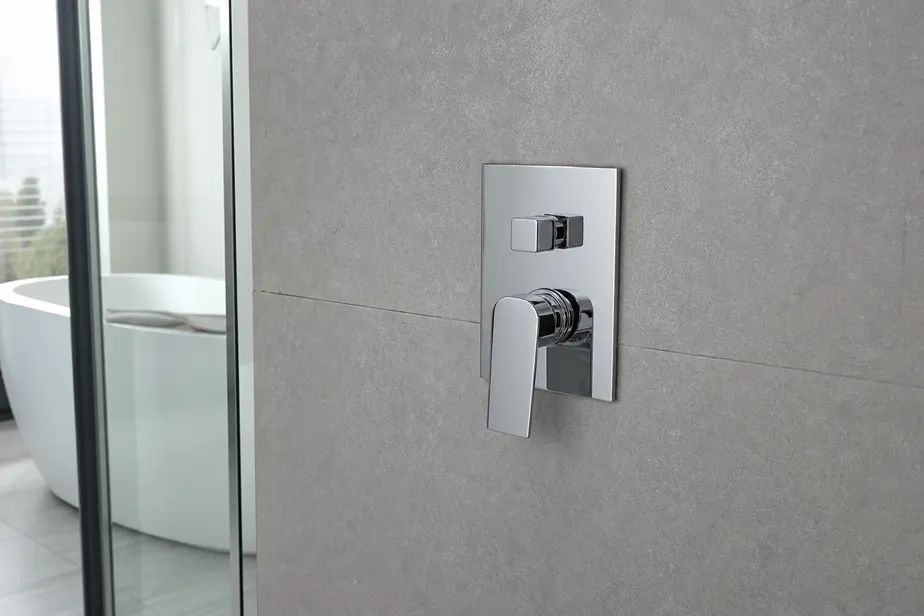
2 way concealed shower mixer with integrated diverter — brass body, chrome finish, installed in-wall

Product Overview

What This Product Is and Where It Sits in the Line

The 2 way concealed shower mixer is a pressure-balanced in-wall valve with an integrated two-outlet diverter — one handle controls temperature and flow, a second control routes water to either the overhead head or the hand shower, not simultaneously. That "not simultaneously" detail is the defining characteristic of this configuration and the reason it sits at a different price point than the 3-way variant: the diverter mechanism is simpler, the installation is more straightforward, and the retail price lands in a range that moves volume.

Within our concealed shower line, this is the configuration we'd describe as the volume SKU. It's not the entry-level product — that's the basic concealed shower mixer without a diverter — and it's not the premium anchor. It's the product that covers the widest range of residential and mid-range commercial projects: two outlets, pressure-balanced, broad finish availability, certified for the markets where most of our buyers operate. If you're building a concealed shower program and need one SKU that moves consistently across your customer base, this is typically where we'd start the conversation.

The two outlet concealed shower mixer configuration is also the most common specification in new residential construction across North America, Europe, and Australia — overhead head plus hand shower is the standard two-outlet setup that contractors and developers default to. That demand pattern means predictable reorder cycles for distributors stocking this SKU, and it means your contractor customers already know how to install and sell it.

Technical Data

Exact Specifications for This Mixer

These are the specific parameters for the 2 way concealed shower mixer. The category page covers range values across the full line — this table gives you the exact figures for this configuration.

Full Specification Table

2 Way Concealed Shower Mixer — Standard Configuration

Parameter Specification
Body material C36000-equivalent free-machining brass
Valve type Pressure-balanced cartridge
Diverter outlets 2 (overhead / hand shower) — sequential, not simultaneous
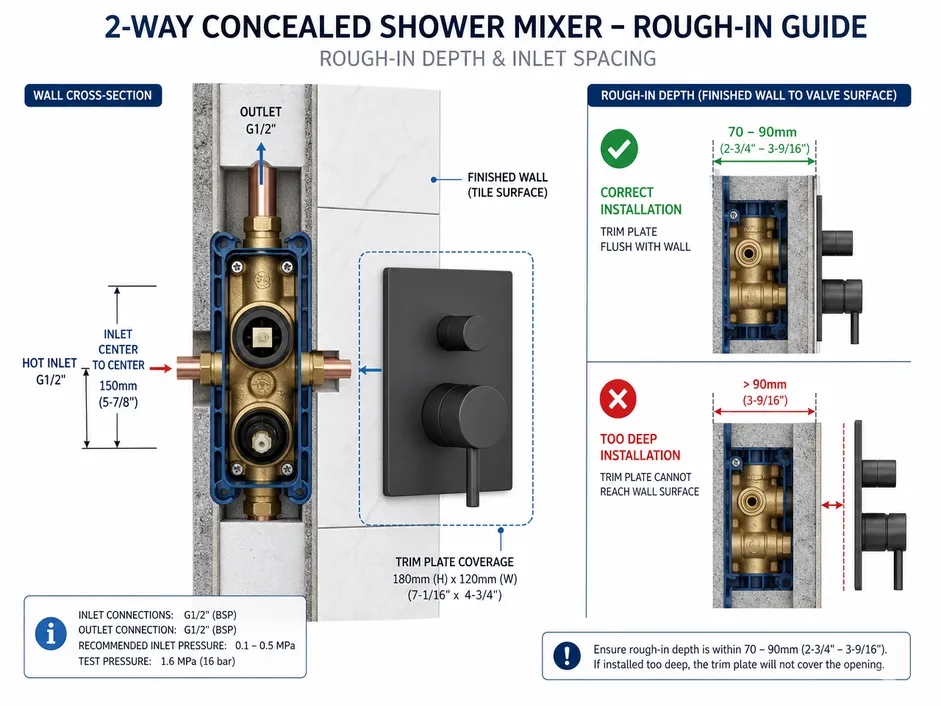
Rough-in depth 60–75mm from finished wall surface (standard)
Max working pressure 0.6 MPa
Min working pressure 0.05 MPa
Temperature range 20–65°C
Flow rate 10–18 L/min at 0.3 MPa (typical; varies by outlet configuration)
Inlet connection G1/2" (standard); G3/4" available on request
Outlet connections G1/2" × 2
Trim plate dimensions Approx. 200 × 200mm (standard profile; OEM dimensions available)
Handle type Single lever (temperature/flow) + diverter control
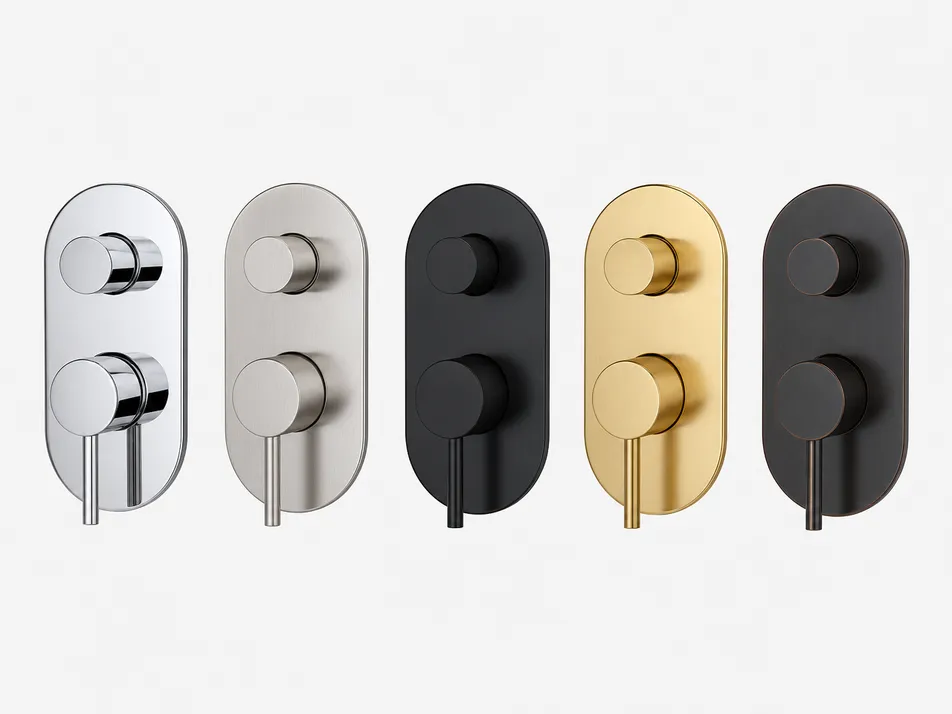
Surface finishes Chrome, brushed nickel, matte black, PVD gold, oil-rubbed bronze
Certifications CE cUPC ISO 9001:2015
OEM MOQ 200 pieces per SKU
Standard lead time 25–35 days
OEM lead time (new tooling) 35–50 days

Specifications shown are industry-standard values for this product type. Actual specifications may vary by configuration. Contact us for detailed product data sheets and confirmation of exact parameters for your order.

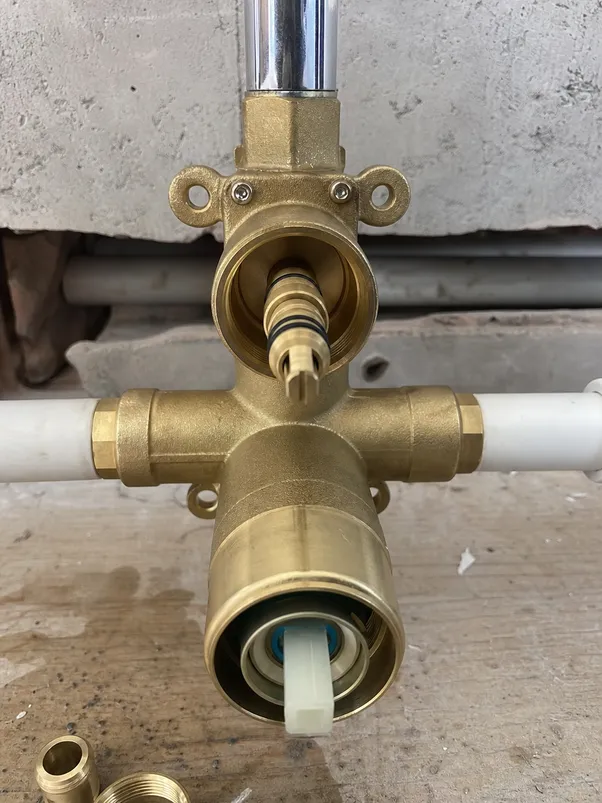
2 way concealed shower mixer — valve body detail showing brass construction and diverter mechanism

Key Spec Highlights

Pressure-Balanced Cartridge

Holds outlet temperature within a reasonable range when supply pressure fluctuates — the standard residential scenario where a toilet flush drops cold supply pressure momentarily.

Sequential Diverter

Routes water to overhead head or hand shower — not simultaneously. Simpler mechanism, lower unit cost, straightforward installation.

Standard Rough-In Depth

60–75mm from finished wall surface. Compatible with standard stud-wall and concrete construction without special framing.

5 Surface Finishes

Chrome, brushed nickel, matte black, PVD gold, and oil-rubbed bronze. All finishes available across the same valve body — no tooling changes required.

CE, cUPC, ISO 9001:2015

Certified for European and North American markets. Documentation available for import compliance and project specifications.

Pressure-Balanced vs Thermostatic

This mixer uses a pressure-balanced cartridge — it compensates for pressure fluctuations but does not maintain a precise set temperature independently of supply temperature changes.

A thermostatic mixer maintains a user-set temperature regardless of supply temperature variation. It costs more and suits projects where precise temperature control is a specification requirement.

For most residential and mid-range hospitality projects, pressure-balanced is the standard and appropriate choice. If your project spec calls for thermostatic, see the thermostatic range.

Valve Mechanics

How the 2 Way Concealed Shower Mixer Works

Understanding the internal mechanics helps you specify the right product, brief your installation team accurately, and answer end-customer questions with confidence.

1

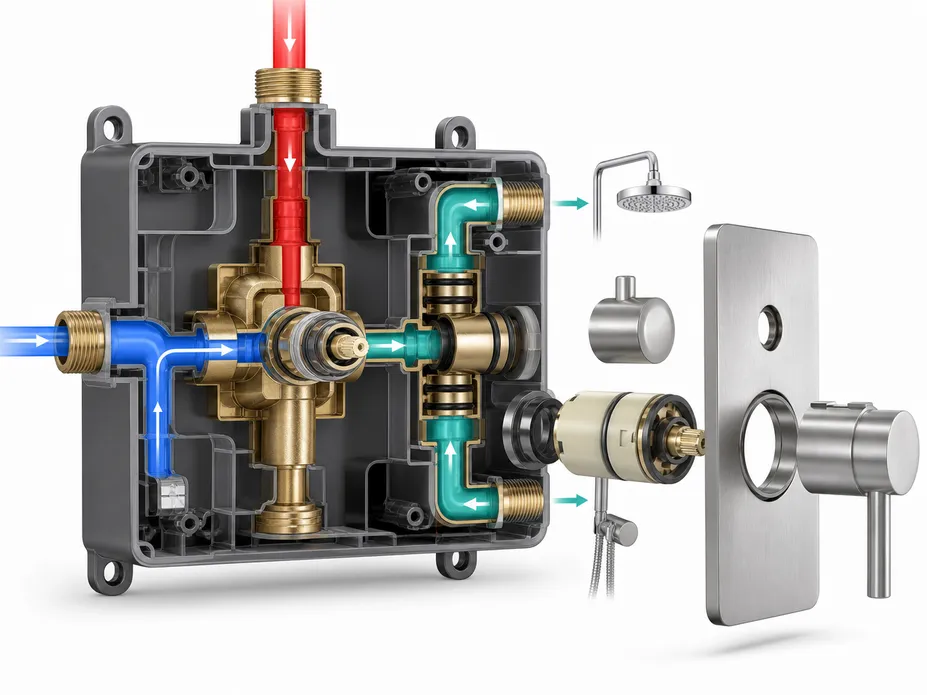
Water Enters the Rough-In Body

Hot and cold supply lines connect to the concealed valve body via G1/2" inlets. The body is set into the wall during rough-in — before tiling — at the correct depth (60–75mm from finished wall surface). Once tiled, only the trim plate and controls are visible.

2

Pressure-Balanced Cartridge Mixes Temperature

The single lever controls both temperature (left/right rotation) and flow volume (up/down). Inside, the pressure-balanced cartridge monitors the ratio of hot to cold pressure. If cold pressure drops — for example, when a toilet flushes — the cartridge automatically reduces hot flow proportionally, preventing a sudden temperature spike at the outlet.

3

Diverter Routes Flow to Selected Outlet

A separate diverter control — typically a rotary knob or push-button on the trim plate — directs mixed water to either Outlet 1 (overhead shower head) or Outlet 2 (hand shower). The diverter is sequential: only one outlet is active at a time. This is by design — it keeps the mechanism simple and the unit cost lower than a simultaneous-flow configuration.

4

Water Exits Through the Active Outlet

Mixed water at the selected temperature and flow rate exits through the active G1/2" outlet port and travels to the connected fixture — overhead arm, hand shower bar, or body jet rail. The inactive outlet port is sealed by the diverter mechanism with no bypass flow.

Diagram showing internal flow path of a 2 way concealed shower mixer — pressure-balanced cartridge and sequential diverter

Mechanical Notes for Specifiers

No simultaneous flow: The 2-way diverter is sequential by design. If a project requires overhead and hand shower to run simultaneously, specify the thermostatic mixer with independent volume controls instead.

Cartridge serviceability: The pressure-balanced cartridge is accessible from the front after removing the trim plate — no wall demolition required for routine maintenance or cartridge replacement.

Rough-in body is finish-agnostic: The same valve body accepts any trim plate finish. This means the rough-in can be completed before the finish decision is finalised — useful for large projects where finish selections are confirmed late.

Minimum pressure requirement: 0.05 MPa (0.5 bar). Gravity-fed systems with very low static pressure may need a pump booster upstream — confirm supply pressure before specifying.

Installation Overview

Installation Requirements and Process

Concealed mixers require rough-in work before tiling. This section covers what your installation team needs to know — wall preparation, rough-in depth, supply connections, and trim-out sequence.

Phase 1 — Rough-In

Before tiling; structural and plumbing work

1

Mark valve centre position

Typically 900–1100mm from shower floor. Confirm with trim plate dimensions (approx. 200×200mm) to ensure adequate clearance from adjacent fixtures.

2

Set supply line centres

Hot and cold inlets are on standard 150mm centres (G1/2"). Confirm exact inlet spacing from the product data sheet before roughing in supply lines.

3

Mount valve body at correct depth

60–75mm from finished wall surface. Use the supplied depth gauge or bracket. Incorrect depth is the most common installation error — it prevents the trim plate from seating flush.

4

Connect supply and outlet lines

Connect hot/cold supply to inlets. Run outlet lines to overhead arm position and hand shower bar position. Cap outlets and pressure-test before closing the wall.

5

Pressure test and close wall

Test at 1.5× working pressure for a minimum of 30 minutes before boarding and tiling. Document the test — required for warranty and building inspection in most markets.

Phase 2 — Trim-Out

After tiling; finish installation

1

Insert cartridge

The pressure-balanced cartridge is installed at trim-out, not rough-in. This protects it from construction debris and pressure-test damage. Insert and hand-tighten per the installation guide.

2

Fit trim plate

Slide the trim plate over the valve stem and seat flush against the tile. Apply a thin bead of neutral-cure silicone around the perimeter — do not use acetoxy (acid-cure) silicone near brass fittings.

3

Attach lever and diverter controls

Fit the temperature/flow lever and diverter knob per the trim kit instructions. Confirm diverter indexes correctly between both outlet positions before completing.

4

Connect and fit outlet fixtures

Connect overhead shower arm and hand shower bar to the outlet ports. Fit escutcheons and check for leaks at all connections under live pressure before signing off.

5

Commission and set temperature limit

Set the maximum temperature stop on the cartridge per local code requirements (typically 49°C / 120°F for residential). Test both outlets across the full diverter range.

Most Common Error

Incorrect rough-in depth. The valve body must be set at 60–75mm from the finished wall surface — not the substrate. Account for tile thickness when setting depth.

Tools Required

Adjustable wrench, PTFE tape, spirit level, silicone gun (neutral cure), pressure test kit, and the supplied installation template for inlet spacing.

Installation Guide

Full installation guide with dimensioned diagrams is available on request. Contact us to receive the PDF for your project documentation.

Engineering Detail

The Diverter Mechanism: How We Build It and Why It Matters for Your Returns Rate

The integrated diverter is the component that distinguishes this mixer from a basic concealed valve — and it's where we've seen the most variation in quality across the market. A poorly built diverter either leaks at the non-active outlet, or the diverter handle becomes stiff over time as the internal seals degrade. Both failure modes generate warranty claims. In a concealed installation, a leaking outlet means your customer's contractor is cutting into tile.

Machined from the Same Brass Billet

We machine the diverter body from the same C36000-equivalent brass billet as the main valve body. It's not a separate zinc alloy insert pressed into a brass housing — a common cost-reduction approach we've seen from other factories. This matters for long-term dimensional stability and corrosion resistance in the shower environment.

EPDM Seals and Pressure-Tested Cartridge

The diverter cartridge uses EPDM seals rated for the temperature and pressure range of this application. We run the assembled diverter through a 0.6 MPa pressure test before the unit moves to final assembly. The diverter handle torque is set during assembly to a specified range — loose enough to operate without effort, firm enough that it doesn't drift between positions under water pressure.

500,000-Cycle Endurance Testing

We run 500,000-cycle endurance testing on the diverter assembly as part of our standard production batch testing. This is the number that tells you whether the cartridge your sample showed is the cartridge your container delivers. We've had suppliers who passed paper qualification but showed early failure rates in our endurance testing — they're no longer on our approved list. A diverter that passes 500,000 cycles under test conditions will hold up through normal service life without the seal degradation that causes drip failures at the non-active outlet.

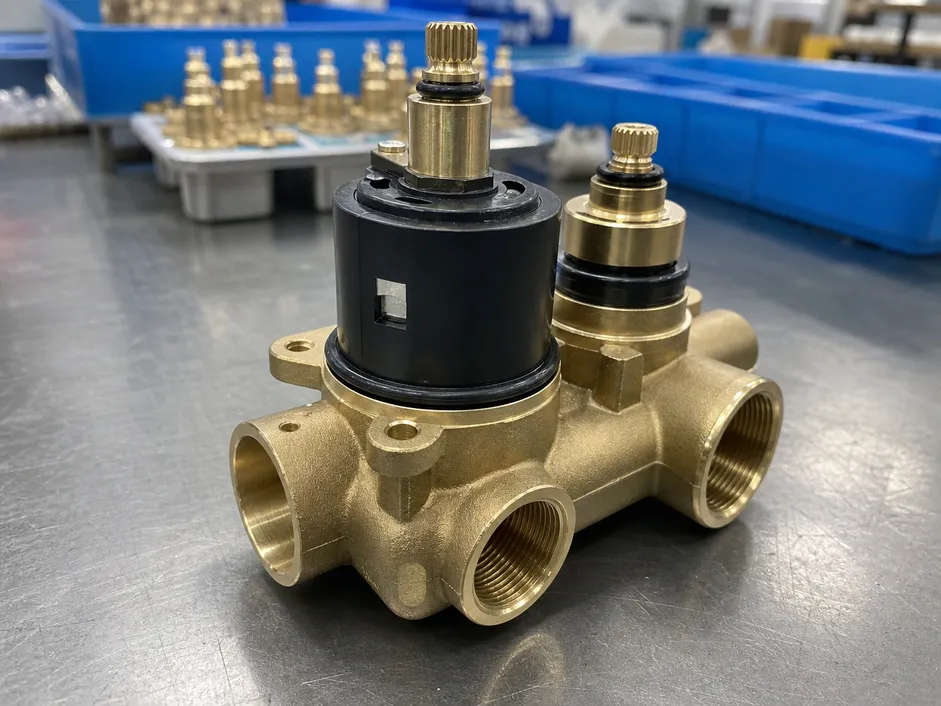
Two-way concealed shower mixer diverter mechanism — brass body and EPDM cartridge detail

What Diverter Failure Costs Your Business

Drip at non-active outlet — water from the overhead head while the hand shower is running, or vice versa. Immediate callback, customer dissatisfaction.

Stiff handle over time — internal seal degradation makes the diverter hard to operate. Warranty claim, replacement unit required.

Concealed installation penalty — any leak at the non-active outlet in a tiled wall means the contractor cuts into tile to access the valve. Tile damage claims erode the margin on the original SKU.

A diverter that works reliably means no callbacks, no tile damage claims, and no warranty replacements. The margin on this SKU stays intact across the product's service life.

0.6 MPa

Pressure Test

Every assembled diverter pressure-tested before final assembly

500,000

Cycle Endurance

Standard production batch testing across all valve products

C36000

Brass Equivalent

Same billet for diverter body and main valve — no zinc alloy inserts

Installation Reference

Rough-In and Installation Parameters: What Your Contractors Need to Know

The concealed shower mixer with diverter goes into the wall before tile work starts, which means installation errors are expensive to correct. The parameters below are what your contractor customers need to confirm before rough-in.

Rough-In Depth

60–75 mm

Standard 60–75 mm from the finished wall surface. Covers the most common wall assemblies in primary export markets: standard drywall plus tile, cement board plus tile, and single-layer tile on masonry. For non-standard assemblies — thicker tile packages, double-layer drywall, or specific commercial wall systems — adjusted rough-in depth is available on OEM orders. A rough-in guide is included with every valve body shipment.

Inlet Spacing

150 mm c/c

Standard 150 mm center-to-center between hot and cold inlets, matching the industry-standard rough-in pattern for concealed shower valves. Compatible with standard plumbing rough-in templates.

Outlet Positions

2 outlets

Two outlets at standard positions for overhead arm and hand shower slide bar connection. Outlet positions are fixed on the standard valve body. OEM configurations with adjusted outlet positions are available on orders of 200+ pieces.

Trim Plate Coverage

200 × 200 mm

The standard 200 × 200 mm trim plate covers the rough-in opening for standard wall assemblies. For tile assemblies with larger grout joints or non-standard opening sizes, extended trim plate profiles are available on OEM orders.

Concealed shower mixer rough-in depth and inlet spacing installation diagram

Critical: Rough-In Depth Tolerance

The rough-in depth tolerance matters more on this product than on a surface-mounted valve. If the valve body is installed 10 mm too deep, the trim plate won't reach the wall surface and the escutcheon won't seat correctly. We've seen this cause installation callbacks even when the valve itself is perfectly functional.

The rough-in guide included with every shipment addresses this specifically. It's worth making sure your contractor customers read it before they pour the wall.

Wall Assembly Compatibility at Standard Rough-In Depth

Wall Assembly Standard Compatible Notes
Drywall + tile Yes Standard 60–75 mm depth covers this assembly
Cement board + tile Yes Standard 60–75 mm depth covers this assembly
Single-layer tile on masonry Yes Standard 60–75 mm depth covers this assembly
Thick tile package OEM Adjusted rough-in depth available on OEM orders
Double-layer drywall OEM Adjusted rough-in depth available on OEM orders
Commercial wall systems OEM Specify wall assembly on OEM inquiry for confirmation

Buyer Intelligence

Market Segments Where This SKU Moves Volume

The two outlet concealed shower mixer is a broadly applicable product, but the segments where it generates consistent, repeatable volume are specific. Here's where we see the strongest demand from our existing buyers.

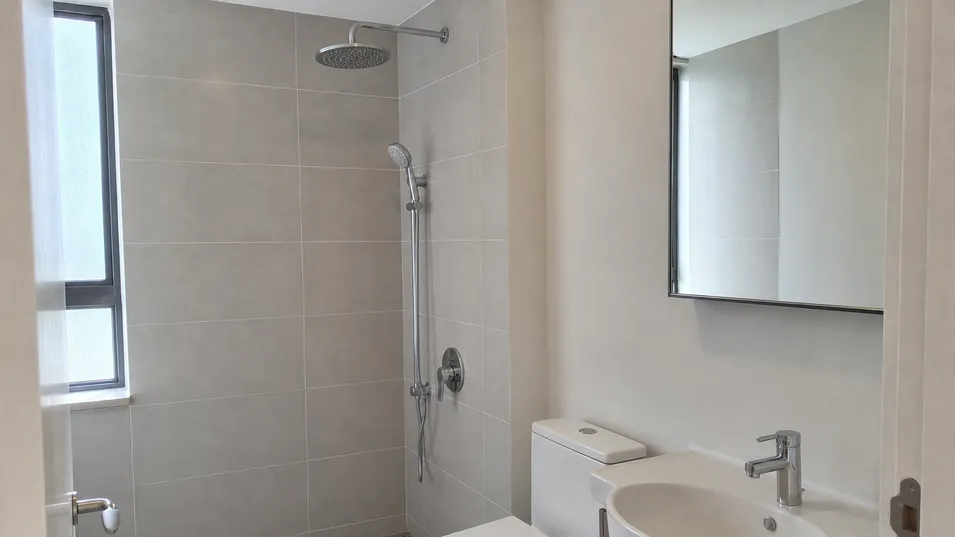
Concealed shower mixer installed in multi-unit residential development bathroom

Residential Construction & Developer Projects

Property developers specifying concealed shower systems across multi-unit residential builds default to the 2-way configuration because it covers the standard overhead-plus-hand-shower setup at a price point that works in mid-range residential. Volume per project runs 50–500 units depending on project scale, and developers in this segment reorder on a project-by-project basis.

The cUPC and CE certifications are typically required for permit compliance, and having the documentation ready at order confirmation removes a friction point from the procurement process. We've had several developer-focused distributors tell us that documentation readiness is the deciding factor when they're choosing between two otherwise comparable suppliers — it's worth having the test reports in hand before your customer asks.

50–500 units/project cUPC & CE required Project-by-project reorder
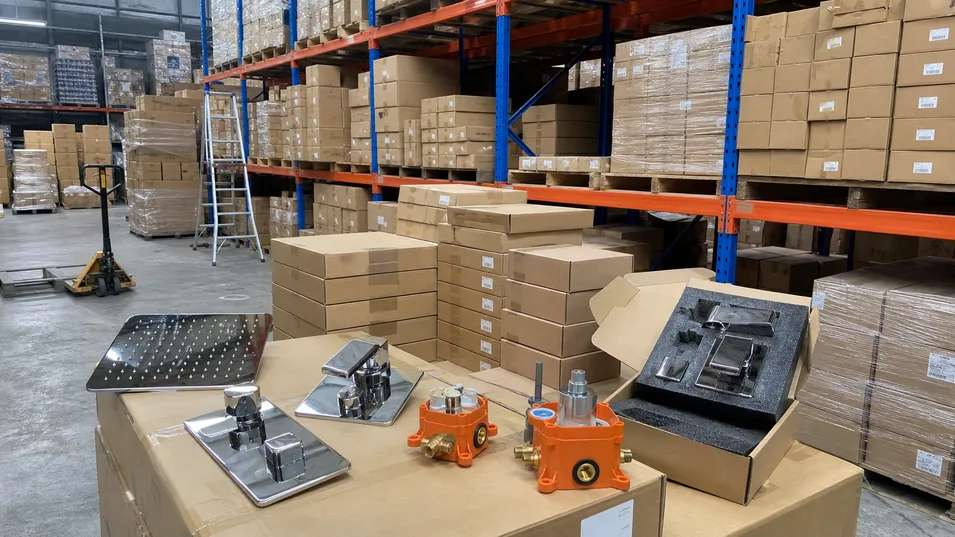
Plumbing wholesale distribution warehouse stocking concealed shower mixer SKUs

Plumbing Wholesale & Distribution

Distributors building a concealed shower program need a volume SKU that their contractor customers will specify repeatedly. The 2-way configuration is that SKU — it's what most contractors default to for standard residential projects, and it's the configuration that generates the most reorder activity.

Stocking this mixer alongside the concealed shower trim kit as a separate SKU gives your contractor customers the flexibility to source rough-in and trim on independent timelines, which is how new construction projects actually work.

High reorder velocity Contractor-specified Trim sold separately
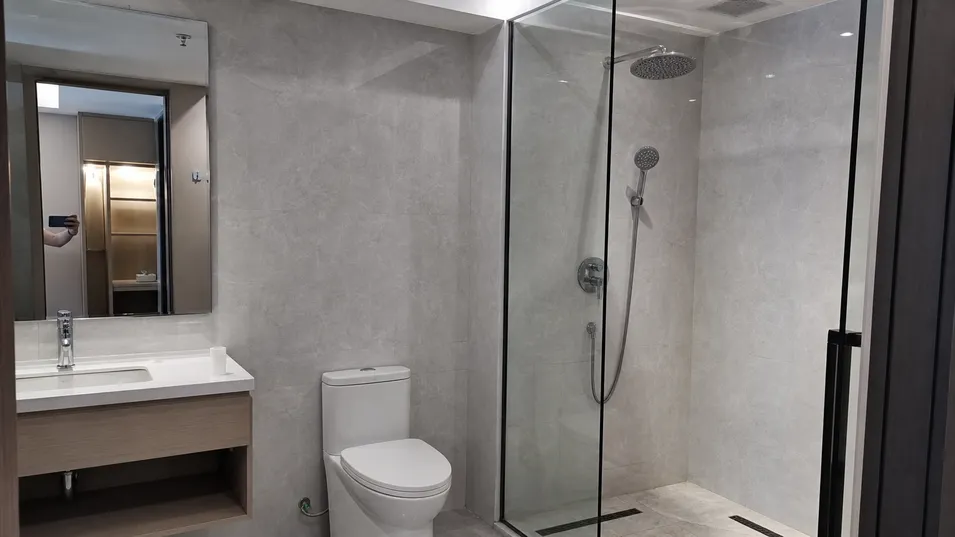
3-star hotel guest bathroom renovation with concealed shower mixer installation

Mid-Range Hospitality Renovation

Hotels renovating guest bathrooms at the 3- and 4-star level specify the 2-way concealed mixer as the standard configuration. Overhead head plus hand shower covers the functionality guests expect; the concealed installation gives the bathroom a cleaner look than surface-mounted alternatives.

Hospitality procurement typically runs 50–300 units per property, with repeat orders as properties renovate additional floors or expand. The CE certification covers most European and Middle Eastern hospitality markets; cUPC covers North American properties. We've shipped this configuration to hospitality projects across Southeast Asia and the Middle East — the matte black and PVD gold finishes move particularly well in that segment.

50–300 units/property CE & cUPC certified SE Asia & Middle East
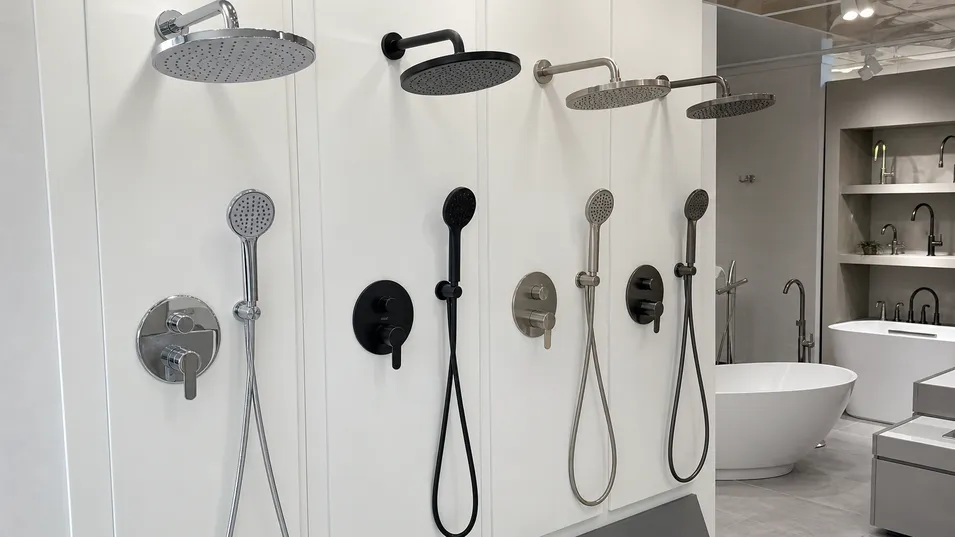
Kitchen and bath showroom display featuring concealed shower mixer in multiple finishes

Kitchen & Bath Showrooms

Showrooms stocking concealed shower products for the residential renovation market need a mid-range SKU that demonstrates the concealed shower concept without requiring the premium price commitment of a thermostatic system. The 2-way mixer fills that role — it's a genuine concealed shower product with a clean trim profile, available in finishes that photograph well for showroom displays, at a price point that converts browsers into buyers.

OEM trim profiles let you differentiate your showroom's offering from the standard catalog.

Mid-range price point OEM trim available Showroom-ready finishes

Ready to Specify?

Tell Us Your Target Market

We'll quote the right configuration for your segment and volume.

Get a Segment Quote

Surface Engineering

Finish Options and Durability in Shower Environments

All five of our in-house finishes are available on this mixer. The finish decision affects both the retail price point you can support and the warranty claim exposure you're taking on. Because all five finishes run on our in-house lines, a mixed-finish order doesn't require coordinating between two suppliers or managing two lead times.

Finish Comparison by Market Fit

Finish Process Salt Spray Best Market Fit
Chrome
Cu/Ni/Cr electroplating 24h+ (most batches 48h) Volume residential, hospitality
Brushed Nickel
Multi-layer electroplating + brushing 24h+ North American residential
Matte Black
PVD or electroplating + matte treatment 24h+ Premium residential, hospitality
PVD Gold
Physical vapor deposition, 0.3–0.5μm 24h+ Middle East, premium segment
Oil-Rubbed Bronze
Electroplating + patina treatment 24h+ North American traditional style
Five available finishes for the 2-way concealed shower mixer: chrome, brushed nickel, matte black, PVD gold, oil-rubbed bronze

In-House Finish Lines: What This Means for Your Order

  • Mixed-finish orders — chrome and brushed nickel in the same container — don't require coordinating between two suppliers or managing two lead times.

  • Finish consistency within a batch is controlled by one team — the chrome on unit 1 matches the chrome on unit 50, which matters when your customers are installing multiple units in the same project.

  • Matte black and PVD gold carry a higher retail price point than chrome, which means better margin per unit for your distribution business.

  • PVD gold holds up well against the cleaning chemicals that premium bathroom users tend to apply — fewer finish warranty claims from your downstream customers.

Matte Black & PVD Gold: Fastest-Growing Finishes

Both finishes have been the fastest-growing in our concealed shower line over the last few years. They move particularly well in premium residential and boutique hospitality — Southeast Asia and Middle East markets in particular. Higher retail price point means better margin per unit for your distribution business.

Salt Spray Testing & Warranty Exposure

All five finishes pass 24h+ salt spray testing; most chrome batches reach 48h. The multi-layer electroplating stack, PVD process, and salt spray testing protocol are documented in our category-level finish durability report — available on request with your quote.

OEM & Private Label

OEM Configuration for Program Differentiation

The standard 2 way concealed shower mixer is a ready-to-list SKU. The OEM path is for buyers who need to differentiate their program — different trim plate profile, custom handle design, private label packaging, or a finish combination not in our standard catalog.

Standardized Valve Body

The foundation of the OEM program

The valve body is standardized across our concealed shower line. That's a deliberate choice: standardizing the rough-in component keeps tooling costs manageable, keeps certification coverage straightforward, and means your customers' plumbers are installing the same rough-in regardless of which trim profile they're pairing it with.

Trim Kit OEM Development

Where visible differentiation happens

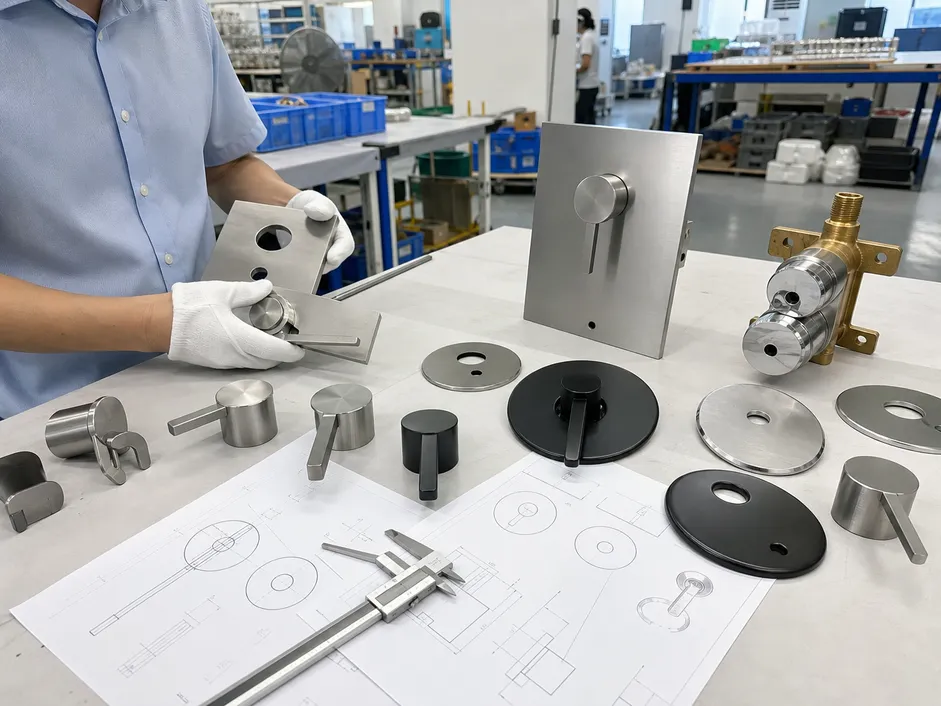
The OEM development work focuses on the trim kit — trim plate dimensions, handle profile, escutcheon design. We maintain an in-house tooling room for casting dies and CNC fixtures, so tooling revisions don't go to an outside vendor.

First Sample

25–35 days

Custom trim kit OEM

MOQ

200 pcs

Custom OEM trim

Private Label Packaging

Faster path for standard trim profiles

For private label packaging on our standard trim profiles, we can move faster.

First Sample

15–20 days

Private label packaging

MOQ

200 pcs

Same minimum

OEM trim kit development for concealed shower mixer — custom handle and trim plate profiles

Certification Coverage Under OEM

The valve body's CE and cUPC certifications remain valid when paired with a custom OEM trim kit, because the certifications cover the valve body's pressure-balancing and flow performance — not the trim aesthetics.

If you're modifying the valve body itself — adjusting rough-in depth, adding an outlet — we manage the certification extension with the relevant certification body. You don't run a full re-certification from scratch.

MOQ of 200 pieces is low enough to test a new design in your market before committing to a full container.

OEM Scope Summary

Trim plate profile Custom available
Handle design Custom available
Escutcheon design Custom available
Private label packaging Custom available
Non-standard finish combinations Custom available
Valve body (standardized) Shared across line

Certifications & Compliance

Compliance Coverage for Your Export Markets

The 2 way concealed shower mixer carries CE and cUPC certification, covering the two largest regulated markets in our buyer base. Here's what that means for your specific market.

Market Certification Required Our Coverage Documentation

US / Canada

cUPC (IAPMO, ASSE 1016)

Certified

Test reports, certificate of conformity, HS code classification

European Union / UK

CE (EN 1111)

Certified

CE declaration of conformity, technical file

Australia / New Zealand

WaterMark (AS 4032)

On request

WaterMark license documentation

Middle East / Southeast Asia

CE accepted in most markets

CE covers most

CE documentation covers most requirements. Consult for specific market requirements.

North American Shipments

We prepare the HS code classification and can provide a binding ruling reference for customs pre-clearance if your broker needs it.

European Shipments

The CE declaration and technical file are prepared in parallel with production and travel with the shipment documentation. The documentation package is consistent from order to order — your customs broker isn't solving new problems every time a container arrives.

ASSE 1016 vs. ASSE 1070: Which Standard Applies

cUPC certification for this product covers ASSE 1016 compliance, which is the pressure-balancing performance standard required for shower valves in the US and Canada. If your market requires ASSE 1070 (thermostatic performance), that's the concealed thermostatic shower mixer. The two standards address different performance requirements, and the certification coverage is specific to each.

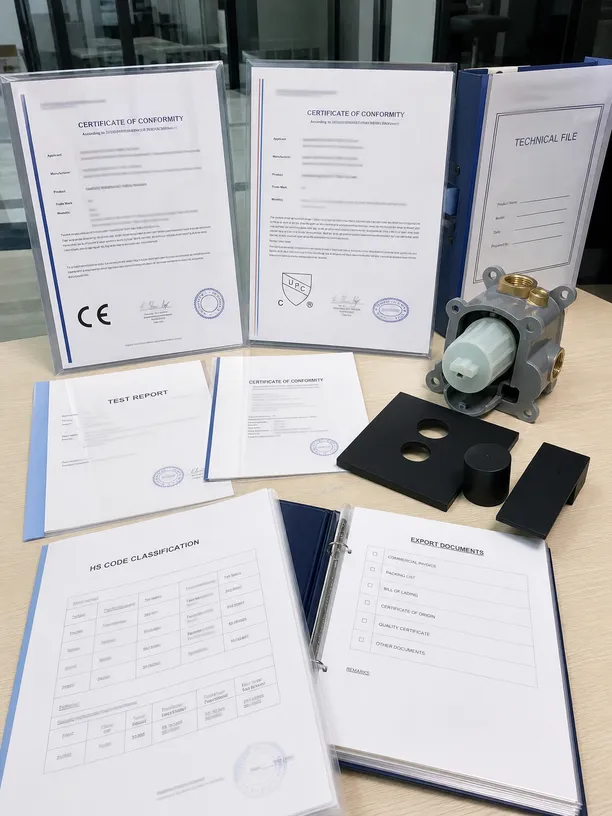
CE and cUPC certification documentation for concealed shower mixer export markets

Certification at a Glance

CE (EN 1111) Certified
cUPC (IAPMO) Certified
ASSE 1016 Covered
WaterMark (AS 4032) On request

OEM trim kit changes do not invalidate valve body certifications. Valve body modifications are managed through certification extension — not full re-certification.

Documentation Included

  • Test reports
  • Certificate of conformity
  • HS code classification
  • CE declaration of conformity
  • CE technical file
  • Binding ruling reference (on request)

Logistics & Cost Planning

Container Loading and Landed Cost Planning

Valve bodies are solid brass — they're heavier than most shower products, and getting the container loading right affects your landed cost calculation. Here's what to expect before you confirm the order.

Standard Packing Configuration

  • Each valve body packed in individual foam-lined carton for transit protection
  • Master-carton packed for container optimization — carton dimensions calculated against container floor plans
  • Packing list with CBM and gross weight per SKU provided before order confirmation so your freight forwarder can quote accurately

40HQ Container Capacity

3,500 – 4,500 units

per standard 40HQ container

Capacity varies by trim configuration — valve-only vs. valve with trim kit. Exact count confirmed on the pre-shipment packing list.

Multi-SKU Consolidation

For buyers consolidating multiple SKUs — this mixer alongside the 3-way concealed shower mixer or the concealed shower trim kit — we coordinate the packing sequence to minimize void space and keep the container weight balanced for port handling.

The documentation package is prepared in parallel with production and ready at container loading.

Documentation Package Includes

Commercial invoice Packing list Certificate of origin CE / cUPC test reports

Lead Time to Container Loading

25–35

days

Standard Catalog Items

From order confirmation to container loading for in-catalog SKUs with no new tooling required

35–50

days

OEM Orders with New Tooling

Extended timeline for OEM configurations requiring new tooling development

Brass valve bodies in foam-lined cartons prepared for container loading

Product Line

How This Mixer Compares to Sibling Products in the Line

The concealed shower line has eight variants. Here's how the 2-way mixer sits relative to the products buyers most often compare it against — so you can match the right SKU to each project specification.

Comparing

2-Way vs. Basic Concealed Shower Mixer

Basic Concealed Shower Mixer

The basic concealed shower mixer is a single-outlet valve — no diverter. Right choice when your customer's shower has only one outlet (overhead head only, or hand shower only).

2-Way Mixer (This Product)

Adds the diverter for two-outlet configurations. If your market is standard residential with overhead-plus-hand-shower setups, the 2-way is the correct specification.

Specify the 2-Way When

The shower configuration includes two outlets — typically overhead rain head plus hand shower.

Comparing

2-Way vs. 3-Way Concealed Shower Mixer

3-Way Concealed Shower Mixer

The 3-way concealed shower mixer routes water to three outlets — typically overhead, hand shower, and a body jet or secondary outlet. Right choice for premium residential and boutique hospitality projects.

2-Way Mixer (This Product)

The standard specification for the majority of residential and mid-range commercial projects. The 3-way is the upgrade for buyers targeting the premium segment.

Specify the 3-Way When

The shower configuration includes a third outlet — body jet, secondary rain head, or additional hand shower.

Comparing

2-Way vs. Concealed Thermostatic Shower Mixer

Concealed Thermostatic Shower Mixer

The concealed thermostatic shower mixer holds outlet temperature to a precise set point (±2°C) regardless of supply pressure or temperature fluctuations. Required by code in several European markets for commercial applications and increasingly specified in Australian commercial projects.

2-Way Mixer (This Product)

Pressure-balanced mixer. Satisfies code in most residential applications in North America and is the standard specification where thermostatic performance isn't a code requirement.

Specify Thermostatic When

The project is commercial in Europe or Australia, or the end-user requires precise temperature hold regardless of supply fluctuations.

Comparing

2-Way Mixer vs. Concealed Shower Set

Concealed Shower Set

The concealed shower set includes the mixer plus overhead rain head and hand shower, packaged together. Right choice when your customers want a complete coordinated package.

2-Way Mixer Only (This Product)

Gives flexibility to pair with preferred heads. Common in new construction where the plumbing rough-in happens before finish selection — the mixer-only SKU lets buyers source heads separately.

Specify Mixer-Only When

The rough-in precedes finish selection, or the buyer is sourcing heads from a different supplier or product line.

Full Concealed Shower Line — Quick Reference

Product Outlets Temperature Control Best Fit
2-Way Concealed Shower Mixer (This Product) 2 Pressure-balanced Standard residential, mid-range commercial
Basic Concealed Shower Mixer 1 Pressure-balanced Single-outlet showers
3-Way Concealed Shower Mixer 3 Pressure-balanced Premium residential, boutique hospitality
Concealed Thermostatic Shower Mixer 2+ Thermostatic (±2°C) EU/AU commercial, code-required thermostatic
Concealed Shower Set 2 Pressure-balanced Complete package buyers, coordinated finish
Concealed Shower Trim Kit Finish upgrade / replacement trim
Concealed Shower Valve Rough-in valve, trim-separate specification
Concealed Shower System Multi Varies Full system specification, hospitality fit-out
Buyer FAQ

Frequently Asked Questions

Decision-support answers for importers, distributors, and OEM program managers evaluating this mixer.

What is the difference between a 2 way and 3 way concealed shower mixer?

A 2 way concealed shower mixer routes water to one of two outlets — typically overhead head or hand shower — using a diverter that switches between them sequentially. Only one outlet runs at a time. A 3 way mixer adds a third outlet (body jet or secondary head) and a diverter that switches among three positions.

The 2-way is the standard specification for most residential and mid-range commercial projects; the 3-way is specified when the shower configuration includes a third outlet. For buyers building a volume program, the 2-way covers the majority of projects; the 3-way is the premium-tier add-on. See the 3 Way Concealed Shower Mixer for that configuration.

Does the 2 way concealed shower mixer meet cUPC requirements for the US market?

Yes. This mixer carries cUPC certification covering ASSE 1016 pressure-balancing performance, which is the standard required for shower valves in the US and Canada. We provide the full documentation package — test reports, certificate of conformity, and HS code classification — with every North American shipment. If your customs broker needs a binding ruling reference for pre-clearance, we can provide that as well.

Note: cUPC covers pressure-balancing performance (ASSE 1016). If your market or project specification requires thermostatic performance (ASSE 1070), that is a different product — see the Concealed Thermostatic Shower Mixer.

Can the diverter run both outlets simultaneously?

No — the integrated diverter in this mixer is a sequential selector, not a splitter. It routes full flow to one outlet at a time. This is the standard design for a two outlet concealed shower mixer and is what most residential and mid-range commercial specifications call for.

If your customers need simultaneous flow to multiple outlets, that requires a different valve configuration — contact us to discuss the right product for that application.

What rough-in depth does this mixer require, and can it be adjusted for non-standard wall assemblies?

Standard rough-in depth is 60–75mm from the finished wall surface, covering the most common wall assemblies in North America, Europe, and Australia. We include a rough-in guide with every valve body shipment.

For non-standard assemblies — thicker tile packages, double-layer drywall, or specific commercial wall systems — we can adjust the rough-in depth specification on OEM orders of 200+ pieces. If your market has specific wall construction standards, send us the details and we'll confirm compatibility or specify the adjustment needed.

What is the minimum order for OEM trim customization on this mixer?

200 pieces per SKU for custom OEM trim kits — new trim plate profile, custom handle design, or non-standard dimensions. That's low enough to test a new design in your market before committing to a full container.

Private Label — Standard Trim

MOQ: 200 pieces. No new tooling required. First-sample lead time: 15–20 days.

Custom OEM Trim — New Tooling

MOQ: 200 pieces. New trim plate or handle profile. First-sample lead time: 25–35 days.

The valve body is standardized and certified; OEM development focuses on the trim kit.

How do I prevent the diverter from dripping at the non-active outlet?

Drip at the non-active outlet is a diverter seal failure — either the EPDM seals have degraded or the diverter cartridge wasn't seated correctly during installation. Our diverter assemblies use EPDM seals rated for the full temperature and pressure range of this application, and we pressure-test every assembled unit at 0.6 MPa before it leaves the line. We also run 500,000-cycle endurance testing on the diverter assembly per production batch.

Most common field cause: Installation error — specifically, the diverter cartridge not being fully seated before the trim plate is installed. The installation guide addresses this step explicitly.

For persistent failures, contact us with the batch number from the shipment documentation and we'll pull the test records for that production run.

Factory-Direct Inquiry

Get a Quote for the 2 Way Concealed Shower Mixer

Send us your target market, volume, and finish requirements — we'll come back with a detailed quote and, if you're new to this product, a recommendation on whether the standard catalog configuration or an OEM trim variant makes more sense for your program.

Most new buyers start with a 2–3 unit sample order to test with their own customers before committing to a stocking order. We can ship samples within 7–10 days of order confirmation.

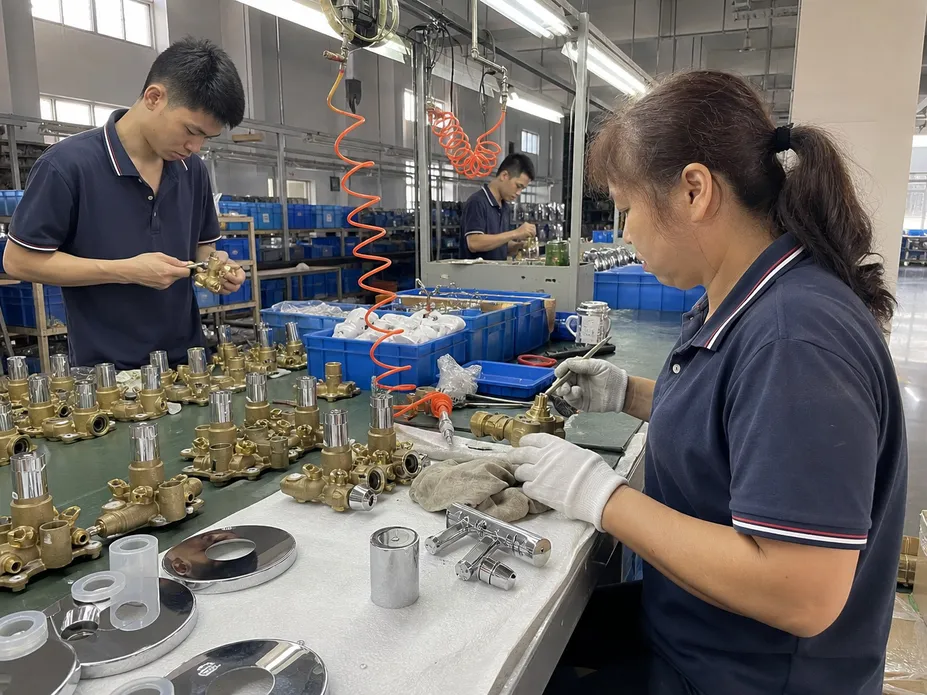
2 way concealed shower mixer factory production — Wfaucet manufacturing facility

Manufacturing Since 2008

CE & cUPC certified. 5 finishes. OEM from 200 pcs. Factory-direct pricing with full documentation for every export market.

About Wfaucet

Factory-direct manufacturer of concealed shower systems, faucets, and bathroom hardware since 2008. Full OEM and private label capability with certified documentation for North American, European, and Australian markets.

Learn more about our manufacturing capabilities