

Faucet Aerators &
Components
Source faucet aerators and components direct from the manufacturer — no middlemen, no spec surprises.
We manufacture aerators, cartridges, supply hoses, and filter inserts in-house, with the same brass casting and QC infrastructure that runs our full faucet lines. Every component ships with the documentation your compliance team needs.
Manufacturing Integrity
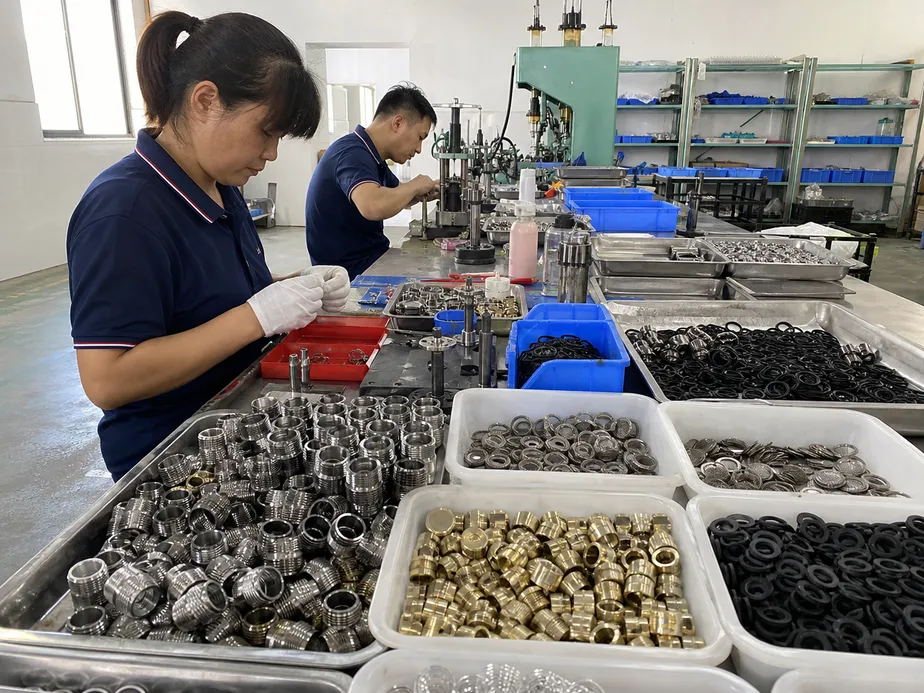
Components Made in the Same Factory as the Faucets
Most buyers sourcing faucet aerators and components run into the same problem: the components come from a different factory than the faucets, and the specs don't quite line up. Thread pitch is off by half a millimeter. The aerator housing is a slightly different diameter. The cartridge torque doesn't match the handle travel. These aren't catastrophic failures — they're the kind of tolerance drift that generates warranty calls and eats into your after-sales margin.
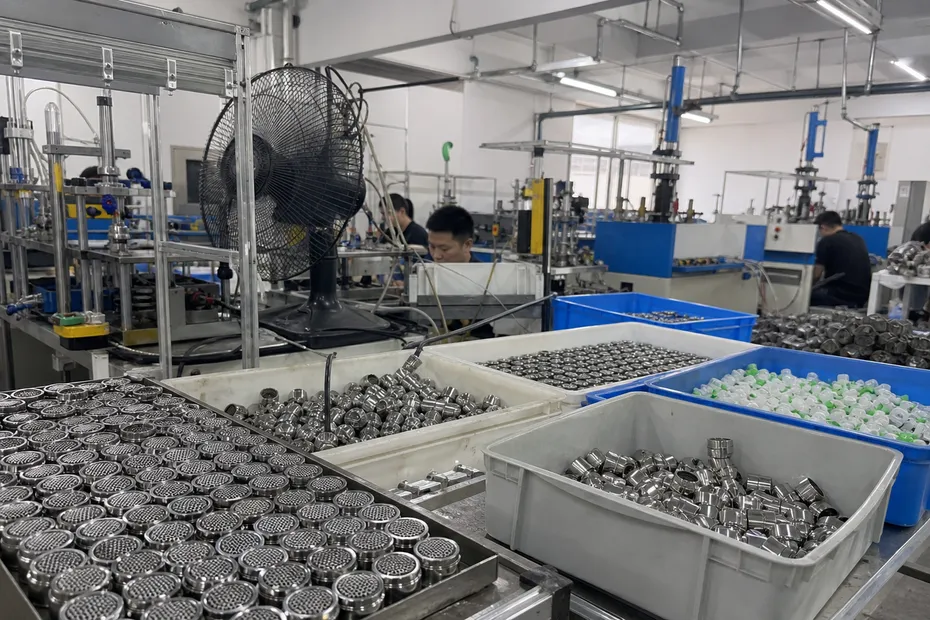
We make components on the same floor where we make faucets. The aerator thread specs we hold are the same specs we machine into our faucet spouts. The cartridges we supply as replacement parts are the same cartridges we install on the assembly line. When you source components from us, you're not buying from a separate supplier who happens to be in the same industrial park — you're buying from the team that designed the tolerance stack in the first place.
That matters most when you're stocking replacement parts for a faucet line you already carry, or when you're building a private-label faucet program and need components that will hold up across a multi-year product lifecycle. Consistency from one container to the next is the thing your downstream customers will never notice — until it breaks.
Same Tolerance Stack
Thread specs machined to the same standard as our faucet spouts.
Assembly-Line Parts
Replacement cartridges are the same units installed on our production line.
Container Consistency
Spec stability across multi-year product lifecycles and repeat orders.
Full Catalog
Component Range
Our faucet aerators and components catalog covers nine product lines. Each links to a dedicated product page with full specifications, available configurations, and OEM options.
Aerators
Aerators
Faucet Aerators
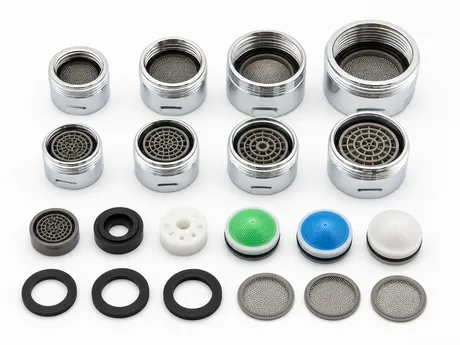
Standard male and female thread aerators in M16, M18, M22, M24 sizes, available in flow rates from 1.0 to 2.2 GPM. The core SKU for any faucet replacement parts program.
View Specifications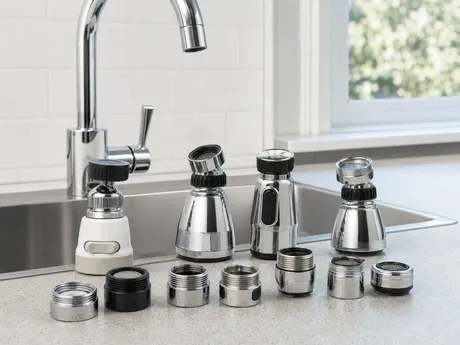
Aerators
Kitchen Faucet Aerators
Swivel-style and fixed aerators sized for kitchen spout diameters, with dual-function spray/stream switching available. Tested through 50,000 switch cycles before leaving the line.
View Specifications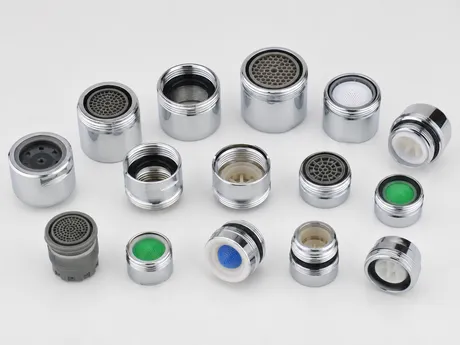
Aerators
Bathroom Faucet Aerators
Laminar and aerated flow options in compact cache and standard external thread configurations. The highest-volume replacement part in most plumbing distribution catalogs — a reliable source matters.
View Specifications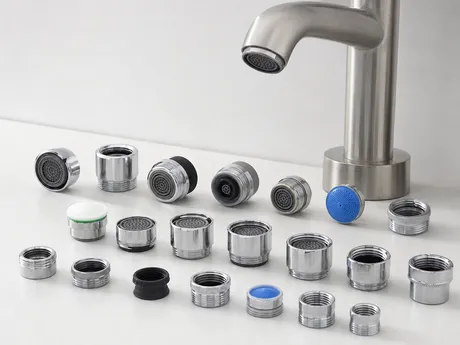
Aerators
Sink Faucet Aerators
Covers both kitchen and bathroom sink applications, with a focus on universal thread compatibility across common faucet brands. Useful for distributors building a cross-brand replacement parts assortment.
View Specifications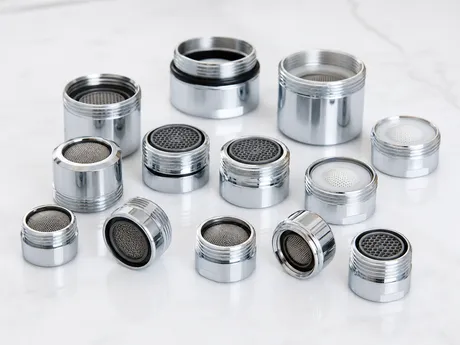
Aerators
Low Flow Faucet Aerators
0.5 GPM and 1.0 GPM flow-restricted aerators for WaterSense-compliant programs and water conservation mandates. California, Colorado, and several EU markets now require sub-1.5 GPM at the point of sale — these cover that requirement.
View Specifications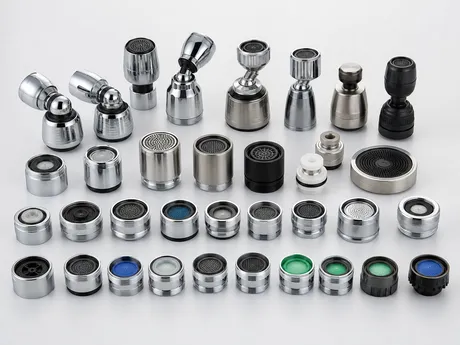
Aerators
Water Faucet Aerators
General-purpose aerators for residential and light commercial applications, available in chrome, brushed nickel, and matte black to match common faucet finish programs.
View Specifications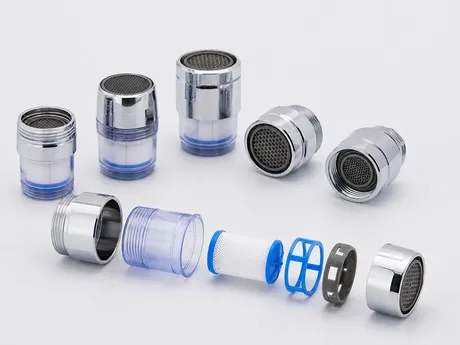
Aerators
Filter Faucet Aerators
Aerators with integrated sediment pre-filter inserts, designed for markets where municipal water quality is inconsistent. The filter element is replaceable without removing the aerator housing — a detail that matters for end-user retention in your distribution channel.
View SpecificationsHoses & Cartridges
Hoses
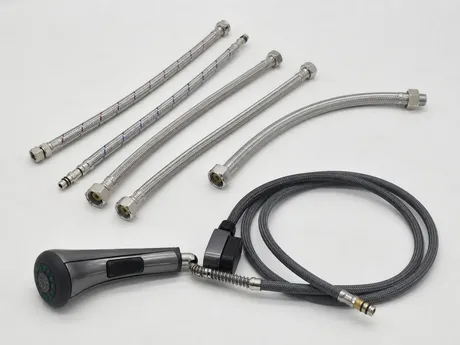
Kitchen Faucet Hoses
Braided stainless supply hoses and pull-down spray hoses in standard 3/8" compression and 1/2" NPT configurations. Burst pressure tested to 500 PSI. Standard 24" and 36" lengths; custom lengths available on OEM orders.
View Specifications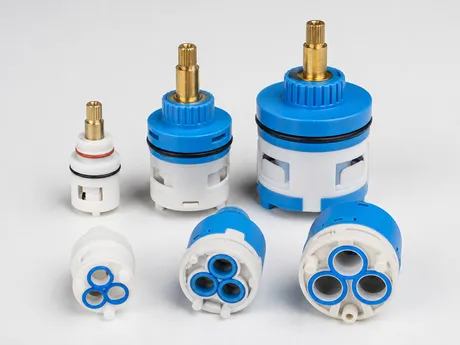
Cartridges
Shower Faucet Cartridges
Ceramic disc cartridges for single-handle shower valves, in 25mm,35mm, and 40mm diameters. Tested to 500,000 open/close cycles. Compatible with standard shower valve bodies across major OEM formats.
View Specifications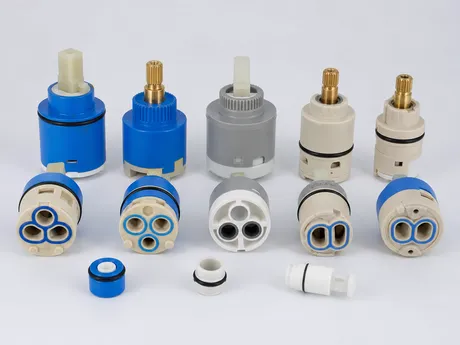
Cartridges
Bathroom Faucet Cartridges
Single and dual-handle ceramic disc cartridges for bathroom basin faucets. Available in hot and cold configurations with standard stem dimensions for cross-brand compatibility in replacement parts programs.
View Specifications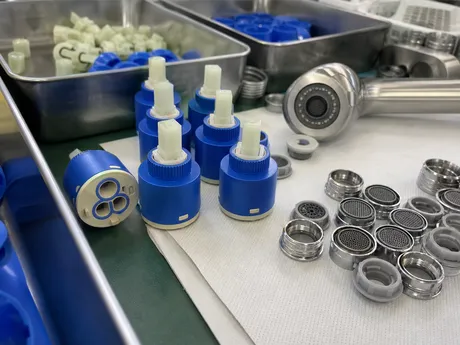
Cartridges
Kitchen Faucet Cartridges
Ceramic disc cartridges for single-lever kitchen faucets including pull-out and pull-down configurations. Designed for high-cycle kitchen use with smooth quarter-turn operation and drip-free sealing under continuous pressure.
View SpecificationsHandles & Accessories
Handles
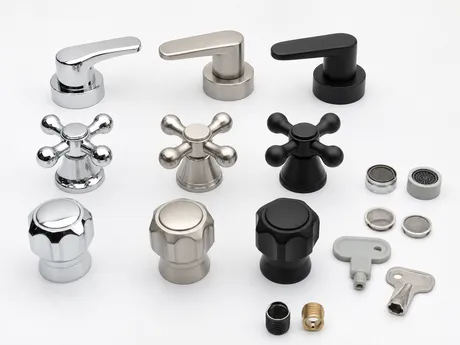
Faucet Handles
Lever, cross, and knob-style handles in zinc alloy and brass, finished in chrome, brushed nickel, and matte black. Standard spline and D-bore stem fittings for broad compatibility across valve body formats.
View Specifications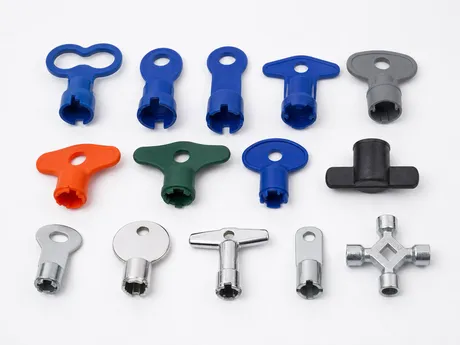
Accessories
Faucet Aerator Key
Removal and installation keys for cache-style aerators, in plastic and metal versions. Sized for the most common cache aerator diameters. Frequently bundled with aerator SKUs as a value-add for end-user installation kits.
View Specifications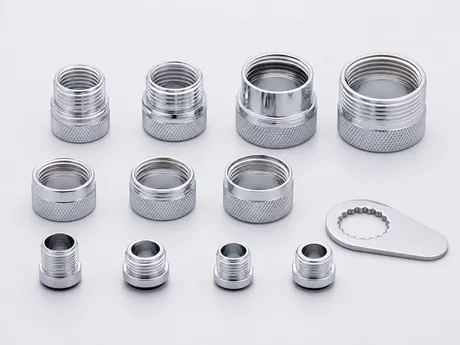
Accessories
Faucet Aerator Adapter
Thread conversion adapters for M16, M18, M22, and M24 male and female aerator threads. Allows a single aerator SKU to fit multiple spout thread sizes — useful for distributors consolidating SKU count without sacrificing coverage.
View Specifications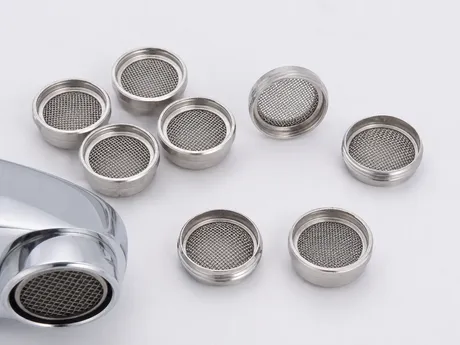
Accessories
Faucet Aerator Screen
Stainless steel mesh replacement screens for standard aerator housings. Sized to fit common aerator diameters. A low-cost consumable that extends aerator housing life and supports a recurring replacement parts revenue stream.
View SpecificationsAerator Specifications: What the Numbers Mean for Your Sourcing
Aerators look simple. The spec decisions are not. Here's the parameter range we work across, and why each one matters when you're building a catalog or a replacement parts program.
| Parameter | Range We Manufacture | Sourcing Relevance |
|---|---|---|
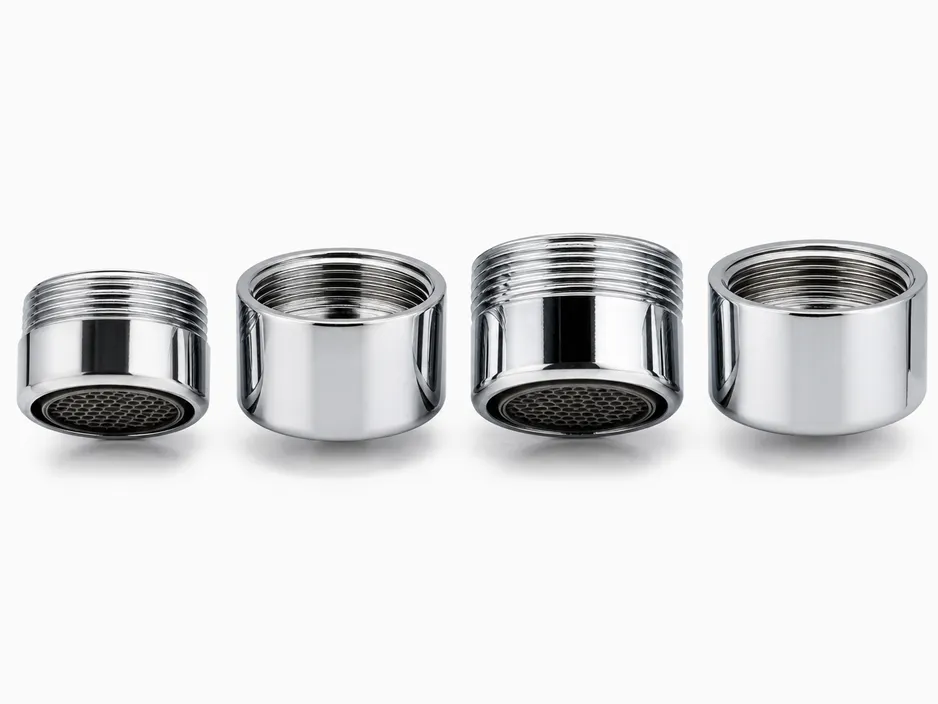
| Thread type | Male (M16×1, M18×1, M22×1, M24×1) / Female (F16×1, F18×1, F22×1, F24×1) | Must match your faucet spout thread — wrong thread = 100% return rate |
| Flow rate | 0.5 / 1.0 / 1.5 / 1.8 / 2.0 / 2.2 GPM | Determines WaterSense compliance; 1.5 GPM is the current federal threshold in the US |
| Housing material | Brass, zinc alloy, ABS | Brass for premium lines; ABS for price-sensitive SKUs where corrosion isn't a concern |
| Finish | Chrome, brushed nickel, matte black | Must match faucet finish — mismatched aerator finish is a common complaint in online reviews |
| Flow pattern | Aerated (air-infused), laminar (clear stream), spray | Application-dependent; laminar preferred for RO/filter faucets where aeration would disrupt water quality |
| Cache vs. external | Cache (recessed, key-removal) / External (standard wrench removal) | Cache aerators reduce vandalism in commercial settings — specify for hospitality and institutional buyers |
Thread Size: Where Most Sourcing Errors Happen
M22 is the most common in North American faucets. M24 dominates European product. If you're building a cross-market replacement parts catalog, you need both — and they are not interchangeable.
North America
M22
Most common thread
Europe
M24
Dominant standard
US WaterSense
1.5
GPM federal threshold
Explore Aerator Product Lines
Cartridge Specifications and Failure Mode Prevention
Cartridges are the component that determines whether your faucet line generates warranty calls or doesn't. We've been assembling and testing cartridges since 2008, and the failure patterns are consistent across the industry.
Failure Mode 1: Ceramic Disc Cracking
Thermal shock & particulate contamination
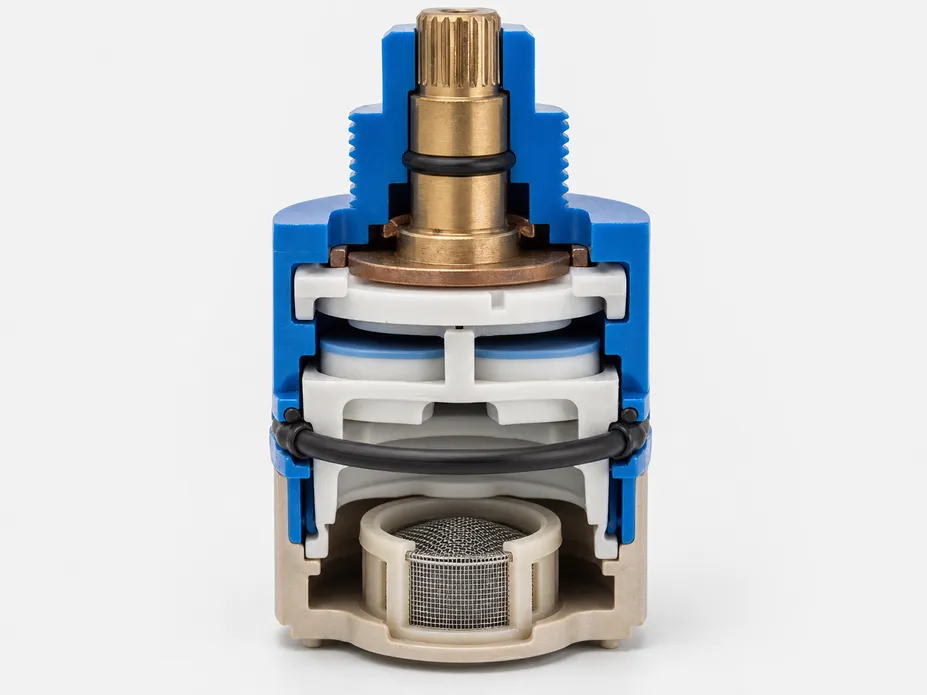
The most common cartridge failure in the field is ceramic disc cracking — usually caused by thermal shock when cold water hits a hot disc, or by particulate contamination scoring the disc surface.
Our response: Ceramic discs are sintered at 1,600°C and tested for thermal cycling resistance before assembly. The cartridge body includes a 100-mesh inlet screen to catch particulate before it reaches the disc faces.
We added the inlet screen after seeing a batch of returns from a hard-water market in the Middle East — calcium deposits were scoring the discs within 18 months. The screen adds about $0.08 to the unit cost and eliminates the failure mode.
Failure Mode 2: O-Ring Extrusion
Slow drip that worsens over time
The O-ring gets pushed out of its groove under pressure, causing a slow drip that gets worse over time.
Our response: We use EPDM O-rings with a 70 Shore A durometer, sized to the groove with a 15% compression ratio. That's tighter than the minimum spec, and it's why our cartridges hold at 0.6 MPa without weeping.
Batch Endurance Testing
Every production batch of cartridges runs 500,000 open/close cycles on our endurance test rig before release. The test report travels with the shipment. If your QC team wants to run their own incoming inspection, the test protocol is documented and we can provide the fixture dimensions.
Cartridge Specification Table
| Parameter | Specification |
|---|---|
| Body diameter | 25mm / 35mm / 40mm |
| Ceramic disc material | Alumina ceramic, sintered at 1,600°C |
| O-ring material | EPDM, 70 Shore A |
| Operating pressure | 0.05–0.6 MPa |
| Temperature range | 0–90°C |
| Endurance test | 500,000 cycles per batch |
| Inlet screen | 100-mesh stainless |
1,600°C
Disc sintering temperature
70A
O-ring Shore A durometer
500K
Cycles per batch test
100
Mesh inlet screen
Related Component Lines
Matching Components to Market Compliance Requirements
The compliance picture for faucet components varies significantly by destination market, and getting it wrong costs more than the components themselves — it costs you a customs hold or a product recall.
North America
US & Canada
- NSF/ANSI 61 — lead content in wetted surfaces; brass housings use C36000-equivalent alloy, lead below 0.25%
- California AB 1953 & federal Reduction of Lead in Drinking Water Act — compliant
- cUPC — cartridges certified for Canadian plumbing code
- WaterSense ≤1.5 GPM (federal) and ≤1.2 GPM (California) — both manufactured
Europe
EU Market
- CE marking — covers aerators and cartridges for EU market entry
- EN 246 — thread dimensions standard for aerators
- EN 817 — mechanical mixing valves standard for cartridges
- M22×1 and M24×1 thread specs manufactured to EN 246 tolerances
Australia
AU Market
- WaterMark certification — required for all plumbing products sold in Australia
- Aerators and cartridges carry WaterMark
- Certification documentation included with every shipment to Australian buyers
Middle East / SE Asia
Gulf & ASEAN
- SGS test reports available for all component lines
- Most Gulf and ASEAN markets accept SGS documentation for import clearance without requiring additional local certification
Multi-Market Documentation Package
If you're building a multi-market catalog and need components certified for more than one region, we can supply the same SKU with the full documentation package — cUPC + CE + WaterMark on one part number. That simplifies your inventory management considerably.
View aerator rangeHow We Select Aerator Housing Materials — and Why It Affects Your Margin
We manufacture aerator housings in three materials: brass, zinc alloy, and ABS. The choice isn't just about cost — it affects your warranty exposure, your finish durability, and which market segments you can credibly sell into.
Premium / Commercial
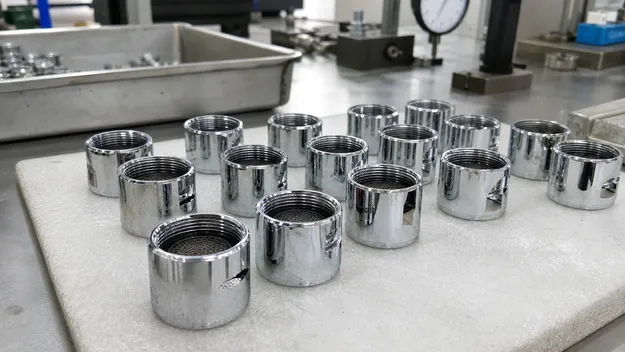
DefaultBrass Housings
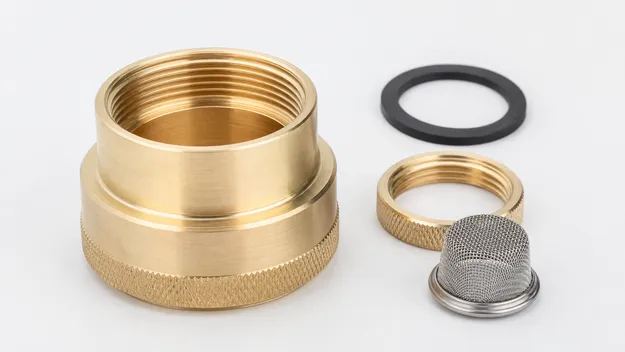
The default for any product going into a premium or commercial channel. Brass machines cleanly, holds thread tolerances across temperature cycling, and takes electroplating without adhesion issues.
Alloy: C36000-equivalent. Lead content below 0.25% — NSF/ANSI 61 and AB 1953 compliant.
Mid-Market
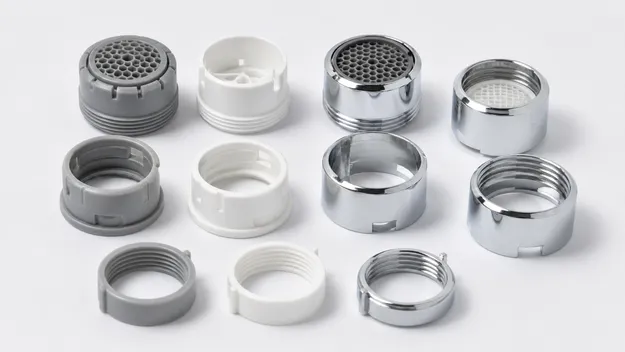
ZA-8 AlloyZinc Alloy Housings
Appropriate for mid-market price points where the buyer's retail price target doesn't support brass. We use ZA-8 alloy, which has better corrosion resistance than standard Zamak.
Key constraint: Avoid specifying for Florida, Gulf Coast, or Southeast Asian coastal cities. Brass adds ~$0.15/unit but eliminates slow-burn warranty claims.
Price-Sensitive / Consumable
ABSABS Housings
For price-sensitive applications where the aerator is essentially a consumable — filter aerators with replaceable inserts, for example, where the buyer expects to replace the whole unit every 6–12 months.
Typical use: Filter aerators with replaceable inserts; expected replacement cycle 6–12 months.
Material Selection at a Glance
Use this to match housing material to your channel and distribution footprint before specifying.
| Criterion | Brass | Zinc Alloy (ZA-8) | ABS |
|---|---|---|---|
| Channel fit | Premium, commercial | Mid-market | Price-sensitive, consumable |
| Corrosion resistance | High — 24hr salt spray | Moderate — avoid coastal | No metal corrosion |
| Finish durability | Excellent — plating adhesion stable | 12–18 mo. risk in humid climates | No durable metallic finish |
| Coastal / humid markets | Yes | Not recommended | Yes (no metal) |
| NSF/ANSI 61 / lead compliance | Yes — <0.25% lead | Verify per SKU | N/A — non-metallic |
| Warranty exposure | Low | Medium — climate-dependent | Low (consumable model) |
| Relative unit cost | Higher (~+$0.15 vs zinc) | Mid | Lowest |
The Slow-Burn Warranty Risk
Chrome on a zinc alloy housing typically starts showing corrosion at the thread interface within 12–18 months in humid climates. That's the kind of slow-burn warranty claim that damages your brand with distributors before you can trace it back to the component. If your distribution footprint includes Florida, the Gulf Coast, or Southeast Asian coastal cities, brass is the right call even if it adds $0.15 to your unit cost.
Explore by Application
Flow Control
Flow Restrictors & Flow Rates
The flow restrictor is the component that actually determines GPM output. Getting this wrong is the most common cause of failed WaterSense certification and distributor returns. Here's how to specify it correctly.
How a Flow Restrictor Works
A flow restrictor is a small disc — typically 10–14mm in diameter — with a precision-molded orifice. It sits upstream of the aerator screen stack and limits the volume of water that can pass through regardless of inlet pressure. The orifice diameter is what sets your GPM rating.
Most buyers think of flow rate as a property of the aerator as a whole. It isn't. The restrictor is a discrete, swappable component. That means you can offer the same aerator housing and screen stack in multiple flow rate variants simply by changing the restrictor disc — which is how most OEM programs are structured.
The critical spec is orifice diameter at a defined test pressure. WaterSense tests at 60 PSI. If your restrictor is calibrated at a different pressure, your certified flow rate will be off.
Standard Flow Rate Tiers
WaterSense Threshold
Maximum 1.5 GPM at 60 PSI. Tested per EPA WaterSense Protocol for Residential Bathroom Lavatory Faucets.
LDPE Disc Restrictors
The most common construction. Low-density polyethylene disc with a molded orifice. Inexpensive, chemically inert, and easy to color-code by flow rate — which is how assemblers avoid mix-ups on the line.
Color coding: red = 1.5 GPM, blue = 1.0 GPM, green = 0.5 GPM (varies by manufacturer — confirm with your supplier).
Pressure-Compensating Restrictors
A silicone or rubber orifice that deforms under higher pressure, maintaining consistent GPM output across a wider pressure range (typically 20–80 PSI). Adds $0.08–$0.15 per unit but eliminates flow variation complaints in markets with inconsistent municipal pressure.
Recommended for commercial projects and markets with known pressure variability.
Integrated Screen-Restrictor Units
Some designs combine the restrictor disc and the first screen layer into a single molded component. Reduces part count and assembly steps, but limits your ability to swap flow rates independently of the screen stack.
Useful for high-volume programs where flow rate is fixed. Not recommended if you need multi-SKU flexibility from a single housing.
Common Flow Restrictor Specification Errors
These are the mistakes that cause WaterSense failures and distributor returns.
Specifying orifice diameter without a reference pressure
An orifice diameter alone doesn't define flow rate. A 1.2mm orifice at 40 PSI delivers a different GPM than at 60 PSI. Always specify orifice diameter and test pressure together. WaterSense uses 60 PSI — if your supplier tests at 45 PSI, your certified flow rate will be higher than expected.
Assuming color codes are universal
Color coding conventions for restrictor discs are not standardized across manufacturers. Red means 1.5 GPM at one factory and 2.0 GPM at another. Always confirm the color-to-flow-rate mapping with your specific supplier and document it in your BOM.
Using a fixed-orifice restrictor in a high-pressure-variability market
Fixed-orifice LDPE restrictors deliver consistent flow only within a narrow pressure band. In markets where municipal pressure swings between 30 and 90 PSI — common in parts of Southeast Asia, the Middle East, and older US infrastructure — a fixed-orifice restrictor will produce noticeably different flow rates at different times of day. Pressure-compensating restrictors solve this at minimal cost.
Omitting the restrictor from the assembly drawing
Because the restrictor is small and inexpensive, it sometimes gets treated as a loose consumable rather than a controlled BOM component. If it's not on the assembly drawing with a part number and flow rate callout, your factory will substitute whatever is available. That's how a WaterSense-certified product ships with a 2.0 GPM restrictor.
Matching Flow Rate to Application
Residential Bathroom
1.5 GPM
WaterSense compliant. Standard for US residential new construction and renovation.
Commercial Restroom
0.5–1.0 GPM
LEED and green building projects. Sensor faucets typically spec 0.5 GPM.
Kitchen Faucet
1.8–2.2 GPM
Higher flow for rinsing tasks. WaterSense kitchen faucet threshold is 2.2 GPM.
Replacement / Legacy
2.2 GPM
Pre-2010 replacement market. Buyers expect higher flow to match original fixture feel.
Aeration & Filtration
Screen Stacks & Mesh Specifications
The screen stack is what turns a stream of water into a coherent, aerated flow. Mesh count, layer count, and material determine stream quality, clog resistance, and how the aerator performs after 12 months of use.
Screen Stack Anatomy
A standard aerator screen stack has three to five layers, each serving a distinct function. The layers work together — specifying one without considering the others produces either a clogged aerator or a poor stream pattern.
Coarse pre-filter screen (40–60 mesh)
Catches debris and sediment before it reaches the fine mesh layers. Stainless steel. This is the layer that clogs first in hard-water markets — it should be accessible for cleaning in any serviceable aerator design.
Flow straightener / mixer disc
A plastic or rubber disc with a honeycomb or radial channel pattern. Breaks the turbulent flow from the restrictor into parallel streams before it hits the fine mesh. Without this, the stream pattern is uneven.
Fine aeration mesh (80–120 mesh)
The primary aeration layer. Fine mesh breaks water into small droplets and entrains air, producing the soft, white, non-splashing stream that end users associate with quality. Mesh count here directly affects perceived stream quality.
Outlet screen (60–80 mesh)
Shapes the final stream profile and prevents the aerated flow from dispersing. Determines whether the stream is laminar (pencil-thin, clear) or aerated (soft, white). Some designs omit this layer for laminar stream aerators.
Mesh Count Reference
Hard Water Note
In markets with water hardness above 200 ppm (common in the Middle East, parts of Europe, and the US Southwest), fine mesh above 80 count will clog within 3–6 months without a pre-filter. Always include a serviceable coarse pre-filter layer in hard-water market specs.
304 Stainless Steel Mesh
StandardThe default for all but the most price-sensitive applications. Corrosion-resistant, dimensionally stable under water pressure, and holds mesh geometry over time. 304 is appropriate for most markets; 316 is specified for desalinated water supplies or very high chlorine content.
Nylon / PP Mesh
Price-SensitiveLower cost than stainless, and adequate for short-lifecycle applications. The limitation is dimensional stability — nylon mesh can deform under sustained water pressure, which shifts the effective mesh opening and changes stream character over time. Not recommended for serviceable aerators.
Stream Type by Screen Configuration
The screen stack configuration determines stream character — not just flow rate.
Aerated (Standard)
Most commonFine mesh (80–100 count) with flow straightener. Produces a soft, white, non-splashing stream with entrained air. The standard for residential bathroom faucets. Perceived as higher quality by end users because the aerated stream feels fuller at lower flow rates.
Laminar
Commercial / medicalHigh mesh count (100–120) without aeration layer. Produces a clear, glass-like stream with no entrained air. Specified for healthcare environments where aerated streams can harbor Legionella, and for sensor faucets where stream visibility matters. Also used in some premium residential designs for aesthetic reasons.
Spray / Mist
SpecialtyMultiple fine mesh layers with a spray disc. Breaks flow into a wide, soft spray pattern. Used in some kitchen faucet designs and rinse stations. Higher splash potential than aerated — not appropriate for standard bathroom lavatory applications.
Dual-function
Kitchen / premiumSwitchable between aerated and spray modesvia a rotating collar or push-button mechanism. Adds mechanical complexity and a potential leak point at the switching interface. Appropriate for kitchen faucets where users switch between filling and rinsing tasks. Not recommended for commercial or sensor faucet applications.
Flow Restrictors & Pressure Compensation
The flow restrictor is the component that actually limits water consumption. Understanding how restrictors work — and where they fail — is essential for specifying aerators that perform consistently across variable supply pressures.
Fixed Orifice Restrictor
BasicA disc with a fixed-diameter orifice. Flow rate varies with supply pressure — at 20 psi the unit may deliver 1.0 GPM; at 80 psi the same unit delivers 2.0+ GPM. The rated flow on the label is measured at a specific test pressure (typically 60 psi in the US, 3 bar in Europe). Performance at other pressures is not guaranteed.
Flow vs Pressure (Fixed Orifice)
Pressure-Compensating Restrictor
RecommendedUses a flexible silicone or EPDM disc that deforms under higher pressure, narrowing the effective orifice to maintain a near-constant flow rate across a defined pressure range (typically 20–80 psi / 1.4–5.5 bar). The rated flow is delivered consistently across that range — which is what compliance certifications actually require.
Flow vs Pressure (Pressure-Compensating)
Restrictor Failure Modes
Understanding how restrictors fail helps you design for serviceability and set realistic maintenance expectations with buyers.
Sediment clogging
Most commonParticulate matter lodges in the orifice, reducing effective flow below rated. Symptom: flow rate drops progressively over weeks. Fix: remove and backflush or replace the restrictor disc. Prevention: ensure a coarse pre-filter screen is upstream of the restrictor in the assembly stack.
Silicone disc degradation
PC restrictorsIn supplies with high chlorine (above 2 ppm residual) or ozone treatment, the silicone compensating disc can harden and lose elasticity over 2–4 years. When this happens, the disc no longer compensates — the unit behaves like a fixed orifice. Specify EPDM disc material for high-chlorine markets, or include disc replacement in the maintenance schedule.
Scale buildup
Hard waterCalcium carbonate deposits form on the orifice edges in hard water, progressively narrowing the opening. Unlike sediment clogging, scale cannot be backflushed — it requires soaking in a mild acid (citric acid or dilute white vinegar) for 15–30 minutes. Serviceable aerator designs that allow disc removal are essential in hard-water markets.
Disc displacement
Assembly defectThe restrictor disc is not retained in its seat and shifts under water hammer or pressure surge, bypassing the orifice entirely. Symptom: sudden jump to unrestricted flow. This is an assembly or housing design defect — the disc must be positively retained by a snap-fit, press-fit, or retaining ring, not just friction-seated. Verify retention method with your supplier before approving tooling.
Flow Rate Standards by Market
Rated flow limits and test conditions vary by certification program. Specify the correct restrictor for the target market.
| Market / Program | Max Flow (Lavatory) | Test Pressure | PC Required? |
|---|---|---|---|
| US — WaterSense (EPA) | 0.5 GPM (1.9 L/min) | 60 psi (4.1 bar) | Yes |
| US — ASME A112.18.1 (code minimum) | 2.2 GPM (8.3 L/min) | 60 psi (4.1 bar) | No |
| EU — EN 246 (standard) | No limit (flow class label) | 3 bar (43.5 psi) | No |
| EU — Ecolabel (voluntary) | 6 L/min (1.6 GPM) | 3 bar (43.5 psi) | Yes |
| Australia — WELS 6-star | 4.5 L/min (1.2 GPM) | 3 bar (43.5 psi) | Yes |
| Singapore — WELS 4-tick | 4 L/min (1.1 GPM) | 3 bar (43.5 psi) | Yes |
Flow limits shown are for lavatory (bathroom sink) faucet aerators. Kitchen faucet limits are typically higher. Always verify current standard revision before submitting for certification — limits are periodically revised downward.
OEM Aerators and Components: Private Label from 200 Pieces
Most of our component buyers are running private-label programs — they want their brand on the aerator, not ours. We've been doing OEM component work since 2010, and the process is straightforward.
Aerators
MOQ 200 pcs per SKU
OEM customization covers housing material and finish, flow rate, thread size, packaging, and logo engraving or pad printing on the housing. Low enough MOQ to test a new SKU in your market before committing to a full container.
Lead Times
Standard OEM (existing tooling, new finish or packaging): 15–20 days
New tooling (new thread sizes or housing profiles): add 20–25 days for die fabrication
Cartridges
Fit-and-function testing available
OEM options include body diameter, handle travel angle, and packaging. Custom ceramic disc geometry is not offered — disc tooling is expensive and standard sizes cover 95% of market applications.
Cartridge qualification testing: Send us your valve body drawing and we'll run a fit-and-function test before you commit to a production order.
Supply Hoses
Pre-applied hang tags available
OEM covers length, end fitting configuration (compression, NPT, BSP), braiding material (stainless or nylon), and packaging.
We can supply hoses with your brand's hang tag and UPC barcode pre-applied — saves your warehouse a labeling step.
OEM Customization at a Glance
Housing material & finish
Chrome, brushed nickel, matte black, and more
Flow rate selection
Swappable restrictor disc — no housing retooling required
Thread size
Standard and custom; new sizes add 20–25 days tooling
Logo engraving or pad printing
Applied directly to the housing
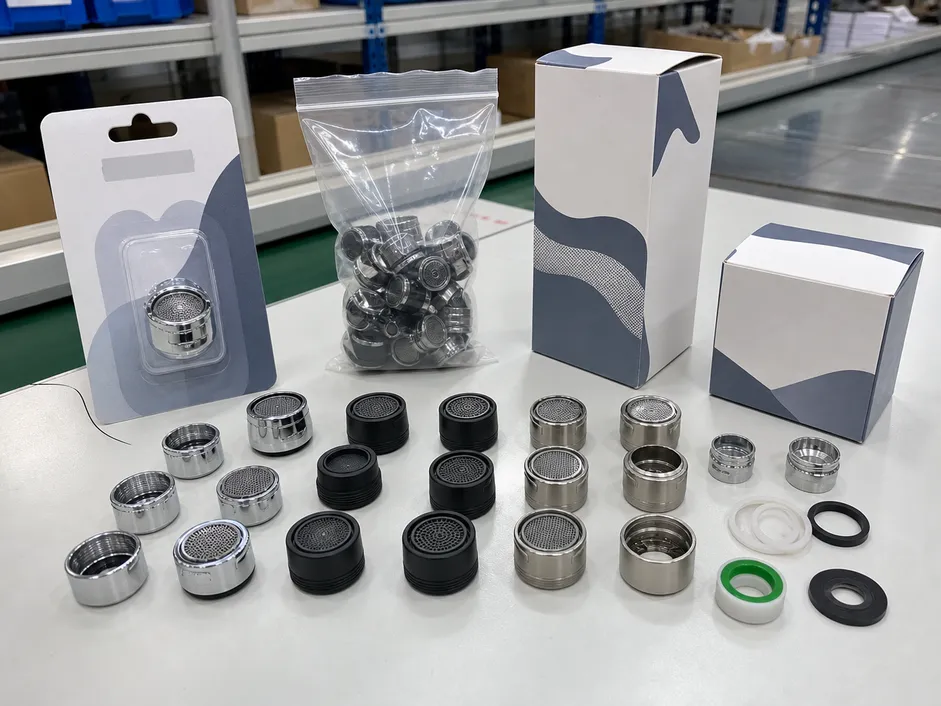
Packaging options
Retail blister pack, bulk poly bag, or branded box
Minimum Order Quantity
200 pieces per SKU
Coordinated Production Scheduling
If you're sourcing components to pair with faucets you already buy from us, we can coordinate the component and faucet production schedules so they arrive in the same container. That's a landed cost saving that adds up quickly on a 12-month replenishment program.
Aerator Flow Rate Selection: Matching Compliance to Your Market
Flow rate is the spec that most buyers get wrong on their first order — usually because they spec the same flow rate across all markets without checking local requirements. Here's the practical breakdown.
| Market | Lavatory | Kitchen | Notes |
|---|---|---|---|
|
US Federal (WaterSense) |
≤1.5 GPM | ≤2.2 GPM | WaterSense label requires third-party certification |
|
California (CEC) |
≤1.2 GPM | ≤1.8 GPM | Stricter than federal; applies to all products sold in CA |
|
Canada (CSA B125.1) |
≤1.9 GPM | ≤2.2 GPM | cUPC covers compliance |
|
EU (EcoDesign) |
≤6 L/min (≈1.6 GPM) |
≤8 L/min (≈2.1 GPM) |
EU Water Label voluntary but increasingly expected by retailers |
|
Australia (WELS) |
≤6 L/min (3-star min) |
≤9 L/min (3-star min) |
WELS star rating required on packaging |
Practical Sourcing Scenarios
California + EU from a single SKU
A 1.0 GPM aerator covers both markets. No need to manage separate SKUs for these two regions.
Broader US market with WaterSense label
1.5 GPM is the ceiling. Third-party certification required to carry the WaterSense label.
Multi-market inventory simplification
The flow restrictor disc is a separate insert in our aerator design. We can swap flow rates without changing the housing tooling — run a single housing SKU with multiple flow rate variants to simplify your inventory.
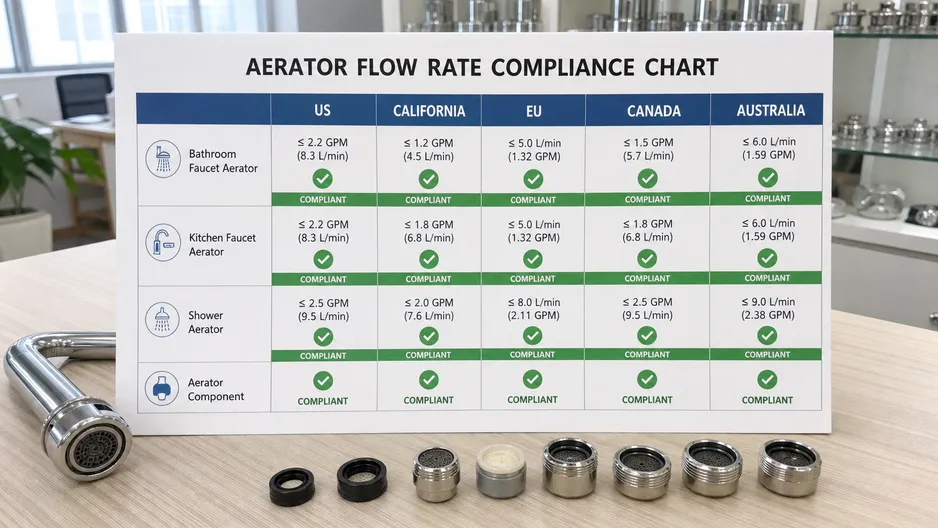
Flow rate requirements vary significantly by market. Specifying the wrong rate on your first order is a common and avoidable sourcing error.
All Flow Rates Manufactured In-House
We manufacture all of these flow rates. Because the flow restrictor disc is a separate insert in our aerator design, you can run a single housing SKU with multiple flow rate variants — which simplifies your inventory and reduces the number of tooling setups you need to manage across markets.
Logistics & Cost Planning
Packaging, Container Loading, and Landed Cost
Components are high-volume, low-CBM products — which means container loading efficiency has a direct impact on your landed cost per unit. Here's how we pack.
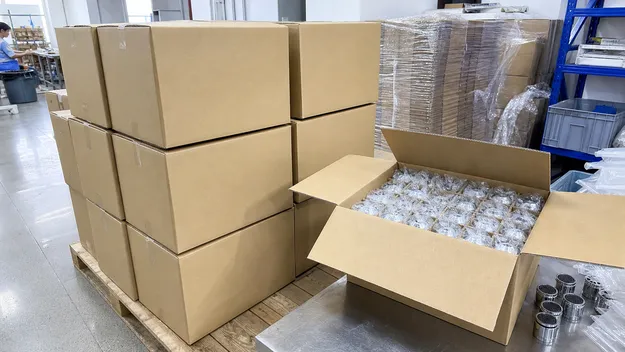
Aerators
Aerator Packaging Spec
- Retail pack: polybag with header card
- 50 units per inner box
- 500 units per master carton
- Master carton: 40×30×25 cm, ~8 kg gross
40HQ Container Capacity
1,400,000 units
≈ 2,800 master cartons
Mixed-SKU orders are packed by SKU in separate master cartons. A detailed packing list with carton count and CBM per SKU is provided for efficient warehouse receiving.
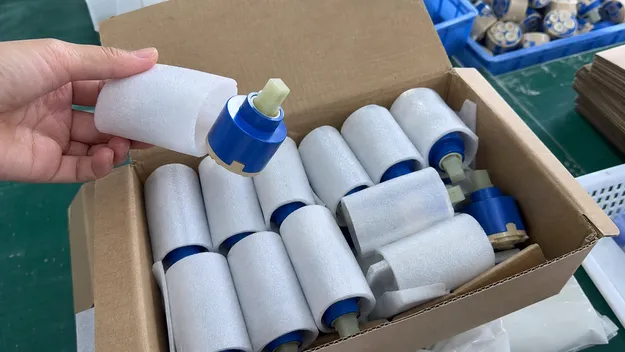
Cartridges
Cartridge Packaging Spec
- 10 units per inner box
- 100 units per master carton
- Master carton: 35×25×20 cm, ~6 kg gross
- Individual foam sleeve per unit
Why Foam Sleeve?
An early shipment with loose cartridges arrived with chipped ceramic disc edges from transit rattling. The foam sleeve adds $0.03 per unit and eliminates the problem entirely.
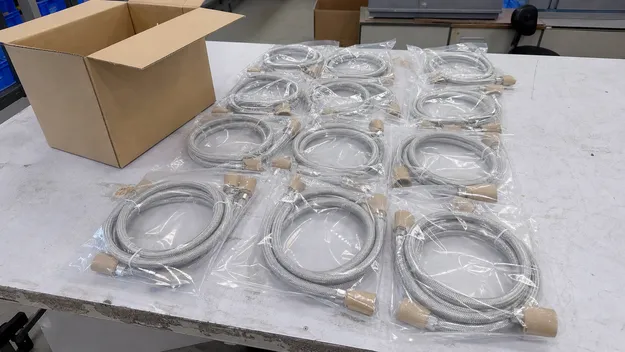
Supply Hoses
Hose Packaging Spec
- Coiled and poly-bagged
- 20 units per master carton
- Cardboard end caps on fittings to prevent thread damage in transit
Thread Protection
End caps are a standard inclusion — not an upgrade. Every hose carton ships with fitting threads protected.
Container Consolidation
Consolidating Components with a Faucet Order?
For buyers combining components with a faucet order into one container, we coordinate the packing sequence — faucets on the floor, components on top — and provide a single combined packing list.
Your freight forwarder gets one document, not two.
Packing Sequence
Documentation
- Single combined packing list
- Carton count per SKU
- CBM per SKU breakdown
Buyer Guidance
Sourcing Faucet Aerators and Components at Scale: What to Expect
If you're new to sourcing components from a faucet manufacturer rather than a component-only supplier, here's what the process looks like with us.
Sample Order
Most buyers start with a sample order — typically 5–10 units across the aerator sizes and flow rates they're evaluating. We ship samples within 7 days of order confirmation.
Sample Set Includes
- Endurance test report for cartridges
- Flow rate certification for aerators
- Documentation ready for QC review before production commitment
Production Order
Production MOQ is 200 pieces per SKU for standard catalog items. For OEM orders with custom packaging or branding, MOQ is also 200 pieces — we don't require a full container to run a private-label program.
Standard Catalog
15–20 days
From order confirmation
OEM (Existing Tooling)
20–25 days
From order confirmation
New Tooling
Adds 20–25 days on top of the OEM lead time. Total: approximately 40–50 days from order confirmation.
Payment Terms
Standard export manufacturing terms: 30% deposit on order confirmation, 70% before shipment. For buyers with an established order history, we can discuss net terms.
30%
Deposit on confirmation
70%
Before shipment
Shipment Documentation
We ship to North America, Europe, Southeast Asia, the Middle East, and Australia. Standard documentation for each shipment includes:
- Commercial invoice
- Packing list
- Certificate of origin
- Compliance test reports (market-specific)
If your customs broker needs additional documentation — binding ruling reference, material safety data, or specific certification copies — we prepare those in parallel with production so they're ready when the container is.
Shipping Destinations
North America
Europe
Southeast Asia
Middle East
Australia
At a Glance
Explore Component Categories
Common Questions
Frequently Asked Questions
Answers to the questions B2B buyers ask most often about sourcing faucet aerator components, OEM programs, and export logistics.
The MOQ is 200 pieces per SKU for both standard catalog items and OEM / private-label orders. This applies whether you're ordering a single component type or mixing SKUs within a product family. Sample orders (typically 5–20 pieces) are available before committing to production quantities.
Don't see your question here?
Ask Us DirectlyGet in Touch
Request a Quote or Sample
Tell us what you need and we'll respond within one business day with pricing, lead times, and next steps.
What Happens Next
-
1
We review your inquiry and match it to the right product family or OEM capability.
-
2
You receive a detailed quote with unit pricing, MOQ, lead time, and shipping estimate — within one business day.
-
3
If samples are needed, we confirm the sample order and dispatch within 7 days.
-
4
Once you approve samples or specs, we confirm production and issue a proforma invoice.
Direct Contact
Response Time
Within 1 business day
Languages
English, Chinese (Mandarin)
Frequently Asked Questions
Sourcing decisions answered directly — thread sizing, cache vs. standard, WaterSense compliance, clogging causes, OEM minimums, and cartridge compatibility.
What aerator thread sizes do you manufacture, and how do I know which one fits my faucet?
What aerator thread sizes do you manufacture, and how do I know which one fits my faucet?
We manufacture M16×1, M18×1, M22×1, and M24×1 in both male and female configurations. M22 is the most common thread in North American faucets; M24 is standard in most European product.
The easiest way to confirm is to unscrew the existing aerator and measure the outside diameter of the male thread (or inside diameter of the female thread) with a caliper.
If you're sourcing aerators to pair with faucets you're also buying from us, we'll confirm the thread spec from the faucet drawing — no guesswork.
What is the difference between cache aerators and standard external aerators, and when should I specify cache?
What is the difference between cache aerators and standard external aerators, and when should I specify cache?
A cache aerator recesses into the spout end and requires a special key tool for removal — it can't be unscrewed by hand. Standard external aerators thread onto the outside of the spout and can be removed with a wrench or by hand.
Cache aerators are specified for commercial and institutional settings (hotels, schools, public restrooms) where vandalism or theft of the aerator is a concern. For residential product, standard external aerators are the norm.
If you're building a hospitality or institutional product line, specify cache — the key-removal feature is a selling point your buyers in those segments will recognize.
How do I match aerator flow rate to WaterSense certification requirements?
How do I match aerator flow rate to WaterSense certification requirements?
WaterSense certification for lavatory faucets requires a maximum flow rate of 1.5 GPM at 60 PSI. The aerator is the component that controls flow rate, so a WaterSense-labeled faucet must be fitted with an aerator that delivers ≤1.5 GPM. We manufacture 1.5 GPM aerators that meet this requirement.
Note that WaterSense certification requires third-party testing by an EPA-recognized laboratory — the aerator spec alone doesn't get you the label. If you're building a WaterSense program, we can supply the aerators and connect you with a testing lab for the certification process.
What causes faucet aerators to clog, and how does your design address it?
What causes faucet aerators to clog, and how does your design address it?
Aerator clogging is almost always caused by sediment or mineral scale accumulating on the mesh screen. Our aerators use a multi-layer mesh stack — a coarser outer screen catches larger particles before they reach the fine inner mesh. The housing is designed for tool-free disassembly so the screen can be cleaned without replacing the whole unit.
For markets with hard water or inconsistent municipal supply, we recommend our filter aerator line, which adds a replaceable sediment pre-filter upstream of the mesh stack.
We've seen aerators from some suppliers that use a single fine mesh with no pre-filter — they clog within 3 months in hard-water areas and generate a steady stream of warranty calls.
What is your MOQ for OEM aerators with custom branding, and what customization is available?
What is your MOQ for OEM aerators with custom branding, and what customization is available?
MOQ for OEM aerators is 200 pieces per SKU. Customization options include:
- Housing material — brass, zinc alloy, ABS
- Finish — chrome, brushed nickel, matte black
- Flow rate — 0.5 to 2.2 GPM
- Thread size
- Logo engraving or pad printing on the housing
- Packaging — retail blister, bulk poly bag, or branded box with your UPC
For new housing profiles or non-standard thread sizes that require new tooling, we quote tooling cost separately — typically $800–$1,500 depending on complexity, amortized over the first production run.
Can you supply cartridges as replacement parts for faucets we didn't buy from you?
Can you supply cartridges as replacement parts for faucets we didn't buy from you?
Yes, with a qualification step. Send us the valve body drawing or a sample of the existing cartridge, and we'll confirm whether our standard 25mm, 35mm, or 40mm cartridge is a direct fit.
If the body geometry is close but not exact, we can often modify the O-ring sizing or stem length to achieve compatibility.
We've done this for several buyers who were transitioning their product line to us from another factory — it's a practical way to consolidate your supply chain without forcing an immediate product redesign.
Source Components from the Factory That Makes the Faucets
We've been manufacturing faucet aerators and components since 2008 — not as a side business, but as an integrated part of a faucet manufacturing operation. The same brass alloy, the same CNC tolerances, the same QC protocols that run our faucet lines run our component lines.
That's the difference between sourcing components from a dedicated component factory and sourcing them from the team that understands how the whole assembly performs in the field.
If you're building a replacement parts program, a private-label component line, or sourcing components to pair with faucets you already carry, send us your target SKUs and volume expectations. We'll come back with a detailed quote, sample availability, and a recommendation on which configurations fit your market and compliance requirements.