
Manufactured Since 2008

304 Stainless Steel
Kitchen Faucets

Lead-free body construction, brushed finish — built for food service and health-conscious residential markets. cUPC, CE, and WaterMark certified. OEM from 200 pieces with in-house tooling and full documentation.

304 SS
Lead-free body
cUPC + CE
WaterMark certified
500K
Cycle cartridge test
OEM 200
Pieces minimum
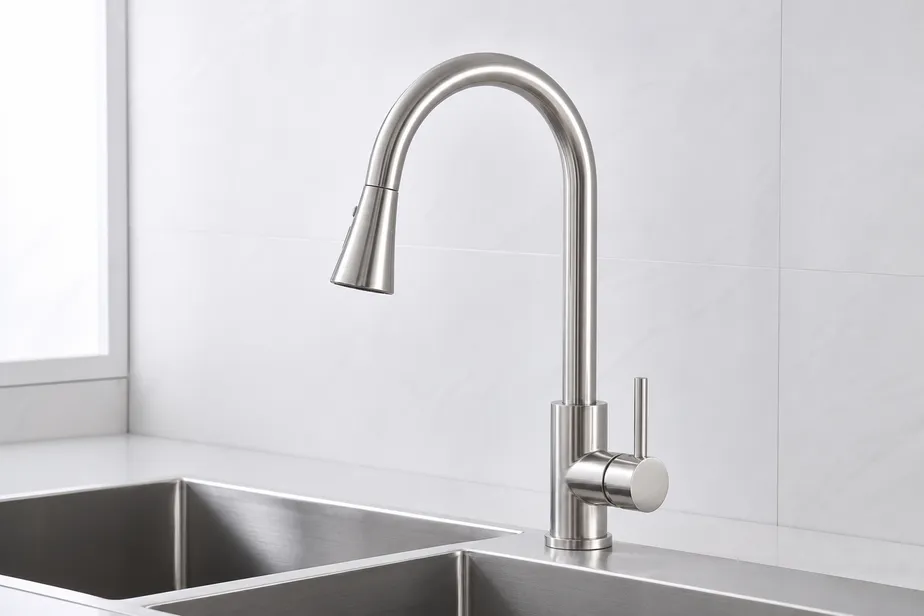
304 stainless steel kitchen faucet with brushed finish — Wfaucet manufacturer

Product Architecture

Why Stainless Steel Is a Different Product Category, Not Just a Different Finish

Most kitchen faucets in our line are brass-bodied with a surface finish applied on top — chrome, brushed nickel, PVD gold. The stainless steel kitchen faucet is a different construction entirely. The body is 304 stainless steel, which means the material itself is the finish. There's no plating stack to delaminate, no coating to scratch through, and no underlying brass to corrode if the surface is compromised.

That's not a cosmetic distinction — it's a structural one that changes the product's risk profile for your downstream customers and, by extension, your warranty exposure.

We run the stainless steel body line separately from our brass casting operation. The 304 stainless bodies are formed through a combination of deep drawing and CNC machining — the spout and body sections are drawn from 304 sheet stock, then machined at the valve seat interface to the same ±0.05mm thread tolerance we hold on brass.

The cartridge housing is brass (ceramic disc cartridge, 500,000-cycle tested), because brass machines more precisely at the tolerances a valve seat requires. The external body and spout are stainless. That's the configuration that gives you the material benefits of stainless where they matter — the water-contact surfaces and the visible exterior — without compromising the valve performance that determines long-term reliability.

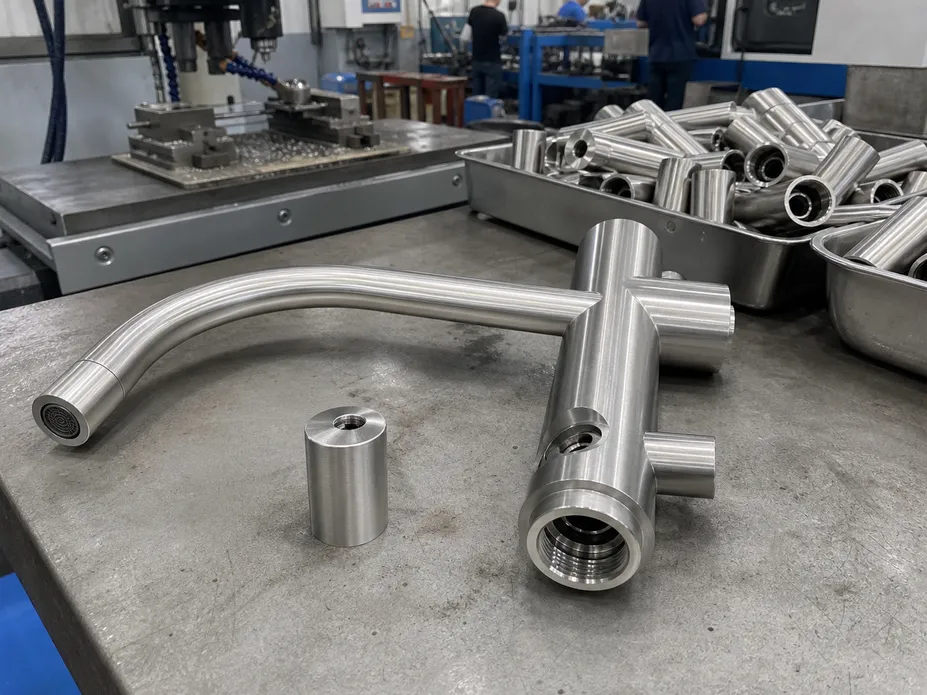
304 stainless steel faucet body construction — deep-drawn spout and CNC-machined valve seat

Mechanical Brushed Finish — No Bath Chemistry

The brushed finish on the stainless body is mechanical, not chemical. We run the surface through a belt-grinding and brushing sequence that produces a consistent linear grain pattern across the body and spout. No coating, no bath chemistry, no adhesion variables. The finish that ships in your first container is the same finish that ships in your tenth reorder, because the process parameters are mechanical tolerances, not bath chemistry that drifts.

This is the finish consistency question we hear most often from buyers who've had problems with PVD brushed nickel — the stainless brushed finish eliminates that variable entirely.

No Plating Stack to Fail

Brass-body faucets rely on a plating stack — base coat, mid coat, top coat — to deliver the surface finish. Each layer is an adhesion interface that can delaminate under thermal cycling, chemical exposure, or mechanical wear. The 304 stainless body has no plating stack. The surface you see is the material itself.

Lead-Free Water Contact

304 stainless steel contains no lead. For food service procurement, health-conscious residential buyers, and markets with strict lead-free compliance requirements, the material itself is the compliance argument — not a certification applied to a brass alloy that still contains trace lead.

Reorder Finish Consistency

Mechanical brushing parameters are fixed tolerances. PVD and electroplating bath chemistry drifts with temperature, bath age, and load density — meaning finish color and texture can shift between production runs. Stainless brushed finish is repeatable across reorders because the process is mechanical, not chemical.

Engineering Data

Technical Specifications

These are the standard specifications for our stainless steel kitchen faucet line. Exact dimensions vary by configuration — contact us for the spec sheet on a specific model.

Parameter Specification
Body Material 304 stainless steel (deep-drawn body and spout)
Cartridge Housing Brass (CNC machined)
Valve / Cartridge Ceramic disc, 500,000-cycle endurance tested per batch
Valve Seat Thread Tolerance ±0.05mm
Spout Height (typical) 280mm – 420mm (varies by configuration)
Spout Reach (typical) 180mm – 230mm
Spout Rotation 360° swivel
Flow Rate 1.5 – 2.2 GPM (adjustable aerator)
Water Pressure Rating 0.05 – 0.8 MPa operating range
Leak Test Standard 0.6 MPa, 60 seconds, 100% of units
Supply Line Connections 3/8" compression (standard); G1/2" available
Hole Configuration 1-hole deck mount (standard); 3-hole available
Exterior Finish Brushed stainless (mechanical, no coating)
Salt Spray Performance N/A — 304 stainless body requires no coating; corrosion resistance is inherent
Certifications
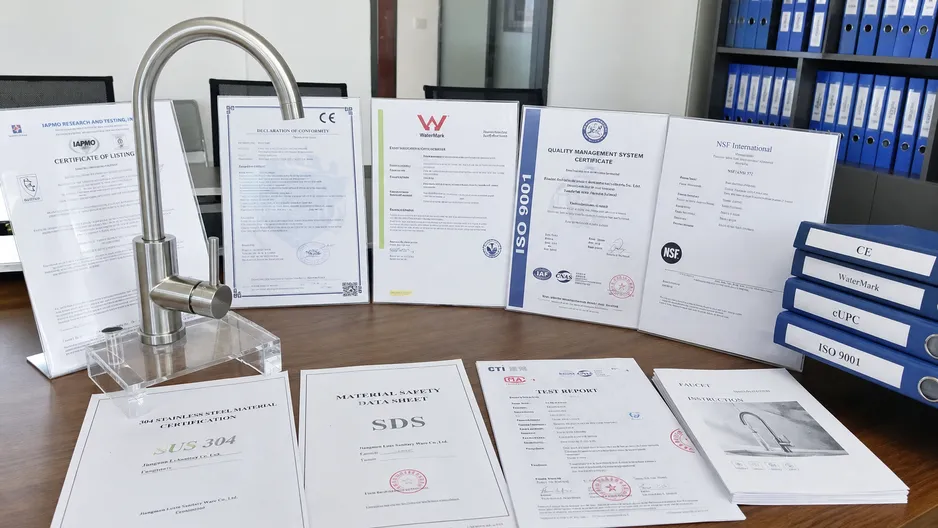
cUPC CE WaterMark SGS
OEM MOQ 200 pieces per SKU
Standard Lead Time 25–35 days (catalog items); 35–50 days (OEM with new tooling)

Specifications shown are standard values for this product line. Actual dimensions may vary by configuration. Contact us for detailed product data sheets and model-specific drawings.

Request Spec Sheets and Pricing

Model-specific drawings, dimensional data, and batch test reports available on request. OEM configuration quotes include full documentation package.

Request Spec Sheets

Key Performance Points

  • 100% leak tested at 0.6 MPa for 60 seconds — every unit, not sampled
  • 500,000-cycle cartridge endurance tested per batch, not per model
  • ±0.05mm valve seat thread tolerance — same standard as our brass line
  • No coating to fail — brushed finish is mechanical, not chemical
  • Lead-free water contact — 304 stainless contains no lead by composition

Certifications

cUPC North America
CE European Union
WaterMark Australia / NZ
SGS Third-party tested

Configuration Options

Available Configurations

Our stainless steel kitchen faucet line covers the configurations most requested by importers, distributors, and OEM buyers. All configurations share the same 304 stainless body and ceramic disc cartridge standard.

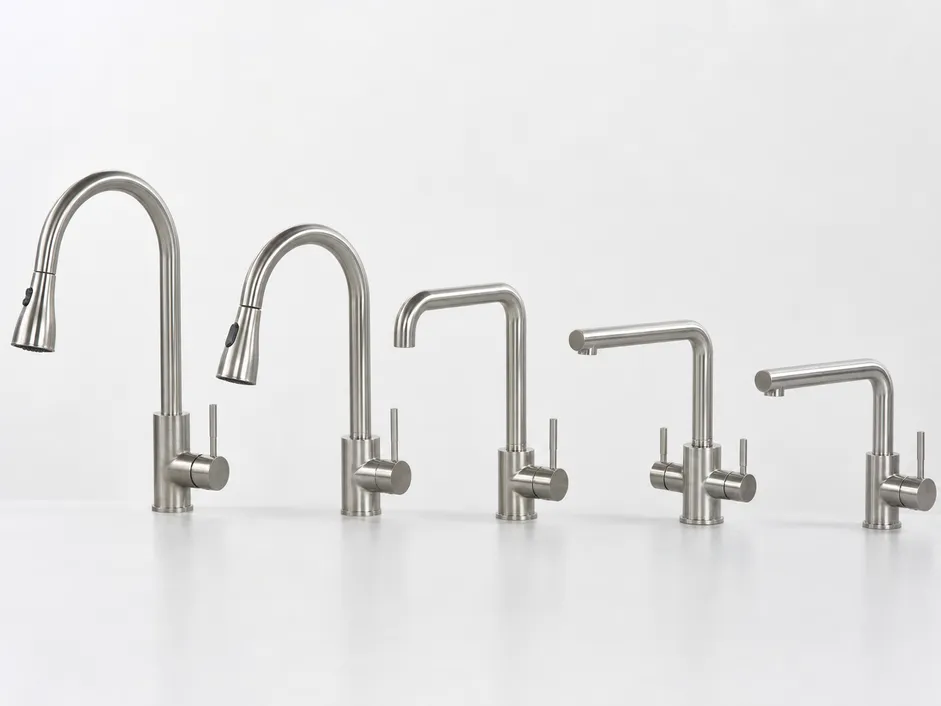
Single Handle Pull-Down

Most requested configuration

  • 360° swivel spout with pull-down spray head
  • Stream / spray toggle on head
  • 1-hole deck mount standard
  • Magnetic docking for spray head
  • Spout height: 380–420mm typical

Single Handle Pull-Out

Lower-profile spout option

  • Compact spout height: 280–320mm
  • Suitable for under-cabinet clearance constraints
  • Stream / spray toggle on head
  • 1-hole deck mount standard
  • Weighted hose return system

Two Handle Deck Mount

Traditional hot/cold configuration

  • Separate hot and cold ceramic disc valves
  • 3-hole deck mount (standard 8" spread)
  • Fixed or swivel spout options
  • Preferred for commercial and food service
  • Escutcheon plate included for 1-hole retrofit

Commercial Pre-Rinse Style

High-arc, high-flow configuration

  • High-arc spout: 400–450mm height
  • Spring coil spout design available
  • Side spray or integrated spray options
  • Suitable for restaurant and food prep environments
  • 1-hole or 2-hole deck mount

Touchless / Sensor

Infrared proximity activation

  • IR sensor with 0–15cm detection range
  • AC adapter or battery-powered (6×AA)
  • Manual override handle retained
  • 304 stainless body — same as manual line
  • OEM sensor module branding available

OEM Custom Configuration

Built to your specification

  • Custom spout geometry and handle design
  • Private label and branded packaging
  • Custom hole configuration and supply connections
  • MOQ 200 pcs per SKU; tooling cost quoted separately
  • Sample lead time: 15–20 days from drawing approval
Discuss OEM Requirements

Not seeing the configuration you need?

These are our standard catalog configurations. We also produce wall-mount, bridge, and pot-filler styles in 304 stainless. If your project requires a configuration not listed here, contact us with your drawings or reference images and we'll confirm feasibility and tooling requirements.

Process Transparency

Manufacturing & Quality Control

The stainless steel body introduces different process requirements compared to brass casting. Here is how we handle each stage and what we test at each checkpoint.

1

304 Stainless Sheet Selection

Incoming coil stock is verified against mill certificates for chromium and nickel content. We use 1.0–1.2mm gauge sheet for body panels and 1.5mm for spout tubes. Thickness tolerance is checked at intake — undersized sheet causes thinning failures during deep drawing.

2

Deep Drawing and Hydroforming

Body shells are formed by deep drawing on hydraulic presses. Stainless work-hardens faster than brass, so draw ratios and lubrication schedules are tighter. Each draw stage is inspected for wall thinning, wrinkling, and cracking before the next stage proceeds.

3

TIG Welding and Seam Inspection

Spout tubes and body joints are TIG welded. Weld seams are ground flush and inspected visually and by dye penetrant on a sampled basis. Weld porosity or incomplete fusion at the spout-body joint is the primary failure mode for stainless faucets — we treat this checkpoint as a hold point, not a pass-through.

4

Mechanical Brushing

Surface finish is applied by mechanical brushing with fixed-parameter abrasive belts. Grit sequence, belt speed, and contact pressure are documented per finish specification. This is what makes the finish repeatable across production runs — the parameters are fixed, not operator-dependent.

5

Cartridge Housing Assembly

The ceramic disc cartridge seats into a CNC-machined brass housing. Thread engagement depth and torque are verified at assembly. Cartridges are batch-tested to 500,000 cycles before release to the assembly line — not per model, per batch.

6

Full Assembly and Torque Verification

All fasteners are torqued to specification using calibrated tooling. Supply line connections, aerator seats, and handle set screws are checked against a documented assembly checklist. No hand-feel estimation — torque values are recorded per unit on OEM orders.

7

100% Hydrostatic Leak Test

Every assembled unit is pressurized to 0.6 MPa for 60 seconds. This is not a sample test — it is 100% of production. Units that fail are quarantined, disassembled, root-cause analyzed, and either reworked or scrapped. Failure data feeds back into the assembly process.

8

Final Inspection and Packaging

Post-test units are inspected for surface finish defects, handle operation smoothness, and aerator flow pattern. OEM orders include a pre-shipment inspection report. Packaging is configured per buyer specification — retail box, bulk carton, or custom branded packaging.

100%
Units hydrostatic tested at 0.6 MPa
500K
Cartridge cycles tested per batch
±0.05mm
Valve seat thread tolerance

Material Comparison

Stainless Steel vs. Brass: What Actually Differs

Both materials produce durable faucets when manufactured correctly. The differences are real but specific — here is an honest comparison so you can match the right material to your application.

Factor 304 Stainless Steel Brass
Corrosion resistance Excellent — passive oxide layer reforms if scratched; no plating to fail Good on base metal; depends on surface finish/plating for exposed surfaces
Lead content Zero — no lead in 304 alloy by composition Varies; low-lead and lead-free brass alloys available but require verification
Surface finish durability Brushed finish is the base material — cannot peel or flake PVD and electroplated finishes are durable but are coatings over substrate
Finish color range Brushed silver standard; PVD black and gold available at higher cost Wide range — chrome, brushed nickel, matte black, brushed gold, ORB
Complex geometry Limited by sheet forming and welding; organic curves are difficult Sand and die casting allow complex, sculptural forms with low tooling constraints
Weight Lighter — sheet-formed bodies use less material mass Heavier — solid cast bodies; perceived as premium by some end users
Unit cost at volume Competitive at mid-to-high volume; tooling cost lower for simple forms Higher raw material cost; casting tooling is significant upfront investment
Regulatory fit Strong fit for NSF/ANSI 61, California AB 1953, EU drinking water directives Compliant alloys available; requires alloy documentation for lead-sensitive markets
Machinability Harder to machine; work-hardening requires slower feeds and sharp tooling Excellent machinability; preferred for precision valve seats and threaded ports

Choose stainless when…

  • Your market requires zero-lead compliance documentation without alloy verification overhead
  • The design is geometric or architectural — straight lines, cylinders, angular forms
  • Brushed stainless is the target finish and you want it to be the base material, not a coating
  • The application is commercial kitchen, food service, or healthcare where hygiene perception matters
  • You are targeting markets where stainless is the category expectation (AU, NZ, parts of EU)

Choose brass when…

  • The design requires organic curves, sculptural spouts, or decorative casting detail
  • You need a wide finish palette — chrome, brushed nickel, matte black, brushed gold in one product line
  • The valve body requires complex internal porting that is easier to cast than to fabricate
  • Your target market associates weight and heft with quality
  • You are sourcing a full bathroom suite and need finish consistency across faucets, accessories, and hardware

Compliance Documentation

Certifications & Market Compliance

Certification requirements vary by destination market. Below is what we hold, what we can support, and what requires buyer-side action. We do not overstate our certifications — if a specific mark requires in-country testing by an accredited lab, we will tell you that upfront.

Held

NSF/ANSI 61

Drinking water system components — material safety. Our 304 stainless body and ceramic cartridge assembly are tested and listed. Documentation available on request for US and Canadian market buyers.

Required: USA, Canada
Held

cUPC / ASME A112.18.1

Plumbing supply fittings for residential and commercial use. Covers flow rate, pressure rating, and handle operation. Listed models are documented; confirm model number when requesting compliance records.

Required: USA, Canada
Held

WELS (Water Efficiency)

Water Efficiency Labelling and Standards scheme. Star rating is flow-rate dependent and aerator-specific. Our standard aerator configurations achieve 4-star rating. Custom flow rates require re-rating — we can support the testing process.

Required: Australia, New Zealand
Supported

CE / EN 817

Mechanical mixing valves for sanitary tapware. We supply test reports and technical documentation for CE self-declaration. For markets requiring notified body involvement, we coordinate with buyer-nominated labs.

Required: European Union
Held

California AB 1953 / S152

Lead-free requirements for California and Vermont markets. 304 stainless is inherently compliant by composition. We provide material composition certificates and third-party XRF test reports on request.

Required: California, Vermont, Maryland
Held

ISO 9001:2015

Quality management system certification covering design, manufacturing, and inspection processes. Certificate scope includes stainless steel and brass faucet production. Current certificate available on request.

Global — procurement requirement

A note on certification claims

Some suppliers list certifications that apply to a single tested model and imply they cover the full product range. We list certifications per model family. If you need compliance documentation for a specific SKU destined for a regulated market, request it by model number and we will provide the exact certificate scope — not a general factory certificate.

Who We Work With

Sourcing Scenarios We Handle Well

Different buyers have different requirements. Here is how we typically work with each buyer type and what to expect from the process.

Wholesale Distributor

MOQ from 500 pcs/SKU

You are stocking a catalog range and need consistent supply across multiple SKUs. We work on blanket order agreements with scheduled releases — you commit to annual volume, we hold buffer stock and release against your call-offs. Lead time on scheduled releases is 15–20 days versus 45–60 days for fresh production.

What we provide
Compliance docs, product data sheets, photography assets, and private label packaging
Typical order cycle
Quarterly releases against annual blanket; minimum 3-month forecast horizon
First order process
Sample approval → compliance review → pricing agreement → production

OEM / Private Label Brand

MOQ from 200 pcs/SKU

You have a design or a reference product and need it manufactured under your brand. We handle tooling fabrication, sample iterations, and production with your branding on the product and packaging. Typical OEM engagement runs 60–90 days from drawing approval to first production sample.

What we need from you
2D/3D drawings or reference samples, target market compliance requirements, branding files
Tooling ownership
Tooling is buyer-owned after cost recovery; we hold it on-site for production use
Sample iterations
Up to 3 sample rounds included; additional rounds quoted separately

Project / Specification Buyer

No minimum on project orders

You are specifying fixtures for a hospitality, commercial, or residential development and need consistent supply across a project timeline. We provide specification sheets, sample units for approval, and project pricing with delivery scheduling tied to your construction program.

What we provide
Spec sheets, BIM objects on request, sample units, project delivery schedule
Delivery flexibility
Staged delivery against construction milestones; we hold stock against confirmed project orders
Compliance support
Full documentation package for project compliance submissions included

Common Questions

Frequently Asked Questions

Questions we get from buyers evaluating stainless steel faucets for the first time, or switching from a brass supplier.

Is 304 stainless actually lead-free, or does it depend on the alloy batch?

304 stainless steel (UNS S30400) contains no lead by specification — the alloy is iron, chromium (18%), and nickel (8–10%) with trace elements that do not include lead. This is different from brass, where lead content depends on the specific alloy and must be verified per batch. For stainless, we provide mill certificates showing alloy composition. There is no lead to test for because it is not in the material.

Why does stainless steel cost more upfront but often less over the product lifecycle?

Stainless steel carries a higher raw material cost than brass, but the comparison changes when you factor in warranty claims, returns, and replacement cycles. Brass faucets in hard water or coastal environments corrode and pit within 3–5 years. Stainless in the same conditions lasts 15–20 years with no surface treatment. For commercial and hospitality buyers, the maintenance and replacement cost difference is significant. The upfront premium is typically recovered within the first replacement cycle.

Can you match a finish we are already using on a brass fixture range?

We can get close on most PVD finishes — brushed gold, matte black, gunmetal, and rose gold are all achievable on stainless. An exact visual match to a brass PVD finish is not always possible because the base metal affects how the coating reads under light. We recommend ordering a sample set before committing to a mixed-material range. We will send finished samples against your reference and you can assess the match in your actual installation context.

What is the minimum order quantity for a first trial order?

For catalog products, the trial order minimum is 100 pieces per SKU. This is lower than our standard MOQ because we want buyers to validate the product in their market before committing to larger volumes. For OEM or custom products, the minimum depends on tooling requirements — typically 200 pieces per SKU once tooling is amortized. We do not charge a sample fee for standard catalog items; you pay unit cost plus shipping.

How do you handle quality issues after delivery?

We ask for photos and a defect description within 30 days of receipt. For confirmed manufacturing defects, we replace affected units in the next production run or issue credit — your choice. We do not ask you to ship defective product back at your cost. For issues that appear after installation, we assess case by case. If the defect is traceable to material or workmanship, we cover it. If it is installation damage or misuse, we will tell you clearly rather than string you along.

Do you work with freight forwarders, or do we need to arrange our own logistics?

Both options work. We quote FOB Ningbo as standard, which means you arrange freight from port. If you prefer a delivered price, we can quote CIF to your destination port using our freight partners — we pass the rate through without markup. For buyers who already have a preferred forwarder, we coordinate directly with them on booking and documentation. We provide a full commercial invoice, packing list, and certificate of origin as standard; additional documents like fumigation certificates or specific country-of-origin declarations are available on request.

Can we visit the factory before placing an order?

Yes, and we encourage it for buyers placing significant first orders. We are based in Zhongshan, Guangdong — a 90-minute drive from Guangzhou Baiyun International Airport. Factory visits typically run half a day and cover the production floor, QC lab, and a meeting with the technical team. We can also arrange a virtual factory walkthrough via video call if travel is not practical. Contact us to schedule either option.

Get in Touch

Ready to discuss your sourcing requirements?

Send us your product requirements, target market, and annual volume estimate. We will respond within one business day with a preliminary assessment and, if there is a fit, a sample proposal.

Response time
Within 1 business day. We do not use auto-responders for initial inquiries.
What to include
Product type, target market, annual volume estimate, and any compliance requirements.
Confidentiality
We treat all inquiry details as confidential. NDA available on request before sharing drawings or specifications.

Send an inquiry

By submitting this form you agree to our privacy policy. We do not share inquiry details with third parties.

Material Analysis

The Material Case: 304 Stainless Steel vs. Brass Body with Brushed Finish

Buyers evaluating stainless steel kitchen faucets are usually comparing against brushed nickel or brushed stainless-finish faucets on a brass body. The price point is different, the market positioning is different, and the compliance story is different.

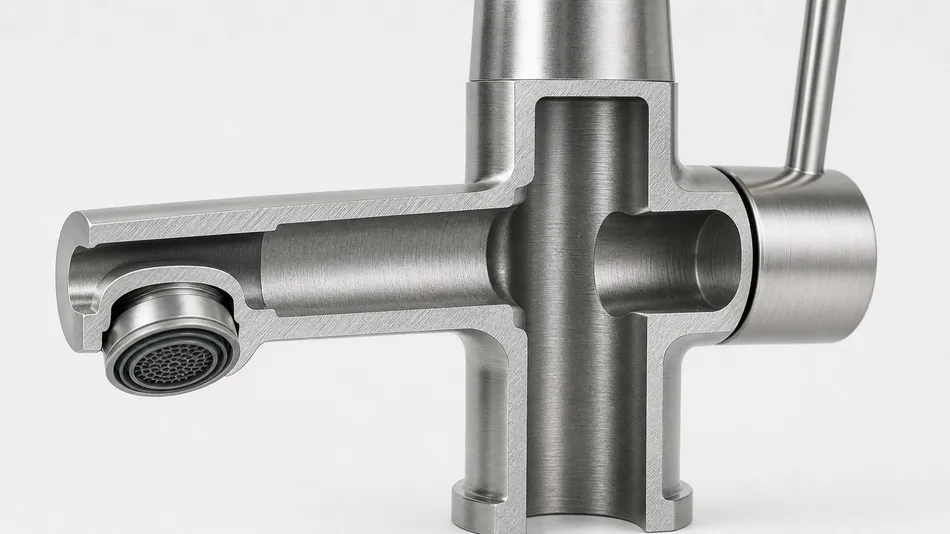
304 stainless steel faucet body cross-section showing material composition

304 Stainless Steel Body

  • A scratch exposes more stainless steel — no substrate change, no coating failure
  • Essentially zero lead content by composition — no alloy qualification required
  • No XRF testing needed, no lead content documentation to manage
  • Cleaner lead-free marketing claim — material composition is the proof
  • Resists commercial cleaning chemicals without coating degradation
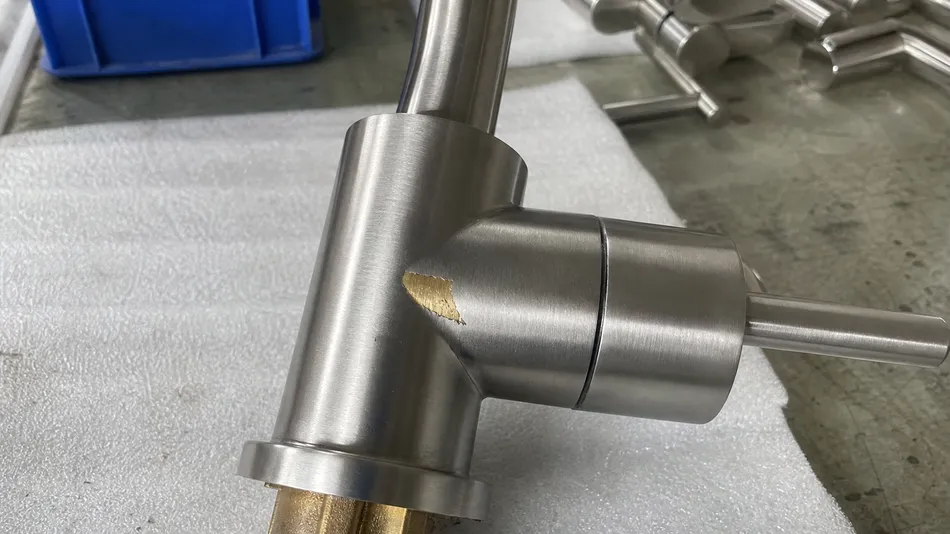
Brass body faucet with PVD brushed nickel finish showing coating layer

Brass Body + PVD Brushed Finish

  • A compromised coating exposes the brass substrate — visible material change at scratch or chip
  • Low-lead alloy required to meet NSF 61/372 (≤0.25% weighted average lead content)
  • XRF analysis required on every incoming brass batch for compliance verification
  • Lead content documentation required for cUPC-certified products
  • Cleaning chemicals that attack the coating can expose substrate in commercial use

The Compliance Difference

Lead-Free as a Material Fact, Not a Documentation Exercise

Our brass bodies for cUPC-certified products use a low-lead alloy that meets NSF 61/372 requirements, and we verify every incoming brass batch with XRF analysis. That's a solid compliance position. But 304 stainless steel has essentially zero lead content by composition. For buyers selling into markets where lead-free is a marketing claim as much as a compliance requirement, stainless steel is the cleaner story to tell.

Stainless Lead Content

~0%

By material composition — no qualification needed

NSF 61/372 Brass Limit

≤0.25%

Weighted average — requires XRF batch verification

Shipping Track Record

Where We've Shipped Stainless Steel Kitchen Faucets

North America & Australia

Food service distributors — commercial kitchen fit-outs with consistent repeat orders as new locations open

Southeast Asia & Middle East

Residential importers positioning in the health-conscious segment — water quality concerns driving lead-free fixture demand

Channel Intelligence

Market Segments Where Stainless Steel Kitchen Faucets Move

Four distinct buyer channels with different volume profiles, specification requirements, and sales cycle characteristics. Understanding which segment fits your distribution model determines how you position and price this product.

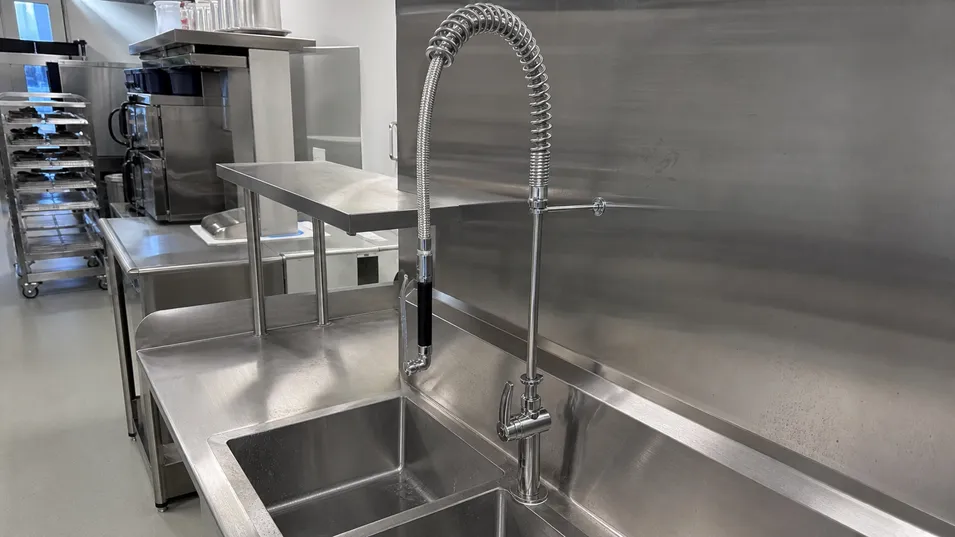
Stainless steel kitchen faucet installed in commercial food service kitchen

Primary Volume Channel

Food Service & Commercial Kitchen Supply

Order Range

50–300 units

Commercial kitchens — restaurants, institutional cafeterias, hotel food preparation areas — specify stainless steel fixtures as a standard. The material is easy to clean, visually consistent with stainless steel sinks and equipment, and carries no coating that can be damaged by commercial cleaning chemicals.

cUPC documentation is the entry requirement for North American food service supply — we hold it and can provide test reports with shipment
Reorders tied to new location openings or renovation cycles — predictable volume, low return rates
Longer sales cycles than residential retail — commercial buyers specify carefully before ordering
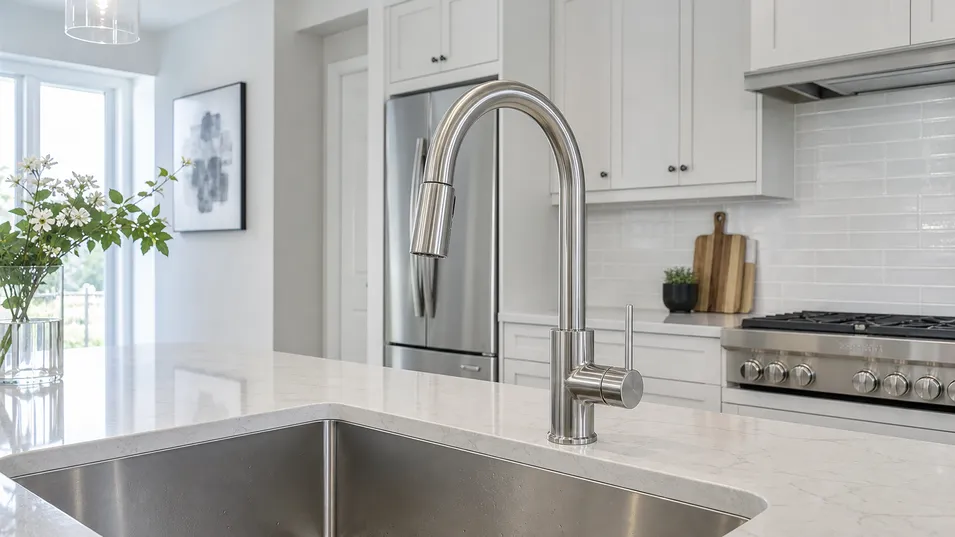
Brushed stainless steel kitchen faucet in contemporary residential kitchen setting

Growing Segment

Health-Conscious & Premium Residential

MOQ

200 pcs

Buyers in this channel are positioning stainless steel kitchen faucets as a lead-free, chemical-free alternative to coated brass faucets. The brushed stainless finish fits contemporary and industrial kitchen aesthetics that are moving well in North American and Australian residential markets.

E-commerce is a significant channel — "lead-free kitchen faucet" and "stainless steel faucet" search categories growing
Product photographs well against white and grey kitchen backgrounds
MOQ of 200 pieces makes it viable to test this positioning in your catalog before committing to volume
Stainless steel faucet in hotel or serviced apartment commercial kitchen specification

Project Procurement

Hospitality & Contract Specification

Markets

SEA / ME

Markets where stainless steel is a standard specification — particularly in Southeast Asia and the Middle East, where commercial kitchen and food preparation areas in hotels and serviced apartments require stainless fixtures. Project procurement teams in this segment specify by material and certification, not by brand.

Having cUPC and CE documentation available means your bid package is complete without additional supplier qualification steps
Specification-driven procurement — material and certification compliance wins the bid
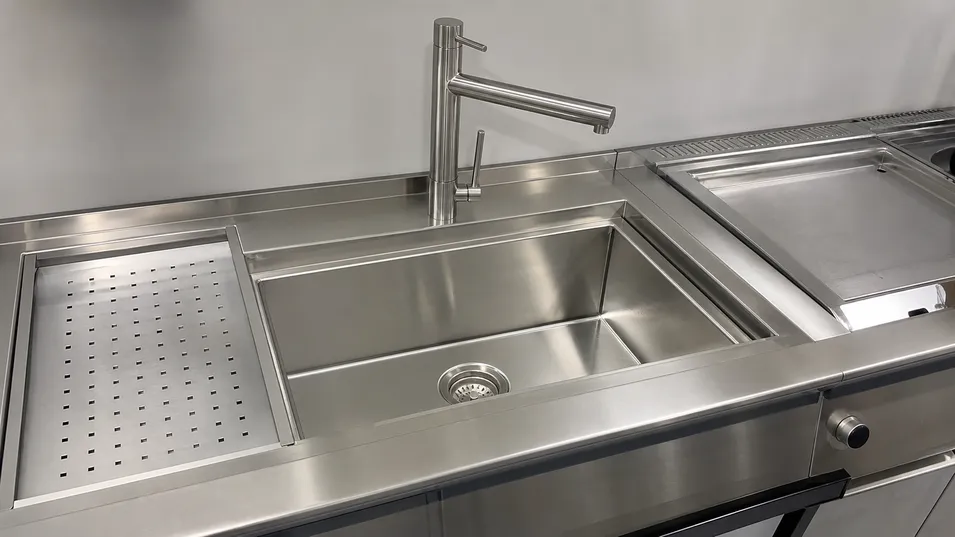
OEM stainless steel faucet integrated into kitchen sink and appliance bundle system

High-Value Segment

OEM for Appliance & Kitchen System Integrators

Tooling Lead

25–35 days

Some buyers are integrating kitchen faucets into broader kitchen system packages — sink-and-faucet combinations, kitchen renovation kits, or appliance bundles. Stainless steel body faucets are the natural pairing for stainless steel sinks. We can supply OEM configurations with custom spout heights, handle profiles, and connection specs to match a specific sink or countertop configuration.

Custom spout heights, handle profiles, and connection specs available
Tooling for a custom spout height or handle shape: 25–35 days to first sample from our in-house tooling room

Discuss Your Market Segment and Volume Requirements

Whether you're sourcing for food service fit-outs, building an e-commerce catalog, bidding a hospitality project, or integrating into a kitchen system — the right configuration and documentation package depends on your channel. Let's work through the specifics.

Manufacturing Process

How We Manufacture the Stainless Steel Body

The production process for stainless steel kitchen faucets differs from our brass line in ways that matter for quality consistency. Understanding the process helps you evaluate what you're buying.

01

Deep-Draw Forming — No Weld Seam on the Body

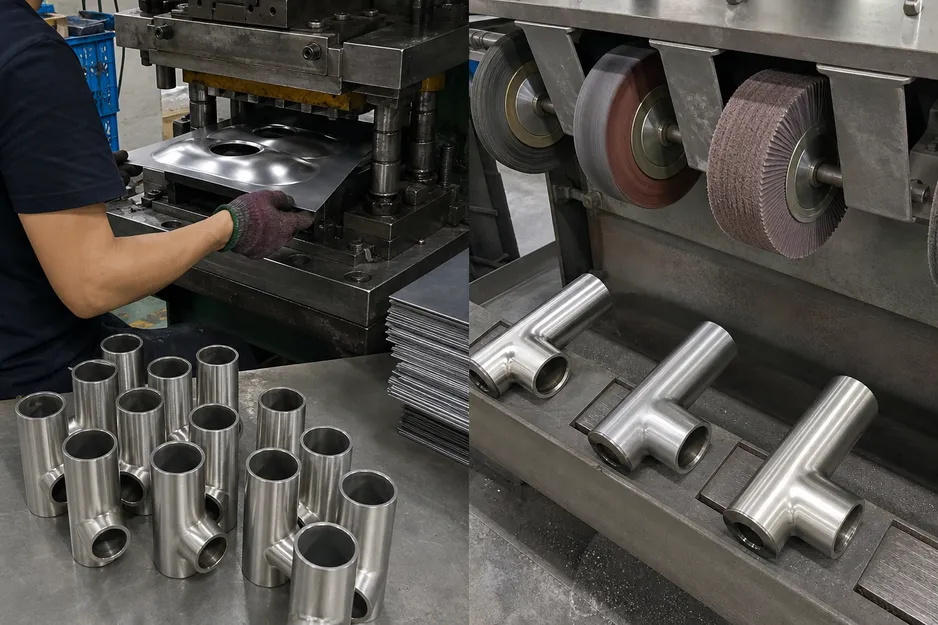
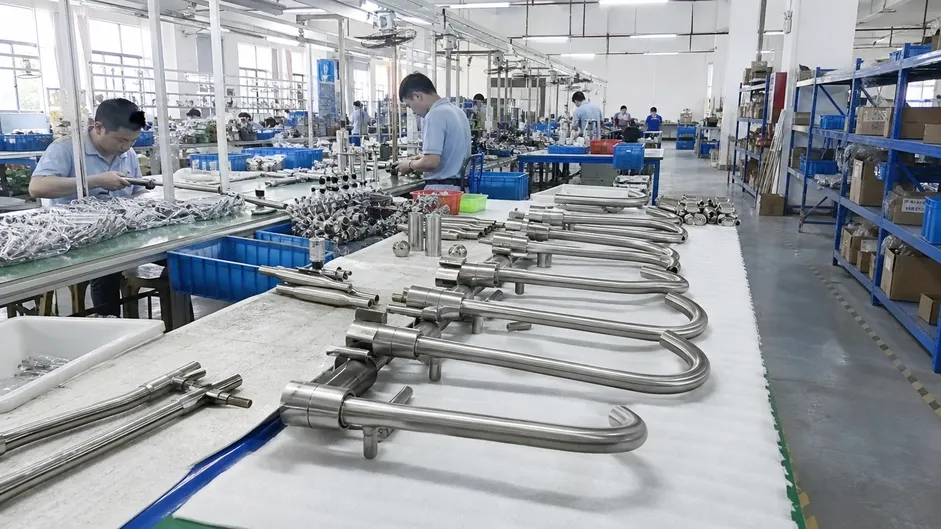
The body and spout sections start as 304 stainless steel sheet, typically 1.0–1.2mm gauge. We deep-draw the spout tube and body sections on hydraulic presses — the drawing process forms the shape without welding, which eliminates the weld seam as a potential corrosion initiation point.

02

TIG Welding at Joints — 308L Filler Wire

Where sections must be joined — spout-to-body connection, for example — we use TIG welding with 308L filler wire, which maintains the corrosion resistance of the 304 base material at the weld zone. After welding, weld seams are ground flush before the brushing sequence begins.

03

Three-Stage Brushing Sequence

The brushing sequence runs three stages: coarse belt grinding to remove surface irregularities, medium-grit brushing to establish the linear grain direction, and fine-grit finishing to achieve the target surface roughness (Ra 0.4–0.8μm). We run a reference panel from the previous production batch alongside each new run to verify grain direction and surface texture consistency.

The result is a finish that's visually consistent across units in a batch and across batches in a reorder — which matters when your buyer is installing 50 faucets in a commercial kitchen and they all need to look the same.

04

Brass Cartridge Insert — Precision Where It Counts

The valve seat interface is CNC machined in the brass cartridge housing, not in the stainless body. We made this design decision early in the stainless line development because stainless steel is significantly harder to machine to tight tolerances than brass, and the valve seat thread is the most tolerance-critical dimension in the faucet.

By using a brass insert for the cartridge housing, we get the material benefits of stainless on the exterior and the machining precision of brass at the valve interface. The brass insert is mechanically pressed and sealed into the stainless body — no adhesive, no thread sealant, no joint that can loosen over time.

Stainless steel kitchen faucet body manufacturing — deep-draw forming and brushing sequence at Wfaucet factory

Design Decision

Why a Brass Insert in a Stainless Body?

  • Stainless steel is significantly harder to machine to tight tolerances than brass — the valve seat thread is the most tolerance-critical dimension in the faucet

  • Exterior stainless body delivers the corrosion resistance and lead-free material story your market demands

  • Mechanically pressed and sealed brass insert — no adhesive, no thread sealant, no joint that can loosen over time

Surface Specification

1.0–1.2mm

Sheet gauge, 304 stainless steel

Ra 0.4–0.8μm

Target surface roughness after brushing

3-Stage

Brushing sequence per unit

308L

TIG filler wire at weld joints

Market Compliance

Certifications and Compliance for Your Target Market

The stainless steel kitchen faucet line carries the same certification coverage as our brass kitchen faucet line. The compliance story is actually simpler for stainless — the lead content question that requires XRF testing and alloy qualification on brass bodies doesn't apply to 304 stainless steel.

Certification Coverage by Market

United States / Canada

cUPC (IAPMO)

ASME A112.18.1 / CSA B125.1 — Certified, test reports available

European Union

CE

EN 817 / EN 200 — Certified, declaration of conformity available

Australia / New Zealand

WaterMark

AS/NZS 3718 — Certified, license documentation available

Global

SGS Third-Party Audit

Audited — reports available on request

All Markets

ISO 9001:2015

Quality management system — certified

Wfaucet stainless steel kitchen faucet certification documentation — cUPC, CE, WaterMark, ISO 9001

North America: cUPC + NSF 61/372

For North American food service buyers, the cUPC certification covers the plumbing code compliance requirement. NSF 61/372 lead content compliance is straightforward for stainless steel — the material composition satisfies the requirement without the alloy qualification process required for brass. We can provide a material certification for the 304 stainless steel confirming composition.

Australia / New Zealand: WaterMark Ships with the Container

WaterMark certification is the mandatory requirement for plumbing fixtures in Australia and New Zealand. Our WaterMark license documentation ships with the container — your importer doesn't need to source it separately.

Stainless vs. Brass — Compliance Advantage

The lead content question that requires XRF testing and alloy qualification on brass bodies doesn't apply to 304 stainless steel. This simplifies the compliance documentation process and removes a variable from your import clearance workflow.

OEM Services

Customization Options and OEM Configuration

The stainless steel kitchen faucet line supports OEM customization across several dimensions. Here's what's practical and what the constraints are.

Spout Height and Reach

Adjustable within the range of our existing tooling: spout height 250–450mm, reach 160–250mm. Custom dimensions outside this range require new tooling; first sample in 25–35 days from our in-house tooling room.

Handle Configuration

Single-handle lever (standard) and two-handle configuration available. Handle shape can be customized from 200 pieces using existing handle tooling options. New handle profiles require tooling investment; tooling cost is discussed separately from per-unit pricing.

Spout Profile

Standard straight spout, gooseneck high-arc, and pull-down configurations available. Pull-down on the stainless line uses a braided stainless hose rated for 500,000 extension cycles — same spec as our brass pull-down line.

Connection Specifications

3/8" compression (North America standard) and G1/2" (European standard) are both available without tooling changes. Other connection specs available on request.

Branding and Packaging

OEM packaging with your brand name, logo, and product specifications. We prepare packaging artwork based on your files and confirm before production. Blind drop-shipping and FBA-ready packaging available for e-commerce buyers.

OEM customization options for stainless steel kitchen faucets — handle configurations and spout profiles

Tooling Constraints — What to Know Before You Spec

The body forming tooling (deep-draw dies) is the major constraint. Significant changes to body diameter or overall form factor require new dies, which adds tooling cost and 4–6 weeks to the first sample timeline.

For most OEM requests — handle shape, spout height, finish variation — we can work within existing tooling. No new dies required.

Tooling-free customization includes:

  • Spout height within 250–450mm range
  • Reach within 160–250mm range
  • 3/8" compression or G1/2" connections
  • Finish variations on existing body forms
  • OEM branding and custom packaging

MOQ for OEM Stainless Steel Kitchen Faucets

Standard OEM

200 pcs

per SKU, within existing tooling

New Tooling Required

500 pcs

recommended to amortize tooling cost without significant per-unit impact

Shipping & Logistics

Packaging, Container Loading, and Logistics

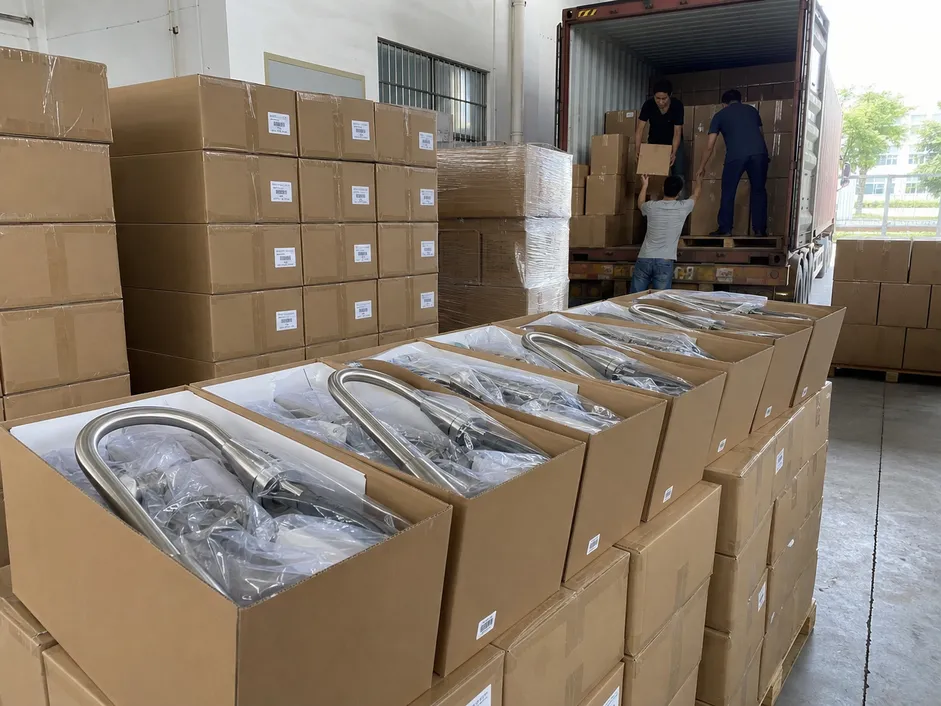
Each stainless steel kitchen faucet ships in an individual retail-ready carton with foam insert protection. Standard carton dimensions are designed for 40HQ container optimization — we provide a packing list with CBM and gross weight per SKU before order confirmation so your freight forwarder can quote accurately.

Typical Container Loading

Container Type
Approximate Units
20GP
800 – 1,200 units
40HQ
1,800 – 2,500 units

Loading quantities vary by configuration and packaging dimensions. We provide exact figures with the packing list for your specific order.

Shipping Documentation

Documentation ships with every container:

  • Commercial invoice and packing list
  • Certificate of origin
  • Applicable certification test reports (cUPC, CE, WaterMark as applicable to your destination)
  • HS code classification for North American shipments — typically 8481.80 for kitchen faucets — with binding ruling references available for customs pre-clearance
Stainless steel kitchen faucet retail-ready carton packaging and container loading for export

FBA-Ready Packaging for E-Commerce

FBA-ready packaging with FNSKU labeling, poly-bag inner packaging, and carton labeling to Amazon's current requirements. We've been preparing FBA shipments for buyers since 2019 and stay current with Amazon's packaging and labeling specifications — your prep center doesn't need to repack the cartons.

Commercial and Project Buyers

For food service and commercial project buyers, we can pack in bulk inner cartons (multiple units per master carton) to reduce per-unit packaging cost on large orders. Pallet configuration for container loading is available on request.

Packaging Options by Buyer Type

We adapt packaging to your channel. Retail importers get individual retail-ready cartons optimized for shelf presentation. E-commerce buyers get FBA-compliant packaging that ships direct to Amazon fulfillment centers. Commercial and project buyers get bulk inner carton packing to minimize per-unit cost on large orders.

Retail Carton

Individual foam-insert carton, retail-ready, 40HQ optimized

FBA-Ready

FNSKU labeling, poly-bag inner, Amazon spec current as of 2019+

Bulk / Commercial

Multi-unit master cartons, pallet config on request

Product Line Navigation

Stainless Steel vs. Other Kitchen Faucet Configurations: Choosing the Right Product for Your Market

The stainless steel kitchen faucet is one of 12 configurations in our kitchen faucet line. Here's how it positions against the alternatives most buyers consider.

Configuration Comparison

Stainless Steel vs. Brushed Nickel

Brushed nickel is a PVD finish over a brass body; stainless steel is a 304 stainless body with a mechanical brushed finish. They look similar in photographs and in person.

The difference is material composition, lead content story, and coating durability.

Stainless steel is the right choice for food service, commercial kitchen, and health-conscious residential positioning.

Brushed nickel is the right choice for mainstream residential renovation where the PVD finish's color range (warm tones, champagne, rose gold variants) is a selling point.

Configuration Comparison

Stainless Steel vs. Chrome

Chrome is the volume leader globally and the lowest unit cost in our kitchen faucet line. Stainless steel commands a price premium and targets a different buyer segment.

Stainless steel is your commercial kitchen and health-conscious tier.

Chrome is your entry-price anchor if you're building a broad distribution catalog.

Configuration Comparison

Stainless Steel vs. Pull-Down

These aren't mutually exclusive — we offer pull-down configuration in the stainless steel line.

If your market needs pull-down functionality with stainless steel material, that configuration is available.

Pull-down is a functional configuration, not a material category. Stainless steel body and pull-down spout can be combined in a single SKU.

Configuration Comparison

Stainless Steel vs. Gooseneck

Gooseneck is a spout profile, not a material. We offer gooseneck spout profile in the stainless steel line for buyers targeting commercial-style kitchen aesthetics with stainless material.

Gooseneck spout + stainless steel body is a combinable configuration — both attributes can be specified in a single OEM order.

Sourcing Guidance

Not sure which configuration fits your market?

Send us your target channel and price point — we'll recommend the configuration that protects your margin.

Buyer FAQ

Frequently Asked Questions

Decision-support answers for sourcing managers, product developers, and compliance teams evaluating stainless steel kitchen faucets.

Is 304 stainless steel truly lead-free, and how does it compare to low-lead brass for cUPC compliance?

304 stainless steel contains no lead by composition — the alloy is iron, chromium (18%), and nickel (8%), with trace amounts of carbon and manganese. There's no lead content qualification required, no XRF testing needed, and no alloy documentation to manage.

For cUPC compliance, the lead content requirement (NSF 61/372, ≤0.25% weighted average) is satisfied by material composition alone. Low-lead brass also meets this requirement, but requires ongoing incoming material testing and alloy supplier qualification to maintain compliance.

For buyers where the "lead-free" claim is a marketing point as much as a compliance requirement — food service, health-conscious residential, children's product-adjacent markets — stainless steel is the cleaner story.

Lead-Free Compliance Comparison

304 Stainless Steel

Lead-free by alloy composition. No XRF testing. No supplier qualification cycle. NSF 61/372 satisfied inherently.

Low-Lead Brass

Meets ≤0.25% weighted average. Requires ongoing incoming material testing and alloy supplier qualification to maintain compliance.

What is the difference between a stainless steel kitchen faucet and a brushed stainless finish on a brass faucet?

A stainless steel kitchen faucet has a 304 stainless steel body and spout — the structural material is stainless. A brushed stainless finish on a brass faucet is a surface treatment applied to a brass body, typically a PVD or electrochemical process that gives the surface a stainless-like appearance.

The distinction matters for lead content, corrosion resistance when the surface is scratched, and the compliance documentation you can provide to your buyers.

If your buyer is specifying "stainless steel faucet" for a food service or commercial kitchen application, they typically mean stainless body construction, not a stainless-look finish on brass.

Why the Distinction Matters

  • Lead Content

    Stainless body: no lead by composition. Brass body with stainless finish: lead content depends on the brass alloy, not the surface coating.

  • Corrosion Resistance

    Stainless body: corrosion resistance is structural. Brass with stainless finish: once the surface coating is scratched, the underlying brass is exposed.

  • Compliance Documentation

    Stainless body: material cert covers the claim. Brass body: requires alloy documentation and may require additional testing for food service or commercial specs.

What certifications does your stainless steel kitchen faucet hold, and are they sufficient for US food service supply?

We hold cUPC (IAPMO), CE, WaterMark, SGS, and ISO 9001:2015. For US food service supply, cUPC is the primary plumbing code compliance certification — it covers ASME A112.18.1 / CSA B125.1 requirements. NSF 61/372 lead content compliance is satisfied by the 304 stainless steel material composition.

Some commercial kitchen equipment specifications also reference NSF 2 (food equipment) or NSF 51 (food zone materials) — these apply to the sink and equipment, not typically to the faucet itself, but we can provide material composition documentation if your buyer's specification requires it.

cUPC (IAPMO)

ASME A112.18.1 / CSA B125.1 — primary US plumbing code compliance

CE & WaterMark

European and Australian/New Zealand market compliance

SGS & ISO 9001:2015

Third-party testing and quality management system certification

NSF 61/372 note: Lead content compliance is satisfied by the 304 stainless steel material composition itself. NSF 2 and NSF 51 (food zone materials) apply to the sink and equipment — not typically to the faucet — but material composition documentation is available on request if your buyer's specification requires it.

What is the minimum order quantity for stainless steel kitchen faucets, and how does OEM customization affect MOQ?

MOQ varies by customization depth. Standard catalog items and OEM modifications using existing tooling both start at 200 pieces per SKU. New tooling — new handle profiles, custom spout geometry — carries a recommended minimum of 500 pieces to amortize tooling cost without significant per-unit impact. Tooling cost is quoted separately and is typically amortized over the first one to two production runs.

200
pieces / SKU
Standard Catalog

No tooling required. Ships from existing production line.

200
pieces / SKU
OEM — Existing Tooling

Handle or spout modifications using existing mold assets.

500
pieces recommended
OEM — New Tooling

New handle profile or custom spout geometry. Tooling quoted separately.

Starting a new SKU in a new market?

200 pieces is a workable trial quantity. Most of our new stainless steel buyers start at 200–500 units before scaling. Tooling cost is amortized over the first one to two production runs, so per-unit impact at 500 pieces is typically modest relative to the differentiation a custom profile delivers.

How do you maintain brushed finish consistency across multiple production runs?

The brushed finish on our stainless steel line is mechanical — belt grinding and brushing to a target surface roughness of Ra 0.4–0.8μm. We run a reference panel from the previous production batch alongside each new run and verify grain direction and surface texture before approving the run.

Because the process is mechanical rather than chemical, there's no bath chemistry drift to manage — the consistency variables are abrasive grit specification and belt speed, both of which are documented process parameters.

Reorder Consistency Advantage

This is the main advantage of mechanical brushing over PVD brushed finishes for reorder consistency: the process doesn't change between runs the way a plating bath does.

What is the typical lead time for stainless steel kitchen faucets, and how does it compare to your brass line?

Standard Catalog Items

25–35 days

From order confirmation to container loading.

OEM Orders with New Tooling

35–50 days

Includes tooling development and first-article approval.

The stainless steel line runs on a separate production schedule from our brass line, so a large brass order doesn't push back your stainless steel delivery.

Scheduling Commitment

We schedule production in 4-week windows and commit to the window at order confirmation — not an estimate that gets revised when a larger order comes in.

Start Sourcing

Start Your Stainless Steel Kitchen Faucet Sourcing

If you're evaluating stainless steel kitchen faucets for food service supply, residential distribution, or OEM development, the fastest path to a decision is a sample order. We can ship 2–4 units from catalog inventory within 7–10 business days — enough to test fit, finish, and function with your own customers before committing to a production run.

Request a Sample Order

We can ship 2–4 units from catalog inventory within 7–10 business days. Test fit, finish, and function with your own customers before committing to a production run.

Compare Against Your Current Source

Send us a reference sample or detailed photos of an existing product you're sourcing. Our engineering team will identify the closest configuration in our stainless steel line or spec an OEM equivalent and send back a detailed quote with drawings.

New to Food Service or Commercial Kitchen?

Tell us your target market and volume expectations. We'll suggest a starter configuration based on what's moving for our existing buyers in that segment.

Contact Our Sales Team

Kitchen Faucet Collection

Explore Related Kitchen Faucet Types