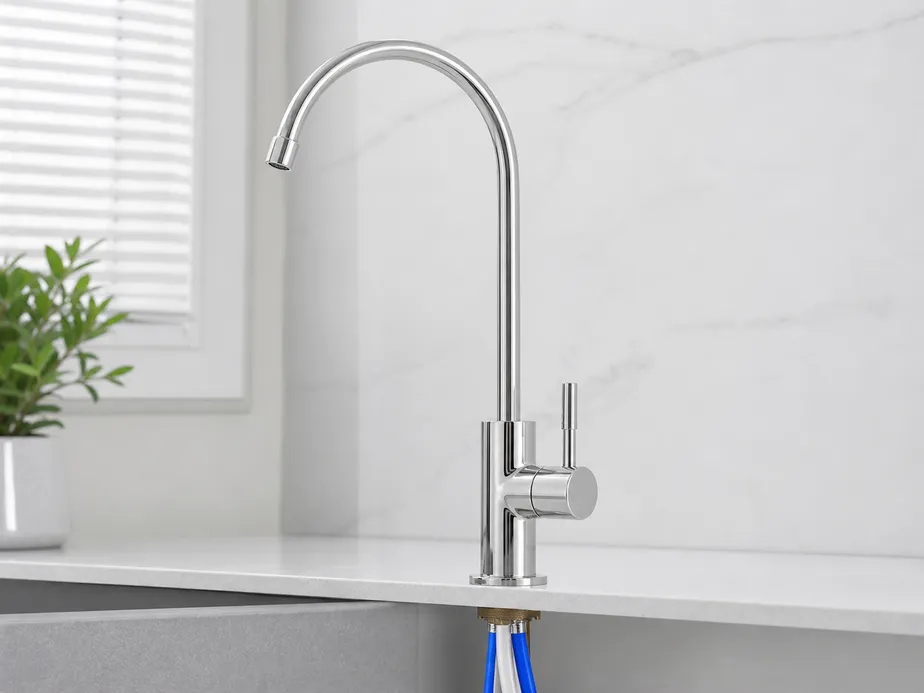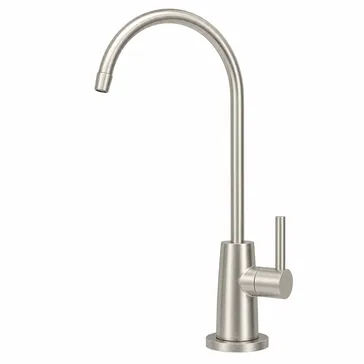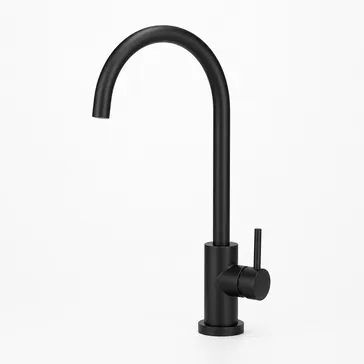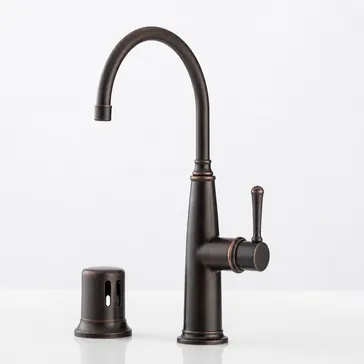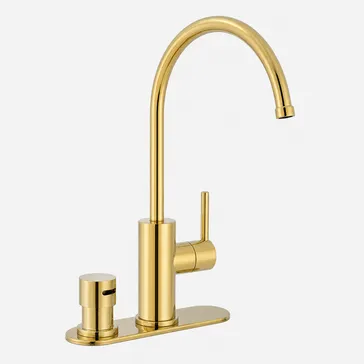

Three-tube air gap RO faucets built for North American compliance — cUPC certified, brass body, OEM from 200 pieces.
The air gap design is a plumbing code requirement in most US states and Canadian provinces. We manufacture to that spec, with the documentation to prove it.
Product Engineering
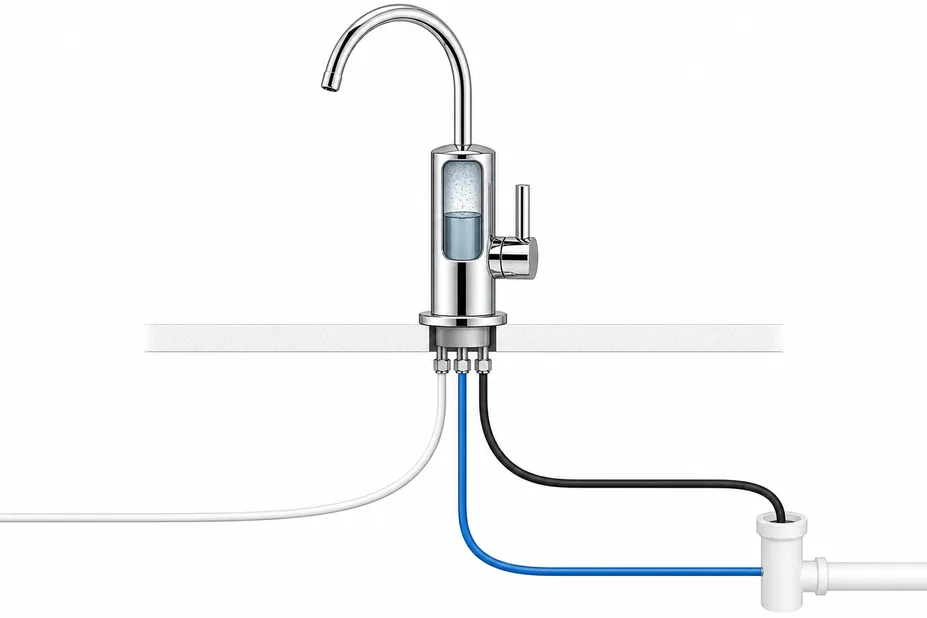
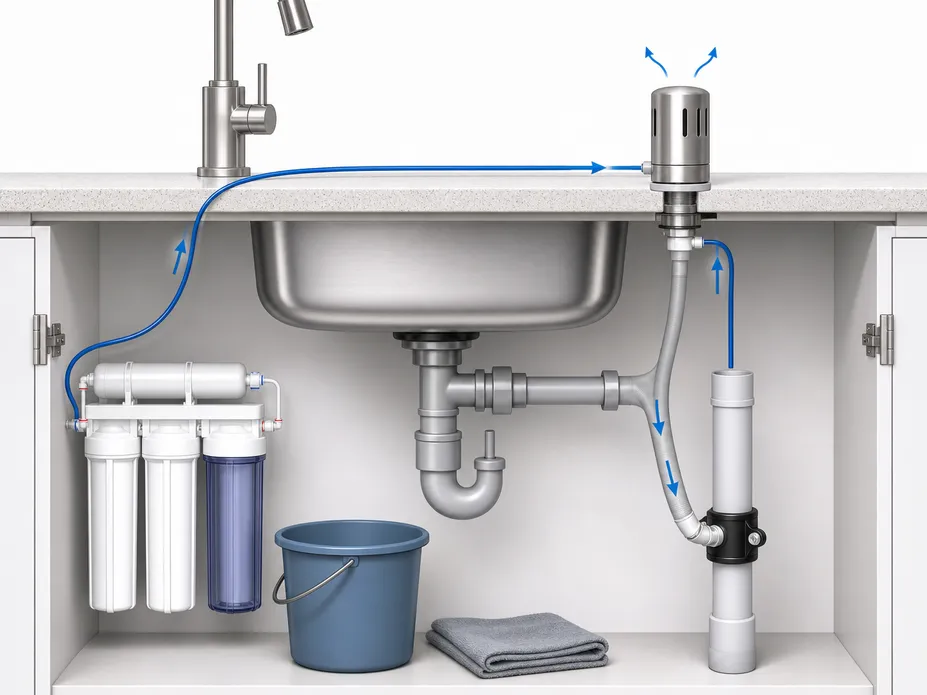
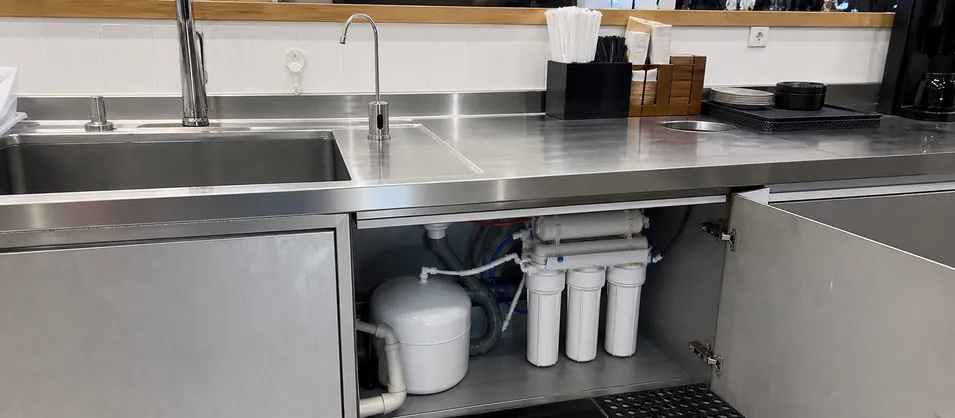
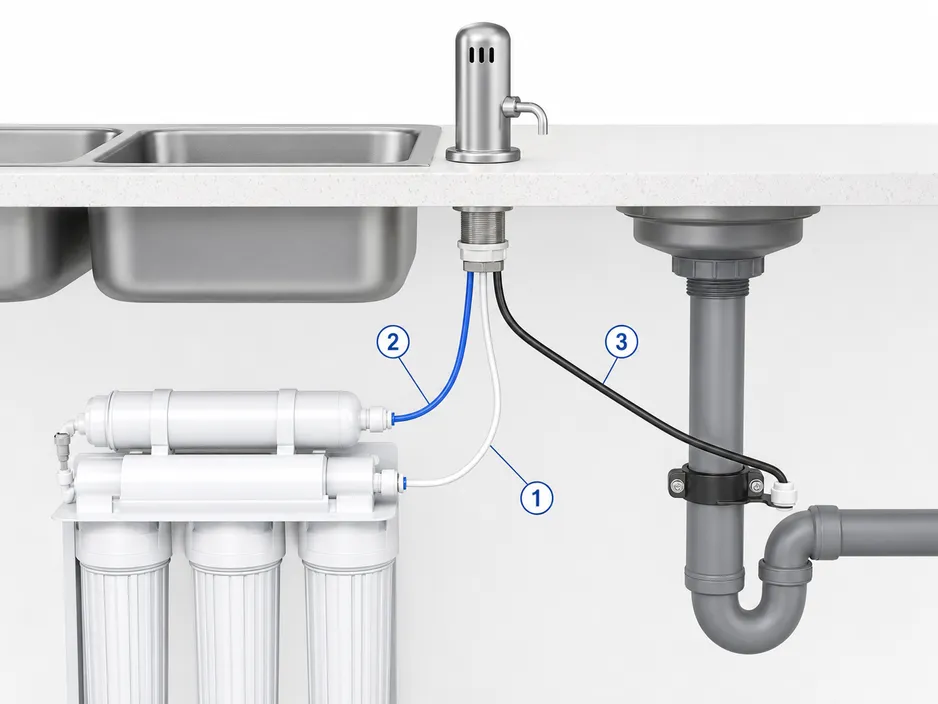
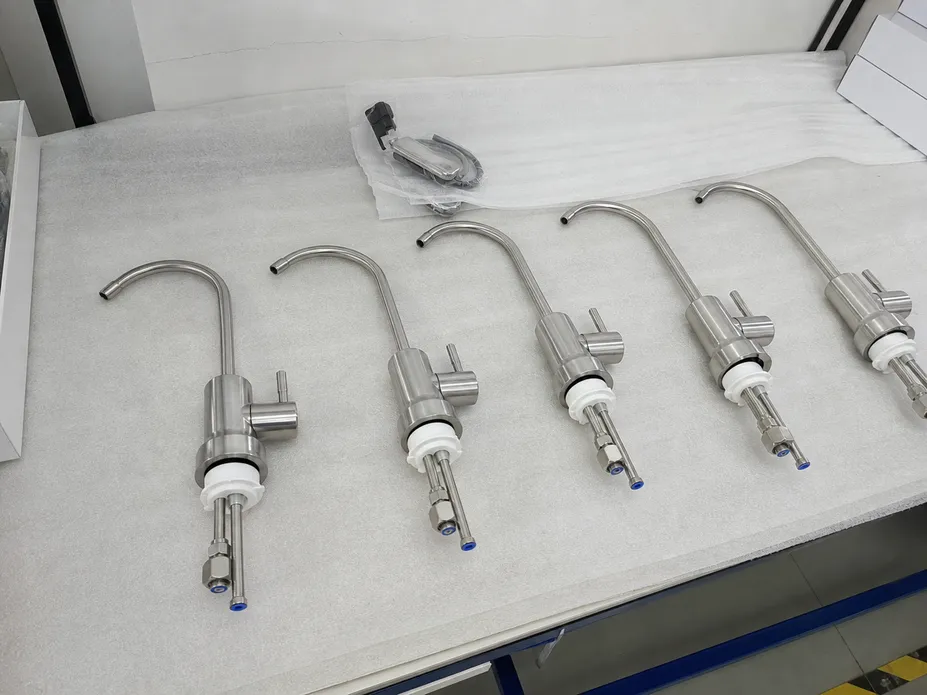
An air gap RO faucet runs three tubes instead of two. The third tube — the drain line — loops up through the faucet body and discharges through a visible air gap before connecting to the sink drain. That physical break in the drain path prevents backflow contamination from the drain into the RO membrane, which is why most US state plumbing codes and Canadian provincial codes require it for under-sink reverse osmosis installations.
The commercial implication is direct: if you're supplying RO systems or faucets into the North American residential or light commercial market, your buyers' plumbers and inspectors will ask for the air gap configuration. Stocking a non-air-gap faucet in that market means your downstream customers either fail inspection or have to source the compliant part separately — neither outcome protects your margin or your relationship with them.
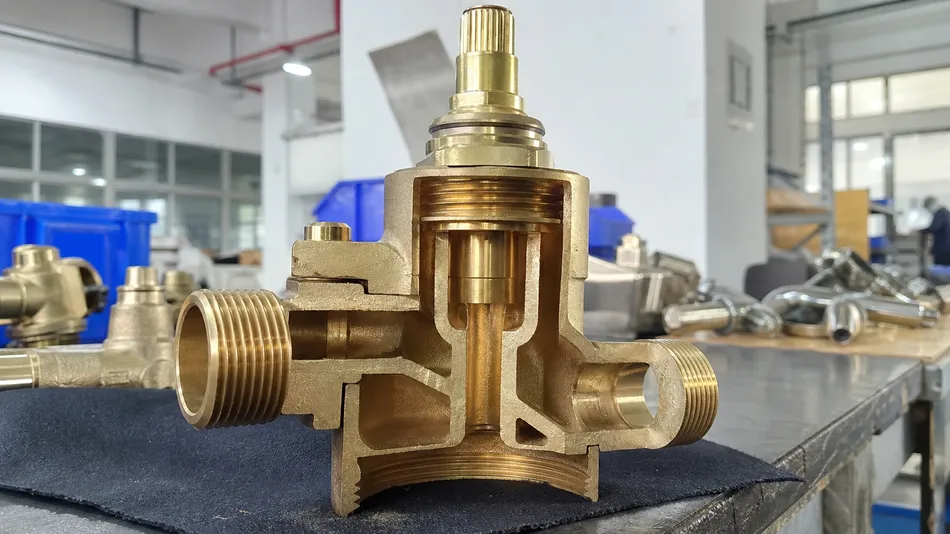
We've been manufacturing air gap reverse osmosis faucets since the early years of our filter faucet line. The three-tube body requires a different casting geometry than a standard two-tube RO faucet — the internal channels have to route the drain tube through the body without intersecting the supply and filtered water paths, and the air gap chamber itself needs to be sized correctly to function under typical drain pressure.
We've seen air gap faucets from other factories where the chamber is undersized and the drain backs up under high-flow conditions — it's a design problem, not a plumbing problem, and it generates returns. Our casting tooling for this product was developed specifically for the air gap geometry, not adapted from a standard faucet die.
Physical air gap breaks the drain path, preventing contamination from reaching the RO membrane.
Required by most US state and Canadian provincial plumbing codes for under-sink RO installations.
Tooling developed for the air gap geometry — not adapted from a standard two-tube faucet die.
Why the chamber size matters
An undersized air gap chamber backs up under high-flow drain conditions. That's a design defect, not a plumbing issue — and it generates returns. Our chamber geometry is sized for real-world drain pressure, not minimum-spec.
Product Data
Specifications shown are industry-standard values for this product type. Actual dimensions and configurations may vary by SKU. Contact us for detailed product data sheets and CAD drawings.
| Parameter | Specification |
|---|---|
| Body material | Lead-free brass (C36000-equivalent, ≤0.25% lead) |
| Tube configuration | 3-tube: supply, filtered water, drain Air Gap |
| Spout height | Typically 8–10 inches (standard countertop clearance) |
| Spout reach | Typically 3–4 inches |
| Mounting hole | Standard 1-3/8" sink deck hole |
| Handle type | Single lever (standard); cross handle available |
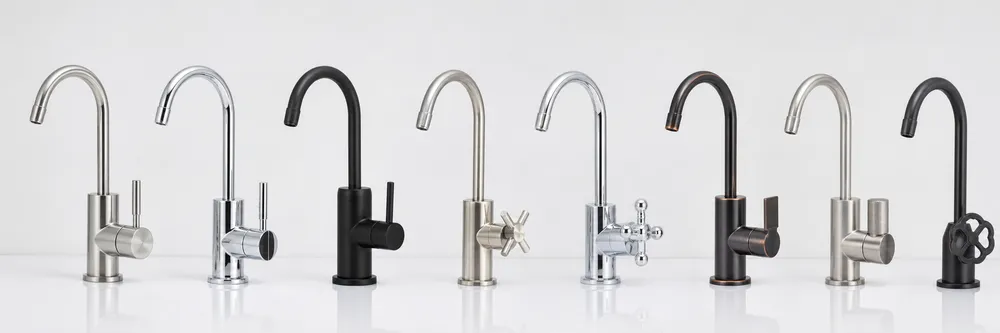
| Finish options |
Chrome Brushed Nickel Matte Black Oil-Rubbed Bronze PVD Gold
|
| Supply connection | 1/4" push-fit or compression fitting (standard RO tubing) |
| Drain connection | 3/8" OD drain tubing |
| Operating pressure | 40–100 PSI |
| Flow rate | Typically 0.5–1.0 GPM at rated pressure |
| Certifications |
cUPC (standard) CE available
|
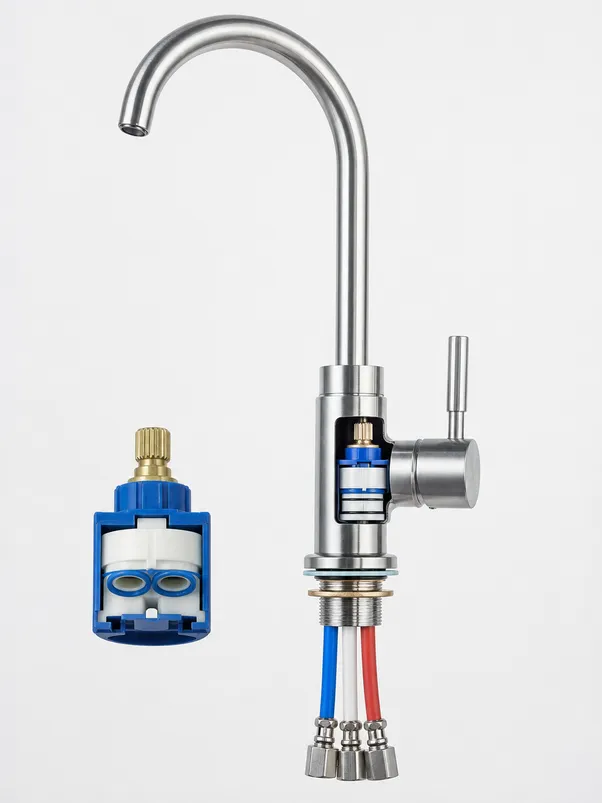
| Valve type | Ceramic disc cartridge |
| Cartridge endurance | 500,000-cycle tested per production batch Per Batch |
Specifications shown are industry-standard values for this product type. Actual dimensions and configurations may vary by SKU. Contact us for detailed product data sheets and CAD drawings.
We provide full product data sheets, CAD drawings, and cUPC certification documentation on request. OEM from 200 pieces.
Request Specs and a QuoteAesthetics
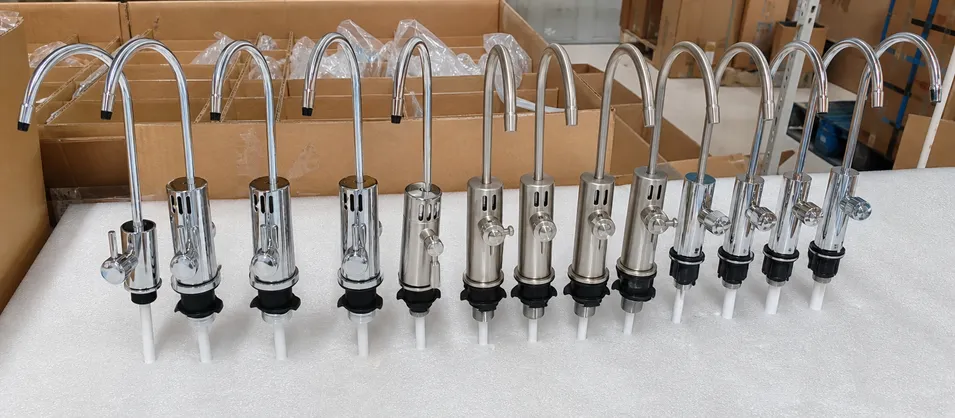
Five standard finishes cover the full range of kitchen hardware styles. All finishes are applied over lead-free brass and sealed for corrosion resistance. PVD finishes carry an extended durability rating.
Classic mirror finish. Pairs with stainless and chrome hardware. Most popular for new builds.
Warm satin tone. Hides water spots and fingerprints. Coordinates with brushed stainless appliances.
Bold, contemporary look. High demand in modern and industrial kitchen designs. Low-glare surface.
Dark, aged patina. Suits traditional and farmhouse kitchens. Coordinates with bronze hardware sets.
Physical vapor deposition coating. Scratch and tarnish resistant. Premium tier for luxury kitchen projects.
PVD DurabilityCustom finishes and OEM branding
Custom finish matching and private-label engraving are available for OEM orders of 500 pieces or more. Lead time varies by finish complexity. Contact us to discuss your project.
Setup Guide
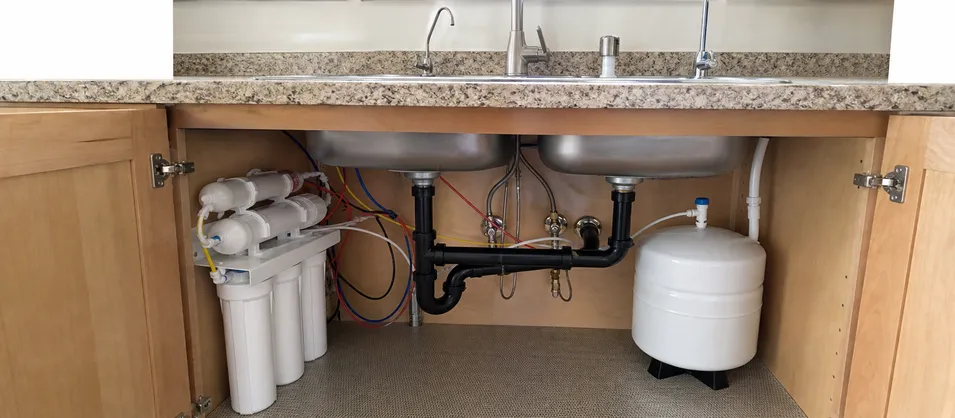
Air gap faucets have one extra drain connection compared to non-air gap models. The steps below cover the full process. Most installers complete it in under 30 minutes.
Drop the faucet through the standard 1-3/8" sink deck hole. Secure with the mounting nut from below. Hand-tight plus a quarter turn is sufficient — overtightening can crack composite sinks.
Run 1/4" tubing from the RO system's filtered water output to the faucet's supply inlet. Use the included push-fit fitting or a compression fitting. No thread tape needed on push-fit connections.
This is the step unique to air gap faucets. Run 3/8" drain tubing from the RO system's drain outlet up to the air gap port on the faucet body, then back down to the sink drain saddle or garbage disposal inlet. The upward loop through the faucet body creates the physical air gap.
Avoid sharp bends or low spots in the drain tube between the faucet and the drain saddle. A kinked or sagging drain line is the most common cause of air gap gurgling and overflow. The tube should slope continuously downward from the faucet to the drain.
Open the faucet and let the system run for 5–10 minutes to flush the membrane and initial carbon fines. Check all connections for drips. Verify the drain line flows freely with no backup at the air gap port.
Installer note
If the drain saddle is installed on the dishwasher drain line rather than the main sink drain, back-pressure from the dishwasher can cause intermittent gurgling at the air gap port. Install the drain saddle on the main drain line where possible.
Usually a kinked or low-sloping drain tube. Re-route with a continuous downward slope.
Drain line is blocked or too restrictive. Check for kinks and confirm the drain saddle hole is fully open.
Check supply pressure (minimum 40 PSI) and confirm the supply tube is not kinked under the sink.
cUPC certification is the compliance credential that clears this product through North American plumbing inspections. Here is what it covers, what it does not, and why having it pre-qualified matters for your distribution chain.
cUPC covers lead content (≤0.25% weighted average in wetted components, per NSF/ANSI 61 and 372), material safety, and basic performance standards. For your downstream customers — plumbers, contractors, and homeowners in code-enforced jurisdictions — a cUPC-marked faucet means the inspector signs off without a conversation.
We hold cUPC on our air gap RO faucet line. The certification process required us to qualify our brass alloy to the low-lead standard and submit to third-party testing through an accredited lab. We maintain the certification with periodic surveillance audits, and the test reports travel with every shipment so your customs broker and compliance team have the documentation without having to request it separately.
cUPC covers the faucet, not the RO system it connects to. If your buyers are sourcing complete RO systems, the membrane housing and filter components have their own certification requirements (NSF/ANSI 58 for the system). The faucet certification is a separate credential, and having it pre-qualified means one fewer compliance item your buyers need to chase down.
cUPC Certified
North American plumbing inspections
NSF/ANSI 61 & 372
Lead ≤0.25% weighted avg in wetted components
Surveillance Audits
Periodic third-party re-certification maintained
Test Reports Included
Travel with every shipment — no separate request needed
CE Marking
Available on this product for European buyers
WaterMark (Australia)
Available on request — confirm target market when you inquire
Documentation Package
Confirm your target market when you inquire and we will specify the correct documentation package — cUPC, CE, or WaterMark — so your compliance team has everything in one place before the shipment lands.
Every material and process decision in the body construction traces back to a specific engineering requirement. Here is the reasoning behind each one.
The body is gravity-cast from C36000-equivalent free-machining brass. We chose brass over zinc alloy for this product line for a specific reason: the three-channel internal geometry requires tight wall thickness between the channels, and zinc alloy's lower tensile strength creates porosity risk at those thin walls under pressure cycling. Brass holds the geometry reliably across the casting run.
This is not a generic material upgrade — it is the direct consequence of the air gap channel geometry. A two-channel body (standard non-air-gap faucet) can be cast in zinc alloy without this risk. The third channel changes the structural calculus.
Valve seat, thread ports, air gap chamber
After casting, each body goes through CNC machining for the valve seat interface and the tube port threads. We hold thread tolerances to ±0.05mm on the valve seat — that is the tolerance that determines whether the ceramic disc seats cleanly and whether the faucet drips after 500,000 cycles.
The drain port and supply port threads are machined to standard push-fit fitting dimensions so the faucet connects to standard 1/4" and 3/8" RO tubing without adapters.
Drain siphon prevention by design
The air gap chamber is machined into the body as part of the same CNC operation. Chamber volume is sized to handle drain flow at the maximum rated system output without backing up — we test this during product development by running the drain at 1.5x rated flow and confirming the air gap breaks cleanly.
Failure mode context: The failure mode being prevented is drain siphoning back through the air gap into the filtered water path. It is rare but it happens with undersized chambers, and it is the kind of failure that generates a product liability conversation, not just a return.
Multi-layer electroplating stack: copper base, nickel mid-coat, chrome top. The nickel mid-coat is what delivers corrosion resistance — a step some factories skip to reduce cost.
Same copper-nickel-top stack with a brushed surface treatment. Consistent with the full plating specification — not a reduced-layer variant.
In-house finishing line. Passes 24-hour salt spray as a minimum; most batches clear 48 hours. Finished on the same line as chrome and brushed nickel.
Warm-toned finish for traditional and transitional kitchen aesthetics. Same multi-layer base stack with oil-rubbed top treatment.
Physical vapor deposition process. Harder surface than electroplated gold, with better scratch and tarnish resistance for premium positioning.
±0.05mm
Valve Seat Tolerance
CNC-held thread tolerance on valve seat interface — determines ceramic disc seating and drip performance after 500,000 cycles
1.5×
Drain Flow Test Rate
Air gap chamber tested at 1.5x rated system output to confirm clean air gap break and prevent drain siphon risk
24–48 hr
Salt Spray Performance
Standard passes 24-hour salt spray; most batches clear 48 hours — the nickel mid-coat is what makes the difference
Why the Nickel Mid-Coat Matters
The multi-layer electroplating stack — copper base, nickel mid-coat, chrome or brushed top — is what separates our finish performance from lower-cost alternatives. The nickel mid-coat is the corrosion barrier; it is a step some factories skip to reduce cost, and it is why you see chrome faucets failing salt spray at 48 hours. Our standard passes 24 hours; most batches clear 48.
Four distinct buyer segments drive consistent demand for air gap RO faucets. Understanding which segment you're serving determines the right SKU mix, order cadence, and compliance documentation you'll need from us.
Primary Volume Segment
US and Canadian homeowners installing under-sink RO systems in code-enforced jurisdictions need the air gap configuration — it's not optional in most markets. Distributors supplying plumbing wholesalers, home improvement channels, or direct-to-consumer RO system brands in North America should be stocking air gap as the default SKU, with non-air-gap as the secondary option for markets where it's permitted.
Typical Order Pattern
Units per SKU
500–3,000
Reorder Cycle
3–6 months
OEM Integration
If you manufacture or assemble complete RO systems for the North American market, the faucet is a component in your BOM. Sourcing a cUPC-certified air gap faucet from us means your system ships with a pre-qualified component — you're not running a separate certification process for the faucet, and your system certification documentation is cleaner.
We supply on OEM terms with your branding on the faucet body and packaging. This segment has grown significantly over the last few years as more RO system brands have moved assembly to North America or Southeast Asia and need certified components sourced separately.
OEM Terms
MOQ
200 pieces
Branding
Body + packaging
Replacement & New Install
Plumbing wholesalers stocking replacement faucets for the RO service market need the air gap configuration because that's what's already installed in most North American homes with RO systems. The replacement cycle is typically 5–10 years, and the buyer is often a plumber sourcing a like-for-like replacement.
Having a cUPC-certified air gap faucet in your catalog at a competitive landed cost gives you a SKU that moves on both new installation and replacement demand.
Demand Drivers
Replacement Cycle
5–10 years
Buyer Profile
Plumbers, distributors
Commercial & Foodservice
Under-counter RO systems in coffee shops, restaurants, and office kitchens increasingly use air gap faucets as the dispensing point. This segment orders smaller quantities but at higher frequency, and the buyers — commercial kitchen equipment distributors and foodservice supply companies — value the compliance documentation because their end customers operate in inspected environments.
Segment Profile
Order Pattern
Smaller, higher frequency
Key Requirement
Compliance docs
We'll spec the right configuration for your distribution channel and order cadence.
Five in-house finishes with no finish-specific MOQ requirements above the standard order minimum. OEM buyers can split orders across finishes and customize branding, handle style, spout configuration, and packaging.
All five finishes are available without minimum finish-specific MOQ requirements above the standard order minimum. You can split a 500-unit order across three finishes if your market data supports it.
Chrome
Standard catalog
Brushed Nickel
Standard catalog
Matte Black
Standard catalog
Oil-Rubbed Bronze
Standard catalog
PVD Gold
Standard catalog
Custom PVD colors are available at a minimum of 500 units per custom color. Standard finishes carry no finish-specific MOQ — split your order across finishes as your market data requires.
Branding
Logo engraving or etching on the body or handle; branded packaging with your artwork
Handle Style
Single lever (standard), cross handle, or custom handle design with tooling
Spout Configuration
Standard upright spout or angled spout; spout height adjustable within the casting geometry
Finish
Any of the five standard finishes, or custom PVD colors (minimum 500 units per custom color)
Tube Length
Supply and drain tube lengths cut to your specification
Packaging
Retail box, poly bag, or bulk carton; insert card and instruction sheet in your language
The internal three-channel geometry and the air gap chamber dimensions are fixed by the casting die. If you need a fundamentally different body geometry — different spout angle, different mounting configuration — that's a new tooling project.
Tooling Lead Time
25–35 days
to first sample
Tooling Transparency
Full cost breakdown
upfront before commitment
Tooling cost is quoted upfront so you can evaluate whether the volume justifies the investment before committing.
We'll quote tooling and per-unit cost together — no separate processes, no surprises.
SKU Selection Guide
Both configurations are in our catalog. The decision comes down to your target market's plumbing code requirements.
| Air Gap RO Faucet | Non-Air Gap RO Faucet | |
|---|---|---|
| Tube count | 3 (supply, filtered, drain) | 2 (supply, filtered) |
| Drain connection | Through faucet body | Direct to drain saddle |
| Plumbing code compliance | Required in most US states and Canadian provinces | Permitted in some US states, most international markets |
| Installation complexity | Slightly higher (drain tube routing) | Simpler |
| Primary market | North America (code-enforced) | International, some US markets |
| cUPC certification | Yes | Yes |
Stock air gap as your primary SKU. Most US states and Canadian provinces require it under plumbing code. It's the default specification your buyers expect.
Europe, Southeast Asia, Middle East, Australia — the non-air-gap configuration is typically sufficient and simplifies installation for your end customers.
We supply both configurations from the same facility with the same certification stack. If you're covering multiple markets, you can consolidate your RO faucet sourcing with us and manage the SKU split in your own distribution.
Installer Guidance
Understanding the installation process upfront reduces field complaints and protects your after-sales margin.
The air gap faucet mounts in a standard 1-3/8" sink deck hole — the same hole used by standard kitchen faucets. Most kitchen sinks have a pre-drilled hole for a soap dispenser or side sprayer that works for this installation. If the sink doesn't have a pre-drilled hole, a standard hole saw handles the job.
The three-tube connection is the part that generates the most installer questions.
Supply tube — connects to the RO system output (1/4" push-fit, standard).
Filtered water tube — connects from the faucet to the RO system's product water port (1/4" push-fit).
Drain tube — routes from the faucet's drain port down to the drain saddle on the sink drain pipe (3/8" OD). The drain tube needs a slight downward slope from the faucet to the drain saddle — if it runs level or uphill, drain water pools in the tube and the air gap doesn't function correctly.
We include a multilingual installation instruction sheet with every unit. For OEM buyers, we can produce a custom instruction sheet with your branding and your preferred language set — this reduces the after-sales support load on your team because the installer has clear guidance at the point of installation rather than calling your support line.
The most common field complaint with air gap faucets from any manufacturer is drain gurgling — the sound of water draining through the air gap chamber. This is normal operation, not a defect, but it generates customer calls if the end user isn't expecting it.
Field Insight
Including a note in the installation instructions or product description that addresses drain gurgling upfront eliminates most of those calls. A North American distributor was getting a high return rate on air gap faucets — the product was fine, the expectation-setting wasn't. We updated the instruction sheet and the return rate dropped.
Logistics & Fulfillment
Every detail from retail carton to container configuration is designed to give your freight forwarder accurate data and your fulfillment operation a clean handoff.
Each faucet ships in a retail-ready carton engineered for shelf presentation and transit protection. Carton dimensions are designed for 20GP and 40HQ container optimization — we provide a packing list with CBM and gross weight per SKU before you confirm the order so your freight forwarder can quote accurately.
Inner Box
Product image and spec callouts for retail shelf readiness
Foam Insert
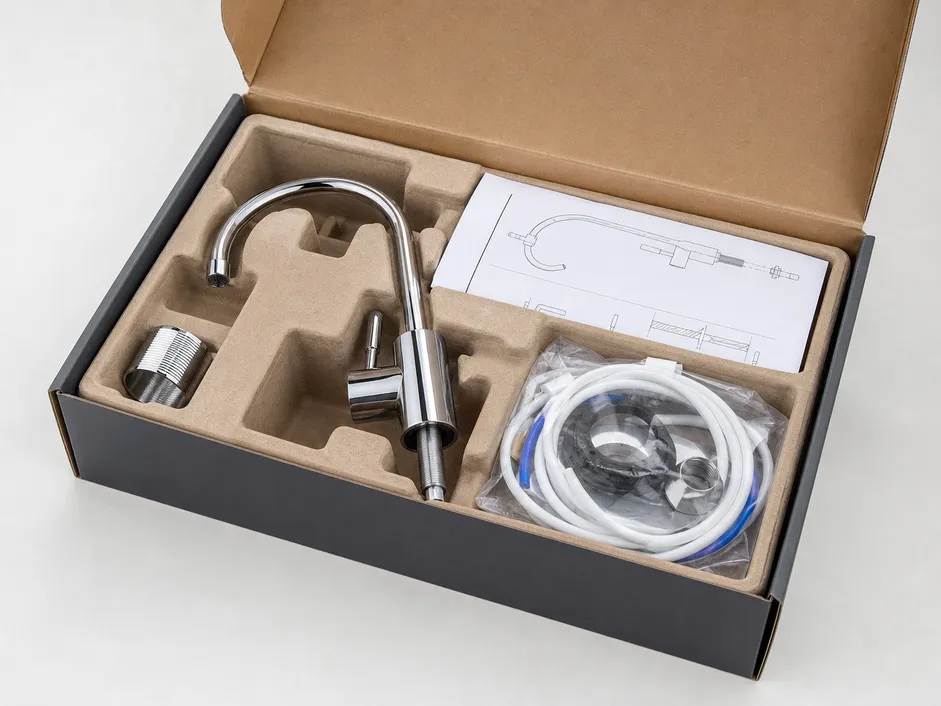
Molded pulp — not EPS — for transit protection and sustainability
Hardware Bag
Mounting hardware and supply tubes included per unit
Instruction Sheet
Installation guide included; custom language versions available
Standard Container
20GP
~2,000–2,500 units
Standard retail carton configuration. Packing list with CBM and gross weight per SKU provided before order confirmation.
High-Cube Container
40HQ
~4,500–5,500 units
Preferred for volume buyers. Optimized carton stacking keeps container weight balanced and cartons undamaged at destination.
Mixed-SKU Container Coordination
For buyers consolidating multiple SKUs — air gap faucets alongside other filter faucet SKUs or kitchen faucets — we coordinate the packing sequence to minimize void space. Mixed-SKU containers are common for our filter faucet buyers, and we've worked out the carton stacking configurations that keep the container weight balanced and the cartons undamaged at destination.
FNSKU Labeling
We apply FNSKU labels at the factory to Amazon FBA inbound shipment specs. Confirm your label requirements when you inquire.
Poly Bag Prep
Individual units poly bagged and cartons prepared to FBA inbound shipment specifications. Built into the production and packing workflow.
Blind Drop-Shipping
Available for buyers running a direct-to-consumer model. Your branding on the carton; no Wfaucet references. Confirm your fulfillment requirements when you inquire.
Quality Assurance
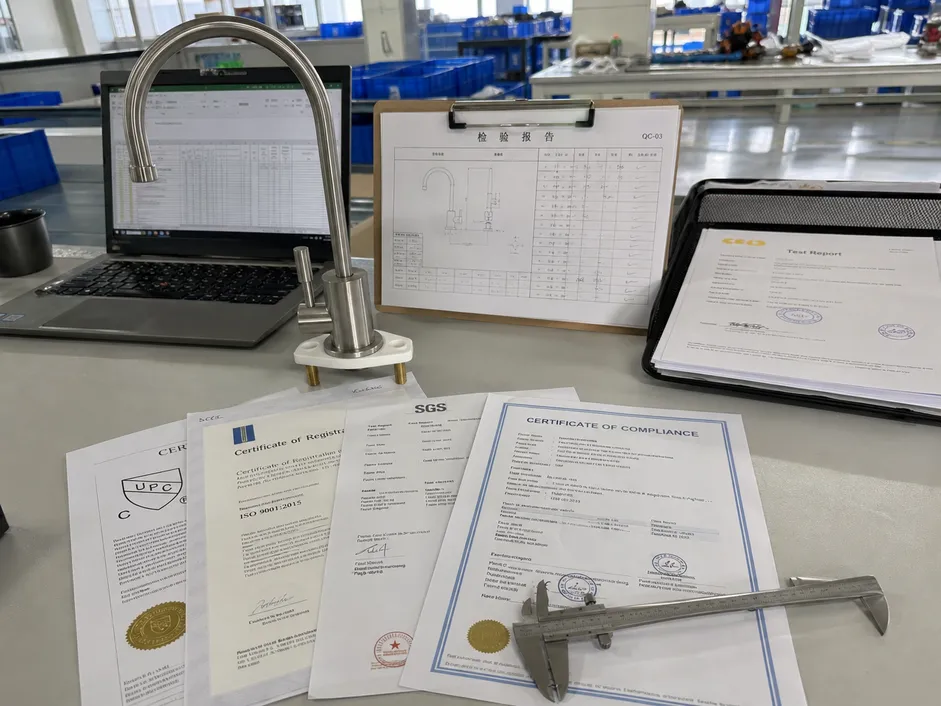
Test reports travel with the shipment documentation. Your compliance team has the data without requesting it separately, and your customs broker has the certification references for pre-clearance.
North American Plumbing Code Compliance
Covers lead content and material safety. Required for distribution in the US and Canadian markets.
Quality Management System
ISO 9001:2015 certification covering process consistency across production runs.
European Conformity
Available for EU-bound orders. Specify at order placement.
Third-Party Audit and Testing
SGS audit and testing reports available. Independent verification of material and performance claims.
Incoming XRF Verification
Lead content verification on brass material via XRF analysis before production begins. Every batch, not spot-checked.
In-Process Dimensional Checks
Dimensional inspection at casting and machining stages. Tolerances verified before parts advance to assembly.
Post-Plating Inspection
Visual and adhesion inspection after plating. Surface finish consistency and adhesion quality checked before final assembly.
Handle Torque & Flow Rate
Final functional test: handle torque and flow rate at rated pressure. Confirms operational performance before shipment.
Leak Test at 0.6 MPa
Pressure leak test at 0.6 MPa held for 60 seconds. Every unit in the final functional test sequence.
Cartridge Endurance Test
Cartridge assemblies endurance-tested to 500,000 open/close cycles per batch. Confirms long-term operational reliability.
Test reports travel with the shipment documentation. Your compliance team has the data without requesting it separately, and your customs broker has the certification references for pre-clearance.
For buyers in markets with specific import documentation requirements — North America, Australia, the EU — we prepare the documentation package to match your destination market's requirements.
Common questions from buyers evaluating air gap RO faucets for North American distribution.
An air gap faucet routes the drain line through the faucet body, creating a physical break (the air gap) between the drain tube and the drain pipe. This prevents backflow contamination from the drain into the RO system. A non-air gap faucet connects the drain line directly to the drain saddle without routing it through the faucet.
Most US state and Canadian provincial plumbing codes require the air gap configuration for under-sink RO installations — if your buyers are in code-enforced North American markets, the air gap faucet is the compliant choice.
No. The air gap faucet mounts in a standard 1-3/8" sink deck hole, the same size used by standard kitchen faucets and soap dispensers. The three tubes exit through the bottom of the faucet body and route under the sink — the mounting footprint at the sink deck is the same as a two-tube faucet.
Our air gap RO faucets are cUPC certified, covering lead content compliance (≤0.25% weighted average in wetted components per NSF/ANSI 61 and 372) and material safety for North American plumbing code compliance. CE marking is available for European market requirements. Our facility holds ISO 9001:2015 and SGS third-party audit certification.
Specify your destination market when you inquire and we'll confirm the applicable documentation package.
MOQ for standard catalog SKUs with your logo and branded packaging is 200 pieces. For custom handle designs or non-standard spout configurations requiring new tooling, MOQ is 500 pieces. We provide tooling cost and per-unit pricing together so you can evaluate the full investment before committing.
The gurgling is the sound of water flowing through the air gap chamber and dropping to the drain tube — it's normal operation, not a defect. The air gap chamber is open to atmosphere by design, which is what creates the backflow protection. The sound is intermittent and occurs only when the RO system is actively producing water and draining concentrate.
Including a note in your product listing or installation instructions that describes this upfront eliminates most customer inquiries about it.
Standard catalog SKUs: 25–35 days from order confirmation to container loading.
OEM orders with custom branding (logo, packaging): 30–40 days.
OEM orders with new tooling (custom handle or spout): 35–50 days from tooling approval to container loading.
We schedule production in 4-week windows and commit to the window at order confirmation.
Send us your target SKUs, finish preferences, volume, and destination market. We'll come back with per-unit pricing, a documentation package summary for your market, and — if you're new to this product category — a recommendation on whether the air gap or non-air gap configuration fits your distribution better.
Most new buyers in this category start with a sample order of 2–5 units to evaluate fit and finish before committing to a container. We can ship samples within 3–5 business days from our existing stock.
Sample Program
Evaluate Before You Commit
2–5 unit sample orders ship within 3–5 business days from existing stock. Assess fit, finish, and installation before placing a container order.
cUPC Certified
Lead-free compliant per NSF/ANSI 61 & 372. Documentation available for North American plumbing code submissions.
OEM from 200 pcs
Custom logo and branded packaging from 200 pieces. New tooling for custom handles or spouts from 500 pieces.
25–35 Day Lead Time
Standard catalog SKUs. Production windows committed at order confirmation.
Since 2008
ISO 9001:2015 certified facility. SGS third-party audit. 17+ years supplying North American and European distributors.
Explore Related Products
Non-Air Gap RO Faucets
Direct drain connection, non-code markets
RO Faucets
Full reverse osmosis faucet range
Reverse Osmosis Faucets
Dedicated RO dispensing faucets
Drinking Water Faucets
Dedicated point-of-use dispensing
Under Sink Water Filter Faucets
Under-counter filtration dispensing
All Water Filter & RO Faucets
Browse the full category
© 2026 Wfaucet. All rights reserved.