

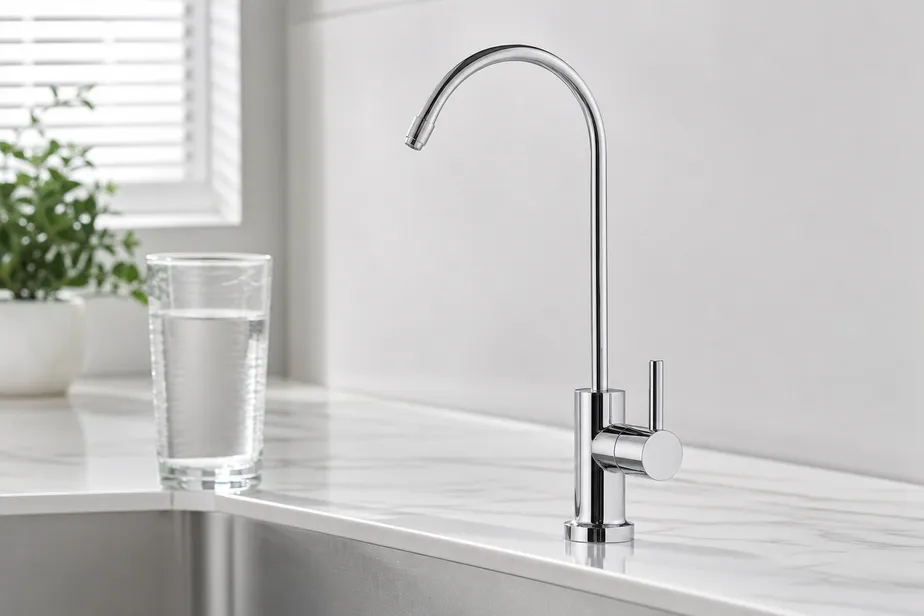
Drinking Water Faucets Built for Direct Consumption
Wider flow path, lead-free brass body, low-pressure compatible. Designed for gravity-fed and low-pressure countertop filter systems where standard RO faucets restrict flow too aggressively. Five finishes, OEM from 200 pieces.
Application Engineering
What Makes a Drinking Water Faucet Different from an RO Faucet
This distinction matters more than most buyers initially realize. Getting it wrong creates a product performance problem that shows up as a customer complaint rather than a spec error.
RO faucets are engineered around the constraints of reverse osmosis systems: slow production rate, pressurized storage tank, dedicated supply line. The flow path is intentionally narrow because the RO membrane produces water slowly and the storage tank has limited capacity — a high-flow faucet drains the tank faster than the system can replenish it. That design logic is correct for RO applications. It's wrong for gravity-fed or low-pressure countertop filter systems, where the water source is a filter canister or a gravity tank operating at 0.05–0.15 MPa — well below the 0.2 MPa minimum that RO faucets are calibrated for.
A drinking water faucet is designed for that lower-pressure environment. The internal flow path is wider — typically 6–8 mm bore diameter versus 4–5 mm in RO faucets — and the cartridge spring tension is calibrated for positive sealing at pressures as low as 0.05 MPa. The result is a faucet that delivers a usable flow rate from a gravity filter system without the drip-under-low-pressure failure mode that plagues RO faucets when they're misapplied to countertop filter installations.
Common Misapplication
We see this regularly from buyers who are new to the category — they source an RO faucet for a gravity filter system, and the first complaint from their customers is a slow drip that won't stop. The fix is the right faucet for the application, not a cartridge replacement.
The material specification is identical to our RO faucet line: C36000-equivalent free-machining brass, ≤0.25% lead by weight, XRF-tested on every incoming batch. The drinking water contact requirement doesn't change based on the pressure source — your downstream customers are drinking this water directly, and the lead content standard applies regardless of whether the system is gravity-fed or pressurized.
Design Comparison
RO Faucet
Reverse osmosis systems
- Narrow bore: 4–5 mm internal diameter
- Calibrated for ≥0.2 MPa operating pressure
- Matched to pressurized storage tank supply
- Restricted flow intentional — protects tank capacity
- Drips continuously on gravity-fed systems below 0.2 MPa
Drinking Water Faucet
Gravity-fed & low-pressure countertop filter systems
- Wider bore: 6–8 mm internal diameter
- Operates from 0.05 MPa — gravity-fed compatible
- Cartridge spring tension calibrated for positive seal at low pressure
- 1.5–2.5 L/min usable flow at 0.1 MPa
- Same ≤0.25% Pb brass spec — XRF-tested every incoming batch
Operating Pressure Range
Gravity-fed systems operate below the RO faucet minimum — the mismatch is the root cause of the drip failure mode.
Product Data
Technical Specifications
Specifications shown are industry-standard values for this product type. Actual dimensions may vary by configuration. Contact us for detailed product data sheets and exact specifications for your application.
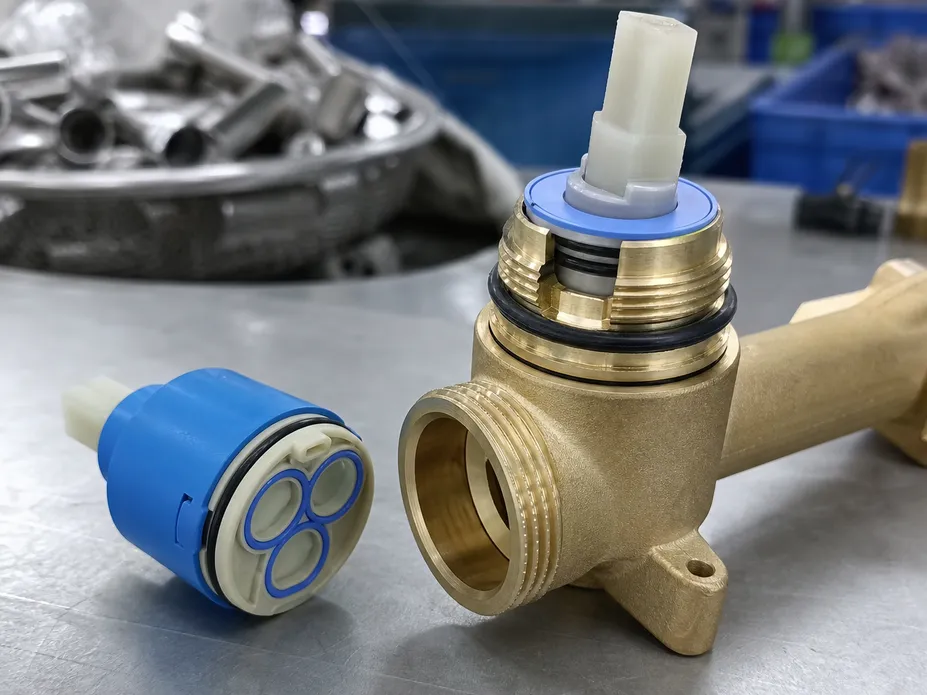
Drinking Water Faucet — Full Specification Table
| Parameter | Specification |
|---|---|
| Body material | C36000-equivalent free-machining brass |
| Lead content | ≤0.25% by weight (NSF/ANSI 61 Section 9 compliant) |
| Internal bore diameter | 6–8 mm (wider flow path for low-pressure systems) |
| Valve type | Ceramic disc cartridge, low-pressure calibrated |
| Cartridge endurance | 500,000 open/close cycles (tested per production batch) |
| Spout reach | Typically 120–160 mm (confirm for specific variant) |
| Spout height | Typically 280–340 mm overall (confirm for specific variant) |
| Deck hole size | Standard 1-3/8" (35 mm) |
| Supply tube connection | 1/4" push-fit (standard); 3/8" available on request |
| Operating pressure range | 0.05–0.6 MPa |
| Minimum operating pressure | 0.05 MPa (gravity-fed system compatible) |
| Flow rate | 1.5–2.5 L/min at 0.1 MPa (gravity-fed typical) |
| Finish options | Chrome, brushed nickel, oil-rubbed bronze (confirm availability) |
| Handle type | Single lever or cross handle (variant dependent) |
| Mounting | Single-hole deck mount; includes mounting hardware |
| Quality verification | XRF lead testing every incoming batch; cycle-test certificates available on request |
Specifications are representative of standard production variants. Dimensional values (spout reach, height) vary by model. Request a product data sheet for exact figures before specifying for installation.
Step-by-Step
Installation Guide
Most installations take 20–40 minutes with basic tools. The steps below cover countertop filter systems and under-sink gravity-fed setups — the two most common configurations for this faucet type.
Tools & Materials Needed
Prepare the Deck Hole
If your countertop or sink deck does not have an existing hole, mark the position at least 50 mm from the sink edge. Use a 35 mm hole saw for standard installations. For stone or granite, use a diamond-tipped bit and keep the surface wet during drilling to prevent cracking.
Check for pipes, wiring, or structural supports below the deck before drilling. Use a stud finder or inspection camera if unsure.
Feed the Supply Tube
Thread the 1/4" supply tube up through the deck hole before mounting the faucet body. Leave enough slack below the deck to reach the filter outlet port without tension. Avoid sharp bends — a minimum bend radius of 50 mm prevents kinking and flow restriction.
- Do not cut the tube to final length until the faucet is fully positioned
- Tube should exit the filter port cleanly — no coiling inside the cabinet
Mount the Faucet Body
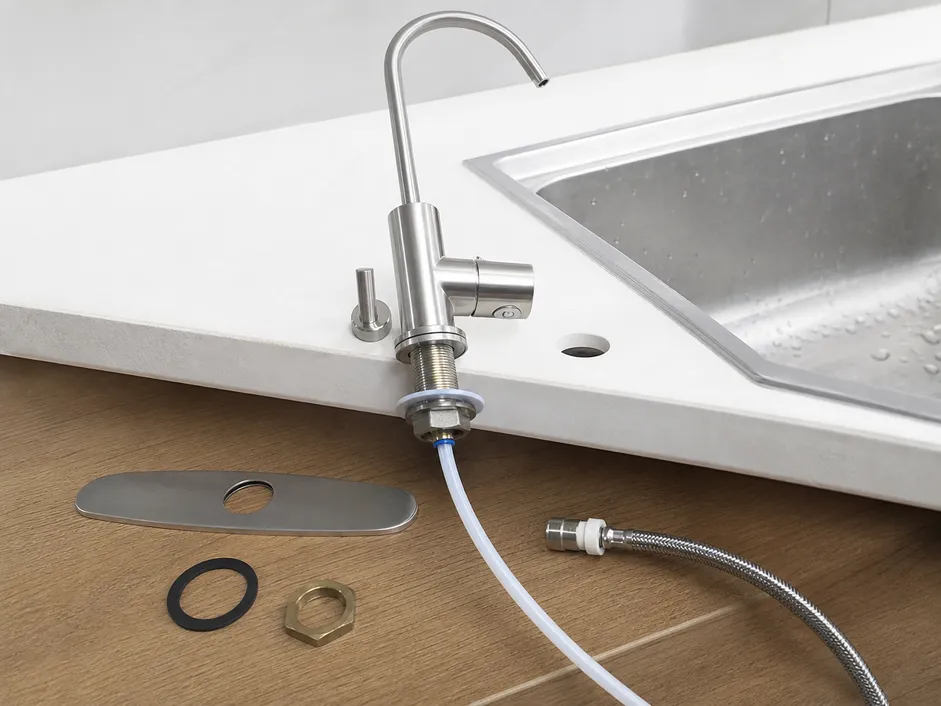
Place the rubber or silicone deck gasket onto the faucet base. Insert the faucet shank through the deck hole from above. From below, slide on the friction washer and hand-tighten the mounting nut. Use a basin wrench to snug the nut — do not overtighten, as this can crack ceramic or composite decks.
For stone decks, apply a thin bead of clear silicone sealant under the base gasket before mounting to prevent water ingress around the hole.
Connect the Supply Tube to the Faucet
Push the 1/4" tube firmly into the push-fit inlet on the faucet shank until it clicks and seats fully — typically 20–25 mm insertion depth. Tug gently to confirm the collet has gripped. If the connection uses a compression fitting instead, wrap 2–3 turns of PTFE tape on the male thread before tightening.
- Push-fit connections require a clean, square-cut tube end — use a tube cutter, not scissors
- To release: press the collet ring inward while pulling the tube
Connect the Other End to the Filter
Route the supply tube to the filtered water outlet port on your filter system. For countertop units, this is typically the spout outlet or a dedicated tap port. For under-sink gravity-fed systems, connect to the lower reservoir outlet. Push-fit the tube into the filter port using the same technique as Step 4.
Confirm you are connecting to the filtered outlet, not the unfiltered inlet or drain port. Ports are typically labelled — check your filter system manual if unsure.
Test and Flush
Open the faucet handle fully before filling or pressurising the filter system. Allow water to run for 2–3 minutes to flush manufacturing residues from the faucet body and supply tube. Check all connections for drips with the faucet both open and closed.
- Discard the first 2–3 litres — this clears carbon fines from new filter media
- A slow initial flow is normal — gravity-fed systems take 30–60 seconds to prime
- If dripping persists after closing, re-seat the cartridge or check for debris at the inlet
After Installation
Re-check all connections after 24 hours of use. Push-fit collets and compression fittings can settle slightly under initial pressure cycles. A brief visual inspection at this point catches the majority of slow-drip connection issues before they cause cabinet damage.
The Low-Pressure Cartridge: Where Most Factories Cut the Wrong Corner
The cartridge determines whether a drinking water faucet works reliably in a gravity-fed system — and it's where the difference between a well-engineered product and a cheap one becomes visible within six months of installation.
The Standard Cartridge Problem
Standard ceramic disc cartridges are designed for municipal tap pressure: 0.3–0.6 MPa. At that pressure range, the water pressure itself helps seat the disc and maintain a positive seal.
Drop the inlet pressure to 0.05–0.15 MPa — the operating range of a gravity filter canister or a countertop filter tank — and a standard cartridge loses its seating force. The disc doesn't seal cleanly, and you get a slow drip that the end user can't stop by tightening the handle. That drip becomes a warranty claim, and the warranty claim becomes a return.
How We Address It
We address this at the cartridge specification level, not at the assembly level. Our drinking water faucet cartridges run a lighter spring tension than our standard faucet cartridges — calibrated to maintain positive disc seating at 0.05 MPa inlet pressure.
The ceramic disc flatness tolerance is held to ±0.003 mm on the seating surface — tighter than the ±0.005 mm we run on standard kitchen faucet cartridges.
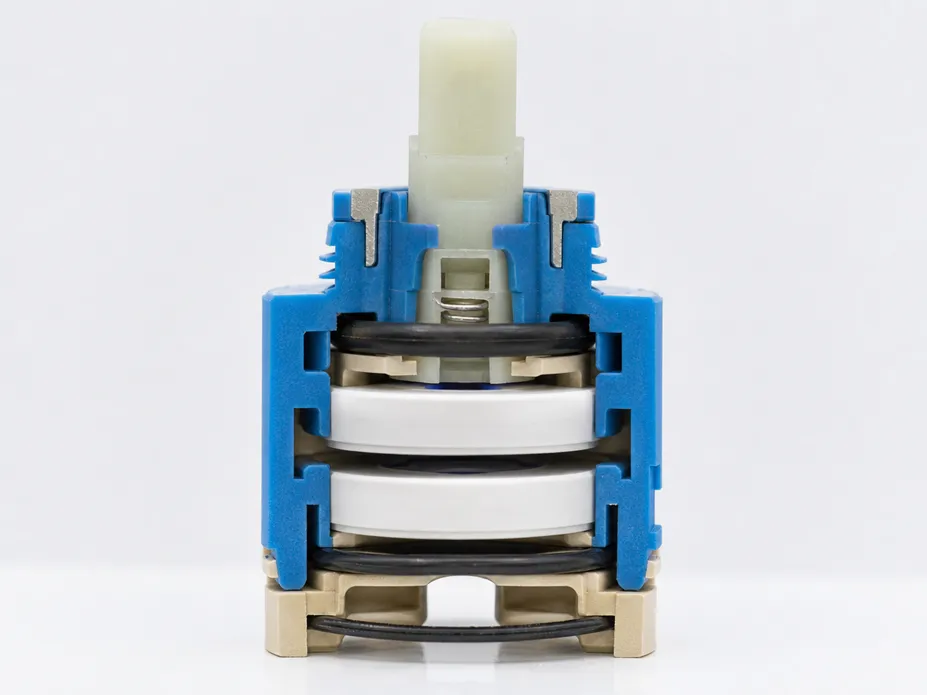
Disc Flatness Tolerance Comparison
Our Low-Pressure Test Protocol
We test every production batch at 0.05 MPa — not just at the standard 0.6 MPa test pressure — specifically to catch low-pressure drip failures before the product ships. Batches that pass the standard pressure test but fail the low-pressure test don't ship.
We added the low-pressure test protocol after a batch of early product showed a 3% drip rate in the field when paired with gravity filter systems. Three percent sounds small until you're processing the returns.
Standard Test Pressure
0.6 MPa
Industry baseline — most suppliers stop here
Our Additional Test
0.05 MPa
Gravity-system operating range — catches real-world failures
The practical implication for your sourcing decision: ask any supplier whether they test at low pressure. Most don't. The ones who do have thought through the application; the ones who haven't are selling you a standard faucet with a different label.
Market Segments Where Drinking Water Faucets Drive Repeatable Volume
Four distinct buyer types generate consistent reorder volume in this category. Each has a different sourcing logic — understanding which one you are shapes how you should spec and stock this product.
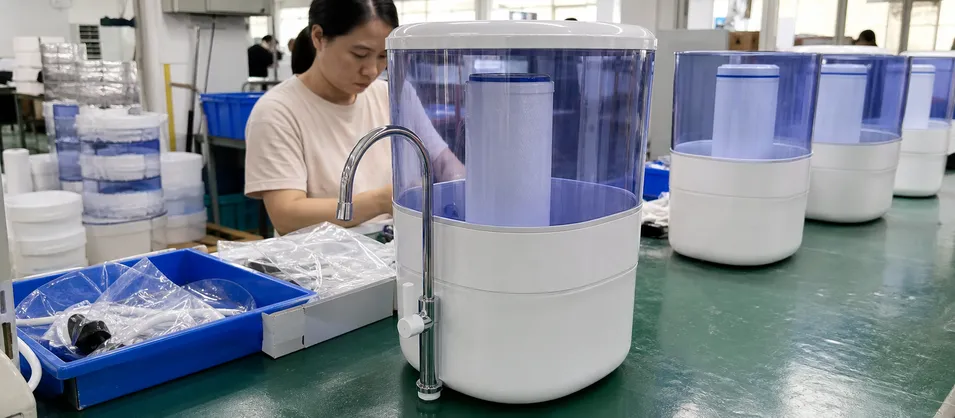
Primary Volume Segment
Countertop & Gravity Filter System OEMs
Companies that manufacture or assemble gravity-fed water filter systems — ceramic pot filters, multi-stage countertop units, gravity tanks — need a matched dispensing faucet that works at their system's operating pressure. The faucet is the most visible component of the system and the one the end user interacts with every day.
OEMs who source a mismatched faucet (typically an RO faucet applied to a gravity system) generate disproportionate customer service volume from drip complaints. We supply several countertop filter OEMs on a private-label basis, typically in runs of 500–3,000 units per order, with matched finishes and handle styles so the faucet looks like it was designed with the system.
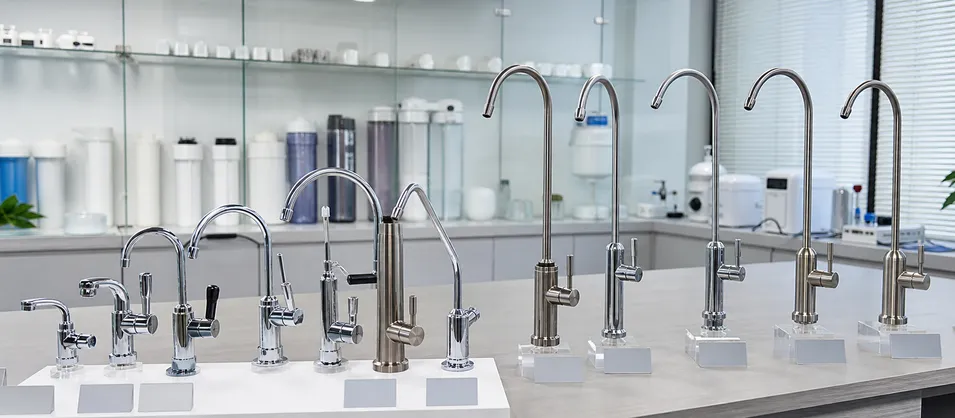
Replacement Parts Catalog
Water Treatment Distributors
Distributors building a complete replacement parts catalog need drinking water faucets as a distinct SKU from their RO faucet line. The installed base of gravity-fed and low-pressure filter systems is substantial — particularly in markets where RO adoption is lower and countertop ceramic or carbon filters are the dominant residential water treatment method.
Southeast Asia, parts of the Middle East, and emerging markets in Africa and Latin America have large installed bases of gravity filter systems. Distributors who stock the right faucet for those systems capture replacement sales that competitors miss by only stocking RO faucets.
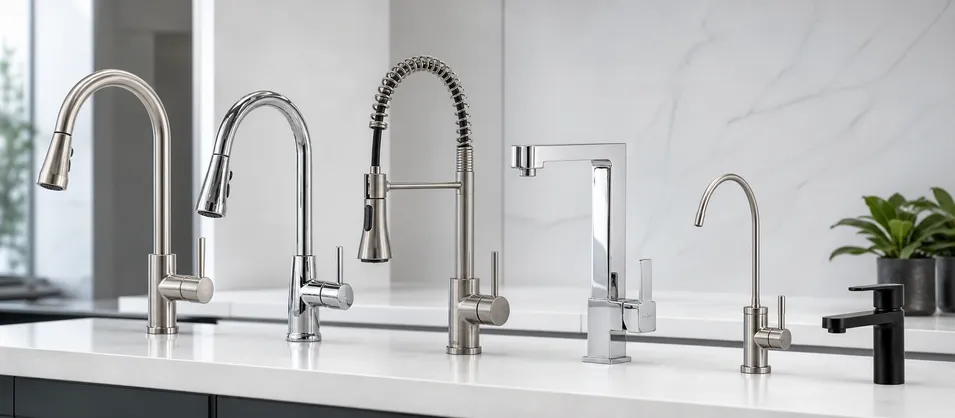
Category Extension
Kitchen & Bath Importers
If you're already importing kitchen or bathroom faucets, adding drinking water faucets is a natural extension — same supplier, same container, same documentation. The drinking water faucet sits at a higher retail price point than a standard kitchen faucet of similar size because of the material specification and certification requirements.
That means better margin per unit for the same container space. We've seen this category grow consistently for our distributors in North America and Australia over the past several years, driven by increasing consumer interest in point-of-use filtration as an alternative to bottled water.
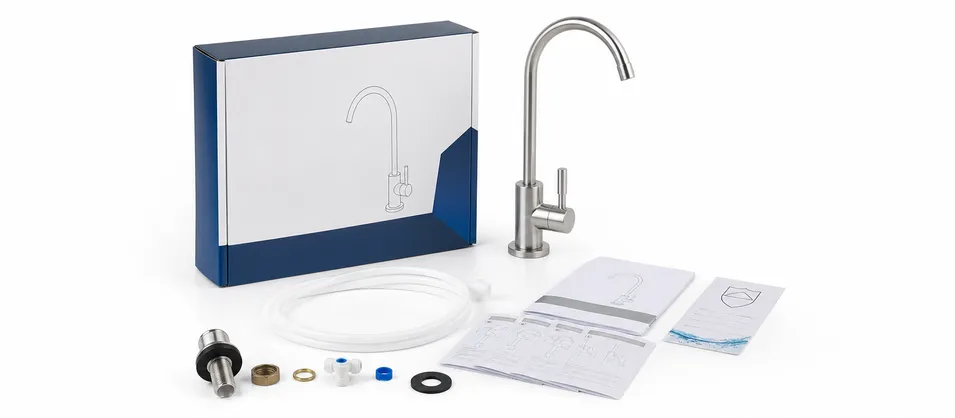
E-Commerce & Specialty Retail
Specialty Retailers & Online Sellers
Drinking water faucets are a high-search, high-intent product online — buyers searching for a replacement faucet for their existing filter system are ready to purchase. The product photographs well, ships in a compact box, and has a low damage rate in transit, which makes it a strong e-commerce SKU.
For buyers building an Amazon or independent store catalog, the combination of a clean retail box, multi-language installation instructions, and a cUPC-certified product reduces listing friction and return rates.
Ready to discuss your volume requirements?
OEM minimums from 200 pcs. Private-label, matched finishes, and custom handle styles available.
Finish Options and What They Mean for Your Margin
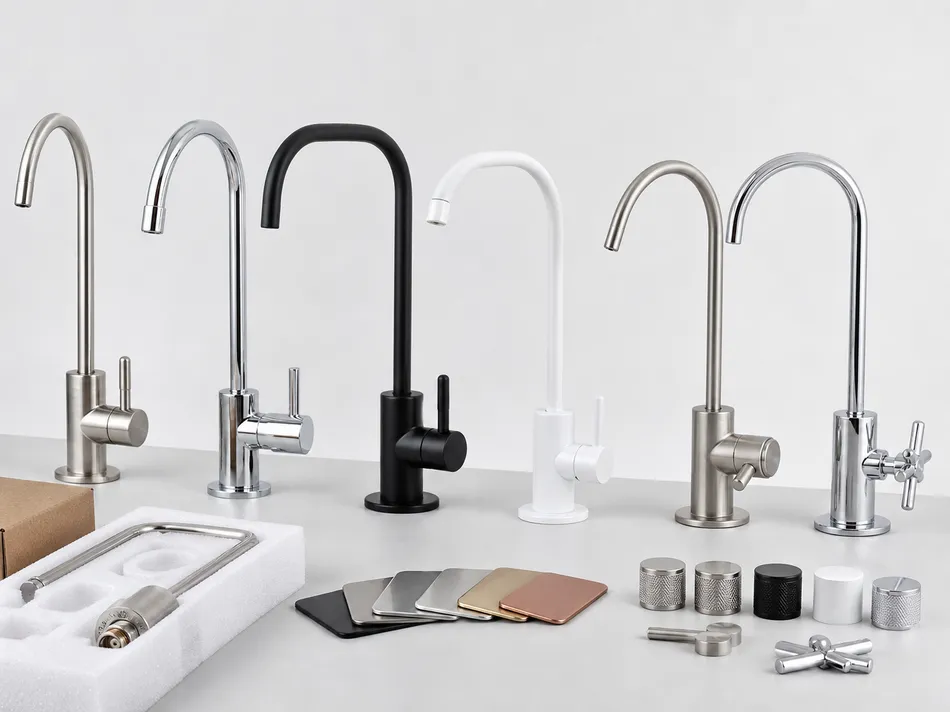
We run five finishes in-house on this product line: chrome, brushed nickel, matte black, PVD gold, and oil-rubbed bronze. All five are available on the brass body. The finish choice affects both your retail price point and your warranty exposure — it's worth understanding the production differences before you commit to a SKU mix.
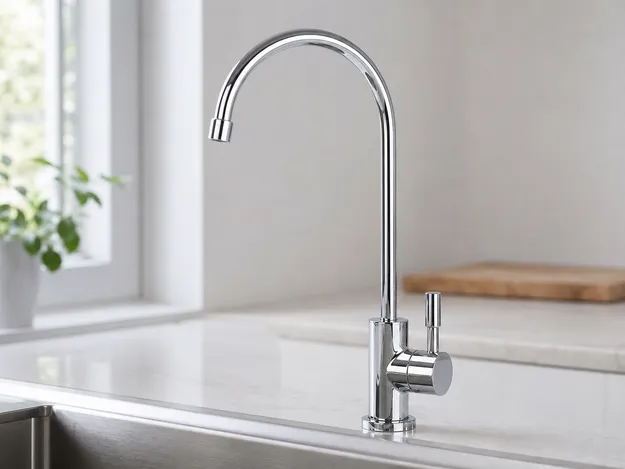
Chrome
Entry-LevelHighest-volume SKU in most markets. Full copper/nickel/chrome electroplating stack — the nickel mid-coat is what delivers corrosion resistance. Skipping the nickel layer is a standard cost-reduction move in this category; it's why you see chrome filter faucets from some suppliers showing delamination at the base within 12–18 months.
Salt Spray Performance
24-hour minimum — most batches clear 48 hours
For a product that sits on a kitchen counter and gets wiped with cleaning products regularly, that corrosion resistance matters.
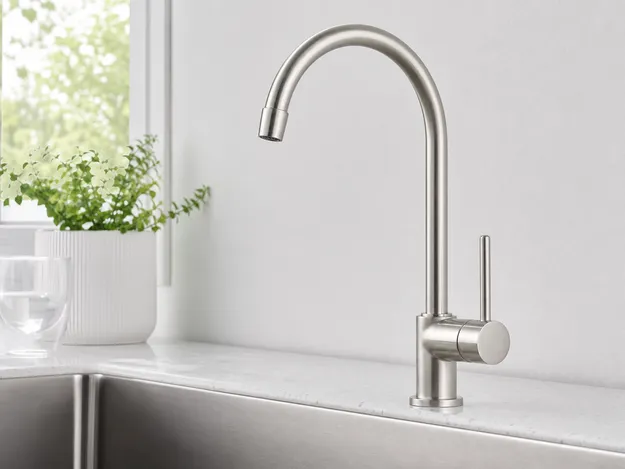
Brushed Nickel
Best MoverMoves best in North American residential channels and carries a meaningful retail price premium over chrome — typically 20–35% depending on the market. The brushed texture hides water spots and minor handling marks better than a polished surface, which reduces the "looks worn" complaints that generate returns in the residential segment.
Retail Price Premium
20–35% over chrome (market-dependent)
Same copper/nickel base stack under the brushed top coat — corrosion resistance is consistent with our chrome.
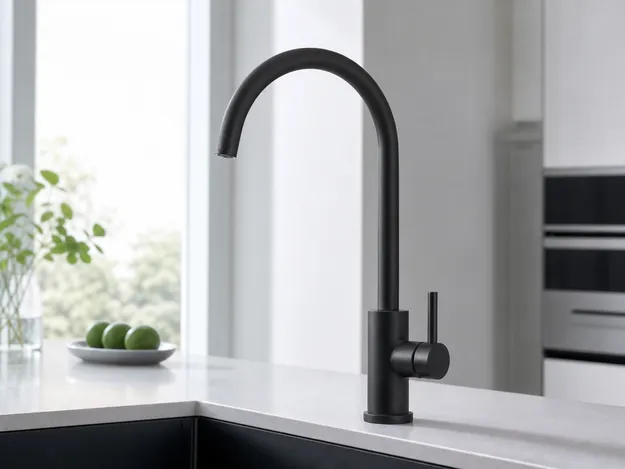
Matte Black
Fastest GrowingFastest-growing finish across our export markets for the past three years. Commands the highest retail price point of the three standard finishes and has the lowest price sensitivity — buyers in the premium residential segment are choosing it for aesthetic reasons, not price comparison.
Trade-Off to Communicate
Shows water spots more readily in hard water areas
We apply a protective topcoat over the matte black finish that reduces spotting, but it doesn't eliminate it entirely in very hard water. Worth communicating to your downstream customers.
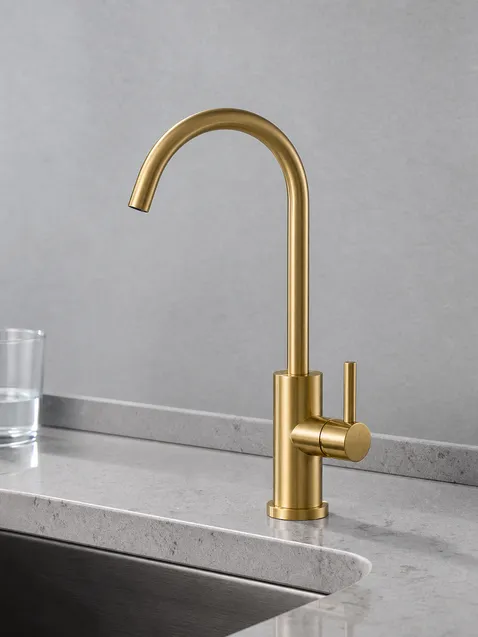
PVD Gold
Lower-volume but carries the highest retail price points in the line. PVD process runs 0.3–0.5 μm coating thickness with cross-cut adhesion testing on every batch.
Coating thickness: 0.3–0.5 μm
Cross-cut adhesion testing on every batch
Significantly better finish hardness and scratch resistance vs. electroplating
Worth stocking for buyers who want margin-protecting SKUs in a catalog that otherwise competes on price.
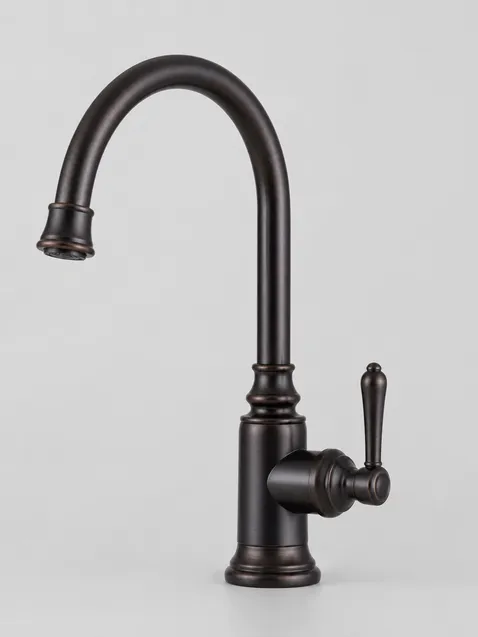
Oil-Rubbed Bronze
Lower-volume alongside PVD gold, but both carry the highest retail price points in the line. Pairs well with traditional and transitional kitchen aesthetics where chrome and matte black read as too contemporary.
Highest retail price tier alongside PVD gold
Available on full brass body
Margin-protecting SKU for premium catalog positioning
Worth stocking for buyers who want margin-protecting SKUs in a catalog that otherwise competes on price.
Finish Comparison at a Glance
| Finish | Volume Tier | Price Point | Key Buyer Consideration |
|---|---|---|---|
| Chrome | Highest | Entry | Verify nickel mid-coat is present; 24–48 hr salt spray |
| Brushed Nickel | High | +20–35% vs. chrome | Reduces return rate from "looks worn" complaints |
| Matte Black | Growing | Highest (standard) | Communicate hard water spotting to downstream buyers |
| PVD Gold | Lower | Premium | 0.3–0.5 μm; batch adhesion testing; scratch-resistant |
| Oil-Rubbed Bronze | Lower | Premium | Margin-protecting SKU; traditional/transitional aesthetic |
Customization Parameters for OEM and Private-Label Orders
Drinking water faucets are a strong OEM candidate because the product is visible, branded, and sold as part of a system — filter system OEMs and water treatment brands consistently want their own identity on the faucet rather than a generic product. We support private-label development from 200 pieces per SKU.
What Can Be Customized
-
Handle style and geometry
8 standard handle profiles in tooling; new tooling developed from your 2D drawing or reference sample
-
Spout profile and reach
Standard reach 120–160 mm; extended reach up to 200 mm available with tooling modification
-
Deck plate configuration
Single-hole deck mount (standard), escutcheon plate for larger deck holes, or no deck plate for direct countertop mount
-
Finish
All five in-house finishes available; custom RAL colors available on runs over 500 units with powder coat application
-
Branding
Logo engraving on handle or body, custom badge, or printed packaging
-
Supply tube connection
1/4" push-fit standard; 3/8" push-fit and compression fittings available for specific market requirements
-
Packaging
Retail box design, multi-language installation instructions, barcode and labeling to your specification
What Requires Significant Tooling Investment
-
Body casting geometry
The core brass body is a fixed casting die. Major dimensional changes require new tooling — typically 4–6 weeks and a tooling cost quoted separately.
-
Certification scope
cUPC and WaterMark certifications cover specific body configurations. Adding a new body geometry requires certification extension.
The ODM Path: Fastest Route to a Branded Product
For buyers who want a differentiated product without full tooling investment, our ODM path starts from existing catalog bodies with modified handles, finishes, and branding. Modified samples typically turn around in 15–20 days.
Most new buyers in this category start here — it's the fastest way to get a branded product into your catalog.
200
Min. pieces per SKU
15–20
Days for modified sample
Why Drinking Water Faucets Are a Strong OEM Candidate
The faucet is the most visible component in a filter or RO system installation. It sits on the countertop, it's touched daily, and it carries your brand identity in front of the end user every time they use it. That visibility is why filter system OEMs and water treatment brands consistently want their own identity on the faucet rather than a generic product.
A private-label faucet also protects your margin — it removes the product from direct price comparison and anchors it to your brand rather than a commodity SKU.
8 standard handle profiles in existing tooling
Custom RAL colors on runs over 500 units
Logo engraving, custom badge, or printed packaging
Multi-language installation instructions to your spec
1/4" push-fit standard; 3/8" and compression available
Compliance Documentation for Drinking Water Contact Applications
Drinking water faucets face stricter compliance requirements than standard kitchen or bathroom faucets in most markets because of the direct consumption application. Here's what we hold and what it covers for this product line.
North America
cUPC
North American plumbing code compliance. Required for sale in most US states and Canadian provinces. Our cUPC certification covers the brass body variants in this product line.
Material Standard
NSF/ANSI 61 Section 9
The drinking water contact material standard. Our ≤0.25% lead specification and XRF incoming inspection documentation support NSF 61 material compliance. Several US states — California, Vermont, Maryland, and others — have adopted NSF 61 into law, and many retailers and distributors require it as a listing condition.
We can provide XRF test reports and material certifications with each shipment. If your buyers require a full NSF 61 product certification (as opposed to material compliance documentation), we can discuss the certification extension process for specific SKUs.
Europe
CE
European conformity. Required for sale in EU member states.
Australia & New Zealand
WaterMark
Australian standards compliance. Required for sale in Australia and New Zealand.
Third-Party Verification
SGS
Third-party audit and testing reports available for buyers who need independent verification for their own compliance processes or for retail listing requirements.
Documentation Ships With the Container
All documentation is prepared in parallel with production and travels with the shipment — test reports, certificates of origin, and compliance documentation are in the container, not chased down after it arrives.
- XRF test reports and material certifications per shipment
- Certificates of origin included in container documentation
- HS code classification provided for North American shipments
- Binding ruling references available for customs pre-clearance
Certification Badges
Current certifications held for this product line. Contact us for full documentation packages or to discuss certification extension for specific SKUs.

Installation Compatibility: What Your Buyers Need to Know
Straightforward installation compatibility that translates directly into a selling point for the replacement market — no countertop modification required in most setups.
Standard 1-3/8" (35 mm) Deck Hole
Installs into the same hole size used for most RO and filter faucets. Most kitchen countertops and sinks have a pre-drilled hole for a soap dispenser or side sprayer that can be repurposed for a filter faucet installation without additional drilling.
That compatibility is a selling point for the replacement market: your customers can upgrade their existing setup without countertop modification.
1/4" Push-Fit Tubing Connection
The supply tube connects to the filter system output via 1/4" push-fit tubing — the same tubing used in most residential under-sink and countertop filter systems. No tools required for the tubing connection; the push-fit fitting accepts the tube with a straight push and releases with a collar press.
Gravity-Fed System Note
For gravity-fed systems with a tank-to-faucet drop of less than 500 mm, we recommend confirming the flow rate at the actual operating head pressure before finalizing the SKU selection. We can provide flow rate data at specific pressure points if you send us your system specs.
What Ships in the Box
Each unit ships with everything needed for a standard installation:
- Mounting hardware (nut, washer, supply tube)
- Deck plate for oversized holes
- Installation instructions
Standard languages: English, French, German, Spanish, and simplified Chinese. Other languages available for OEM orders with sufficient volume.
Deck Hole Size
1-3/8"
35 mm — standard across most RO and filter faucet installations
Tubing Connection
1/4"
Push-fit — no tools required, compatible with standard residential filter systems
Gravity-Fed Minimum Drop
500 mm
Confirm flow rate at actual head pressure for drops below this threshold
Product Line
Sibling Products: Matching the Right Faucet to the System
Drinking water faucets are one of ten variants in our water filter and RO faucet line. If your application or market requires a different configuration, here's where the other products fit.
RO Faucets
For reverse osmosis systems with a pressurized storage tank. Narrower flow path, 0.2 MPa minimum operating pressure. The default choice for residential RO system OEMs.
Air Gap RO Faucets
Three-port design with integrated backflow prevention. Required by plumbing code in California, Massachusetts, and several other US states.
Non-Air Gap RO Faucets
Two-port design, simpler installation, lower retail price point. The volume SKU for residential RO system OEMs in markets where air gap is not required.
Under Sink Water Filter Faucets
Configured for under-counter installation with extended supply tube and deck plate options. Suited for buyers targeting the under-sink filter system market.
Stainless Steel Water Filter Faucets
304 stainless body for buyers targeting the premium or commercial segment where plating durability is a concern.
Beverage Faucets
Bar-style spout profile, compatible with both filtered water and carbonated beverage lines. The SKU that opens the commercial foodservice channel.
Not sure which configuration fits your market?
Send us your system specs or a description of your target application — we'll recommend the right variant and flag any compliance considerations for your destination market.
Buyer Questions
Frequently Asked Questions
Technical and commercial questions we hear most often from OEM buyers, distributors, and procurement teams evaluating drinking water faucets.
What is the difference between a drinking water faucet and an RO faucet?
A drinking water faucet is designed for gravity-fed or low-pressure filter systems — ceramic pot filters, countertop carbon filters, gravity tanks — that operate at 0.05–0.15 MPa. The internal flow path is wider (6–8 mm bore) and the cartridge is calibrated for positive sealing at low inlet pressure.
An RO faucet is designed for reverse osmosis systems with a pressurized storage tank operating at 0.2 MPa or higher. Using an RO faucet on a gravity-fed system typically results in a slow drip that can't be stopped by tightening the handle, because the cartridge seating force is calibrated for higher pressure than the system provides.
The two products are not interchangeable.
Does a drinking water faucet need NSF/ANSI 61 certification?
NSF/ANSI 61 Section 9 is the drinking water contact material standard, and several US states — California, Vermont, Maryland, and others — have adopted it into law for products used in drinking water applications. Many retailers and distributors also require it as a listing condition.
We hold cUPC certification and can provide NSF 61 material compliance documentation (XRF test reports, material certifications) with each shipment. If your buyers require a full NSF 61 product certification rather than material documentation, we can discuss the certification extension process for specific SKUs.
For Australian buyers, WaterMark covers the equivalent compliance requirement.
What is the minimum order quantity for private-label drinking water faucets?
200 pieces per SKU for OEM orders with custom tooling or branding. For ODM orders starting from our existing catalog bodies with modified finishes, handles, or packaging, the MOQ is the same.
Most new buyers start with a 200-unit trial order in one or two finishes to test market response before scaling to container quantities. We can ship samples before the production order so you can evaluate the product with your own customers.
Can a drinking water faucet be used with a reverse osmosis system?
Technically yes, but it's not the optimal configuration. A drinking water faucet's wider flow path will drain an RO storage tank faster than the membrane can replenish it, which means the tank runs dry under sustained use.
For RO systems, the RO Faucet or Reverse Osmosis Faucet with a restricted flow path is the correct product. The drinking water faucet is designed for gravity-fed and low-pressure systems where flow restriction is not needed.
What finishes are available and which holds up best in a kitchen environment?
We offer chrome, brushed nickel, matte black, PVD gold, and oil-rubbed bronze.
Brushed Nickel
Most practical for kitchen counter use. Brushed texture hides water spots and minor handling marks; nickel mid-coat gives strong corrosion resistance.
Matte Black
Current premium choice, holds up well, but shows water spots more readily in hard water areas.
Chrome
Most economical option. Full copper/nickel/chrome plating stack, passes 24-hour salt spray minimum.
PVD Gold
Best scratch resistance of all five finishes due to the hardness of the PVD coating layer.
How do you ensure lead compliance for drinking water contact?
Three layers: material specification, incoming inspection, and surface treatment.
Material specification: We use C36000-equivalent brass held to ≤0.25% lead by weight — below the NSF/ANSI 61 threshold.
Incoming inspection: Every incoming brass batch is tested with XRF analysis before it enters production.
Surface treatment: Internal waterway surfaces are machined smooth and passivated to eliminate casting porosity — a secondary lead leaching pathway that material specification alone doesn't address.
XRF test reports and material certifications are available with each shipment.
Get a Quote for Drinking Water Faucets
Send us your target application, volume expectations, destination market, and finish preference — we'll come back with a detailed quote and a recommendation on configuration.
What to Include in Your RFQ
-
Target Application
Gravity-fed system, countertop filter, or specific system brand
-
Volume Expectations
Annual or per-order quantity so we can confirm MOQ and pricing tier
-
Destination Market
Country or region — determines which compliance documentation applies
-
Finish Preference
Brushed nickel, matte black, chrome, oil-rubbed bronze, or custom
Building a Private-Label Product?
If you're building a private-label product for a filter system OEM, tell us your system specs and we'll confirm compatibility before you commit to tooling.
Fast Response
Quote within 24 hours
OEM from 200 pcs
Low MOQ for new programs
Compliance Ready
cUPC, NSF/ANSI 61 docs
17+ Years
Manufacturing experience
Related Products
Explore the Full Faucet Range
RO Systems
RO Faucets
Dedicated reverse osmosis faucets with matched flow and pressure ratings.
View rangeUnder-Sink
Under Sink Water Filter Faucets
Compact dispensing faucets engineered for under-sink filtration installations.
View rangeBeverage
Beverage Faucets
Bar and countertop beverage dispensing faucets for commercial and residential use.
View rangeAir Gap
Air Gap RO Faucets
Three-tube air gap design for code-compliant RO drain backflow prevention.
View rangeMaterial
Stainless Steel Water Filter Faucets
304 stainless body for markets requiring all-metal construction throughout.
View rangeFull Category
Water Filter & RO Faucets
Browse the complete water filter and RO faucet catalog from Wfaucet.
View all