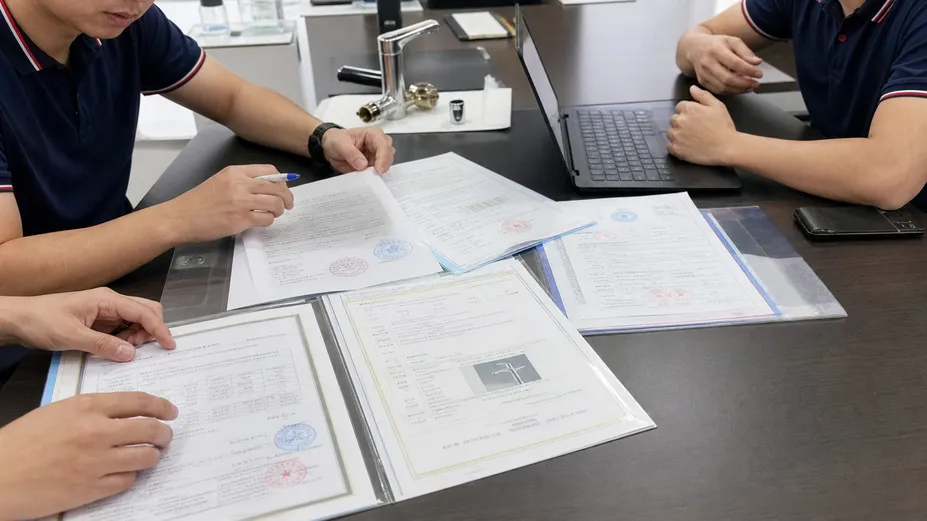

ISO 9001:2015 · CE · cUPC · WaterMark · SGS — certifications covering North America, Europe, and Australia under one roof. We've been building the compliance infrastructure for export faucet manufacturing since 2008. Every certification we hold was earned through the process discipline that export markets demand — not acquired as a paperwork exercise.
Full Certification Picture
We hold five active certifications across quality management, market access, and third-party audit categories. Here's the full picture.
| Certification | Issuing Body | Coverage | What It Means for Your Market |
|---|---|---|---|
| ISO 9001:2015 | Third-party accredited registrar | Full production system — casting, machining, finishing, assembly | Documented quality management system with annual surveillance audits. Your QC team has a standardized framework to reference. |
| CE Marking | Self-declaration under EU directives | All faucet and sanitary ware products for EU markets | Confirms compliance with EU health, safety, and environmental requirements. Required for legal sale in EU member states. |
| cUPC | IAPMO | Faucets for North American plumbing code compliance | Certifies conformance to ASME A112.18.1 / CSA B125.1 — the standard required by most US and Canadian plumbing codes for residential and commercial installation. |
| WaterMark | WaterMark Certification Scheme (WMCS) | Faucets for the Australian market | Mandatory certification for plumbing products sold in Australia and New Zealand. Covers material safety, performance, and installation compatibility with AS/NZS standards. |
| SGS | SGS Group | Factory audit and product testing | Third-party audit and testing reports available for buyers who require independent verification beyond self-declared certifications. |
A note on scope
We don't hold certifications we haven't earned. If a market you're targeting requires a certification not on this list, tell us — we'll give you an honest answer about what we have and what we'd need to pursue.
Ask about your market's requirementsNorth American Market
cUPC is the certification that changed how we run production, and it's worth explaining why.
The cUPC certification process for faucets is administered by IAPMO and tests against ASME A112.18.1 / CSA B125.1. The standard covers flow rate performance, pressure ratings, handle torque, and — critically — lead content in wetted surfaces. The lead content requirement under NSF/ANSI 61 and the Reduction of Lead in Drinking Water Act limits weighted average lead content in wetted components to 0.25% or less. That's a tight threshold, and meeting it consistently requires controlling your brass alloy at the source, not just testing finished product.
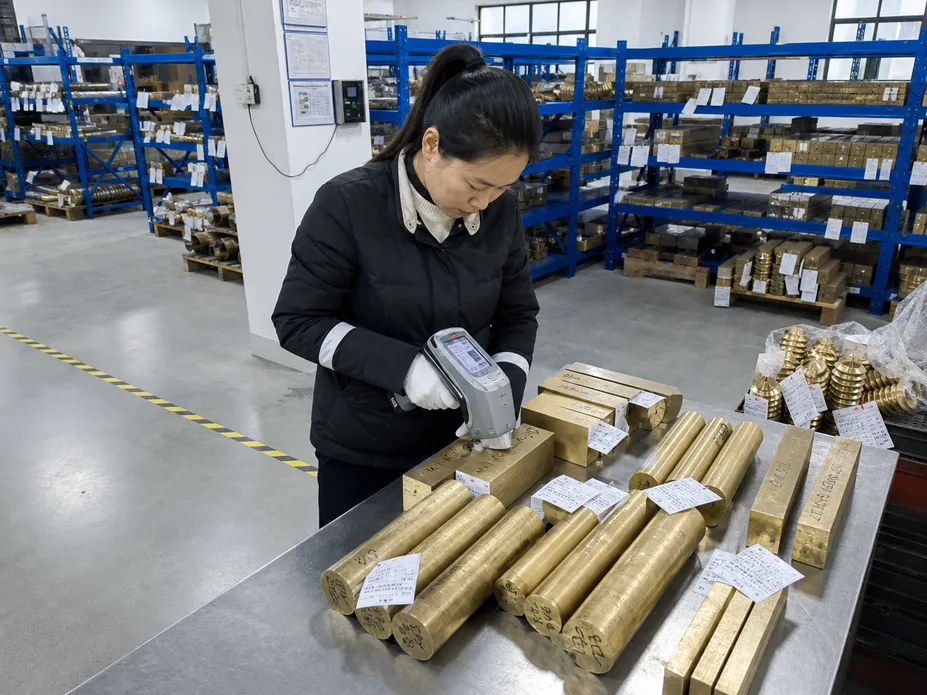
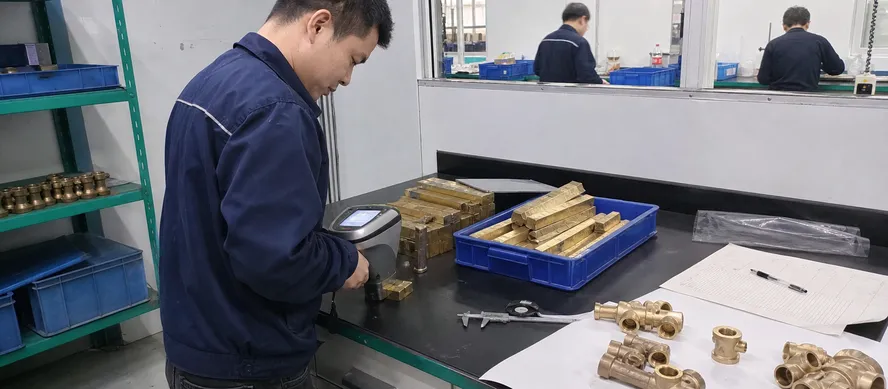
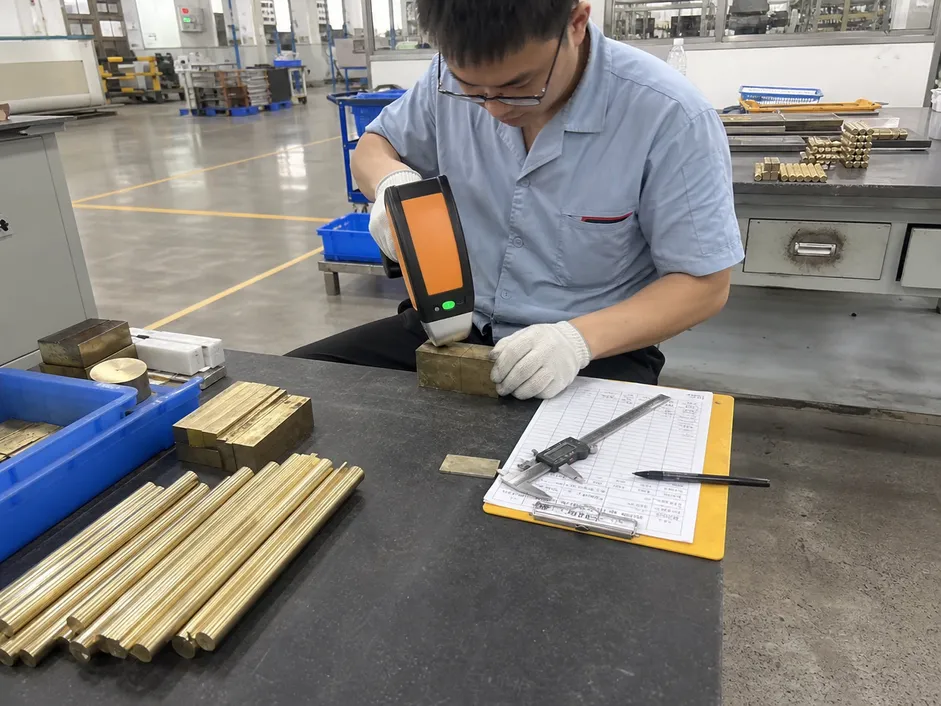
When we went through cUPC qualification, we had to requalify our brass alloy supplier and validate our casting parameters against the new lead content spec. We switched to a low-lead brass alloy — C36000-equivalent with verified lead content — and implemented incoming XRF testing on every brass batch. The XRF testing adds time and cost to incoming inspection, but it's the only way to catch a supplier substitution before it becomes a container of non-compliant product. We kept those controls in place for all production, not just North American orders. The discipline doesn't make sense to apply selectively.
The practical result for your sourcing: any faucet we ship carries the same low-lead brass specification regardless of destination market. Your North American orders are cUPC-compliant. Your European orders benefit from the same material controls even though CE doesn't impose the same lead threshold. If you're selling into California — which enforces AB 1953 and the state's own lead-free standard — our material spec meets that requirement.
Request cUPC Documentation
Lead Content Limit
≤ 0.25%
Weighted average in wetted components per NSF/ANSI 61 & Reduction of Lead in Drinking Water Act
Brass Alloy Spec
C36000-equivalent
Low-lead brass with verified lead content. Requalified supplier, validated casting parameters.
Incoming Inspection
XRF Testing — Every Batch
Catches supplier substitution before it becomes a container of non-compliant product.
Applied Universally
All Markets, All Orders
Controls apply to every production run — not selectively to North American orders only.
Selling into California?
California enforces AB 1953 and its own lead-free standard — stricter than federal requirements. Our material spec meets that requirement. If you're sourcing for California-destined product, our cUPC documentation covers you.
Confirm California complianceStandards Referenced in cUPC Qualification
Construction Products Regulation
CPR 305/2011 — covers sanitary ware and fittings used in construction works across EU member states.
RoHS Compliance
Restriction of Hazardous Substances — limits cadmium, mercury, lead, and other restricted substances in product materials.
EN 817 / EN 200
European harmonised standards for mechanical mixing valves and single-tap faucets — flow, pressure, and endurance testing.
Declaration of Conformity
DoC issued per product family. Available on request for your import documentation and distributor compliance files.
European Market
CE marking is a legal requirement for faucets and sanitary ware sold in EU member states. It's not a quality award — it's a declaration that the product meets the applicable EU directives and harmonised standards. We hold CE marking across our faucet and sanitary ware range, and we can provide the Declaration of Conformity (DoC) for any product family on request.
The directives that apply to our products include the Construction Products Regulation (CPR 305/2011) and RoHS. The relevant harmonised standards are EN 817 for thermostatic mixing valves, EN 200 for single-tap faucets, and EN 246 for flow regulators. Testing covers flow rate at rated pressure, handle torque and endurance cycles, temperature stability under thermostatic operation, and material safety.
What CE marking doesn't cover: it doesn't certify water efficiency ratings under the EU Water Label scheme, and it doesn't replace country-specific approvals required in some member states — notably the WRAS approval sometimes requested for UK projects (post-Brexit, the UK runs its own scheme). If you're selling into the UK market, ask us about WRAS status for specific products.
For importers: we can provide the full technical file summary, test reports, and DoC in the format your customs broker or notified body requires. We've done this for EU-based distributors and know what the documentation package needs to look like.
CE marking is not a universal EU approval
Some EU member states maintain additional national requirements beyond CE — particularly for products contacting drinking water. Germany (KTW/DVGW), France (ACS), and the Netherlands (KIWA) each run their own drinking water contact material approvals. CE marking alone may not satisfy those national schemes. If your distribution is concentrated in one of these markets, ask us which products have been tested to those national standards and which haven't.
Ask about national market requirementsAustralian & New Zealand Market
WaterMark is a mandatory certification scheme for plumbing products sold in Australia and New Zealand. Unlike some certifications that function as market differentiators, WaterMark is a legal requirement under the National Construction Code (NCC). Products without WaterMark certification cannot be legally installed by licensed plumbers in Australia.
The scheme is administered by the WaterMark Certification Scheme (WMCS) and covers material safety, performance, and installation compatibility against AS/NZS standards. For faucets, the relevant standards include AS/NZS 3718 (water supply — tapware) and AS/NZS 4020 (testing of products for use in contact with drinking water). The AS/NZS 4020 testing is particularly rigorous — it covers cytotoxicity, mutagenicity, and taste and odour effects, not just material composition.
Our WaterMark-certified faucets carry a licence number that can be verified on the WMCS public register. When you're sourcing for Australian distribution, ask us for the WaterMark licence number for the specific product — your distributor's plumbing compliance team will want to verify it before placing a large order.
Not every product in our range carries WaterMark — certification is product-specific, not factory-wide. If you're building a range for the Australian market, we'll tell you upfront which SKUs are certified and which would require new certification if you want to add them.
Check WaterMark Status for Your SKUs
What WaterMark Testing Covers
Verify on the WMCS Public Register
Every WaterMark-certified product carries a licence number verifiable on the WMCS public register. Ask us for the licence number before your distributor's compliance check — it saves a step.
Request licence numbersQuality Management
ISO 9001 is the most widely cited quality management certification in manufacturing. It's also the most frequently misunderstood. Here's what it actually means for your orders.
ISO 9001 requires that every production process is documented, version-controlled, and followed. When we change a process — a new supplier, a revised torque spec, a different plating chemistry — the change goes through a formal review before it reaches the line.
We track defect rates, rework rates, and customer complaint rates against defined targets. ISO 9001 requires that we act on negative trends — not just record them. If a defect rate climbs, there's a corrective action process that has to close before the next audit.
ISO 9001 extends quality management to the supply chain. Our brass, ceramic cartridge, and surface finish suppliers are evaluated and re-evaluated on a defined schedule. A supplier that starts missing specs gets a corrective action request — or gets replaced.
Every production batch is traceable to its raw material lot, production date, and inspection records. If a quality issue surfaces after shipment, we can identify the affected batch and scope the problem — rather than issuing a blanket recall of everything shipped in a quarter.
Our ISO 9001 certification is maintained through annual surveillance audits by an accredited third-party registrar. The certificate is current and available on request. Recertification audits happen on a three-year cycle.
ISO 9001 certifies that a quality management system exists and is followed — it doesn't certify that every product meets a specific performance standard. Product-level compliance comes from the product certifications: cUPC, CE, WaterMark. ISO 9001 is the system that keeps those certifications meaningful over time.
ISO 9001:2015 Certificate
Current certificate available on request. Includes scope, registrar, and expiry date.
CE marking for faucets sits primarily under the Construction Products Regulation (CPR) and the relevant harmonized standards for sanitary tapware — EN 200 for single-taps and combination taps, EN 817 for thermostatic mixing valves, and EN 1111 for thermostatic mixing valves for sanitary purposes. The marking confirms that the product meets the essential requirements for mechanical resistance, hygiene, and safe use.
Single-taps and combination taps for water supply systems — covers mechanical performance, flow rates, and endurance testing.
Thermostatic mixing valves — mechanical requirements and test methods for temperature control performance.
Thermostatic mixing valves for sanitary purposes — additional requirements for scalding prevention and hygiene safety.
For buyers distributing into EU markets, CE is the baseline. What matters beyond the marking is the Declaration of Performance — the document that specifies which standard the product was tested against, the performance characteristics, and the declared values.
We prepare DoPs for our CE-marked products and can provide them with shipment documentation. If your EU distributor or a building project's compliance team asks for the DoP, it's ready.
CE marking covers the product's conformity with EU directives, but individual EU member states may have additional national requirements — particularly for water efficiency labeling.
UK (post-Brexit): WRAS approval may be required for water fittings used in UK plumbing systems.
Germany: DVGW mark applies to certain applications under German plumbing regulations.
Other EU markets: If you're targeting a specific market with additional requirements, let us know and we'll confirm what documentation we can support.
DoP documents are prepared for all CE-marked product lines and available with shipment documentation or on request.
WaterMark is mandatory for plumbing products sold in Australia and New Zealand — it's not optional, and products without it cannot legally be installed by licensed plumbers. The certification is administered under the WaterMark Certification Scheme and tests against the relevant AS/NZS standards for tapware.
For buyers building a product range for the Australian market, WaterMark is the first compliance gate. Our certification covers:
Verification that materials in contact with drinking water meet Australian health and safety requirements.
AS/NZS testing protocols account for the higher static pressures common in Australian residential plumbing — conditions that differ from North American norms.
Compatibility with Australian plumbing installation requirements, ensuring licensed plumbers can legally specify and install the product.
We hold WaterMark on our core faucet lines. Certification documents are available on request. If you need to confirm whether a specific SKU is covered before placing an order, contact us with the product reference and we'll verify.
Australia's water pressure standards differ from North American norms. The AS/NZS testing protocols account for the higher static pressures common in Australian residential plumbing. Products that pass cUPC don't automatically pass WaterMark — which is why holding both certifications under one roof matters if you're covering both markets.
Mandatory, Not Optional
Products without WaterMark cannot legally be installed by licensed plumbers in Australia or New Zealand.
Pressure-Specific Testing
AS/NZS protocols test against higher static pressures typical in Australian residential systems — distinct from North American standards.
Documents on Request
WaterMark certification documents for our core faucet lines are available on request for your compliance team or distributor.
Need to confirm WaterMark coverage for a specific SKU or request certification documents for your AU/NZ distributor?
Certifications define the standard. The QC process is how we hit it on every batch.
Approved Supplier List: Cartridge suppliers go through a 50,000-cycle pre-qualification test before they're added to the approved list. We've removed two cartridge suppliers over the years after their components passed paper qualification but showed early failure rates in our endurance testing. The pre-qualification requirement came directly from that experience.
Three checkpoints run during production
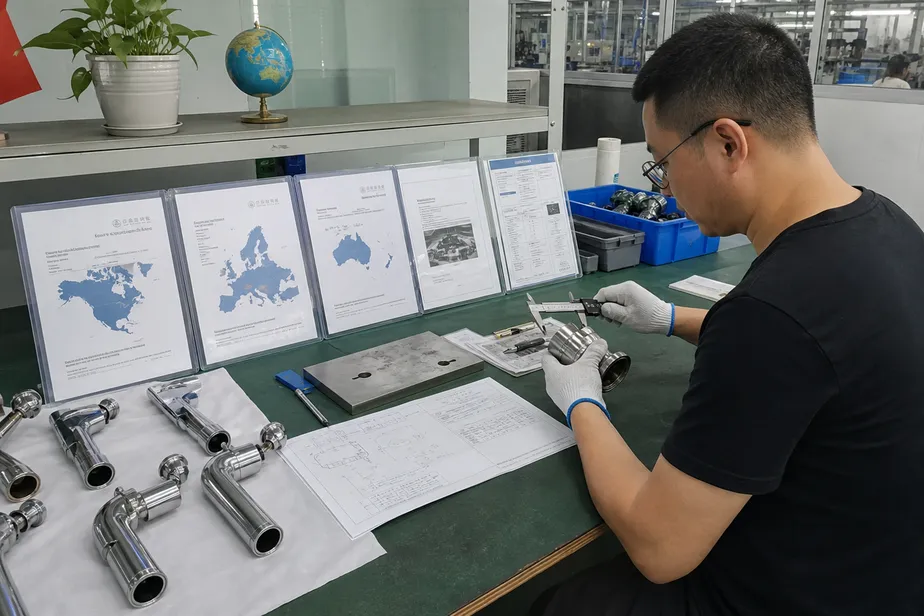
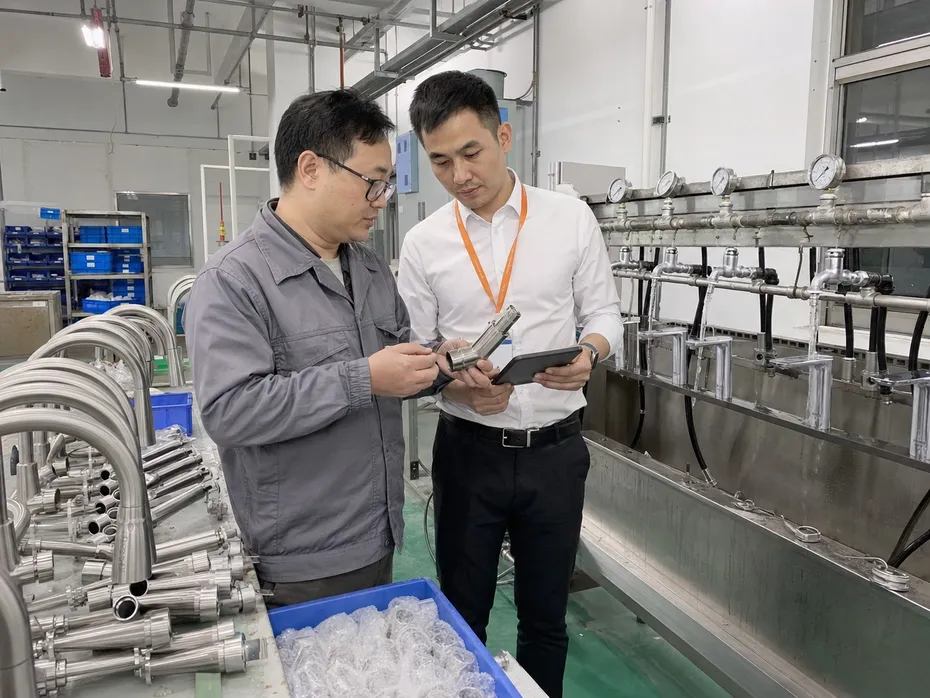
Casting dimensions verified against drawing spec. Valve body wall thickness, port dimensions, and thread boss geometry checked at this stage. Castings that don't meet spec are rejected before machining — catching them here avoids wasting CNC time on a part that will fail later.
Valve seat threads gauged to ±0.05mm tolerance. This is the tolerance that determines whether the cartridge seats correctly and whether the valve seals under pressure. A loose thread tolerance is the most common root cause of drip failure in the field — we check every batch, not a sample.
Surface finish inspected for pinholes, blistering, uneven coverage, and color consistency. Adhesion tested using a cross-cut tape test on a sample from each plating run. Parts that fail visual or adhesion inspection are rejected before assembly — catching finish defects here avoids the labor cost of disassembly and prevents a late-stage batch rejection from delaying your shipment.
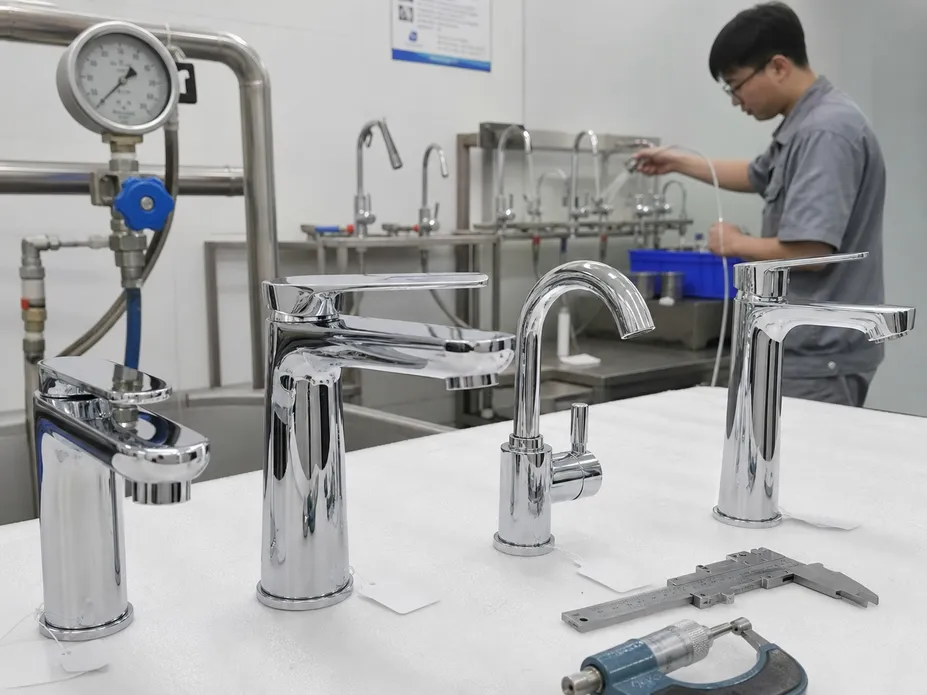
Every unit in a batch goes through functional testing before it's packed
Handle Torque
Verified against spec range — too stiff or too loose both indicate an assembly issue
Flow Rate
Confirmed against the product's declared flow rate at rated pressure
Leak Test
0.6 MPa for 60 seconds — every unit, not a sample
Salt Spray Testing
Statistical sample from each batch: 24 hours minimum for standard production runs, 48 hours for new finish batches or new plating line runs.
Endurance Testing
500,000 open/close cycles on cartridge assemblies — this runs on every production batch, not just new product introductions.
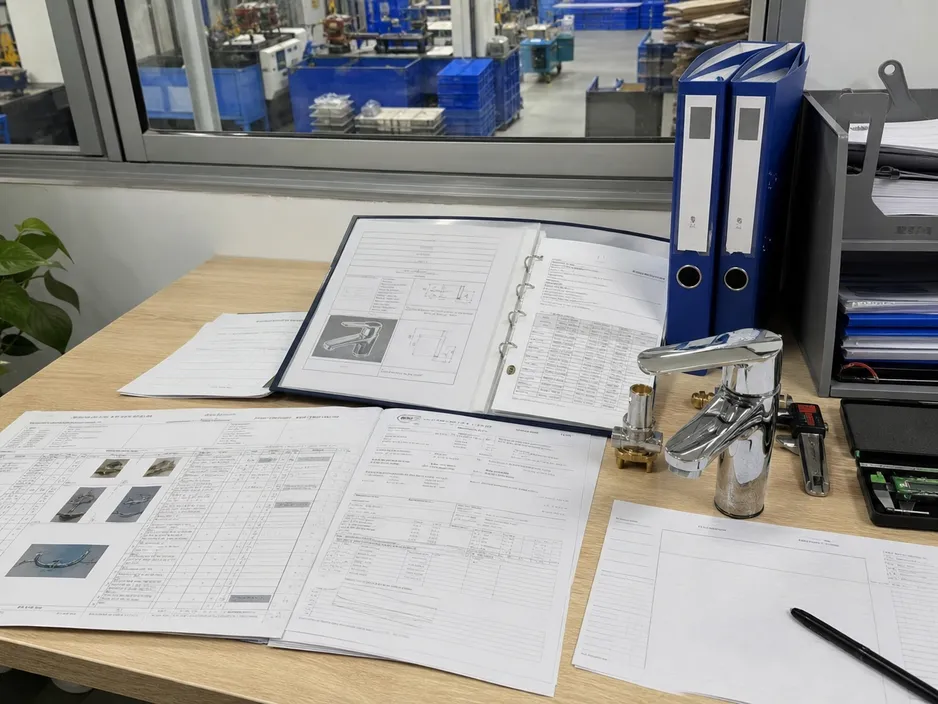
Test reports travel with the shipment. The outgoing documentation package includes:
Your QC team and customs broker have the data without needing to request it separately after the container ships.
Stage 1
XRF Lead Testing on Every Brass Batch
Stage 2
Thread Gauge ±0.05mm — Every Batch
Stage 3
0.6 MPa Leak Test — Every Unit
Stage 4
Full Doc Package Ships with Container
We support SGS factory audits and product testing. SGS is the third-party verification option most commonly requested by North American and European buyers who want independent confirmation beyond our own QC documentation.
For buyers whose procurement process requires a third-party factory audit before approving a new supplier, we can coordinate the audit scheduling. SGS audits cover:
We don't restrict audit scope. If your compliance team has a specific audit checklist, we work through it.
SGS can run independent tests on samples pulled from production. Tests available include:
Flow Rate
Pressure
Lead Content
Endurance Cycles
If your downstream customer or a retail chain requires independent test reports rather than factory-issued reports, this is the path. We can arrange sample submission directly or you can coordinate through your own SGS account.
Factory Audit
Management systems, process controls, QC documentation, working conditions. We coordinate scheduling and don't restrict scope.
Independent Product Testing
Samples pulled from production. Flow rate, pressure, lead content, endurance cycles. Arrange through us or your own SGS account.
Independent Test Reports
Required by some retail chains and downstream customers. SGS-issued reports satisfy requirements that factory-issued reports do not.
Ready to schedule an SGS audit?
Contact us to coordinate audit scheduling or sample submission.
"Lead-free faucet" is a term that gets used loosely in the industry, so here's what it means in practice for our products.
California AB 1953 Compliant
The US standard defines "lead-free" as a weighted average lead content of 0.25% or less in wetted components. California's AB 1953 applies the same threshold.
Our brass alloy specification meets this standard. We test incoming brass with XRF analysis on every batch, and we can provide the material test reports with shipment documentation.
CE Compliance Included
The EU's Drinking Water Directive (DWD) and the associated EN 15664 standard set migration limits for metals from materials in contact with drinking water. Our products are tested against these migration limits as part of CE compliance.
For buyers supplying into markets with drinking water contact requirements — kitchen faucets, filter faucets, drinking water faucets — we can provide the relevant test data.
Our water filter faucets and RO faucets are specifically designed for drinking water contact applications and carry the full material compliance documentation for both North American and EU markets.
Material Test Reports Available
XRF batch analysis reports and migration test data can be provided with shipment documentation. Request them when placing your order or during pre-order qualification.
We've been shipping to 20+ countries since 2010 — most compliance questions have come up before. If your target market isn't in this table, send us the compliance requirement and we'll confirm what we can support.
| Market | Required Certifications | What We Hold | Notes |
|---|---|---|---|
|
United States
|
cUPC (plumbing code), NSF/ANSI 61 (lead-free) |
cUPC Low-Lead Brass Spec
|
California AB 1953 met by material spec |
|
Canada
|
cUPC (CSA B125.1) | cUPC | Same certification covers US and Canada |
|
European Union
|
CE marking, EN 200 / EN 817 | CE | DoP available; country-specific marks (DVGW, etc.) on request |
|
United Kingdom
|
WRAS (post-Brexit) |
CE (legacy) WRAS on request
|
Confirm with us for specific UK project requirements |
|
Australia / New Zealand
|
WaterMark (mandatory) | WaterMark | AS/NZS standards compliance |
|
Middle East / Southeast Asia
|
ISO 9001 typically sufficient; SGS audit common |
ISO 9001:2015 SGS
|
Market-specific requirements vary — confirm per project |
Required: cUPC (plumbing code), NSF/ANSI 61 (lead-free)
California AB 1953 met by material spec
Required: cUPC (CSA B125.1)
Same certification covers US and Canada
Required: CE marking, EN 200 / EN 817
DoP available; country-specific marks (DVGW, etc.) on request
Required: WRAS (post-Brexit)
Confirm with us for specific UK project requirements
Required: WaterMark (mandatory)
AS/NZS standards compliance
Required: ISO 9001 typically sufficient; SGS audit common
Market-specific requirements vary — confirm per project
Send us the compliance requirement and we'll confirm what we can support. We've been shipping to 20+ countries since 2010 — most compliance questions have come up before.
Certificates, test reports, Declarations of Performance, and material data sheets are available on request. Specify your market and product category when reaching out.
Answers to the questions buyers and procurement teams ask most often when evaluating our compliance documentation.
Our cUPC certification covers our core kitchen and bathroom faucet lines — the product families we ship regularly to North American distributors and importers. If you're evaluating a specific SKU for a North American project, confirm with us and we'll verify whether that product is covered under the current certification scope. New product variants added to an existing certified body can typically be covered through a documentation update rather than a full re-certification.
We can provide material test reports showing the lead content of our brass alloy, which is the underlying compliance basis for NSF/ANSI 61 wetted surface requirements. For buyers who need a full NSF/ANSI 61 product certification (as opposed to material compliance documentation), that's a separate certification process — contact us to discuss what your specific project or retail channel requires.
cUPC certifies conformance to ASME A112.18.1 / CSA B125.1 — the North American standard covering flow performance, pressure ratings, handle torque, and lead content. WaterMark certifies conformance to AS/NZS standards for the Australian and New Zealand market, covering similar performance parameters but tested under Australian water pressure conditions and installation requirements.
A product certified under cUPC is not automatically WaterMark-compliant — the test protocols and standards are different. We hold both, so if you're covering both markets from one supplier, the documentation is available.
Yes. We support SGS factory audits and can accommodate buyer-arranged audits through other third-party bodies. Most of our new buyers from North America and Europe request an audit before approving us as a supplier — it's a standard part of the qualification process and we don't treat it as an obstacle. Contact us to schedule.
Email us at julie@wfaucet.com with the certifications you need and the destination market. We'll send the relevant documents — CE Declaration of Performance, cUPC certificate, WaterMark certificate, ISO 9001 certificate, and SGS audit reports as applicable. We don't require an NDA to share certification documents.
Our brass alloy meets the 0.25% weighted average lead content threshold required by NSF/ANSI 61 and California AB 1953. We test every incoming brass batch with XRF analysis and can provide the material test reports. For EU markets, our products are tested against EN 15664 metal migration limits as part of CE compliance.
If you need certification copies, test reports, or a Declaration of Performance for a specific product or market, send us the details and we'll pull the relevant documentation.
For buyers running a supplier qualification process — audit requests, compliance questionnaires, or technical documentation packages — we've been through this process with buyers in the US, EU, Australia, and the Middle East. Tell us what your process requires and we'll work through it.
Contact Details
We share CE Declaration of Performance, cUPC certificate, WaterMark certificate, ISO 9001 certificate, and SGS audit reports without requiring a non-disclosure agreement. Standard supplier qualification documentation is available on request.
We've supported qualification processes for buyers in the US, EU, Australia, and the Middle East. Whether you need a single certificate or a full compliance package for a specific market, specify the destination and we'll pull the relevant documentation.
The quality system described on this page applies to custom production the same way it applies to catalog orders. If you're evaluating us for a custom product program, the certification and audit framework carries over. Explore our OEM/ODM capabilities.
Explore More
© 2026 Wfaucet. All rights reserved.