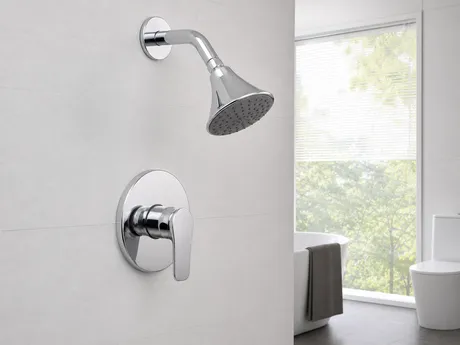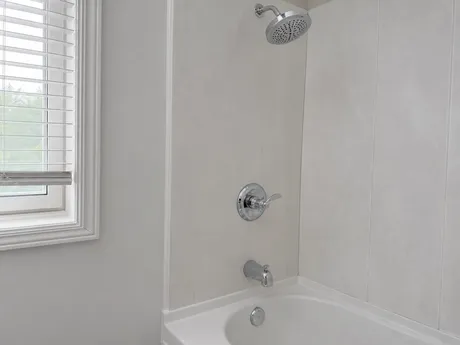

Tub & Shower Collection

Shower Faucets Direct From Factory

Wall-mount shower faucets built for export — brass bodies, pressure-balance and manual mixing configurations, five in-house finishes.

Every production batch endurance-tested to 500,000 cycles. cUPC, CE, and WaterMark certified for North America, Europe, and Australia from one factory.

cUPC Certified CE Certified WaterMark Certified OEM from 200 pcs
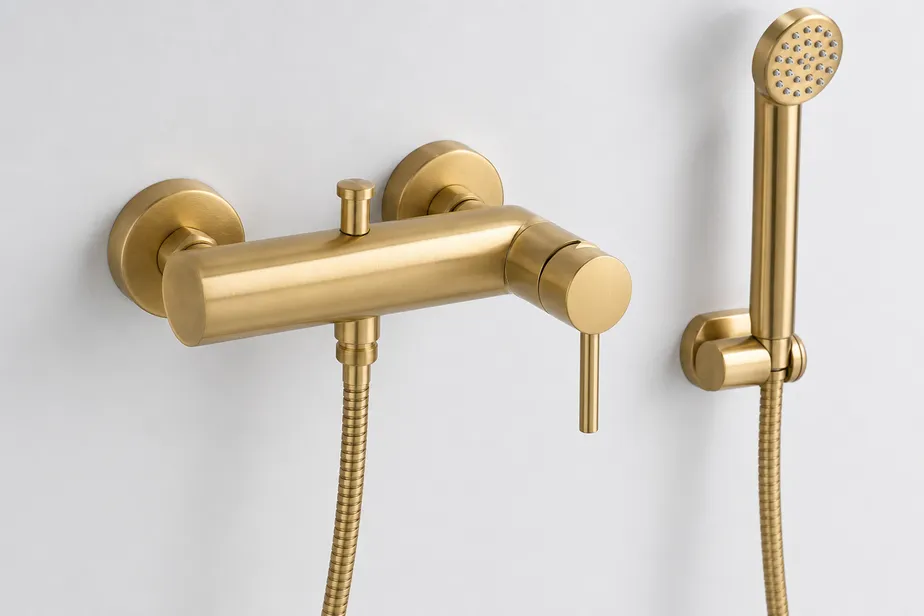
Wfaucet wall-mount shower faucet — brass body, brushed gold finish

Product Overview

What This Product Is and Where It Sits in the Range

A shower faucet, in the way we manufacture and sell it, is a wall-mounted valve and trim assembly — valve body, handle, trim plate, and shower arm connection — designed for standard residential and commercial shower enclosures. It's the foundational SKU in the tub and shower category: the product that moves in the highest volume, fits the widest range of installation scenarios, and anchors most bathroom hardware catalogs.

Within our eight-line tub and shower range, the shower faucet is the entry point. It's not the most complex product we make — that's the thermostatic concealed system — and it's not the highest-margin SKU per unit — that's the freestanding tub filler. But it's the product that drives the most reorders, fits the most projects, and gives distributors and contractors a reliable, certifiable, sourceable SKU they can put in front of their customers without qualification anxiety.

If you're building a bathroom hardware catalog or supplying a residential construction project, this is the product you need to get right before you expand into the rest of the range.

Handle Configuration & Market Fit

The differentiation between this product and the single-handle shower faucet in our lineup comes down to handle configuration and market fit. The shower faucet here covers two-handle and multi-handle configurations — separate hot and cold controls — which is the dominant spec in European and Australian residential construction and in commercial applications where precise temperature control matters.

The single-handle pressure-balance configuration is the North American residential standard and lives on its own product page. If you're supplying the US or Canadian market at volume, you'll want to look at both.

Position Within the 8-Line Tub & Shower Range

Shower Faucet

This Product

Entry point. Highest reorder volume. Widest installation fit. Two-handle and multi-handle configurations for EU, AU, and commercial markets.

Single Handle Shower Faucet

Pressure-balance configuration. North American residential standard. High volume in US and Canadian supply chains.

View product

Wall Mount Shower Faucet

Exposed wall-mount trim. Specified in renovation and design-led residential projects where the valve assembly is a visible design element.

View product

Freestanding Bathtub Faucet

Highest margin per unit in the tub and shower range. Floor-mount configuration for freestanding tub installations.

View product

Manufacturing Detail

Valve Body Construction: Where the Margin Protection Starts

The valve body is the component that determines whether your downstream customers call you with a warranty claim in year two or reorder from you in year three.

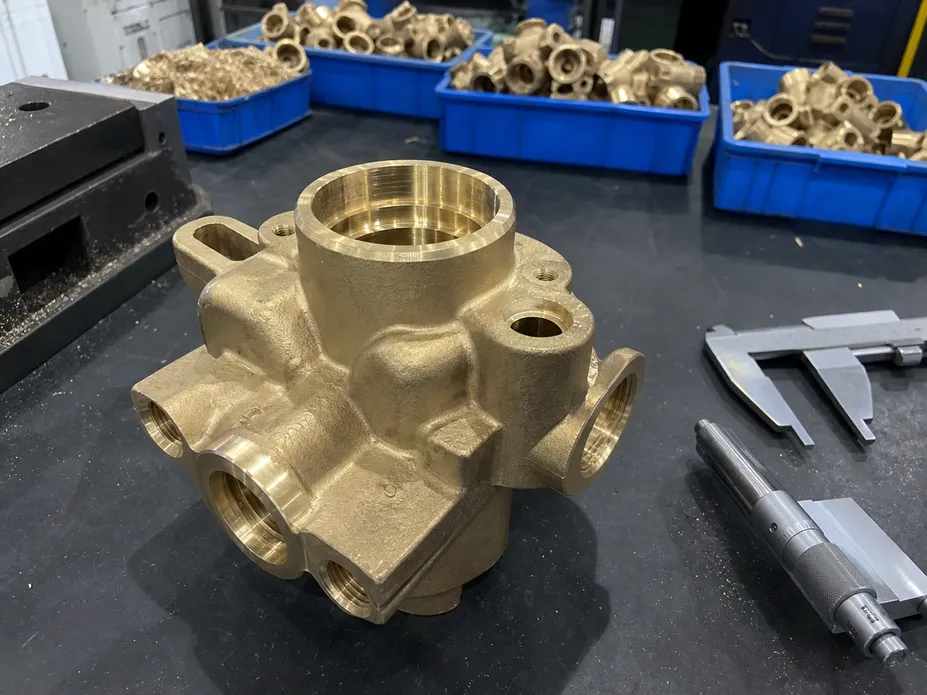
Wfaucet shower faucet brass valve body — gravity cast C36000 brass, CNC-machined valve seat

Material

C36000 Brass

Free-machining equivalent

Casting Method

Gravity Cast

Not die cast, not zinc alloy

Wall Thickness

3.0–3.5 mm

vs. 2.5 mm industry minimum

Thread Tolerance

±0.05 mm

CNC-machined, gauge-verified

Why Gravity Casting in C36000 Brass

We cast our valve bodies from C36000-equivalent free-machining brass using gravity casting — not die casting, not zinc alloy. The choice matters commercially, and it's worth explaining why we make it.

Gravity casting produces a denser brass body with lower internal porosity than die casting. Porosity in a valve body creates two problems: micro-channels that allow water to seep through the casting wall over time, and weak points in the material that can crack under thermal cycling stress. In a shower environment — daily temperature swings from cold to hot, water pressure fluctuating with building supply — a porous casting will show failure within three to five years. A dense gravity-cast body in C36000 brass handles that thermal cycling without degradation for the life of the installation.

Why We Walked Away from Zinc Alloy

We evaluated zinc alloy casting for cost reduction on a few SKUs a few years back and walked away from it. The corrosion performance in chlorinated water systems — particularly in markets like Australia and the Gulf where chlorine levels run high — didn't hold up to our salt spray standards. Brass costs more to cast, but for export markets where your buyers are selling into residential and hospitality projects with 10-year warranty expectations, it's the only defensible material choice.

Wall Thickness and Valve Seat Precision

Body wall thickness on our shower faucet line runs 3.0–3.5 mm. That's thicker than the 2.5 mm minimum you'll see from some factories, and the reason is mechanical: the valve seat interface needs enough material around it to hold thread tolerance under repeated thermal expansion and contraction.

We machine valve seat threads to ±0.05 mm on our CNC line and verify every body with thread gauges before it moves to the finishing line. A loose valve seat is the most common root cause of drip failure in the field — not cartridge wear, not seal degradation, but a seat that was never machined to tolerance in the first place.

Material & Process Comparison

±0.05 mm CNC-machined, gauge-verified
Attribute Gravity Cast Brass (Wfaucet) Die Cast Brass Zinc Alloy
Internal Porosity Low — dense grain structure Higher — gas entrapment risk Variable — material-dependent
Thermal Cycling Resistance Excellent — no degradation over installation life Good — depends on alloy grade Moderate — can crack under stress
Chlorinated Water Corrosion Passes salt spray — AU/Gulf market safe Passes — brass alloy dependent Fails Wfaucet salt spray standard
Wall Thickness (Wfaucet) 3.0–3.5 mm Typically 2.5 mm minimum Varies by factory
Valve Seat Thread Tolerance ±0.1–0.2 mm typical ±0.1–0.3 mm typical
Expected Field Life 10+ years in residential/hospitality 5–8 years typical 3–5 years in chlorinated systems

Internal Components

Cartridge Selection and Pressure Balance Logic

The cartridge is the component your buyers' customers interact with every day. It's also the component most likely to generate a warranty call if it's specified wrong for the market.

Ceramic Disc vs. Thermostatic: Matching Cartridge to Market

We run two cartridge configurations across the shower faucet line: ceramic disc for standard pressure-balance valves, and thermostatic cartridge assemblies for the thermostatic trim range. The choice between them isn't aesthetic — it's determined by the plumbing infrastructure in your target market.

Ceramic disc cartridges are the right specification for markets where hot and cold supply pressures are reasonably balanced and the buyer's customer wants a single-handle control with reliable shutoff. The ceramic disc mechanism handles 500,000+ open/close cycles in our lab testing without measurable seat wear — that's the equivalent of roughly 70 years of daily use at two cycles per day.

Where Thermostatic Cartridges Are Specified

Thermostatic cartridges are specified in markets where hot water supply temperature is variable — multi-unit residential buildings, hotels, and any installation where the hot water system serves multiple outlets simultaneously. The thermostatic element compensates for supply temperature fluctuation and holds the outlet temperature within ±2°C of the set point. For hospitality buyers, that's a code requirement in most markets. For residential buyers selling into multi-unit projects, it's increasingly a specification standard.

Pressure Balance Valve: The Scald Protection Mechanism

Our pressure balance valve cartridge uses a spool mechanism that equalizes hot and cold inlet pressure in real time. When a toilet flushes or another fixture draws cold water — dropping cold supply pressure — the spool shifts to reduce hot flow proportionally, keeping the mixed outlet temperature stable.

The ASSE 1016 standard requires that pressure balance valves limit outlet temperature variation to ±3.6°F (2°C) when inlet pressure drops by 50%. Our cartridge holds ±1.8°F under that test condition — half the allowable variance. That performance margin is what allows our buyers to specify these valves into projects where the engineer of record is reviewing the fixture schedule.

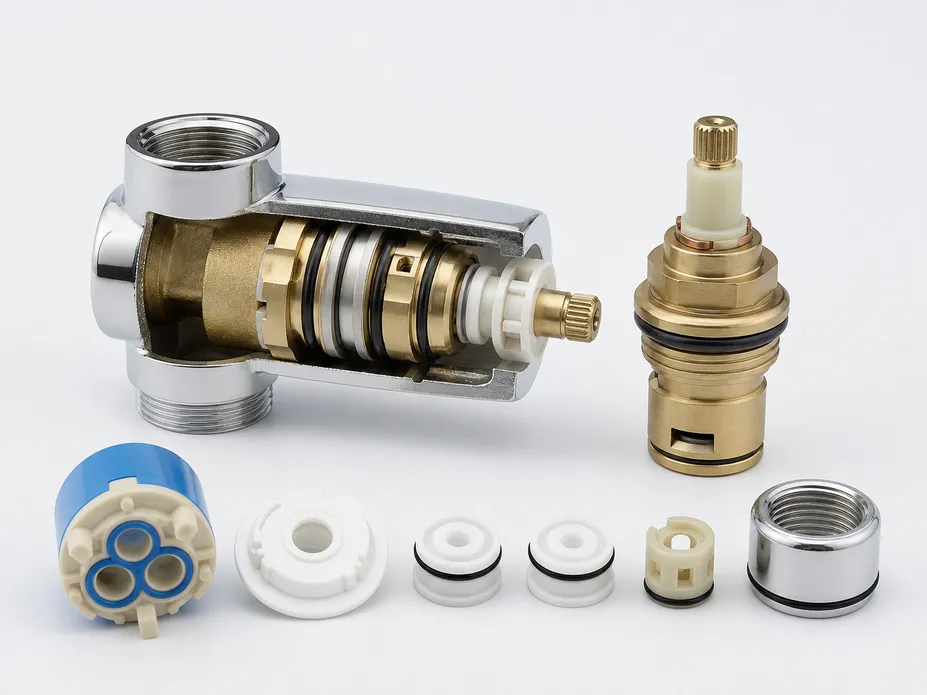
Wfaucet shower faucet ceramic disc cartridge — 500,000 cycle tested, pressure balance spool mechanism

Ceramic Disc Cycles

500,000+

Lab-tested, no measurable seat wear

Thermostatic Accuracy

±2°C

At set point under variable supply

Pressure Balance Variance

±1.8°F

Half ASSE 1016 allowable limit

Inlet Pressure Range

15–125 PSI

Operates across global supply conditions

Cartridge Configuration by SKU

  • Single-handle shower faucets — ceramic disc pressure balance cartridge, ASSE 1016 compliant
  • Thermostatic shower systems — dual thermostatic + volume control cartridge, ±2°C accuracy
  • Two-handle configurations — individual ceramic disc cartridges per handle, replaceable in field
  • All cartridges — available as spare parts; buyers can offer aftermarket service revenue to their customers

Surface Finishing

Finish Durability: PVD vs. Electroplating

Finish failure is the most visible warranty trigger in the faucet category. It's also the most preventable — if the right process is specified at the right price point.

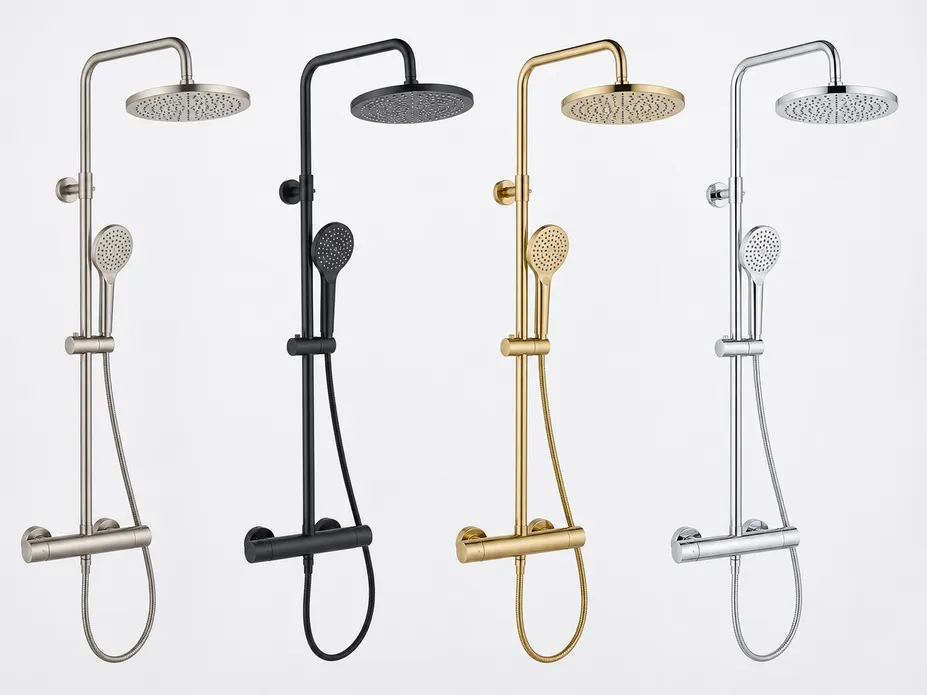
Wfaucet shower faucet PVD finish options — brushed nickel, matte black, brushed gold, polished chrome

Available Finish Options

Polished Chrome

Electroplate — standard

Brushed Nickel

PVD — premium

Matte Black

PVD — premium

Brushed Gold

PVD — premium

Brushed Bronze

PVD — premium

Brushed Chrome

PVD — premium

How PVD Differs from Electroplating — and Why It Matters for Warranty

Electroplating deposits a metal layer onto the brass substrate through an electrochemical process. The layer is thin — typically 0.2–0.5 microns for chrome — and bonded to the surface rather than integrated into it. In a shower environment, that bond is under constant attack: daily exposure to water, soap, cleaning products, and the mechanical abrasion of wiping. Electroplated finishes on shower faucets typically show wear at contact points within three to five years in heavy-use installations.

PVD — Physical Vapor Deposition — works differently. The finish material is vaporized in a vacuum chamber and deposited onto the substrate at the atomic level, forming a bond that's effectively part of the surface rather than a coating on top of it. The result is a finish that's 3–5x harder than electroplate by Vickers hardness measurement and resistant to the chemical attack that degrades electroplated finishes in shower environments.

PVD Performance Data

Salt Spray Resistance

480 hours neutral salt spray (NSS) per ASTM B117 — no blistering, no corrosion at scribe

Surface Hardness

2,000–3,000 HV Vickers — 3–5x harder than standard electroplate chrome

Chemical Resistance

Tested against common bathroom cleaners including bleach-based products — no finish degradation

When to Specify PVD vs. Electroplate for Your Market

Polished chrome on electroplate is the right specification for price-sensitive residential replacement and volume builder programs where the buyer's customer is making a decision on installed cost. The finish performs adequately in normal residential use and the price point is competitive.

PVD is the right specification for any project where the finish color is a design decision — brushed nickel, matte black, brushed gold — and for any hospitality or multi-unit residential project where the buyer is carrying warranty exposure beyond two years. The cost premium for PVD over electroplate at the FOB level is recoverable in the first warranty claim you don't have to process.

Product Architecture

Trim Kit Architecture and Handle Configurations

How the trim kit is structured determines your SKU count, your inventory exposure, and how easily your buyers can service installations in the field.

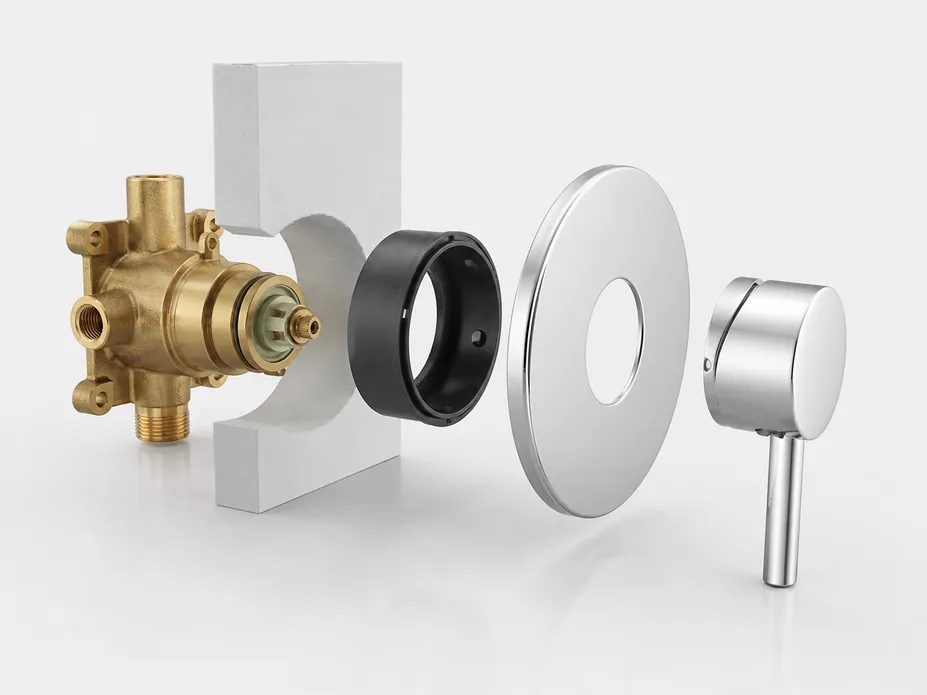
Rough-In Valve and Trim Separation

Our shower faucet line separates the rough-in valve body from the trim kit. The valve body is installed in the wall during rough-in — before tile, before drywall finish. The trim kit — handle, escutcheon plate, and shower arm/head if included — is installed after the finish work is complete.

This architecture matters commercially because it means a buyer can stock one rough-in valve SKU and offer multiple trim configurations against it. A plumber or contractor who has already installed the rough-in valve can upgrade the trim finish or handle style without opening the wall. For buyers selling into renovation and remodel channels, that's a meaningful selling point.

Handle Configuration Options

We offer three handle configurations across the shower faucet line, each targeting a different segment of the market:

Single-Handle Lever

Volume and temperature on one handle. Highest velocity in the residential replacement and builder segments. Easiest installation for plumbers.

Two-Handle Configuration

Separate hot and cold handles. Specified in traditional and transitional design projects. Higher ASP than single-handle in the same finish.

Thermostatic Dual-Control

Separate temperature and volume controls. Specified in hospitality, high-end residential, and multi-unit projects. Highest margin configuration in the line.

Wfaucet shower faucet trim kit — escutcheon plate, lever handle, and rough-in valve separation architecture

Escutcheon Plate Specification

Material Solid brass — same alloy as valve body
Finish match Same PVD/electroplate batch as handle
Wall coverage Covers standard 1/2" NPT rough-in opening
Mounting Concealed fasteners — no exposed screws
Tile clearance Adjustable depth — 1/4" to 3/4" tile thickness

SKU Architecture for Buyers

One rough-in valve SKU supports all trim configurations in the same product family. Buyers can stock the valve body and order trim kits to demand — reducing inventory exposure while maintaining the ability to fulfill multiple finish and handle configurations from a single stocked component.

Technical Data

Shower Faucet Technical Specifications

Full parameter reference for sourcing, compliance, and project specification use. Contact us for detailed product data sheets on specific configurations.

Full Specification Table

Parameter Specification
Body material C36000-equivalent free-machining brass
Body wall thickness 3.0–3.5mm
Valve configuration Pressure-balance (standard); manual mixing (available)
Cartridge type Ceramic disc
Cartridge endurance rating 500,000 open/close cycles (tested every production batch)
Valve seat thread tolerance ±0.05mm (CNC machined, gauge-verified)
Operating pressure range 0.05–0.8 MPa
Leak test pressure 0.6 MPa, 60 seconds per unit
Water temperature range 0–90°C
Available finishes Chrome, brushed nickel, matte black, PVD gold, oil-rubbed bronze
Chrome plating stack Copper base / nickel mid-coat / chrome top coat
Salt spray rating 24h minimum; 48h extended on new finish batches
PVD coating thickness 0.3–0.5μm, cross-cut adhesion tested per batch
Connection standard 1/2" NPT (North America); G1/2" (Europe/Australia)
Certifications
cUPC CE WaterMark ISO 9001:2015 SGS

Specifications shown are industry-standard values for this product type. Actual specifications may vary by configuration. Contact us for detailed product data sheets.

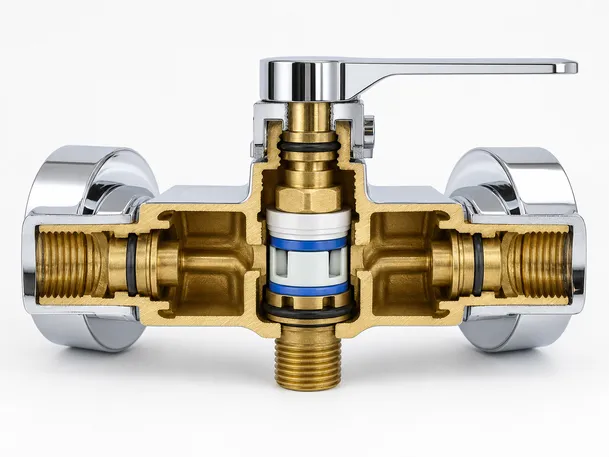
Shower faucet body cross-section showing brass construction and ceramic disc cartridge

Key Sourcing Parameters

  • 500,000-cycle cartridge endurance — tested every production batch
  • ±0.05mm valve seat thread tolerance — CNC machined, gauge-verified
  • 0.6 MPa leak test — 60 seconds per unit, 100% production
  • Dual connection standard — 1/2" NPT and G1/2" available
  • 5 finishes — chrome, brushed nickel, matte black, PVD gold, oil-rubbed bronze
Get a Quote for Shower Faucets
Quality Process

Cartridge Validation: The Process Behind the 500,000-Cycle Claim

The category page covers our cartridge engineering approach in detail — see the full tub and shower faucet overview for the complete picture. For the shower faucet specifically, here's what the 500,000-cycle endurance test means for your sourcing decision.

How the Test Runs

Every production batch — not just new product introductions

We run the endurance test on every production batch, not just on new product introductions or annual audits. The test runs at rated water pressure with temperature cycling — cold water in, hot water out, simulating real-world residential use.

What 500,000 Cycles Translates To

Real-world service life in residential use

At 500,000 cycles, the test corresponds to roughly 15–20 years of normal use at two cycles per day. A cartridge that passes this test on a correctly machined valve seat will not drip in normal residential use within any reasonable warranty period.

Documentation That Ships With Your Order

Ready for QC teams and project engineers

The test reports travel with your shipment documentation. Your QC team has the data without requesting it separately, and your compliance team has the documentation if a downstream customer or project specification requires it. We've had buyers in the Middle East and Southeast Asia use these reports to satisfy project engineer requirements on hospitality procurement contracts — the documentation is formatted for that kind of use.

Ceramic disc cartridge endurance test setup showing pressure cycling equipment

The Failure Mode That Generates Most Warranty Claims

One thing we've learned from years of cartridge qualification: the failure mode that generates the most warranty claims isn't cartridge wear — it's cartridge-to-seat mismatch.

A cartridge from a qualified supplier installed in a body with a loose seat tolerance will fail early regardless of the cartridge's own quality. That's why we hold the seat tolerance and verify it, not just the cartridge spec.

±0.05mm

Seat thread tolerance

100%

Gauge-verified per unit

500,000-Cycle Life Equivalent

Daily use (2 cycles/day) ~685 years
Heavy use (5 cycles/day) ~274 years
Residential warranty period (10 yr) Covered

At 500,000 cycles with temperature cycling at rated pressure. Residential warranty period shown as proportion of total tested life.

Finish Consistency

Five Finishes, One Factory: What That Means for Your Catalog

Chrome, brushed nickel, matte black, PVD gold, and oil-rubbed bronze all run on our own finishing lines. For a buyer building a coordinated bathroom hardware catalog — shower faucet, bathtub filler, bathroom sink faucet — finish consistency across SKUs is a real commercial concern.

The Catalog Consistency Problem

If your shower faucet and your sink faucet come from two different factories, the brushed nickel on one will not match the brushed nickel on the other. Different bath chemistry, different process parameters, different visual result. Your downstream customers notice, and it generates returns and complaints that erode your margin.

When all five finishes run in-house on the same chemistry and the same process parameters, the brushed nickel on your shower valve matches the brushed nickel on every other SKU in your order. That consistency is what lets you sell a coordinated bathroom collection rather than a collection of individual products that happen to share a color name.

Chrome & Brushed Nickel: Three-Layer Electroplating

1

Copper Base Coat

Foundation layer for adhesion and surface leveling

2

Nickel Mid-Coat

The corrosion barrier — skipping it is a common cost-cutting move in the industry, and it's why you see chrome faucets from some factories failing salt spray at 48 hours

3

Chrome or Brushed Top Coat

Final decorative layer applied over the full corrosion-resistant stack

Salt spray performance: Our chrome passes 24-hour salt spray as a minimum, with most batches clearing 48 hours. For buyers supplying coastal markets or humid climates — Southeast Asia, the Gulf, coastal Australia — that extra corrosion margin is the difference between zero warranty claims and a container of returns.

Five shower faucet finishes — chrome, brushed nickel, matte black, PVD gold, oil-rubbed bronze — produced on in-house finishing lines

Matte Black: PVD, Not Paint

0.3–0.5μm

PVD coating thickness

Every Batch

Cross-cut tape adhesion test

Matte black runs on a PVD line, not a paint or powder process. In a shower environment — daily water contact, temperature cycling, soap and cleaning product exposure — spray finishes on brass tend to show edge lifting within two to three years.

PVD doesn't lift. For buyers supplying markets where matte black is a premium finish category, that durability difference is a selling point your downstream customers can verify over time.

Five Available Finishes

Chrome 3-layer electroplate · 24–48hr salt spray
Brushed Nickel 3-layer electroplate · matched bath chemistry
Matte Black PVD · 0.3–0.5μm · batch adhesion tested
PVD Gold PVD process · in-house line
Oil-Rubbed Bronze In-house · consistent batch-to-batch
Market Intelligence

Market Segments Where Shower Faucets Move

Four distinct buyer segments drive volume for this SKU. Understanding which segment your business operates in determines the right configuration, certification package, and order structure.

Residential renovation bathroom with two-handle shower faucet installation

Residential Renovation Supply

Volume Driver

The volume driver for this SKU in North America and Europe. Bathroom renovation cycles run 8–15 years, and the replacement market is large and predictable. Distributors supplying plumbing wholesalers and home improvement retailers typically run 1,000–3,000 units per SKU per order in this segment.

Configuration Note

The two-handle configuration is the dominant spec in European renovation, where separate hot and cold controls are the standard expectation. For North American renovation volume, the single handle shower faucet is the higher-volume SKU.

1,000–3,000 units/SKU NA & Europe
Commercial hotel bathroom with consistent shower faucet specification across multiple units

Commercial & Multi-Unit Residential

Cert-Driven

Where the certification coverage earns its keep. Hotel chains, apartment developers, and student housing projects sourcing for new construction or renovation typically specify a consistent finish and configuration across all units — 50 to 500 rooms, same SKU, same finish, same documentation package.

Cross-Market Advantage

The cUPC and WaterMark certifications on the same product body mean the same SKU clears customs in both the US and Australia without a separate compliance run. We've shipped hotel procurement orders to buyers in the UAE, Southeast Asia, and Australia in this configuration.

50–500 rooms/project UAE, SEA, Australia
Plumbing wholesale distribution warehouse with bathroom hardware catalog SKUs

Plumbing Wholesale Distribution

SEA & Middle East

Southeast Asia and the Middle East tend to run broader SKU mixes at lower per-SKU volumes — a distributor building a bathroom hardware catalog might order 200–500 units across six or eight SKUs in a single container. Our OEM MOQ of 200 pieces per SKU is structured for exactly this pattern.

First-SKU Logic

The shower faucet is typically one of the first SKUs a new distributor adds to their catalog because it's the most universally specified product in the category.

200–500 units/SKU 6–8 SKUs per container
Plumbing contractor reviewing shower faucet specification documentation for multi-unit project

Contractor Supply for Project Work

Spec-Critical

Plumbing contractors supplying multi-unit residential or commercial fit-out projects — a segment where the certification documentation and consistent specification matter as much as the product itself. A contractor writing a shower faucet into a project specification needs to know the product will pass inspection in their jurisdiction.

Certification Coverage

cUPC US & Canada
CE Europe
WaterMark Australia

All three on the same product body means your contractor customers can specify it across markets without sourcing a different product for each.

Hospitality Procurement in Southeast Asia

This segment has grown significantly over the last three years. Hospitality procurement in Southeast Asia in particular tends to run larger per-project volumes than residential renovation, and the documentation requirements are well-defined. The combination of cUPC, CE, and WaterMark on a single product body — with consistent finish across all bathroom hardware SKUs — is the specification profile that hotel procurement teams in this region are looking for.

200 pcs

OEM MOQ per SKU

3 Certs

cUPC · CE · WaterMark

OEM & ODM

OEM Configuration: What Can Be Customized and What Can't

Custom work on shower faucets is common — bathroom hardware buyers building coordinated collections need the shower valve to share handle design, trim plate profile, and finish with the rest of their line. We handle that kind of collection development regularly, and the in-house tooling room means handle design revisions don't go to an outside vendor and add weeks to the timeline.

What's Customizable

Handle Design

Custom handle geometry from your 2D drawing or reference sample. Tooling lead time for a new handle casting die: 15–20 days. Revision to an existing die: 7–10 days.

Trim Plate Profile

Custom escutcheon and trim plate shapes to match your collection design language. The trim plate is a separate casting from the valve body, so trim customization doesn't require re-certification of the valve.

Finish

All five in-house finishes available on OEM runs. Custom finish development — a specific brushed gold tone, a custom PVD color — is available on runs over 500 units.

Valve Configuration

Pressure-balance standard; manual mixing available. Thermostatic cartridge is available on OEM runs, but requires a different valve body casting — it's a separate SKU, not a drop-in swap.

Connection Standard

NPT for North America, G-thread for Europe and Australia — specified at order confirmation, not a tooling change.

Private Label Packaging

Your brand name, logo, and packaging design on all cartons and product documentation.

What Can't Be Customized Without Re-Engineering

The valve body casting geometry is fixed for a given certified SKU. Handle and trim plate changes don't affect the valve body, so they don't require re-certification. Changes to the valve body itself — internal geometry, port sizing, cartridge interface — require a new casting and a new certification run.

We'll tell you upfront if your customization request crosses that line, so you're not surprised by the timeline or cost.

OEM Run Parameters

MOQ per SKU 200 pieces
First sample (from 2D drawing or reference product) 25–35 days
Modified sample (from existing catalog SKU) 15–20 days
In-house tooling room for OEM shower faucet handle casting die production
Certifications

Compliance Coverage by Destination Market

The shower faucet category has market-specific certification requirements that vary significantly by destination. We hold the certifications that cover the three major export markets.

Certification Status by Market

Market Required Certification Our Status
North America (US/Canada) cUPC (IAPMO) Certified
Europe CE marking Certified
Australia / New Zealand WaterMark (AS/NZS) Certified
International / General ISO 9001:2015, SGS Certified

cUPC

IAPMO

CE

Europe

WaterMark

AS/NZS

ISO 9001

:2015

Lead Content Compliance — NSF/ANSI 61 & 372

The cUPC certification covers lead content compliance under NSF/ANSI 61 and 372. We test every incoming brass batch for lead content using XRF analysis and apply the same standard to all production regardless of destination market.

North American Customs Pre-Clearance

For North American shipments, we prepare HS code classification and can provide binding ruling references for customs pre-clearance if your broker needs it.

Multi-Market Distributors: One SKU, Two Certifications

For buyers supplying multiple markets from a single SKU — a common pattern for distributors in Southeast Asia who also supply Australia — the CE and WaterMark certifications on the same product body mean you're not managing two separate product lines to cover your compliance footprint.

Confirm at the RFQ stage and we'll specify the correct connection thread (NPT vs G-thread) for each destination market's cartons.

Shower faucet compliance certifications — cUPC, CE, WaterMark, ISO 9001

Logistics & Export

Packaging, Container Loading, and Export Documentation

Everything your freight forwarder needs is prepared in parallel with production — no chasing documents after the container is loaded.

Shower faucet sets packed in export cartons ready for container loading

Packing Density by Configuration

Volume per unit (valve body, trim plate, handle, hardware) 0.008–0.012 CBM
Units per 40HQ container (shower faucets) 800–1,200 units
Lead time — standard catalog items 25–35 days
Lead time — OEM orders with new tooling 35–50 days

Packing Sequence Calculation

We calculate the packing sequence to minimize void space and provide a packing list with CBM and gross weight per SKU before you confirm the order. Your freight forwarder can quote accurately before production starts — not after the container is loaded.

Mixed-SKU Container Coordination

For mixed-SKU orders combining shower faucets with other tub and shower products, we coordinate the packing sequence across SKUs and provide a consolidated packing list. Consolidating multiple SKUs into one container is the most common order pattern from Southeast Asian and Middle Eastern distributors — the logistics documentation is set up for it.

Documentation Prepared in Parallel

Export documentation is prepared in parallel with production — not queued after the container is ready. Your QC team has the data without requesting it separately.

Commercial Invoice Packing List Certificate of Origin cUPC Test Report CE Test Report WaterMark SGS Salt Spray Report Endurance Test

Buyer Questions

Shower Faucet Sourcing FAQ

The questions distributors and project buyers ask most often — answered with the specifics that matter for sourcing decisions.

What is the MOQ for shower faucets?

200 pieces per SKU for both standard catalog items and OEM orders. Mixed-SKU orders are common — we can combine shower faucets with other tub and shower SKUs in one container. If you're testing a new SKU in your market, 200 pieces is low enough to run a market test before committing to a full container.

Pressure-balance vs. manual mixing: which configuration should I specify?

Pressure-balance is the standard for North American residential and commercial applications — it's required by most US and Canadian plumbing codes for shower valves because it prevents scalding when another fixture draws cold water. Manual mixing (separate hot and cold controls) is the standard in European and Australian residential construction and in commercial applications where the water supply pressure is stable and precise temperature control is preferred.

If you're supplying multiple markets, specify at order confirmation — the connection thread changes (NPT vs G-thread), but the valve body casting is the same.

Which finish holds up best in a humid or coastal market?

PVD finishes (matte black and PVD gold) are the most corrosion-resistant in wet environments. The PVD process bonds the coating at the molecular level; it doesn't lift or peel in daily shower use.

Chrome and brushed nickel are reliable if the plating stack is correct — our three-layer copper/nickel/chrome process passes 48-hour salt spray on most batches. For coastal markets specifically, ask for the 48-hour salt spray test report for the batch you're ordering.

Oil-rubbed bronze has a living finish characteristic — it develops patina over time, which some markets accept and others don't. Confirm with your downstream buyers before specifying it for a humid climate project.

Can the same shower faucet SKU ship to both the US and Australia?

Yes, if it carries both cUPC and WaterMark certification. Most of our standard shower faucet SKUs hold both. The connection thread differs — NPT for North America, G1/2" for Australia — so we pack the correct thread configuration per destination market's cartons. Confirm at the RFQ stage.

What documentation comes with each shipment?

Commercial invoice, packing list, certificate of origin, and the applicable test reports (cUPC, CE, WaterMark, SGS, salt spray, 500,000-cycle endurance test) for the destination market. The test reports travel with the shipment — your QC team has the data without requesting it separately.

How do I know the finish on my shower faucet will match the other SKUs in my order?

All five finishes run on our own finishing lines using the same bath chemistry and process parameters across all product lines. If your shower faucet and your bathtub filler are both in brushed nickel, they run through the same plating line on the same chemistry. The visual match is controlled by one team, not coordinated across two factories.

Tub & Shower Range

Other Products in the Tub & Shower Range

The shower faucet is the foundational SKU in this category. Depending on your market and catalog requirements, you may also need the following configurations.

Start Your Sourcing Conversation

Ready to Source
Shower Faucets Direct?

Tell us your target market, the configuration you're evaluating — pressure-balance or manual mixing, finish, connection standard — and your volume expectations. We'll come back with a detailed quote and a recommendation on which configuration fits your market best.

How Most New Buyers Start

Most new buyers in this category start with a sample order across two or three finishes to test with their own customers before committing to a full container. We can structure a sample order around your target SKUs.

Request a Quote

Share your requirements and we'll respond with pricing, lead times, and a configuration recommendation within one business day.