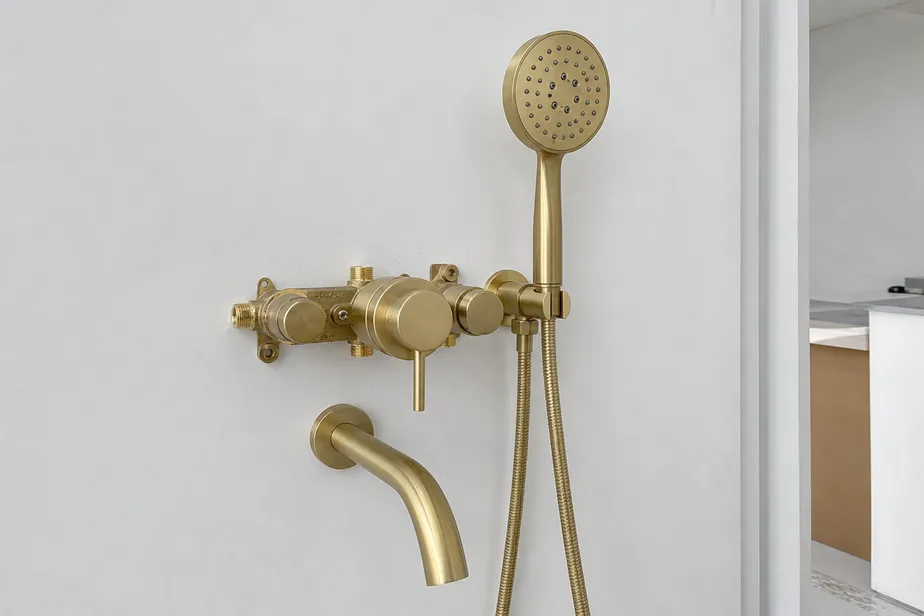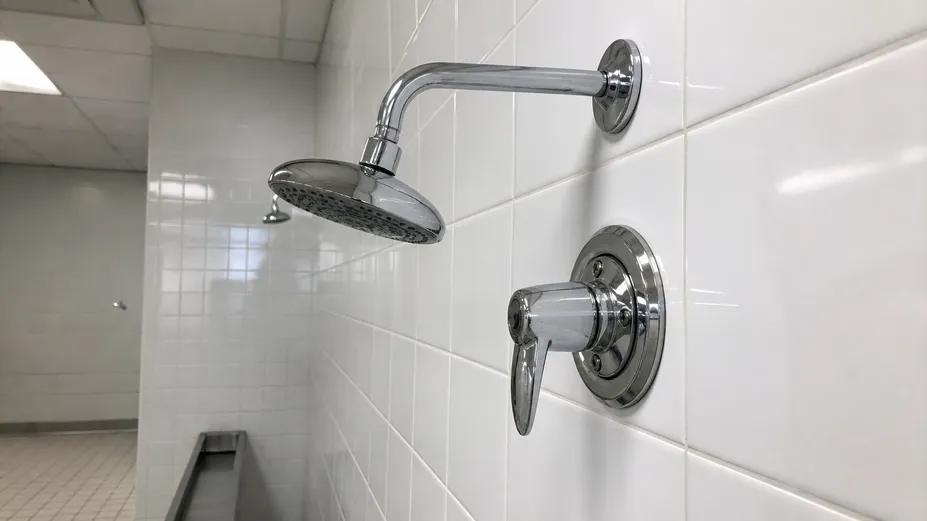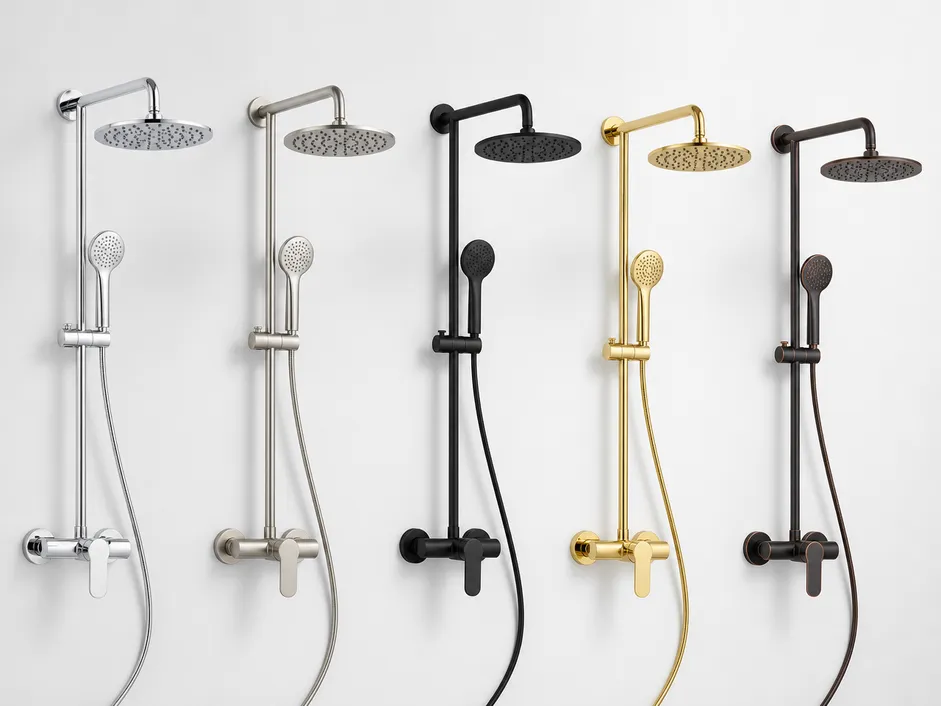

Exposed wall-mount shower valve assemblies — brass body, certified cartridge, five in-house finishes. Built for renovation projects and commercial installs where surface-mounted hardware is the right call. Every batch endurance-tested to 500,000 cycles before it ships.
Sourcing Logic
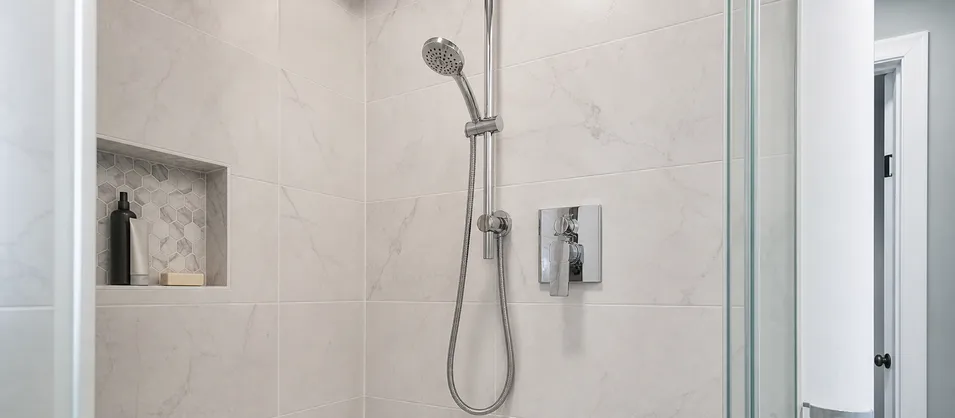
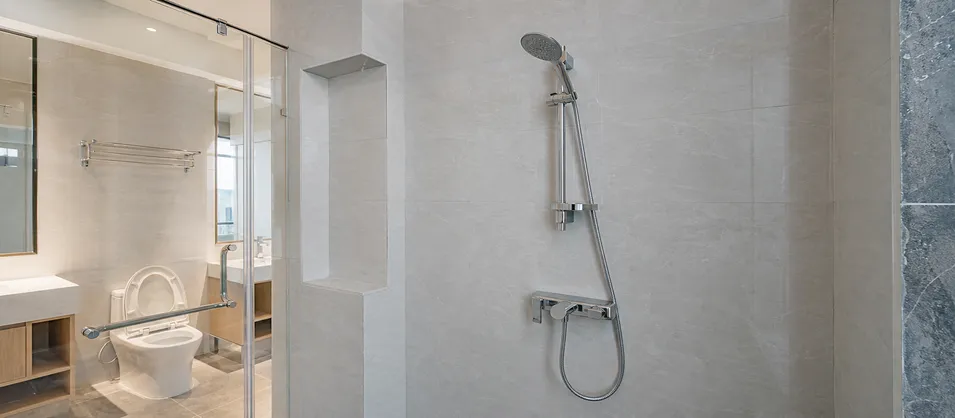
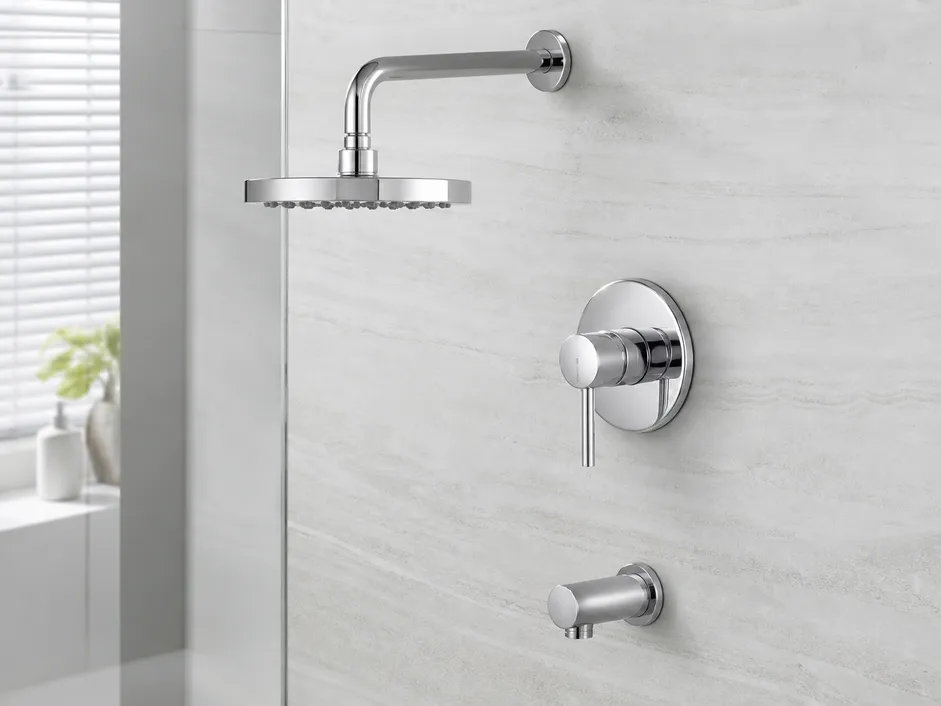
The wall mount shower faucet is a specific product with a specific commercial logic. Everything — valve body, handle, shower arm, trim plate — sits on the wall surface. No rough-in valve buried in the wall cavity, no tile cutout for a trim kit, no coordination with a plumber to set a blocking plate at the right depth before the tile goes in. That surface-mounted profile is exactly why this product moves in two distinct market segments: renovation projects where the wall is already tiled and in-wall rough-in isn't practical, and commercial or institutional installs where maintenance access to the valve matters.
We've been manufacturing wall mount shower faucets since the early years of our export business, and the product has stayed in our line because the demand pattern is consistent. Renovation contractors in North America and Europe specify it regularly — it's the path of least resistance when a bathroom remodel doesn't include a full gut of the shower wall. Hospitality buyers in Southeast Asia and the Middle East use it in commercial shower rooms where the exposed valve profile is actually preferred for its clean, accessible look. Both segments order in volume, and both need a product that holds up to daily use without generating service calls.
The core difference between this product and the single-handle shower faucet in our line is the mounting approach. The single-handle is designed for new construction with a concealed rough-in valve — the trim plate covers the wall opening and the valve body is hidden. The wall-mount is fully exposed: the valve body is a visible design element, the shower arm extends from the wall surface, and the handle operates directly on the exposed valve. That means the casting quality, finish consistency, and dimensional precision of the valve body are all visible to the end user — and to your downstream customer's customer. We cast these bodies to the same tolerances as our concealed valve line, because the exposed configuration leaves no room to hide a rough casting.
Wall already tiled, in-wall rough-in isn't practical. Surface-mount is the path of least resistance for contractors in North America and Europe.
Hospitality buyers in Southeast Asia and the Middle East prefer the exposed valve profile for its clean look and direct maintenance access.
Key Differentiator vs. Concealed Valve
The single-handle shower faucet uses a concealed rough-in valve hidden behind a trim plate. The wall-mount is fully exposed — valve body, shower arm, and handle are all visible design elements. Casting quality and finish consistency are not hidden; they're the product.
Manufacturing Quality
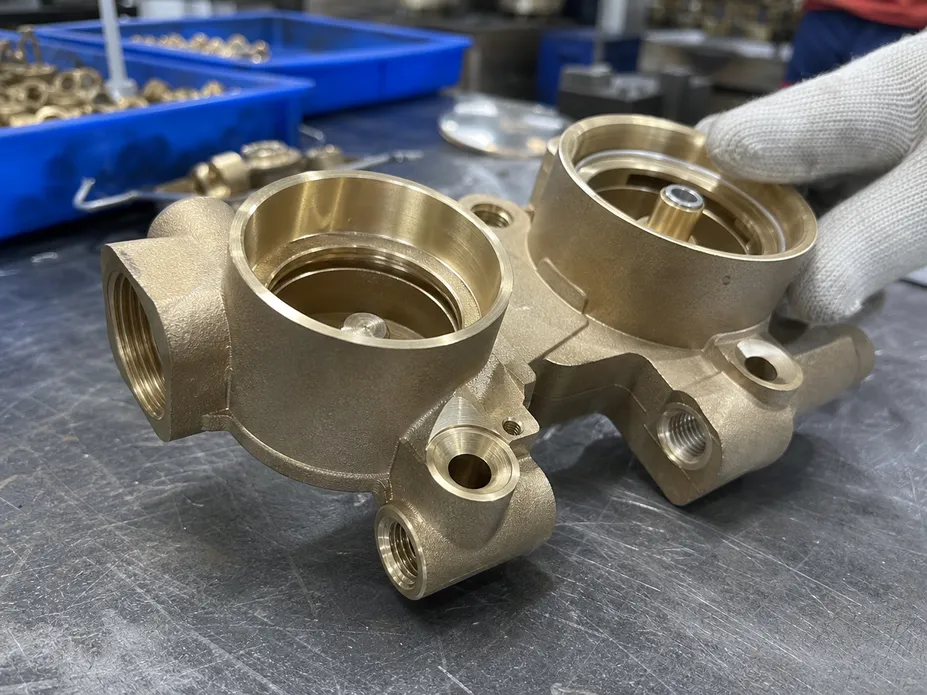
The valve body on a wall mount shower faucet is not hidden behind a trim plate. It sits on the wall, in plain view, and your downstream customer looks at it every day. That changes the quality calculus compared to a concealed valve — surface finish consistency, casting line visibility, and dimensional symmetry all matter in a way they don't when the body is buried in the wall.
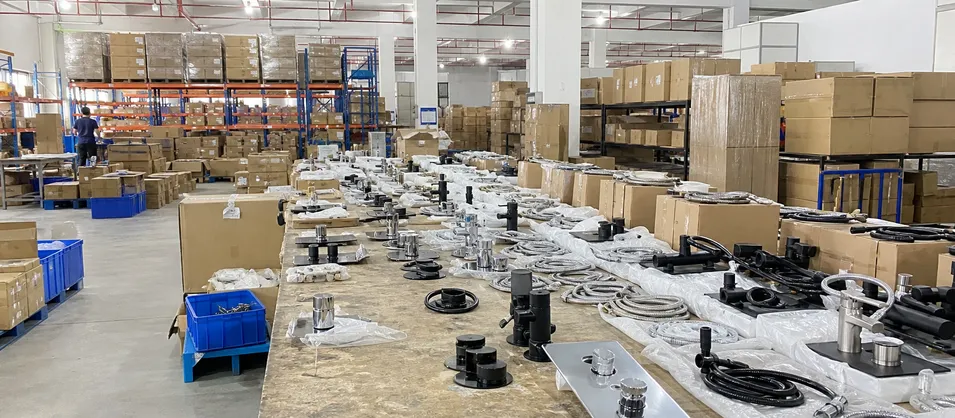
We cast wall mount shower valve bodies from C36000-equivalent free-machining brass using gravity casting. The gravity casting process produces denser brass with lower porosity than die casting — that matters for two reasons on this product. First, lower porosity means fewer surface defects that show through the finish on an exposed body. A pinhole or a casting seam that would be invisible under a trim plate is a visible defect on a wall-mount valve, and it generates returns. Second, denser brass holds the machined thread tolerances better over time — the valve seat interface stays tight through years of thermal cycling and daily use.
After casting, every body goes through CNC machining where we hold valve seat thread tolerances to ±0.05mm. That tolerance is the same spec we run on our concealed valve line, and it's tighter than what most factories hold on exposed valve bodies — where the assumption is that the cartridge will compensate for looser tolerances. We don't make that assumption. A loose valve seat is the most common source of drip failure in the field, and drip failures generate warranty claims regardless of whether the valve is concealed or exposed.
Post-machining, bodies move to the finishing line. For wall-mount valves, we run a post-machining visual inspection specifically for casting line visibility and surface texture consistency before any plating or PVD work begins. Parts that show visible casting lines or surface irregularities are rejected at this stage — not after plating, where the defect would be locked under the finish and might not show until the product is installed.
We added this pre-plating visual check specifically for exposed valve bodies after we saw a batch of chrome wall-mount valves come back from a European buyer with complaints about visible casting marks under the chrome. The check adds about 4 minutes per body, but it's the right place to catch the problem.
Casting & Machining Specs at a Glance
Material
C36000-equivalent free-machining brass, gravity cast
Valve Seat Thread Tolerance
±0.05mm — same spec as concealed valve line
Pre-Plating Inspection
100% visual check for casting lines and surface texture before any plating or PVD work
Endurance Testing
500,000-cycle cartridge test per batch before shipment
Why This Matters for Your Catalog
An exposed valve body is a visible design element in your downstream customer's bathroom. Casting defects that would be hidden under a trim plate on a concealed valve are return-generating defects on a wall-mount. Our pre-plating rejection process means those defects are caught at the factory, not in the field.
Industry-standard values for this product type. Actual specifications may vary by configuration. Contact us for detailed product data sheets.
| Parameter | Specification |
|---|---|
| Body material | C36000-equivalent free-machining brass |
| Body wall thickness | Typical 3.0–3.5mm |
| Mounting type | Surface wall-mount (fully exposed) |
| Valve cartridge type | Ceramic disc, pressure-balance |
| Cartridge endurance rating | 500,000 open/close cycles (tested every batch) |
| Valve seat thread tolerance | ±0.05mm (CNC machined) |
| Operating pressure range | 0.05–0.8 MPa |
| Leak test pressure | 0.6 MPa, 60 seconds per unit |
| Parameter | Specification |
|---|---|
| Water temperature range | 0–90°C |
| Shower arm connection | Standard 1/2" NPT (North America) / G1/2" (Europe, Australia) |
| Available finishes | Chrome, brushed nickel, matte black, PVD gold, oil-rubbed bronze |
| Chrome plating stack | Copper base / nickel mid-coat / chrome top coat |
| Salt spray rating | 24h minimum; 48h extended on new finish batches |
| PVD coating thickness | 0.3–0.5μm, cross-cut adhesion tested per batch |
| Certifications |
cUPC CE WaterMark ISO 9001:2015 SGS
|
Specifications shown are industry-standard values for this product type. Contact us for configuration-specific data sheets.
Wall mount shower faucets are frequently specified as part of a coordinated bathroom hardware collection — the shower valve, the tub filler, the bathroom sink faucet, all in the same finish. If those pieces come from different factories, finish consistency between them is a problem you'll hear about from your downstream customers.
Three-layer electroplating: copper base coat, nickel mid-coat, chrome top coat. The nickel mid-coat is the corrosion barrier — skipping it is a common cost-cutting move in the industry, and it's why you see chrome faucets from some factories failing salt spray at 48 hours. Our chrome passes 24-hour salt spray as a minimum, with most batches clearing 48 hours.
Same three-layer electroplating process as chrome. Every piece in a mixed-SKU order runs through the same chemistry, the same process parameters, and the same QC inspection — so the brushed nickel on your wall-mount shower valve matches the brushed nickel on your tub filler.
Runs on a PVD line, not a paint or powder process. PVD coating thickness is 0.3–0.5μm, with cross-cut tape adhesion testing on every batch before parts move to assembly. PVD is used rather than a spray finish because of adhesion durability in wet environments — a shower faucet sees daily water contact and temperature cycling, and spray finishes on brass in that environment tend to show edge lifting within two to three years. PVD doesn't lift. For buyers building a matte black bathroom collection — a finish that has moved consistently in North American and European renovation markets — the PVD process is what keeps your return rate low.
Physical vapor deposition process. Same 0.3–0.5μm coating thickness and batch-level adhesion testing as matte black. Consistent color match across mixed-SKU orders when specified alongside other PVD finishes in the same collection.
Has a living finish characteristic — it develops patina over time. Some markets accept this and some don't. If you're targeting a humid climate market, confirm with your downstream buyers before specifying it for a wall-mount shower application.
Same chemistry and process parameters across every SKU in a collection order — shower valve, tub filler, sink faucet all match.
Three-layer chrome plating with nickel mid-coat — the corrosion barrier most factories skip to cut costs.
24h salt spray minimum on chrome; most batches clear 48h — relevant for coastal markets, Southeast Asia, the Gulf, coastal Australia.
PVD for matte black and gold — not spray or powder. No edge lifting in wet environments after two to three years of daily use.
Cross-cut adhesion testing on every PVD batch before parts move to assembly.
For buyers supplying coastal markets or humid climates — Southeast Asia, the Gulf, coastal Australia — the extra corrosion margin from the nickel mid-coat is the difference between zero warranty claims and a container of returns. Specify chrome or brushed nickel with the full three-layer stack, and confirm salt spray batch results before shipment.
We can send physical finish samples for your collection review before you commit to a production order.
Four distinct procurement channels drive consistent reorder volume for this product. Understanding which segment your buyers operate in determines the right SKU mix, finish priorities, and certification requirements before you place your first order.
Primary Volume Driver
The primary volume driver for this product in North America and Europe. When a homeowner or contractor is retiling a shower without opening the wall, the wall-mount configuration is the practical choice — no rough-in work, no coordination with a plumber to set a blocking plate before tile.
Order Range
500–2,000 units/SKU
Reorder Cycle
Renovation season
Top-moving finishes: Chrome and brushed nickel lead volume. Matte black is growing but remains a secondary SKU for most distributors in this segment.
Underserved Opportunity
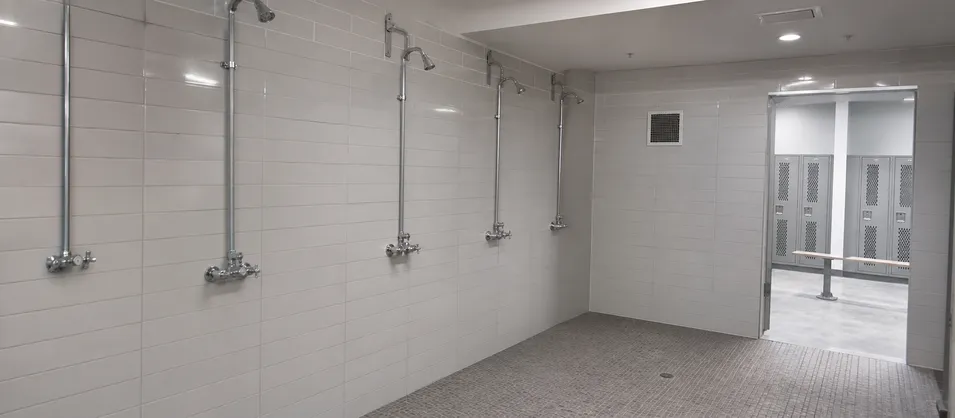
A segment often underserved by distributors who focus only on residential. Gyms, dormitories, correctional facilities, and military housing all use exposed wall-mount shower valves — the surface-mounted configuration makes maintenance straightforward, and the valve is accessible without opening the wall.
Order Range
50–500 units/project
Spec Pattern
Single SKU, all positions
Certification requirement: cUPC required for US commercial projects. CE covers European institutional procurement. If you supply plumbing contractors on commercial projects, this product belongs in your catalog.
Consistent Export Volume
A segment we've shipped into consistently over the last several years. Hotel chains renovating existing properties in these markets frequently specify wall-mount shower valves for the same reason as residential renovation — the wall is already tiled, and surface-mount is the practical path.
Order Range
100–500 units/project
Trend
Growing 3+ years
Finish split by market: PVD gold and brushed nickel move well in Gulf hospitality projects. Chrome and matte black are the dominant specs in Southeast Asian hotel renovation. Orders often carry a specific finish requirement to match the hotel's design standard.
Catalog Builder
In markets where exposed valve hardware is the norm — parts of Europe, Australia, and developing markets in Southeast Asia — wholesale distributors run broader SKU mixes at moderate per-SKU volumes. A distributor building a shower hardware catalog might order 200–500 units across three or four finish options in a single container.
Per-SKU Volume
200–500 units
OEM MOQ
200 pcs/SKU
Structured for this pattern: Our OEM MOQ of 200 pieces per SKU is designed for distributors building multi-finish shower hardware catalogs in a single container order.
Tell us your segment, finish priorities, and volume range — we'll confirm availability and lead time.
Wall mount shower faucets are specified partly because they simplify installation — but the installation still has specific requirements that affect whether your downstream buyers can use the product without surprises. Getting this information to your customers upfront reduces returns and service calls.
Supply Thread — NA
1/2" NPT
North American markets
Supply Thread — EU/AU
G1/2"
European & Australian markets
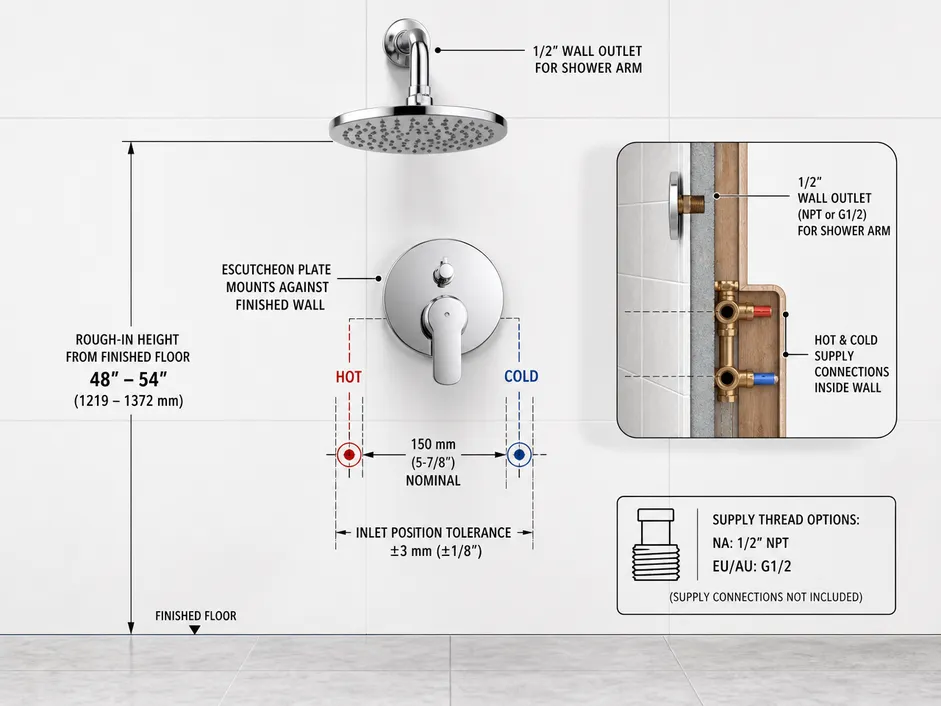
Rough-In Height
48–54"
From finished floor (market-variable)
Inlet Position Tolerance
±3mm
From nominal (tightened spec)
Shower Arm Connection
1/2" wall outlet
Standard; arm customizable on OEM
Thread Spec Timing
At order confirmation
Correct thread ships on product
The valve body mounts directly to the wall surface using a standard escutcheon plate. Supply connections are 1/2" NPT for North American markets and G1/2" for European and Australian markets — specified at order confirmation so the correct thread is on the product when it ships. The shower arm connects to a standard 1/2" wall outlet; the arm length and angle are typically fixed on catalog SKUs but can be customized on OEM runs.
Wall blocking is still required behind the tile for the supply connections — the valve mounts to the wall surface, but the supply pipes need to terminate at the correct position and height. Standard rough-in height for a wall-mount shower valve is typically 48–54 inches from the finished floor, though this varies by market and project spec. For buyers supplying contractors, including this information in your product documentation reduces installation questions and callbacks.
The fully exposed configuration means there's no trim plate to cover misaligned supply connections — the supply inlets on the valve body need to align with the wall outlets within about ±5mm for a clean installation. We hold the inlet position tolerance on our valve bodies to ±3mm from nominal, which gives the installer enough margin without requiring precise rough-in work.
We tightened this tolerance after a run of product came back from a North American distributor with installer complaints about misaligned connections — the original spec was ±8mm, which turned out to be too loose for the renovation market where the wall outlets are often set by a previous plumber and can't be moved.
Rough-in height range, inlet position tolerance, thread spec, and wall blocking requirements are all included in our product documentation package. Distributors can pass this directly to contractors and end-users to reduce installation callbacks and returns.
Related Products in the Tub & Shower Line
Custom work on wall mount shower faucets is common — buyers building a coordinated bathroom collection need the shower valve handle to match the handle design on their tub filler and sink faucet. We handle that kind of collection development regularly, and the wall-mount valve body is one of the more straightforward pieces to customize because the exposed configuration means the handle and trim plate are prominent design elements.
Handle Design
Custom handle geometry from your 2D drawing or reference sample. In-house tooling room for brass casting dies means tooling revisions don't go to an outside vendor and add weeks to the timeline.
Trim Plate / Escutcheon Profile
Custom escutcheon shapes to match your collection design language — round, square, rectangular, or custom profile.
Shower Arm Length and Angle
Standard catalog arm lengths available; custom lengths on OEM runs.
Finish
All five in-house finishes available on OEM runs. Custom PVD color development (a specific brushed gold tone, a custom bronze) is available on runs over 500 units.
Valve Configuration
Pressure-balance standard; thermostatic cartridge available on OEM runs. Note that thermostatic requires a different valve body casting, so it's a separate SKU, not a drop-in swap.
Connection Thread
NPT for North America, G-thread for Europe and Australia — specified at order confirmation.
Private Label Packaging
Your brand name, logo, and packaging design on all cartons and product documentation.
MOQ
200 pcs
per SKU
Custom PVD Finish
500+ units
minimum for custom color
First Sample (New Drawing)
25–35 days
from 2D drawing or reference
Modified Sample
15–20 days
from existing catalog SKU
If you're adding a new finish or handle variant to an existing certified body, our engineering team handles the certification extension documentation — you don't run a full re-certification from scratch.
The certification requirements for shower faucets vary by destination market, and the wall-mount configuration doesn't change those requirements — the same certifications apply as for any shower valve.
North America (US/Canada)
CertifiedcUPC (IAPMO) — NSF/ANSI 61 & 372 lead content
Europe
CertifiedCE marking
Australia / New Zealand
CertifiedWaterMark (AS/NZS)
International / General
CertifiedISO 9001:2015, SGS
The cUPC certification covers lead content compliance under NSF/ANSI 61 and 372. We test every incoming brass batch for lead content using XRF analysis and apply the same standard to all production regardless of destination market.
For North American shipments, we prepare HS code classification and can provide binding ruling references for customs pre-clearance if your broker needs it.
Single SKU for US and Australian Markets
For buyers supplying both the US and Australian markets from a single SKU — a pattern we see regularly with distributors in Southeast Asia — the cUPC and WaterMark certifications on the same product body mean you're not managing two separate product lines to cover your compliance footprint. The connection thread (NPT vs G-thread) is the only market-specific variable; we specify it at order confirmation and mark the cartons accordingly.
Logistics & Landed Cost
Accurate CBM, carton configuration, and documentation before you confirm the order — not after the container is loaded.
CBM per Unit
0.010–0.015
depending on configuration and arm length
Units per 40HQ
2,600–4,000
depending on carton config and SKU mix
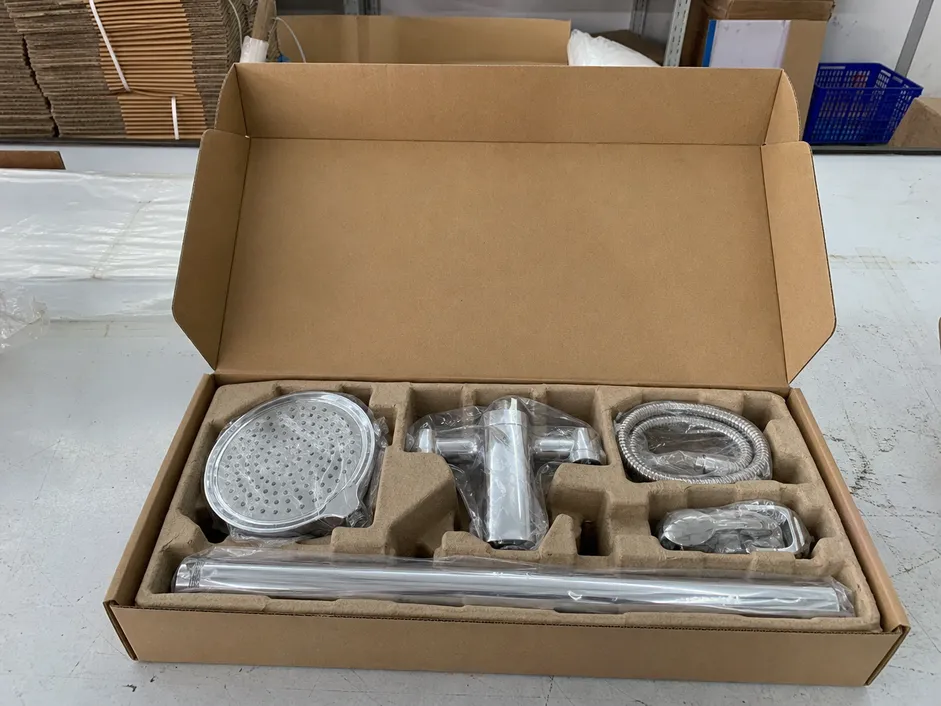
Wall mount shower valve sets — valve body, handle, escutcheon, shower arm, and hardware — pack at approximately 0.010–0.015 CBM per unit. For a 40HQ container loaded with wall-mount shower faucets, that works out to roughly 2,600–4,000 units depending on carton configuration and whether you're mixing SKUs.
For buyers consolidating multiple SKUs into one container — a common pattern for distributors building a wall-mount shower line across multiple finishes — we calculate the packing sequence to minimize void space and provide a packing list with CBM and gross weight per SKU before you confirm the order.
Your freight forwarder can quote accurately before the order is placed, not after the container is loaded.
Standard Catalog Items
In-stock tooling, existing finishes
OEM Orders with New Tooling
Custom handle, new configuration
Sourcing Decision FAQ
Direct answers to the questions that come up most often when buyers are evaluating wall mount shower faucets for their catalog or project supply chain.
200 pieces per SKU for both standard catalog items and OEM orders. Mixed-SKU orders are common — we can combine multiple finishes or configurations in one container. Below 200 units, the production scheduling and setup cost doesn't make sense for either side; above 200, we can run efficiently and hold the quality standard.
It depends on your buyer's project type. Wall-mount is the right call for renovation projects where the wall is already tiled and in-wall rough-in isn't practical, and for commercial installs where maintenance access matters. Concealed valves are the spec for new construction where the rough-in can be set before tile — they give a cleaner finished look but require more precise installation. If you're supplying renovation contractors, wall-mount moves more volume. If you're supplying new construction developers, look at our concealed shower mixer line.
For commercial shower rooms — gyms, dormitories, institutional facilities — we recommend chrome or brushed nickel with the full copper/nickel/chrome plating stack, or PVD matte black. Both pass 24-hour salt spray minimum, with most batches clearing 48 hours. Ask for the 48-hour salt spray test report for the specific batch if you're supplying a coastal or high-humidity market. Oil-rubbed bronze develops patina over time and is not our recommendation for high-traffic commercial shower applications.
Yes, if it carries both cUPC and WaterMark certification. Most of our standard wall-mount shower faucet SKUs hold both. The connection thread is the only market-specific variable — NPT for North America, G1/2" for Australia. We specify the correct thread at order confirmation and mark the cartons by destination market if you're splitting a container between the two.
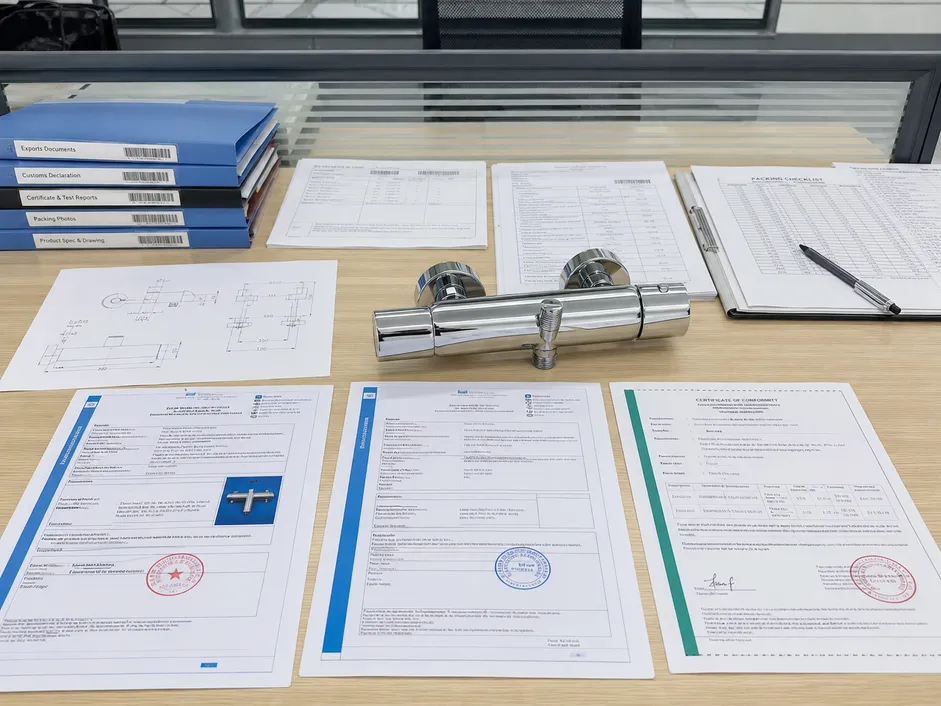
Commercial invoice, packing list, certificate of origin, and the applicable test reports (cUPC, CE, WaterMark, SGS, salt spray, 500,000-cycle endurance test) for the destination market. The test reports travel with the shipment — your QC team has the data without requesting it separately.
Yes. Send us your 2D drawing or a reference sample of your existing handle design — we'll assess tooling requirements and come back with a sample timeline and MOQ. First sample from a new drawing: 25–35 days. If the handle geometry is close to an existing catalog design, we can often modify existing tooling and turn around a sample in 15–20 days.
Tub & Shower Line
If the wall-mount configuration isn't the right fit for your project or market, the rest of our tub and shower line covers the full range of shower valve configurations.
Concealed pressure-balance valves for new construction; the dominant spec in North American residential.
View productsWall-mounted shower valve and trim assemblies in pressure-balance and manual mixing configurations.
View productsComplete shower valve sets with coordinated trim for buyers who want to offer a full shower solution.
View productsCombination tub/shower valve sets for standard North American tub/shower enclosures.
View productsIn-wall concealed valve bodies for new construction projects where a clean wall profile is the spec.
View productsSend us your target market, the finish options you're evaluating, and your volume expectations — we'll come back with a detailed quote and a recommendation on which configuration fits your distribution or project needs.
If you're building a coordinated bathroom collection and need the wall-mount shower valve to match an existing handle design, send us a reference sample or 2D drawing and we'll spec the OEM path.
Most new buyers in this product start with a 2–3 unit sample order to test with their own customers or on a pilot project before committing to a full container. We can ship samples within the standard lead time.
Contact Us Directly
Typical First Order Path
Send target market, finish options, and volume expectations
Receive detailed quote and configuration recommendation
Place 2–3 unit sample order to test with your customers or on a pilot project
Commit to full container once validated — OEM path available from 200 pcs
© 2026 Wfaucet. All rights reserved.