

The finish decision on a bathroom faucet order is not an aesthetic call. It is a warranty risk decision, a maintenance communication decision, and a market-tier positioning decision — all wrapped into one SKU choice. Get it wrong and you're fielding return claims from downstream customers who didn't understand what they were buying, or you're leaving margin on the table by specifying chrome into a market that would pay a premium for brass.
Here's the short verdict before we get into the mechanics: chrome is the default for volume, consistency, and low-maintenance end users; brass — particularly unlacquered brass — is a premium segment play that requires the right market and the right end-user communication to land without warranty headaches. The rest of this article explains exactly where each finish wins, where it fails, and what to verify before you place a finish-sensitive order.
What These Finishes Actually Are at the Surface Level
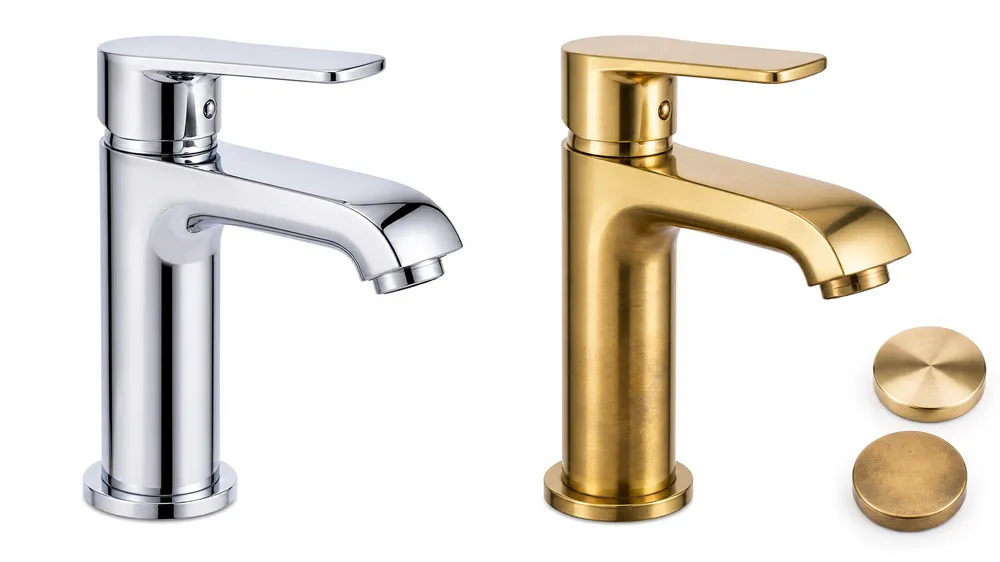
Most content on this topic treats "brass" and "chrome" as color choices. They're not. They're different surface engineering decisions with different failure modes, different maintenance profiles, and different cost structures.
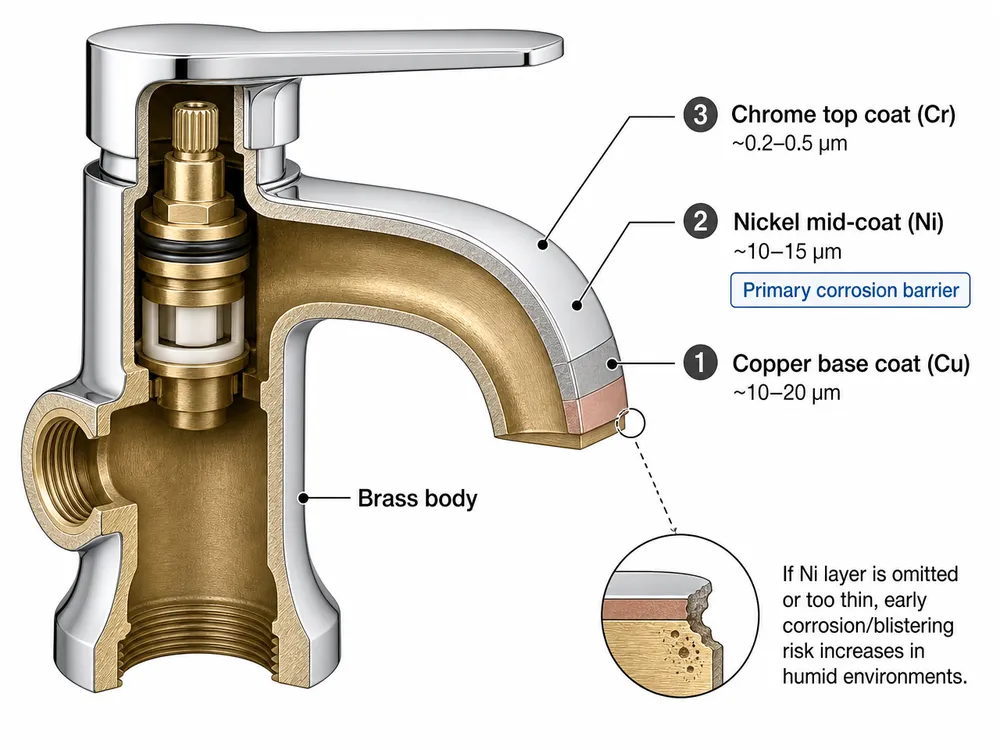
Chrome finish on a bathroom faucet is a multi-layer electroplated coating applied over the brass body. The full stack runs copper base coat → nickel mid-coat → chrome top coat. The copper layer improves adhesion to the brass substrate. The nickel mid-coat is the corrosion barrier — it's what actually protects the base metal from moisture and chlorine. The chrome top coat provides the bright, hard surface and the scratch resistance. That nickel mid-coat is also the layer that gets skipped when a factory is cutting costs. Without it, you're relying on a thin chrome layer over copper over brass, and that combination fails salt spray testing at 48 hours or less. Our chrome line runs the full Cu/Ni/Cr stack, and our standard production clears 24-hour salt spray with most batches reaching 48 hours.
Brass finish is a different category entirely, and it splits into two distinct products that behave very differently in the field:
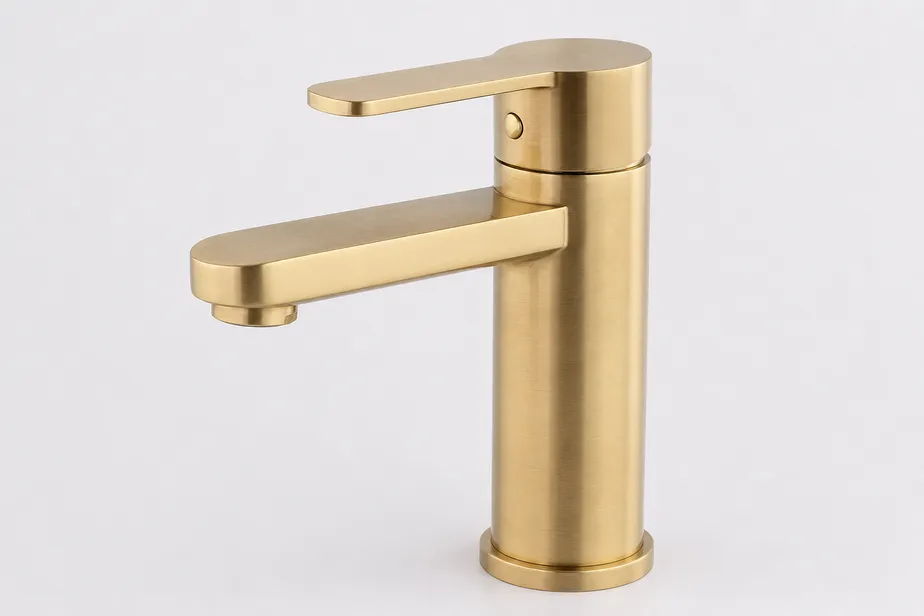
- Lacquered brass: The brass body is polished and then sealed with a clear lacquer coating. The lacquer locks in the warm gold tone and prevents oxidation. It looks consistent, it's low-maintenance, and it behaves predictably — until the lacquer chips or scratches, at which point the exposed brass oxidizes and you get uneven patina spots. Lacquered brass is the safer choice for buyers who want the brass aesthetic without the maintenance conversation.
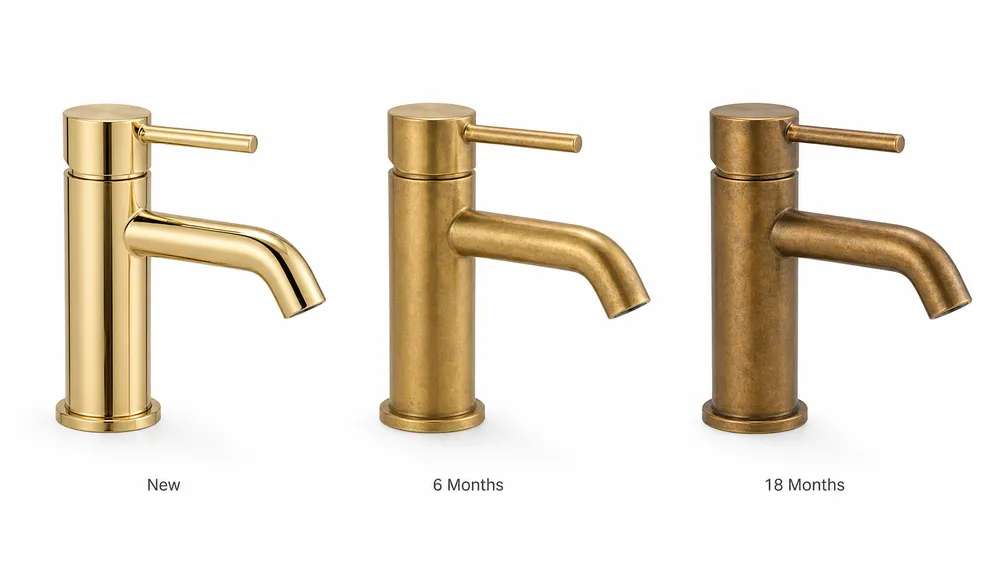
- Unlacquered brass: No protective coating. The raw brass surface is exposed to air, water, and hand contact. It will develop a patina — the surface darkens and shifts in tone over months of use. This is not a defect. It is the intended behavior of the material, and it's what the "living finish" market segment is specifically buying. But it requires explicit end-user communication, and it is absolutely the wrong finish for a buyer whose downstream customers expect a stable, consistent surface.
(We get questions about this distinction regularly from buyers who've seen unlacquered brass trending in design media and want to add it to their catalog without fully understanding the maintenance implications. The patina is the product — if your end users don't know that going in, you'll have returns.)
Chrome Finish: Plating Stack, Durability, and Where It Fails
Chrome is the workhorse finish of the bathroom faucet market for a reason. It's bright, it's hard, it's easy to clean, and when it's done correctly, it holds up in high-humidity environments for years without visible degradation. The problem is that "done correctly" is doing a lot of work in that sentence.
The failure mode we see most often in the market — and the one that generates the most warranty claims — is nickel mid-coat omission. A factory running a two-layer stack (copper + chrome, no nickel) can produce a faucet that looks identical to a properly plated unit on day one. The difference shows up at 6–18 months in a humid bathroom environment: the chrome starts to pit, blister, or develop rust spots at micro-defect sites where moisture has penetrated to the base metal. By the time the end user notices, the damage is cosmetic and irreversible. That's a warranty claim, a replacement unit, and a customer who doesn't reorder.
The salt spray test is the standard verification tool for chrome finish durability. A properly plated Cu/Ni/Cr stack should clear 24 hours minimum in a 5% NaCl salt spray chamber with no visible corrosion. Factories running the full stack with good bath chemistry and process control will typically reach 48 hours. If a supplier can't provide salt spray test reports, or if their reports show 24-hour results as a ceiling rather than a floor, the nickel mid-coat is likely thin or absent.
Chrome also has a cost advantage that matters for volume orders. The electroplating process is faster and cheaper per unit than PVD coating, and the process is well-understood across the industry. For mid-market and value-tier product lines, chrome is the finish that protects your margin while still delivering a clean, professional surface.
Where chrome loses: premium positioning. A chrome faucet in a high-end hospitality fit-out or a luxury residential remodel reads as standard. It doesn't carry the warmth or the design distinctiveness that brass does. If your buyers are selling into segments where the fixture is a design statement, chrome is leaving margin on the table.
Brass Finish: Lacquered vs. Unlacquered, and the Patina Question
Lacquered brass is straightforward to source and specify. The surface is sealed, the color is stable, and the maintenance requirement is the same as chrome — wipe it down, avoid abrasive cleaners. The risk is lacquer integrity over time. A lacquer coat that's applied too thin, or over a surface that wasn't properly prepared, will start to peel or chip within 2–3 years. When it does, the exposed brass oxidizes unevenly and the finish looks damaged rather than aged. Specify lacquered brass from a factory that controls the lacquer application process in-house and can tell you the coating thickness and adhesion test protocol.
Unlacquered brass is a different sourcing and sales conversation. The patina development timeline varies by water chemistry, humidity, and how frequently the fixture is handled — in a high-use bathroom with hard water, visible darkening can appear within 3–6 months. In a low-use guest bathroom, the surface may stay relatively bright for a year or more. Neither outcome is a defect. But if your downstream customer is expecting a stable gold surface and gets a darkening, mottled fixture, they will call it a defect regardless of what the product description says.
The market segments that buy unlacquered brass correctly are the ones where the end user has specifically chosen a living finish — boutique hospitality, high-end residential renovation, design-forward e-commerce. These buyers understand the patina and often want it. The segments where unlacquered brass generates returns are the ones where the buyer chose it for the color and didn't read the maintenance requirements: mid-market residential, rental property fit-out, any context where the end user expects zero maintenance.
We've shipped unlacquered brass to buyers in the US and European markets, and the pattern is consistent: buyers who include explicit patina communication in their product listings — photos of aged fixtures, written maintenance guides, clear "living finish" labeling — have near-zero return rates on this finish. Buyers who list it as "brass finish" without further explanation get returns. The product is the same. The communication is the variable.

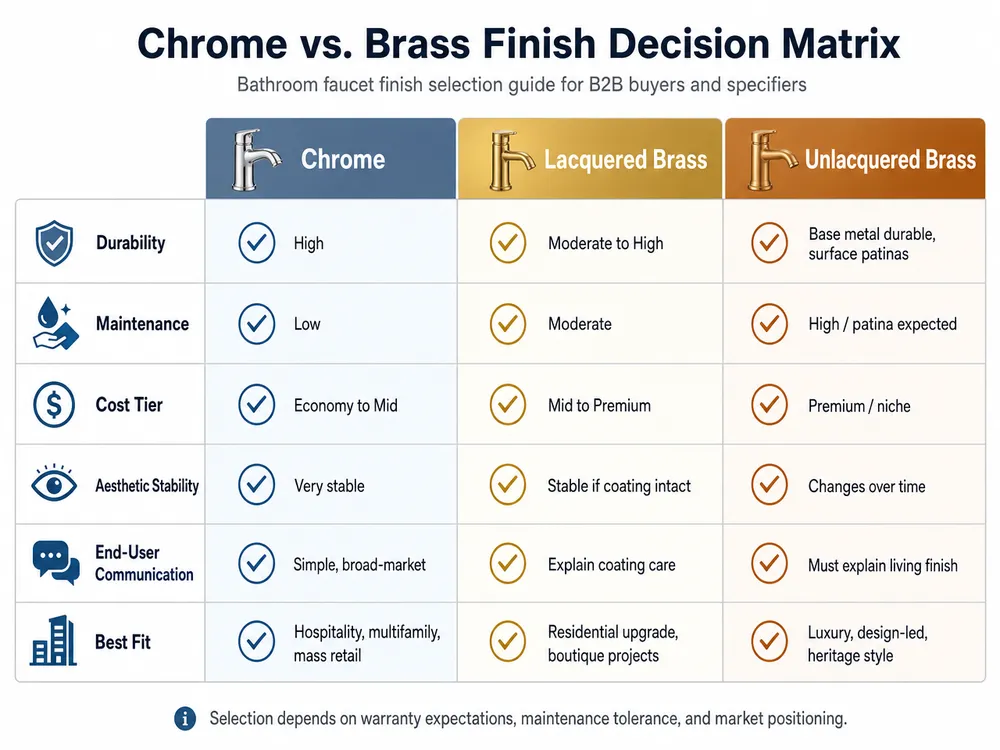
Head-to-Head: Chrome vs. Brass Finish Decision Matrix
| Dimension | Chrome (Cu/Ni/Cr Stack) | Lacquered Brass | Unlacquered Brass |
|---|---|---|---|
| Surface composition | Electroplated Cu/Ni/Cr over brass body | Polished brass + clear lacquer seal | Raw polished brass, no coating |
| Salt spray durability | 24–48h (full stack); <48h (skipped nickel) | N/A — lacquer integrity is the variable | N/A — patina is expected |
| Aesthetic trajectory | Stable, bright, consistent | Stable until lacquer failure | Darkens and develops patina over time |
| Maintenance burden | Low — wipe clean, no special care | Low — same as chrome while lacquer holds | Medium — periodic cleaning, wax or oil treatment to manage patina |
| End-user communication | Minimal | Minimal | High — patina must be explained and expected |
| Cost tier | Mid-market to premium | Mid-premium | Premium |
| Failure mode | Pitting/blistering if nickel mid-coat absent | Peeling/chipping if lacquer thin or poorly applied | Returns if end user not briefed on living finish |
| Best application fit | Volume residential, hospitality, e-commerce | Design-forward residential, boutique hospitality | Luxury residential, design-led e-commerce, boutique hospitality |
| Sourcing verification | Salt spray test report (24h+ minimum) | Lacquer thickness and adhesion test data | Patina communication materials from supplier |
Project-Type Decision Framework: Which Finish Fits Which Market
The matrix above gives you the technical picture. This section translates it into the project types your buyers are actually operating in.
Volume residential distribution — Chrome is the right call. Your buyers in this segment are selling to homeowners who want a clean, consistent surface that requires no maintenance and no explanation. Chrome at the right price point, with documented salt spray performance, is the finish that protects your margin and generates zero finish-related returns. Lacquered brass can work here if you're targeting the upper end of the residential market, but unlacquered brass will generate returns unless your distribution channel has the product knowledge to communicate the living finish correctly.
Hospitality fit-out — This is where the decision splits by project tier. Budget and mid-market hospitality (hotel chains, serviced apartments, student accommodation) runs chrome because the maintenance staff needs a surface that wipes clean without special care and holds up to cleaning chemicals. Boutique and luxury hospitality is the segment where brass — both lacquered and unlacquered — earns its premium. A boutique hotel specifying unlacquered brass fixtures is making a deliberate design statement, and the procurement team in that segment understands the maintenance implications. The risk is mid-tier hospitality buyers who want the brass look without the maintenance infrastructure — that's where lacquered brass is the safer specification.
E-commerce mid-premium — Chrome dominates the volume, but brass is where the margin is. If you're building a product line for an e-commerce seller targeting the $150–$400 retail price point, a well-specified lacquered brass faucet with strong product photography can command a 30–50% premium over a comparable chrome unit. Unlacquered brass at this tier requires strong product content — detailed patina photos, written care guides, and ideally customer reviews from buyers who understand the finish. Without that content infrastructure, the return rate on unlacquered brass in e-commerce is high.
Commercial specification (offices, healthcare, education) — Chrome, full stop. These environments need a finish that maintenance staff can clean with standard commercial cleaners, that holds up to high-frequency use, and that generates no end-user questions. Brass in a commercial specification is a liability unless the specifier has explicitly called for it as a design element and the maintenance protocol is documented.
(We've had buyers try to run unlacquered brass into rental property fit-out — the logic being that the warm tone photographs well for listings. It doesn't work. Tenants don't maintain it, the patina develops unevenly, and the property manager gets complaints. Lacquered brass or chrome for rental.)
The Sourcing Variables That Determine Finish Quality
Knowing which finish to specify is half the decision. The other half is knowing what to verify before you commit to a supplier.
For chrome: The single most important verification is the salt spray test report. Ask for the actual test report, not a spec sheet that lists "24h salt spray" as a feature. The report should show the test standard (ASTM B117 or equivalent), the test duration, the number of samples tested, and the result. A factory running the full Cu/Ni/Cr stack with proper bath chemistry will provide this without hesitation. A factory that hedges, provides a generic certificate, or can't tell you the nickel mid-coat thickness is a risk.
Also ask whether the plating is done in-house or subcontracted. Subcontracted plating means the finish quality is controlled by a third party, and finish consistency across a mixed-SKU order — where you're running chrome and brushed nickel in the same shipment — depends on that third party's process control, not your supplier's. We run all five of our finishes in-house, which means one QC team controls the plating process across your entire order. When you're mixing chrome and brushed nickel SKUs in a single container, the consistency is managed by the same team using the same process parameters.
For lacquered brass: Ask for the lacquer application process — specifically, whether it's spray-applied or dip-applied, what the cured thickness is, and what adhesion test is used. A lacquer coat below 15–20μm is thin enough to chip under normal use. Ask for accelerated weathering test data if the supplier has it — UV exposure testing will show lacquer degradation faster than field time.
For unlacquered brass: The surface preparation before the product ships matters more than most buyers realize. A properly prepared unlacquered brass surface should be clean, evenly polished, and free of machining marks or casting porosity that would cause uneven patina development. Ask for photos of the surface under good lighting before you approve a sample. Also ask what the supplier provides in terms of patina communication materials — care guides, patina timeline photos, product description language. A factory that has shipped unlacquered brass at volume will have these materials ready.
Finish consistency across mixed-SKU orders is a sourcing risk that doesn't get enough attention. If you're ordering chrome bathroom faucets and brass kitchen faucets in the same container, and the chrome is plated in-house while the brass goes to a subcontractor, you're managing two quality systems. The chrome might clear 48-hour salt spray while the brass lacquer is applied at inconsistent thickness. Consolidating to a factory that controls all finishes in-house eliminates that variable.
Scenario Verdicts: Three Sourcing Decisions, One Clear Answer Each
Scenario 1: A US distributor building a 500-unit opening order for a mid-market bathroom faucet line, targeting $80–$150 retail.
Chrome wins. The end-user profile in this segment expects a stable, low-maintenance surface. Chrome at this price point, with documented salt spray performance and cUPC certification, is the finish that clears customs, generates no returns, and reorders predictably. Brass at this price tier is either lacquered (which adds cost without a proportional retail premium at this price point) or unlacquered (which generates returns from buyers who didn't understand the living finish). Specify chrome, verify the salt spray report, confirm the cUPC documentation, and move on.
Scenario 2: A European e-commerce brand launching a premium bathroom collection at €250–€500 retail, targeting design-conscious homeowners.
Lacquered brass is the primary specification, with unlacquered brass as a secondary SKU for buyers who specifically want the living finish. The lacquered brass gives you the warm, premium aesthetic that justifies the price point without the maintenance communication burden. The unlacquered brass SKU — clearly labeled, with patina photos and a care guide in the product listing — captures the segment that specifically wants the living finish and will pay a premium for it. Chrome in this collection is a supporting finish for buyers who want the design language of the collection without the brass tone. Don't lead with chrome at this price point; it undercuts the premium positioning.
Scenario 3: A hospitality procurement team specifying fixtures for a 120-room boutique hotel renovation.
Unlacquered brass for the feature fixtures (vanity faucets in the rooms, statement pieces in the lobby bathrooms), lacquered brass for the secondary fixtures, chrome for the back-of-house and staff areas. The boutique hotel segment is exactly the market that unlacquered brass was designed for — the patina development over the hotel's operating life becomes part of the design story. The procurement team needs to document the maintenance protocol for housekeeping (periodic wax treatment, no abrasive cleaners), but that's a one-time communication, not an ongoing problem. Verify that the supplier can deliver finish consistency across the full fixture count — 120 rooms means 120+ vanity faucets that need to start at the same surface condition and age at roughly the same rate.
What to Ask a Factory Before Placing a Finish-Sensitive Order
The questions below are the ones that separate factories running serious finish operations from factories that are reselling plated product from a subcontractor with no visibility into the process.
- Chrome: "Can you provide the salt spray test report for your current chrome production batch? What is the nickel mid-coat thickness in your Cu/Ni/Cr stack?" A factory that can answer the second question specifically — not just "we use a full stack" — is running the process in-house.
- Lacquered brass: "What is the cured lacquer thickness on your standard lacquered brass finish? What adhesion test do you run post-application?" Expect a specific number (μm) and a test method, not a general quality assurance statement.
- Unlacquered brass: "Do you have patina timeline photos from production samples? What surface preparation do you run before shipping?" The patina photos tell you whether the factory has actually shipped this finish at volume and tracked the results.
- Mixed-SKU orders: "Is your plating done in-house or subcontracted? If in-house, do chrome and brass finishes run on the same QC system?" This question surfaces the finish consistency risk before it becomes a container-level problem.
- Certification: "Which certifications cover your bathroom faucet line, and do they extend to the finish variants I'm ordering?" A cUPC-certified body with a non-certified finish variant is a compliance gap. Confirm the certification scope covers the specific SKU you're ordering.
For buyers sourcing Brass Bathroom Faucets specifically, the unlacquered brass question is the one that most often gets skipped in the RFQ process — and it's the one that generates the most post-delivery issues. Build it into your standard supplier qualification checklist.
FAQ: Finish Selection for B2B Buyers
Does chrome or brass hold up better in coastal and high-humidity environments?
Chrome with a full Cu/Ni/Cr stack outperforms lacquered brass in sustained high-humidity environments because the nickel mid-coat provides a continuous corrosion barrier that lacquer cannot match once it develops micro-cracks. Unlacquered brass in coastal environments will develop patina faster — the salt air accelerates oxidation — which is acceptable if the end user expects it, but problematic if they don't. For coastal hospitality or residential projects where the end user wants a stable surface, chrome is the lower-risk specification. If the project specifically calls for brass, lacquered brass with a high-quality lacquer application is the safer choice over unlacquered in salt-air environments.
What salt spray rating should I require when sourcing chrome bathroom faucets?
24 hours minimum in a 5% NaCl salt spray chamber (ASTM B117 or equivalent) is the floor for a properly plated Cu/Ni/Cr stack. Require the actual test report, not a spec sheet claim. For orders going into humid climates, coastal markets, or hospitality applications where the fixtures will see frequent cleaning, specify 48-hour salt spray as your minimum and ask for the report from the current production batch, not a historical sample. Factories running the full plating stack with good process control will meet 48 hours routinely — if a supplier pushes back on this requirement, the nickel mid-coat is likely thin.
Is unlacquered brass a viable finish for e-commerce distribution?
Yes, but only with the right product content infrastructure. The return rate on unlacquered brass in e-commerce correlates directly with how well the patina behavior is communicated in the product listing. Buyers who include patina timeline photos, written care guides, and "living finish" labeling in their listings report near-zero finish-related returns. Buyers who list it as "brass finish" without further explanation see return rates that make the SKU unprofitable. If your e-commerce channel doesn't have the content infrastructure to support the living finish communication, specify lacquered brass instead — you get the brass aesthetic without the maintenance conversation.
How do I verify that a supplier's chrome plating includes the nickel mid-coat?
Three ways: (1) Ask for the salt spray test report — a full Cu/Ni/Cr stack will clear 24–48 hours; a two-layer stack without nickel typically fails below 48 hours. (2) Ask the supplier directly for the nickel mid-coat thickness in microns — a factory running the process in-house will know this number; a factory reselling subcontracted plating often won't. (3) Request a cross-section analysis on a sample unit — this is more involved but gives you definitive layer verification for high-value orders. For most sourcing decisions, the salt spray report plus a direct question about nickel thickness is sufficient.
What MOQ applies to custom finish orders, and does it affect finish consistency?
For standard catalog finishes (chrome, lacquered brass), MOQ at Wfaucet starts at 200 pieces — low enough for a market test before committing to volume. For unlacquered brass, we recommend a minimum of 500 pieces for a first order, not because of production constraints but because the patina communication materials and product listing setup represent a fixed cost that needs enough volume to amortize. Finish consistency is not an MOQ issue when plating is done in-house — a 200-unit run and a 5,000-unit run go through the same plating bath and the same QC process. The consistency risk is with subcontracted plating, where small runs may be batched with other customers' product and process parameters may vary.
Does the brass body material affect finish performance?
Yes, significantly. The brass alloy used for the faucet body affects both the plating adhesion and the long-term corrosion performance of the finished product. We use C36000-equivalent free-machining brass for our bodies — it machines cleanly, which means the surface going into the plating bath is consistent and free of the micro-tears that cause adhesion problems. Zinc alloy (zamak) bodies are cheaper to cast but require different pre-treatment before plating, and the long-term corrosion performance in chlorinated water systems is lower than brass. If you're sourcing chrome faucets for markets with aggressive water chemistry (high chlorine, high hardness), confirm the body material is brass, not zinc alloy.
The finish decision on a bathroom faucet order comes down to three variables: the end-user's maintenance tolerance, the project tier, and the market segment's willingness to pay for premium aesthetics. Chrome is the right answer for most volume applications. Brass — lacquered or unlacquered — is the right answer when the market segment supports the premium and the end-user communication is in place.
If you're building a product line that spans both finishes, the sourcing efficiency question is whether your supplier controls both finish processes in-house. Mixed-finish orders from a factory with subcontracted plating introduce consistency risk that shows up as variation between SKUs in the same container. We run chrome and brass finishes on the same QC system, so your mixed-SKU order ships with consistent finish quality across the board.
Send your finish specification, project type, target market, and annual volume to our team via the Request Quote page — we'll come back with product options, finish data sheets, and salt spray test reports for the specific SKUs you're evaluating.